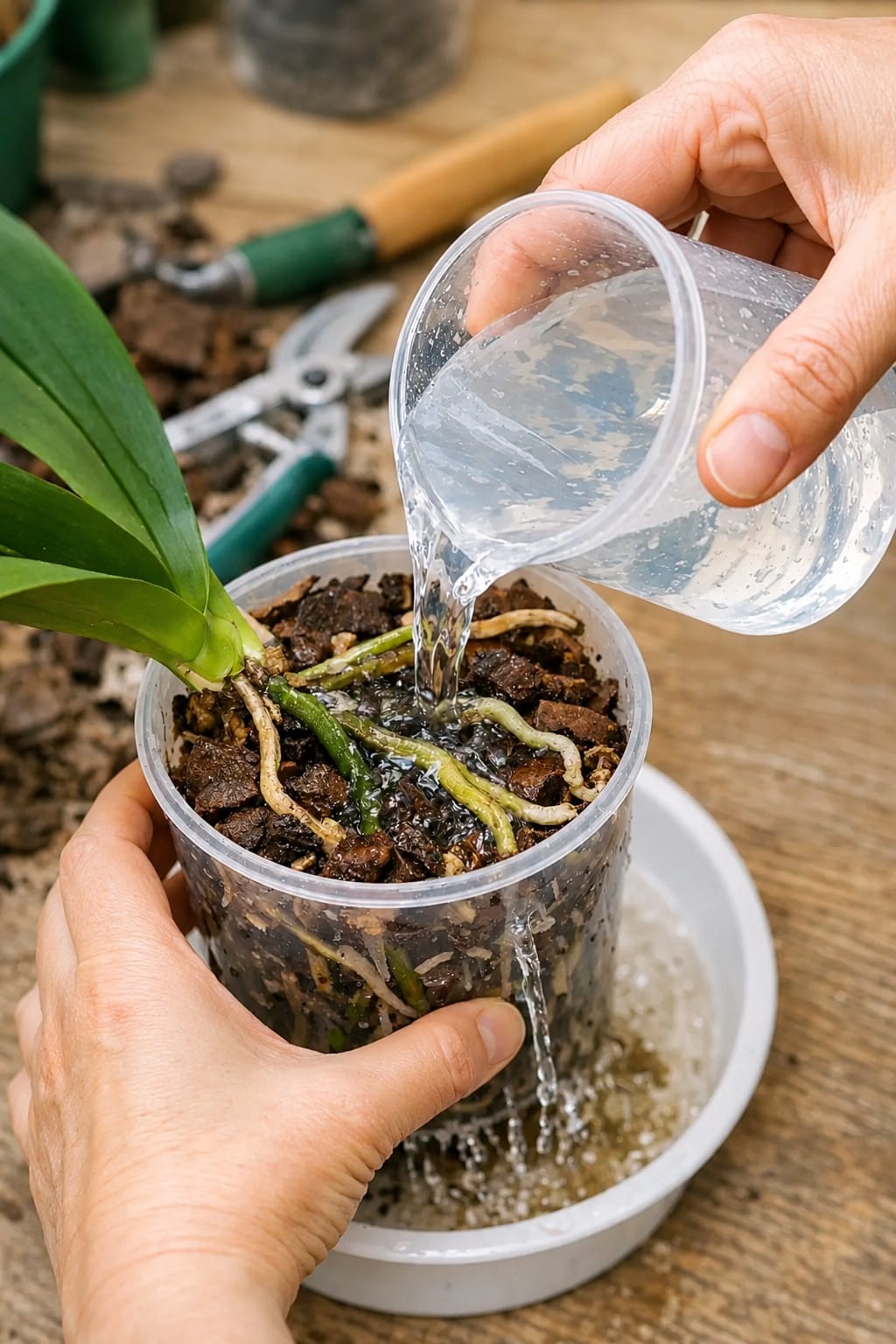
Common Mistakes With Orchid Cleansing Mixtures
One common mistake is using a mixture without knowing what it contains. Clear liquid can still contain strong or harmful ingredients. Another mistake is pouring the mixture into the crown. This can create crown rot. A third mistake is using organic kitchen liquids that leave residue in bark.
A fourth mistake is trying to cleanse old rotten bark instead of replacing it. If bark is broken down, repotting is the better solution. A fifth mistake is leaving the orchid sitting in runoff after flushing. The liquid that drains out should be discarded.
A sixth mistake is cleansing too often. Orchids need wet-dry balance. Repeated rinsing can keep the roots too wet and slow recovery. A cleansing rinse should support care, not become the whole care routine.
What Usually Helps More Than a Cleansing Mixture
Fresh orchid bark usually helps more than any unknown cleanser. Correct watering helps more. Bright indirect light helps more. A dry crown helps more. Drainage helps more. Root inspection helps more. These are the foundation of orchid recovery.
If the orchid has root rot, trim dead roots and repot. If the orchid is not blooming, improve light and feed gently during active growth. If the orchid has salt buildup, flush with plain water. If the orchid has pests, identify the pest and treat specifically. A cleansing mixture should never be used as a substitute for diagnosis.
Orchids respond well to patience. New roots may take weeks to appear. New flower spikes may take months. A healthy orchid routine is slow, clean, and consistent.
Final Thoughts
A cleansing mixture poured through an orchid pot may look like a quick root-reviving trick, but it should be used carefully. The safest version is usually plain room-temperature water used as an occasional flush. Unknown mixtures, fermented liquids, milk, sugar water, lemon water, vinegar, baking soda water, and unstrained kitchen extracts can sour the bark, attract pests, leave residue, and stress sensitive roots.
The real foundation of orchid health is firm roots, fresh airy bark, drainage holes, careful watering, bright indirect light, a dry crown, moderate humidity, airflow, and gentle feeding only when the plant is actively growing. If the roots are rotten, remove damaged roots. If the bark is old, replace it. If the crown is wet, dry it. If the plant is not blooming, improve light and root health.
With patient care and clean styling, orchids can remain stunning indoor plants for living rooms, bedrooms, home offices, apartments, bright windowsills, commercial interiors, luxury home staging, and premium plant displays. Firm roots, clean bark, glossy leaves, graceful flower spikes, and balanced maintenance will always create a safer and more elegant result than relying on risky cleansing mixture shortcuts.