When Flower Spikes Return
After the orchid rebuilds strength, it may produce a new flower spike. This often happens when the plant receives bright indirect light and a slight nighttime temperature drop for several weeks.
Do not force blooming while the orchid is weak. A plant with few roots should focus on recovery first. Strong roots create better flowers later.
When a new spike appears, support it gently with a stake and clips. Do not bend it harshly.
Common Mistakes to Avoid
Do not pour strong hydrogen peroxide into the pot regularly. Do not use thick turmeric paste around orchid roots. Do not repot into regular soil. Do not bury the crown. Do not leave the orchid standing in water.
Do not remove firm roots just because they look dry. Silver roots can be healthy. Do not panic if the orchid pauses after repotting. Recovery takes time.
Do not add many homemade treatments at once. Orchids prefer clean, airy, stable care.
How to Style a Recovering Orchid
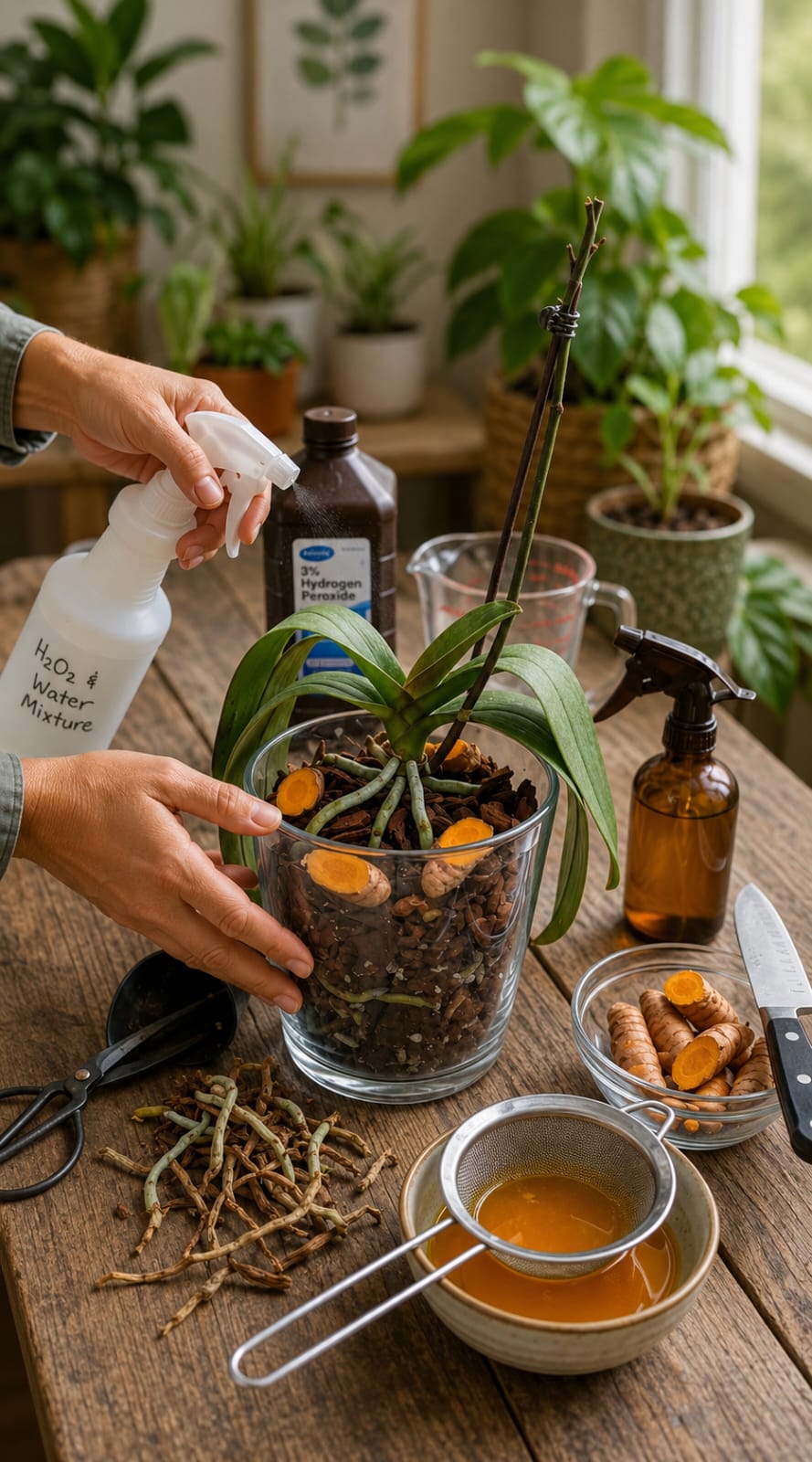
A recovering orchid can still look beautiful. Place it in a clear pot inside a simple cover pot or glass container. Keep the potting area clean. Remove dead roots, old bark pieces, and dry flower spikes from the display.
Use a wooden table, greenhouse shelf, or bright windowsill to create a natural plant-care corner. A clean spray bottle, small scissors, bark mix, and a glass jar can make the setup look intentional rather than messy.
Orchids look especially elegant beside soft natural light, wooden surfaces, terracotta pots, and other tropical plants.
Creating a More Expensive-Looking Orchid Display
For a refined look, keep the arrangement simple. Choose one clean pot, one healthy orchid, and one bright background. Avoid clutter around the plant. Wipe the leaves and clean the pot rim regularly.
White orchids look luxurious in matte ceramic pots. Pink and purple orchids look beautiful in clear pots or soft neutral containers. Yellow orchids pair well with warm wood and terracotta.
A clean orchid with healthy roots visible through a clear pot can look more sophisticated than an overdecorated arrangement.
Greenhouse and Balcony Styling
If you keep orchids in a greenhouse or protected balcony, use shelves that allow airflow. Keep tools organized in a tray. Store bark, scissors, and spray bottles neatly. A tidy care station makes the space feel professional and calming.
Place orchids where they receive bright filtered light but are protected from harsh direct sun and cold drafts. Good airflow helps prevent fungal problems after watering.
Do not leave freshly treated orchids in strong sun. Give them a calm recovery spot.
A Simple Orchid Recovery Schedule
During the first week after the reset, keep the orchid in bright indirect light and avoid overwatering. Check that the crown stays dry. Let the bark settle.
During weeks two to four, water only when the bark is mostly dry. Watch for new root tips or a firm new leaf. Do not fertilize heavily.
After a month, if the orchid looks stable and begins growing, resume a weak orchid fertilizer routine. Keep watering carefully and avoid repeated chemical or homemade treatments.
Final Thoughts
A gentle orchid root-cleaning routine can help a tired orchid recover when it is done carefully. The most important steps are removing dead roots, using clean tools, refreshing the bark, choosing a pot with drainage, and giving the plant bright indirect light. Diluted hydrogen peroxide may be used briefly for cleaning damaged root areas, but it should not be treated as fertilizer or used too often.
A golden natural rinse can be optional, but it must be weak, strained, and used rarely. Orchids are sensitive plants, and thick homemade mixtures can create more problems than benefits. When in doubt, choose plain water, fresh bark, and patience.
With clean roots, airy bark, proper drainage, and steady care, an orchid can rebuild strength slowly. New roots, firm leaves, and future flower spikes all begin with a healthy root zone. Keep the routine simple, keep the plant clean, and let your orchid return to a more graceful, elegant, and blooming display over time.