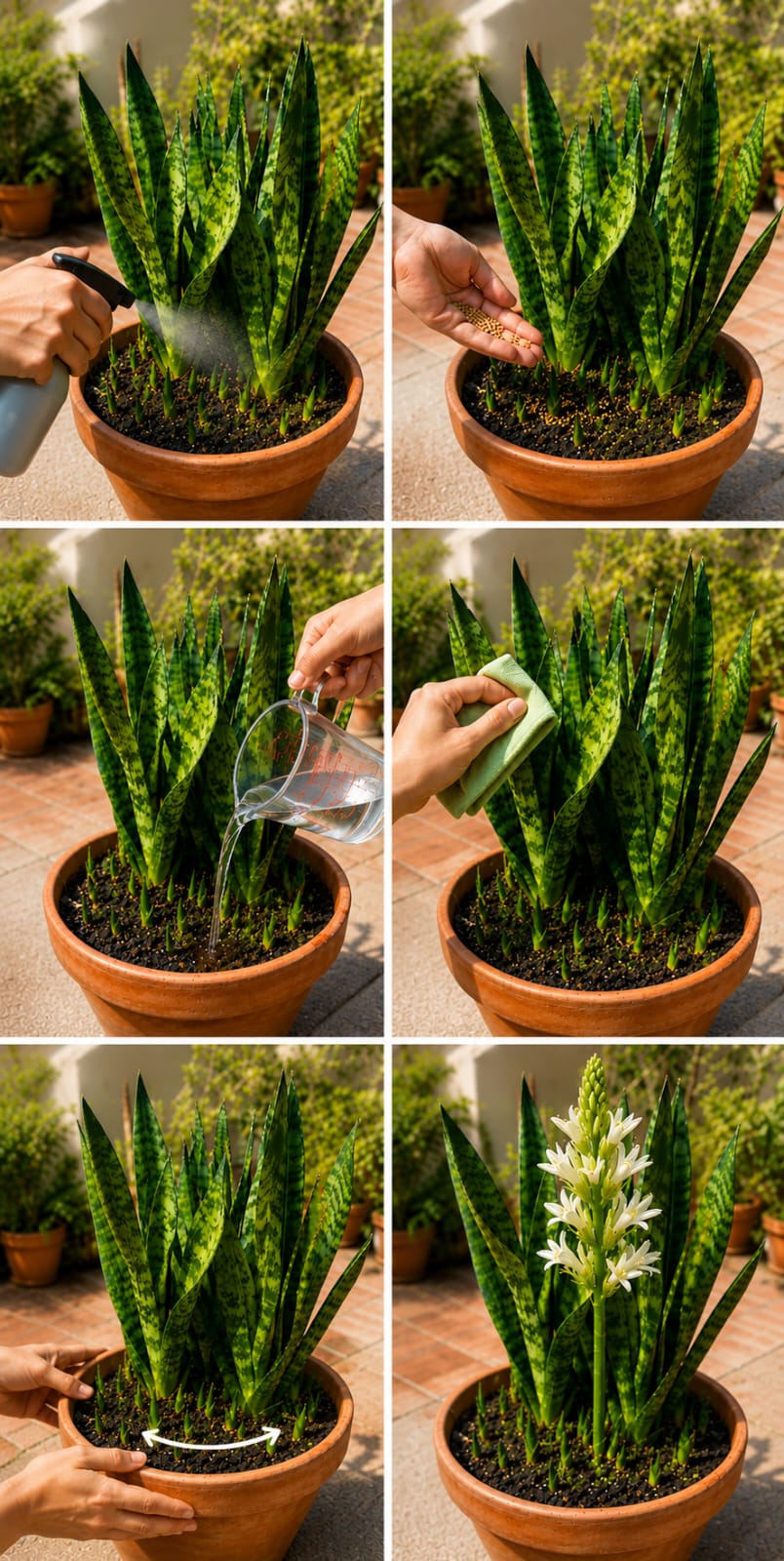
Snake plants are famous for being almost effortless. They tolerate low light better than many houseplants, they do not need constant watering, and their upright sword-shaped leaves can make any room, balcony, patio, or entryway look cleaner and more architectural. Their sharp vertical shape works beautifully in modern homes, minimalist corners, terracotta planters, white ceramic pots, and sunny outdoor patios.
But many plant lovers do not realize that snake plants can do more than simply survive. With the right routine, they can produce fresh pups, thicker clusters, stronger leaves, and, in mature plants, even a tall flower spike with delicate white or cream blooms. Snake plant flowers are not guaranteed, and they should never be forced with harsh treatments, but a healthy, slightly mature plant in the right conditions may surprise you with a beautiful bloom stalk.
This 6-step snake plant routine focuses on clean care, gentle feeding, correct watering, bright light, leaf cleaning, and pot rotation. It is not about overdoing fertilizer or flooding the soil. It is about creating the steady conditions that allow the plant to feel strong enough to grow new shoots and possibly flower.
The method is especially useful for potted snake plants grown on patios, balconies, bright windowsills, or warm indoor corners. It can also help a plant look more polished and expensive, because clean upright leaves, fresh pups around the base, and a neat terracotta pot create a refined display without needing complicated decor.
Why Snake Plants Sometimes Flower
Snake plants, also called Sansevieria or Dracaena trifasciata, can produce flower spikes when they are mature and growing under suitable conditions. The flowers are usually small, white, cream, or pale green, and they grow along a tall central stalk. Some varieties produce fragrant blooms, especially in the evening.
Flowering is not something that happens on command. A snake plant may live for years without flowering, even when it is healthy. However, blooms are more likely when the plant is mature, slightly root-bound, receiving enough bright indirect light, and not being overwatered. A plant that is constantly stressed, soggy, or kept in a very dark location is less likely to bloom.
The goal of this routine is not to force flowers, because forcing a plant can weaken it. The goal is to improve the plant’s overall health so it can grow strongly. If flowering happens, it is a bonus.
Why This 6-Step Routine Works
Snake plants respond best to calm, consistent care. They do not need daily attention, but they do benefit from periodic maintenance. A good routine should include moisture control, mild feeding, soil refreshment, leaf cleaning, light management, and space for pups to develop.
The six steps are simple: mist or clean lightly when needed, add a small amount of gentle slow nutrition, water correctly, wipe the leaves, rotate the pot, and keep the plant in bright indirect light. Each step supports a different part of plant health.
Misting alone does not make a snake plant grow. Fertilizer alone does not guarantee flowers. Water alone is not enough if the plant has no light. But when all the basics work together, the plant often becomes fuller, cleaner, and stronger.
Step 1: Refresh the Plant With Light Surface Care
The first step is to refresh the plant and remove dust from the growing area. Snake plants do not need heavy misting, and they do not like water sitting between the leaves. However, a light surface refresh can help clean dust from the leaves and make the plant look brighter.
Use a spray bottle only lightly, and avoid soaking the crown. A few sprays around the leaves or soil surface are enough if the plant is dusty or has been sitting outside in dry weather. If the leaves are very dusty, wiping is better than misting.
For indoor snake plants, frequent misting is unnecessary. These plants are adapted to dry conditions and do not require high humidity. Too much moisture around the crown can cause rot. Think of this step as a visual refresh, not as a daily hydration method.
How to Do Step 1 Safely
Use clean room-temperature water in a spray bottle. Mist from a distance so the droplets are fine. Do not spray heavily into the center of the plant. If water collects in the leaf rosette or between tight leaves, blot it with tissue or a soft cloth.
Outdoor plants can handle a little more airflow, so a light spray is usually less risky. Indoor plants in cool rooms should be kept drier. If your room is dark, avoid misting completely and simply wipe the leaves instead.
Never mist at night in a cool room. Moisture that sits overnight can encourage fungal problems or rot.
Step 2: Add Gentle Slow Nutrition
The second step is mild feeding. Snake plants do not need heavy fertilizer. In fact, overfeeding can damage them. A small amount of slow-release fertilizer or a very diluted liquid fertilizer during the growing season is enough.
If using slow-release granules, apply only a small amount around the soil surface, away from the crown. Do not pile fertilizer directly against the leaves. After applying, water lightly so nutrients can begin moving into the soil gradually.
The best time to feed is spring or summer, when the plant is actively growing. Avoid feeding during cold winter months unless the plant is in a warm, bright location and still producing new growth.
Choosing the Right Fertilizer
A balanced houseplant fertilizer works well for snake plants. You can use a cactus and succulent fertilizer, a slow-release indoor plant fertilizer, or a balanced liquid fertilizer diluted to half or quarter strength.
Do not use strong bloom boosters repeatedly. Snake plants do not need aggressive feeding to flower. A healthy plant with good light and stable roots has a better chance of flowering than one pushed with too much fertilizer.
If you prefer natural options, you can occasionally top-dress with a very small amount of worm castings. Keep it light. Thick compost layers can hold too much moisture around the base.
Step 3: Water Deeply but Infrequently
Watering is the most important part of snake plant care. These plants store water in their thick leaves and rhizomes, which means they are much more tolerant of dryness than soggy soil. Overwatering is one of the fastest ways to damage them.
When it is time to water, water thoroughly. Pour water slowly around the soil until it drains from the bottom of the pot. Then let the pot drain completely. After that, wait until the soil is dry before watering again.
Do not water just because the surface looks dry. Check deeper. In a large pot, the lower soil may remain moist even when the top looks dry.
How Often Should You Water a Snake Plant?
There is no perfect calendar because watering depends on light, temperature, pot size, soil type, and season. In bright warm conditions, a snake plant may need water every 2 to 3 weeks. In cooler or darker indoor conditions, it may need water only once every 4 to 6 weeks.
The best method is to check the soil. Insert your finger several centimeters down. If it feels dry, water. If it feels cool or damp, wait. You can also lift the pot. A dry pot feels much lighter than a wet one.
During winter, reduce watering significantly. Snake plants grow more slowly in winter and use less moisture.
Step 4: Wipe the Leaves for Better Light Absorption
Snake plant leaves are large, upright, and often patterned with dark green bands and yellow edges. Dust can settle on them easily. Dusty leaves look dull and reduce the plant’s ability to absorb light. Clean leaves look sharper, brighter, and more expensive.
Use a soft damp cloth to wipe each leaf from base to tip. Support the leaf with one hand while wiping with the other. This prevents bending or cracking. Do not use oily leaf shine products. A clean damp cloth is enough.
This step is especially important for decorative displays. A snake plant with clean leaves in a terracotta or ceramic pot looks instantly more polished.
How Often to Clean the Leaves
Wipe the leaves every 2 to 4 weeks, or whenever they look dusty. If the plant is outside, it may need cleaning after wind, rain, or dusty weather. If it is indoors near a window, dust may collect slowly but still needs attention.
While cleaning, inspect the plant for pests. Look for small insects, sticky residue, webbing, or cottony patches. Snake plants are generally pest-resistant, but they can still get mealybugs, scale, or spider mites in some conditions.
Early pest detection keeps the plant healthier and prevents problems from spreading to nearby plants.
Step 5: Rotate the Pot for Balanced Growth
Snake plants naturally lean toward light. If one side receives more light than the other, the plant may grow unevenly. Rotating the pot helps every side receive light and keeps the display balanced.
Turn the pot a quarter turn every one or two weeks. This is especially useful for plants near windows, balcony doors, or patio walls where light comes from one direction.
Rotation also helps you notice pups forming around the base. New pups are a sign that the plant is actively growing and spreading through its underground rhizomes.
Why Pups Matter
Pups are small new snake plant shoots that emerge from the soil around the parent plant. They make the pot look fuller and more attractive. Over time, a few pups can turn a sparse plant into a lush architectural cluster.
If you want a fuller pot, leave the pups in place. If the pot becomes overcrowded, you can divide the plant during repotting. Each division should have roots attached.
Fresh pups are often a better sign of success than flowers because they show that the plant is actively expanding.
Step 6: Give Bright Indirect Light for Stronger Growth
Snake plants are often described as low-light plants, but that can be misleading. They can survive in low light, but they grow better in bright indirect light. If you want pups, strong leaf color, and a chance of flowers, give the plant more light.
A bright window, covered patio, balcony with morning sun, or filtered outdoor shade can work well. Direct harsh afternoon sun may scorch leaves, especially if the plant was previously grown indoors. Introduce brighter light gradually.
Bright indirect light helps the plant use water efficiently, produce energy, and develop stronger roots. A snake plant in very low light should be watered less often because it dries slowly.
Can Snake Plants Grow Outdoors?
Yes, snake plants can grow outdoors in warm climates, but they must be protected from cold, frost, and too much rain. They enjoy bright shade and morning sun. In hot climates, afternoon sun can be too intense.
If you move a snake plant outdoors, acclimate it slowly. Start with shade, then gradually increase brightness. Sudden intense sun can burn the leaves.
Outdoor snake plants often grow faster because they receive stronger light and better airflow. However, they may also dry faster and need more careful monitoring.
The Best Soil for Snake Plants
Snake plants need fast-draining soil. Regular heavy potting soil can hold too much moisture and cause root rot. A better mix includes cactus soil, perlite, pumice, coarse sand, or orchid bark.
A simple mix is two parts cactus or succulent soil, one part perlite, and one part pumice or orchid bark. This creates airflow and prevents the soil from staying wet too long.
If your snake plant is in dense soil and the pot stays wet for weeks, repot it into a better mix. Soil quality often matters more than fertilizer.
Choosing the Right Pot
A pot with drainage holes is essential. Snake plants should never sit in water. Terracotta pots are excellent because they allow moisture to evaporate through the sides. This helps prevent soggy soil.
Plastic and ceramic pots can also work, but watering must be more careful because they hold moisture longer. If using a decorative pot without drainage, keep the snake plant in a nursery pot inside it and remove the plant for watering.
A wide, stable pot is useful because tall snake plants can become top-heavy. Terracotta bowls and heavy ceramic planters are both good options.
How to Encourage a Fuller Snake Plant
To encourage fullness, provide bright indirect light, avoid overwatering, feed lightly during active growth, and allow pups to remain in the pot. Do not keep dividing the plant too often if you want a dense display.
If the pot is extremely crowded, growth may slow. In that case, repot into a container only slightly larger. A pot that is too large can hold too much soil and moisture, increasing rot risk.
A slightly snug pot is often fine for snake plants and may even encourage stable growth. Just make sure the soil drains well.
How to Encourage Flowering Naturally
Flowering is more likely when a snake plant is mature, healthy, and receiving bright light. Some plants bloom after experiencing mild stress, such as being slightly root-bound or having a dry period, but this should not be exaggerated.
Do not starve or severely dry the plant just to force flowers. That can weaken it. Instead, give it excellent light, correct watering, and time. If it flowers, enjoy the spike without cutting it too early.
After flowering, the plant may continue growing normally. Remove the flower stalk once it dries.
Continue to Page 2
Continue to page 2 for more details about this article and the key points many readers miss on the first page.