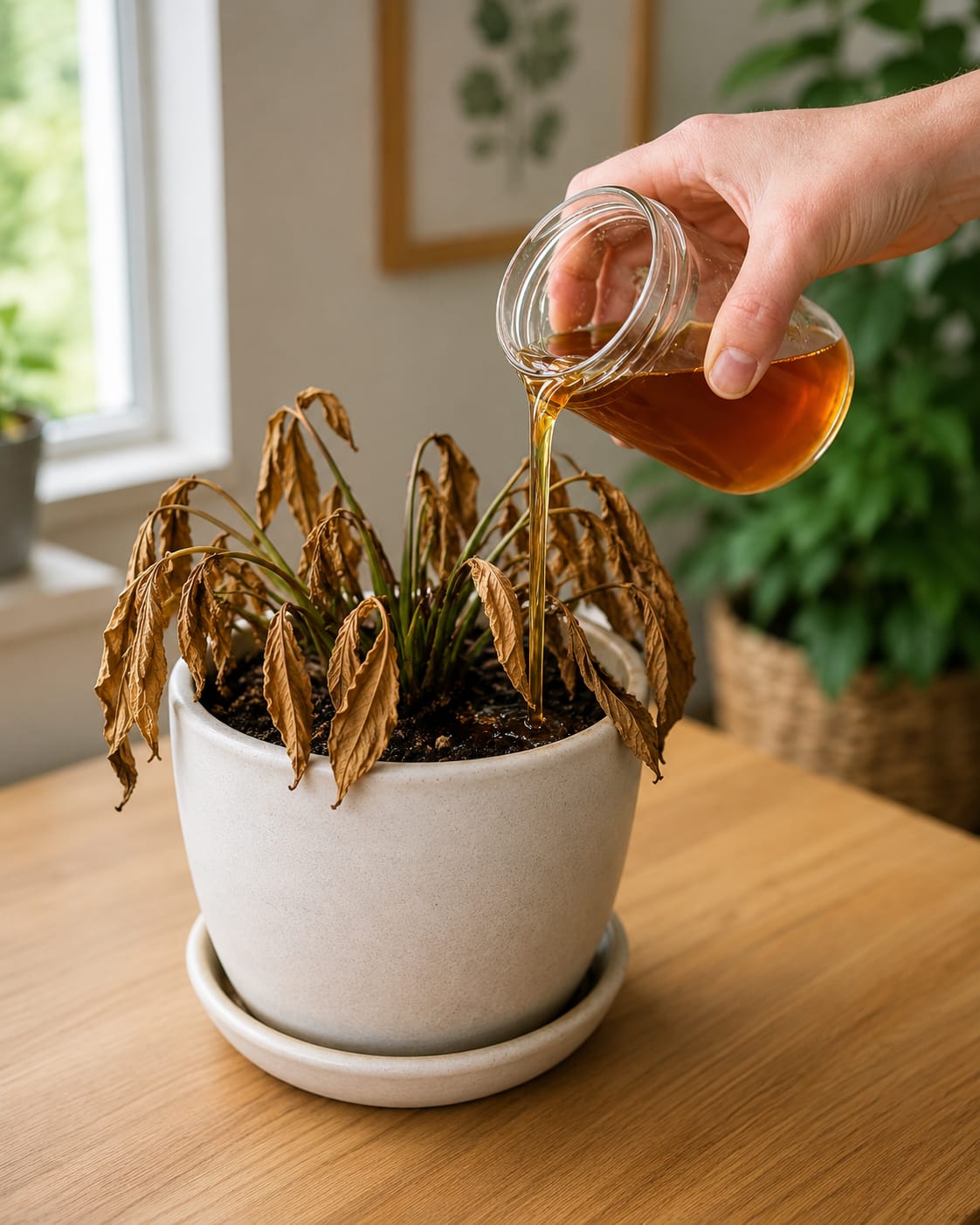
Peace lilies are among the most beautiful indoor plants for creating a calm, polished, and expensive-looking home. Their glossy green leaves, upright white blooms, and soft tropical shape can make a simple corner feel fresh and elegant. A healthy peace lily looks clean, refined, and peaceful, which is why many homeowners love placing it on side tables, plant stands, windowsills, entryway consoles, and bright living room corners.
But peace lilies are also very expressive plants. When they are unhappy, they show it quickly. Leaves may droop, turn yellow, brown at the tips, or lose their shine. Blooms may stop appearing, and the whole plant can look tired even when it is still alive. Because of this, many plant lovers look for gentle natural routines that can refresh the root zone and help the plant recover its fuller, greener appearance.
One popular home-care idea is a mild amber-colored root tonic made from natural kitchen ingredients such as onion skins, banana peel water, diluted compost tea, or a very weak homemade plant infusion. The important point is not the dramatic color of the liquid. The important point is that the mixture must be weak, strained, fresh, and used carefully. Peace lilies have sensitive roots, and strong homemade liquids can damage them if they are too concentrated, sugary, salty, fermented, or applied too often.
This guide explains how to use a gentle amber root tonic safely for peace lilies, how to prepare a mild version, how often to apply it, when to avoid it, and how to combine it with the real secrets of peace lily success: bright indirect light, breathable soil, correct watering, clean leaves, good drainage, and patient care.
Why Peace Lilies Respond So Quickly to Root Care
Peace lilies grow from a central crown and rely heavily on healthy roots. Their leaves are large and soft, so they lose water quickly when the root system is stressed. This is why a peace lily can droop dramatically when it is thirsty, but it can also droop when the soil is too wet and the roots cannot breathe.
Many people think a drooping peace lily always needs more water, but that is not always true. Sometimes the plant droops because the roots are sitting in soggy soil. When roots are waterlogged, they cannot take in oxygen properly. This makes the plant look thirsty even though the pot is wet.
A good root-care routine focuses on balance. The soil should stay lightly moist, but not swampy. The pot should drain well. The roots should have air. The plant should receive enough indirect light to use the water it receives. A gentle tonic can support the routine, but it cannot fix poor drainage, heavy soil, or a dark location by itself.
What an Amber Root Tonic Is Meant to Do
An amber root tonic is usually a light plant rinse made from natural materials soaked in water and strained well. The color may come from onion skins, banana peels, mild compost tea, or other plant-based ingredients. For peace lilies, the safest approach is to treat this liquid as a gentle soil refresh, not a powerful fertilizer.
The tonic is meant to lightly moisten the root zone and encourage a fresher soil environment. It may provide tiny amounts of nutrients, but it should not be relied on as the main feeding source. Peace lilies still benefit from a balanced houseplant fertilizer during the growing season, used at a weak dose.
The biggest benefit of this routine is that it encourages careful observation. When you prepare and apply a root tonic, you naturally check the soil, remove dead leaves, look for pests, and notice whether the plant needs more light or better drainage. This attention often improves the plant more than the tonic itself.
Important Safety Rule Before Using Homemade Tonics
Peace lilies do not like strong mixtures. Avoid anything thick, oily, salty, sugary, fermented, or sour-smelling. A homemade tonic should be watery, fresh, mild, and fully strained. If it smells bad, do not use it. If it has floating pieces, strain it again. If it looks thick, dilute it heavily.
Never pour food scraps directly into the pot. Banana pieces, onion pieces, potato scraps, coffee sludge, or fruit pulp can rot in indoor soil. This may attract fungus gnats, create mold, and damage roots. Only a clean strained liquid should be used.
Also avoid using homemade tonics on a plant that is already suffering from root rot. If the soil smells rotten or the roots are mushy, the plant needs repotting and root cleaning, not extra liquid.
A Gentle Onion-Skin Amber Tonic for Peace Lilies
One mild version of an amber tonic can be made from dry onion skins. Onion skins release a golden-brown color into water and are often used by gardeners as a simple kitchen-scrap plant rinse. For peace lilies, it must be diluted and used occasionally.
Ingredients
- Dry outer skins from 1 small onion
- 2 cups warm water
- 2 to 4 cups clean water for dilution
- A clean glass jar
- A fine strainer or clean cloth
Method
Place the dry onion skins into a clean jar and add warm water. Let the skins soak for 6 to 12 hours. The water should become lightly amber. Strain the liquid very well so no pieces remain. Dilute one part onion-skin water with two to three parts clean water before using it on the peace lily.
The final liquid should look like weak tea. It should not be dark, thick, or strong-smelling. Use it fresh and discard leftovers after one day.
A Gentle Banana-Peel Amber Tonic for Peace Lilies
Another version can be made with banana peels, but this one must be used even more carefully because banana peel water can become sugary or fermented if left too long. For indoor peace lilies, use a very weak version only.
Ingredients
- One small piece of banana peel
- 3 cups water
- A clean jar
- A fine strainer
Method
Place a small piece of banana peel in water for 6 to 8 hours only. Strain completely. Dilute the liquid with at least three parts clean water. Use a small amount around the outer edge of the pot and do not repeat often.
Do not use banana peel water if it smells sour, sweet, alcoholic, or fermented. Do not leave banana pieces in the soil. A fresh, weak liquid is the only safe option.
How to Apply the Tonic Safely
Before applying any tonic, check the soil moisture. If the soil is already wet, do not add more liquid. Wait until the top inch of soil feels slightly dry. Peace lilies like moisture, but they do not like sitting in heavy wet soil.
When the plant is ready, pour the diluted tonic slowly around the outer soil area. Avoid pouring directly into the central crown where the leaf stems emerge. Use only enough liquid to lightly moisten the soil. If water drains from the bottom, let it drain completely and empty the saucer.
For a small peace lily, use about half a cup of diluted tonic. For a medium plant, use about one cup. For a large pot, use one to two cups depending on soil moisture and pot size. More is not better.
How Often to Use It
Use an amber root tonic once every 4 to 6 weeks during active growth, and only if the plant is healthy enough to handle it. If the peace lily is growing well, you may use it less often or skip it completely.
Do not apply homemade tonic every week. Frequent organic liquids can build up in indoor soil, especially in pots with limited airflow. This can lead to odor, pests, and root stress.
During winter, reduce extra treatments. Peace lilies grow more slowly in cooler, darker months, so they need less water and less feeding.
When Not to Use an Amber Tonic
Do not use this routine if the peace lily is severely wilted in wet soil, if the soil smells bad, if fungus gnats are present, if the pot has no drainage holes, or if the plant has recently been repotted. Do not use it on a peace lily with mushy stems, black roots, or crown rot.
If the plant is weak because of root rot, remove it from the pot and inspect the roots. Healthy roots are firm and pale to tan. Rotten roots are mushy, dark, and may smell unpleasant. Cut away damaged roots with clean scissors and repot in fresh, well-draining soil.
A tonic should never be used to hide a serious root problem. Fix the root environment first.
The Real Secret to Peace Lily Blooms
Many people want peace lilies to bloom nonstop, but the real secret is not one homemade liquid. Peace lilies bloom when they receive enough bright indirect light, have healthy roots, and are mature enough to flower.
A peace lily in a dark corner may survive, but it may not bloom often. To encourage flowers, move it near a bright window where it receives filtered light. Avoid harsh direct sun, which can scorch the leaves. Morning light or bright indirect light is ideal.
If your peace lily has healthy leaves but no blooms, light is often the missing factor. Before adding tonics or fertilizers, improve the light.
Best Watering Routine for Peace Lilies
Peace lilies prefer evenly moist soil. Water when the top inch feels dry. If the leaves droop and the soil is dry, water thoroughly. If the leaves droop and the soil is wet, check the roots and drainage.
Use room-temperature water. Pour slowly until water drains from the bottom of the pot. Empty the saucer afterward. Do not allow the plant to sit in standing water.
If your tap water is high in minerals or chlorine, leaf tips may brown. Try filtered water, rainwater, or water left out overnight. Consistent watering is more important than dramatic treatments.
Best Soil for Peace Lilies
A good peace lily soil mix should hold some moisture while still allowing air to reach the roots. Dense soil can stay wet too long and cause root problems. A simple improved mix can include indoor potting soil, perlite, and orchid bark.
Try two parts quality potting soil, one part perlite, and one part fine orchid bark. This creates a breathable texture that supports healthy roots.
If your soil stays wet for more than a week, it may be too heavy. If it dries within a day, it may be too loose or the plant may be root-bound.
Choosing the Right Pot
A peace lily pot must have drainage holes. This is non-negotiable. Decorative pots without drainage may look beautiful, but they can trap water and damage roots.
If you love a decorative container, keep the peace lily in a plastic nursery pot inside the decorative pot. Remove the nursery pot when watering, let it drain completely, then place it back.
White ceramic pots make peace lilies look clean and modern. Terracotta pots create a warm natural style. Black or charcoal planters can make the white blooms look dramatic and elegant.
How to Refresh a Tired Peace Lily
If your peace lily looks tired, begin with a full care reset. Remove dead leaves and faded flowers. Check the soil moisture. Inspect for pests. Wipe dust from the leaves. Move the plant to brighter indirect light. Make sure the pot drains.
After the plant stabilizes, you may use a mild diluted amber tonic if the soil is not wet. But do not expect instant transformation. A weak plant needs time to rebuild roots and leaves.
Peace lilies often respond beautifully to consistent care over several weeks. New leaves are a sign that the plant is recovering.
How to Clean Peace Lily Leaves
Peace lily leaves collect dust easily because they are broad and glossy. Dust makes the plant look dull and can reduce light absorption. Wipe leaves every few weeks with a damp soft cloth.
Support each leaf gently while wiping to avoid tearing it. Do not use oily leaf shine products. Clean water is enough. A naturally clean leaf looks more elegant than an oily artificial shine.
Clean leaves also help you notice pests early. Check under leaves and near stems for sticky residue, webbing, or small insects.
Removing Yellow and Brown Leaves
Yellow leaves should be removed when they are mostly yellow or brown. Cut them at the base using clean scissors. Do not pull them because this can damage the crown.
Brown tips can be trimmed if they bother you. Follow the natural shape of the leaf for a softer look. However, trimming does not solve the cause. Brown tips often come from inconsistent watering, dry air, mineral buildup, or too much fertilizer.
Keep the care routine steady and gentle to reduce future browning.
Humidity and Airflow
Peace lilies enjoy moderate humidity. In dry homes, leaf edges may crisp. You can improve humidity by grouping plants together, using a pebble tray, or placing a humidifier nearby.
Airflow is also important. Stale air and wet soil can lead to fungal issues. Keep the plant in a room with gentle air movement, but avoid cold drafts from doors, windows, or air conditioners.
Do not mist heavily every day if the room is cool or dark. Too much moisture on leaves can create problems.
Continue to Page 2
Continue to page 2 for more details about this article and the key points many readers miss on the first page.