Flowering plants can completely change the feeling of a balcony, patio, windowsill, or garden corner. A simple pot filled with pink, red, white, yellow, or purple blooms can make an outdoor space feel warmer, cleaner, and more expensive-looking. When the leaves are full and green and the flowers keep opening, even an ordinary container garden starts to look like a carefully styled home entrance or a charming cottage balcony.
Many homeowners look for natural ways to support flowering plants without relying only on store-bought products. One popular homemade idea is a mild banana and potato peel tonic. This garden trick uses kitchen scraps, water, and careful dilution to create a light liquid that can be poured around the soil of flowering plants. It is often used for patio flowers, balcony pots, geraniums, impatiens, petunias, begonias, marigolds, and other ornamental plants that need steady nutrients, consistent moisture, and healthy roots to keep blooming beautifully.
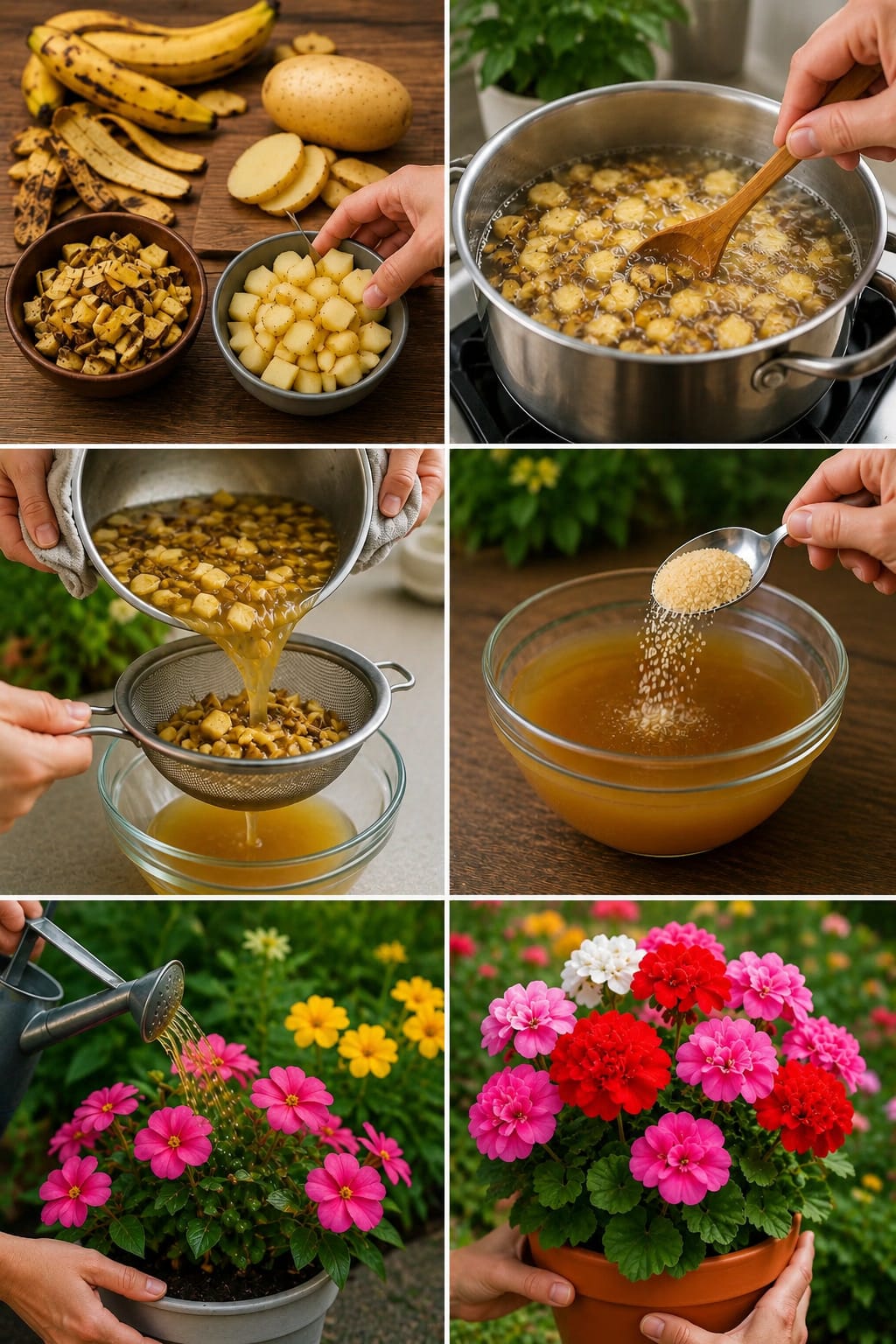
The idea is simple: banana peels and potato peels are soaked or lightly simmered in water, then strained and diluted before being used around the base of plants. Some gardeners also add a tiny spoonful of rice water or plain rice grains to the liquid, but this must be done carefully because too much starch can create odor or attract pests. The safest version is a clean, strained, diluted liquid applied only to the soil, never poured over the flowers.
This guide explains how to prepare the tonic, how to use it safely, which plants can benefit from it, when to avoid it, and how to combine it with proper watering, sunlight, pruning, and container styling for a fuller and more refined blooming display.
Why Flowering Plants Need Gentle Feeding
Flowering plants use a lot of energy. They are not only producing leaves and stems; they are also forming buds, opening flowers, and replacing old blooms with new ones. In containers, nutrients wash out faster than they do in garden beds because every watering carries some minerals through the drainage holes. This is why potted flowers often look beautiful at first, then slowly become weak, pale, or less productive if they are not refreshed.
A gentle homemade tonic can be useful as part of a larger care routine. It should not be treated as a magic solution, and it should not replace balanced fertilizer completely. But when used lightly, it can give plant owners a simple way to refresh the soil and reduce kitchen waste.
The most important word is gentle. Strong homemade mixtures can harm roots, create bad smells, attract insects, and make soil too wet. Flowering plants prefer consistency. They need good light, breathable soil, drainage, and regular deadheading more than they need dramatic treatments.
Why Banana Peels Are Popular in Flower Care
Banana peels are often used in home gardening because they contain potassium, which is associated with plant strength, flower development, and overall growth. This does not mean banana peels instantly create blooms, but they can be part of a natural feeding routine when prepared correctly.
The mistake many people make is burying large pieces of banana peel directly in pots. In outdoor garden beds, organic matter breaks down more easily. In a small indoor or balcony pot, thick banana pieces can rot, smell, attract flies, and make the soil too wet. For container flowers, a strained liquid is much safer than chunks of peel.
Banana peel water should always be mild, fresh, and diluted. It should smell clean, not fermented or sour. If it smells bad, do not use it on plants.
Why Potato Peels Are Added
Potato peels are another common kitchen scrap used in garden routines. They contain small amounts of nutrients and starches. When lightly simmered and strained, the water becomes a mild amber liquid. Some plant lovers use it as a soft soil refresh for ornamental plants.
However, potato peel liquid can become starchy, so it must be diluted. Too much starch in soil can encourage microbial activity, odors, or pests. The goal is not to pour thick potato water into a pot. The goal is to create a very light rinse that supports the soil without overwhelming it.
Use potato peels from clean, healthy potatoes. Avoid green potato skins, rotten pieces, moldy scraps, or oily cooked leftovers. Only clean raw peels should be used.
Why the Liquid Must Be Strained
Straining is one of the most important steps. Solid pieces of banana peel and potato peel should not be left in the final liquid. In a container pot, solids can sit on the soil surface, decay, and attract pests. A clear strained tonic is easier for the soil to absorb and less likely to create problems.
Use a fine strainer, cheesecloth, or clean cloth. The final liquid should be watery and pourable, not thick. If it looks heavy or cloudy, dilute it more with clean water.
Simple Banana-Potato Flower Tonic Recipe
This recipe is designed for outdoor or balcony flowering containers. It is mild and should be used occasionally.
- 1 banana peel, chopped
- Peels from 1 small potato
- 4 cups water
- Optional: 1 teaspoon plain rice water, not cooked rice
- A saucepan
- A strainer or clean cloth
- A watering can
Place the banana peel and potato peels in a saucepan with the water. Simmer gently for 10 to 15 minutes. Turn off the heat and let the liquid cool completely. Strain well. Dilute one part tonic with three parts clean water before using it on plants.
The final liquid should be weak and lightly colored. If it looks strong, thick, or smells unusual, dilute it more or discard it.
No-Boil Version
For a softer version, place the chopped banana peel and clean potato peels in a jar with water. Let them soak for 12 to 24 hours. Strain well and dilute before use. Do not let the mixture sit for several days. Long soaking can lead to fermentation and odor.
The no-boil version is lighter, but it should still be used fresh. Prepare only what you need for one watering session.
How to Apply the Tonic
Water the soil lightly first if it is very dry. Then pour the diluted tonic around the outer soil area of the plant, not directly on the stems or flowers. Use a small amount. The goal is to moisten the soil, not flood the pot.
For a small pot, use about half a cup of diluted tonic. For a medium pot, use one cup. For a large planter, use two to three cups depending on size. Always let excess liquid drain away.
Never leave the pot sitting in a saucer full of liquid. Standing water can suffocate roots and cause rot.
How Often to Use It
Use this tonic once every 3 to 4 weeks during the active growing and blooming season. Do not use it every day or every week. Flowering plants benefit from steady care, not constant additives.
During hot summer weather, plants may need more plain water, but that does not mean they need more tonic. Use plain water for regular hydration and keep the homemade feed occasional.
Stop using the tonic in cold weather or when plants are resting, unless they are actively growing in a warm protected area.
Best Plants for This Tonic
This mild tonic is best for outdoor or balcony flowering plants in containers. It can be used carefully around geraniums, impatiens, petunias, marigolds, begonias, zinnias, flowering annuals, and mixed patio planters.
It can also be used for some leafy ornamental plants outdoors, but it is mainly intended for blooming plants that are actively growing.
Avoid using it on succulents, cacti, orchids, carnivorous plants, seedlings, or plants in very wet soil. These plants have special needs and may react poorly to organic liquids.
When Not to Use It
Do not use banana-potato tonic if the plant is already overwatered, if the soil smells sour, if fungus gnats are present, if roots are rotting, or if the plant is newly transplanted and stressed. Do not use it on pots without drainage holes.
If your plant is weak because of poor light, wrong watering, pests, or compacted soil, a homemade tonic will not solve the problem by itself. Fix the growing conditions first.
Also avoid using this liquid on indoor plants if you are worried about pests. Organic liquids are safer outdoors where airflow and soil biology are stronger.
The Real Secret to More Blooms
More blooms usually come from four things: enough light, healthy roots, regular feeding, and deadheading. A natural tonic can support the routine, but it cannot replace these basics.
Most flowering plants need several hours of bright light to bloom well. Some prefer full sun, while others prefer morning sun and afternoon shade. If a flowering plant has many leaves but few flowers, light may be the first thing to check.
Roots also matter. If the pot is too small, too wet, or too compacted, the plant cannot perform well. A plant with healthy roots produces stronger stems and more reliable blooms.
Deadheading for Continuous Flowers
Deadheading means removing faded flowers. This is one of the easiest ways to keep a container looking fresh. When old blooms remain on the plant, the plant may spend energy forming seeds instead of producing new flowers.
Pinch or cut off faded flowers regularly. For geraniums, remove the whole spent flower cluster. For petunias, pinch back leggy stems and remove sticky faded blooms. For marigolds and zinnias, snip old flowers just above a leaf node.
Deadheading makes the planter look cleaner and encourages a fuller blooming habit.
Watering Flowering Containers Correctly
Container flowers often dry faster than garden plants. In warm weather, they may need water daily, especially in terracotta pots or hanging baskets. But they still need drainage. Soil should be moist, not swampy.
Water deeply until water runs from the drainage holes. Then let the top layer begin to dry before watering again. Small shallow sips can leave the lower roots dry, while constant soaking can rot the roots.
Morning watering is best because the plant has moisture before the heat of the day. Evening watering can work in hot climates, but avoid wet leaves overnight if fungal problems are common.
Best Soil for Flowering Pots
Use a light, well-draining potting mix for containers. Garden soil is often too dense for pots. A good potting mix holds moisture but still allows air around the roots.
For blooming containers, choose a mix with compost, peat or coco coir, perlite, and good drainage. If the potting mix becomes compacted, loosen the top layer gently and add fresh mix.
Healthy soil is the foundation. A homemade tonic works better when the soil is already breathable and active.
How to Combine This Tonic With Fertilizer
Banana-potato tonic is not a complete fertilizer. Flowering plants often need balanced nutrition that includes nitrogen, phosphorus, potassium, and micronutrients. If your plants are heavy bloomers, use a proper flowering plant fertilizer according to label directions, usually diluted.
Do not apply homemade tonic and store-bought fertilizer on the same day. Alternate them. For example, use a diluted flowering fertilizer one week, plain water the next, and banana-potato tonic once a month.
Too much feeding can burn roots or create leafy growth with fewer flowers. Gentle moderation is best.
Continue to Page 2
Continue to page 2 for more details about this article and the key points many readers miss on the first page.