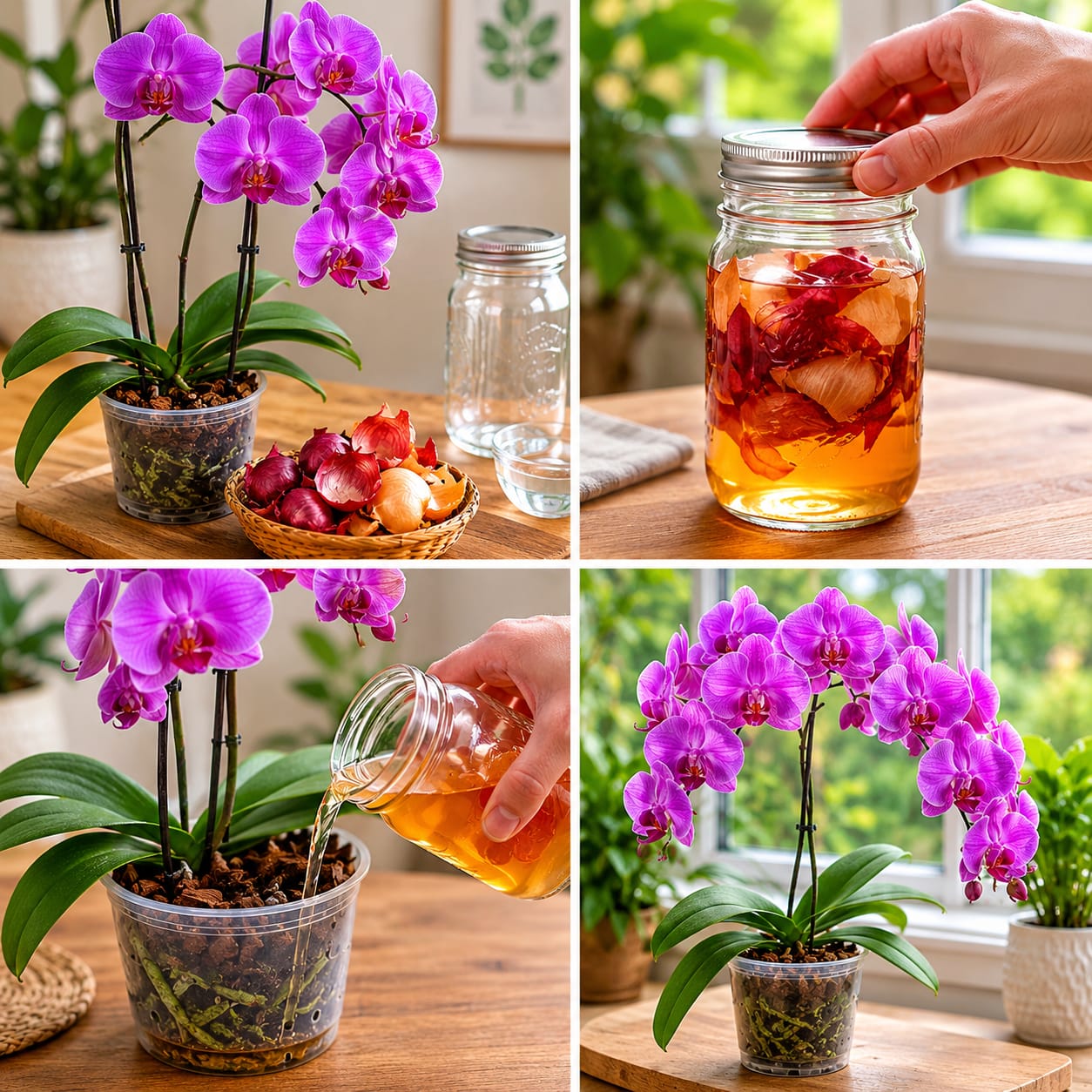
Orchids are one of the most graceful plants you can keep indoors. Their long arching flower stems, glossy green leaves, and delicate blooms can instantly make a window, shelf, table, or plant corner look more refined. A healthy orchid has a simple luxury that few houseplants can match. Even one blooming plant in a clear pot can make a room feel brighter, softer, and more carefully styled.
But orchids can also make plant owners nervous. They are beautiful, but they are not ordinary soil plants. Most common indoor orchids, especially Phalaenopsis orchids, grow with thick aerial roots that need air, light moisture, and excellent drainage. When their roots are clean and healthy, the whole plant looks better. The leaves stay firm, the flower spikes develop more confidently, and the plant has enough strength to bloom again after resting.
One gentle natural care idea many plant lovers talk about is soaking onion skins in water and using the strained liquid as a light root rinse. Onion skins are usually thrown away, but they contain natural pigments and small amounts of plant-based compounds. When soaked in water, they create a pale amber liquid that some gardeners use as a mild homemade plant tonic. For orchids, the key is to use it carefully, dilute it well, and treat it as an occasional refresh rather than a miracle fertilizer.
This guide explains how to prepare a light onion-skin orchid rinse, how to apply it safely, when to avoid it, and how to combine it with the real foundations of orchid care: airflow, bright indirect light, proper watering, clean roots, and a suitable bark-based potting mix.
Why Onion Skins Are Used in Plant Care
Onion skins are rich in color and contain natural compounds from the outer layers of the onion. When soaked in water, they release a light golden-brown tint. Many home gardeners like this because it feels like a simple zero-waste way to create a mild plant rinse from kitchen scraps.
For orchids, onion-skin water should not be treated like a strong fertilizer. It is better understood as a gentle botanical rinse. It may help refresh the root area, but it cannot replace proper orchid fertilizer, correct watering, or healthy growing conditions.
The biggest benefit of this routine is that it encourages plant owners to check the root zone. When you prepare and apply a light rinse, you naturally observe the orchid more closely. You notice whether roots are green, silver, dry, mushy, or crowded. This attention is often what improves orchid care the most.
Important Orchid Safety Rule
Orchids do not like heavy, stale, or sugary mixtures around their roots. Their roots need oxygen. Anything thick, sticky, oily, salty, or strongly fermented can damage them. Onion-skin water must be clear, strained, mild, and used only occasionally.
Never pour onion pulp, onion pieces, or thick residue into an orchid pot. These pieces can rot inside the bark, attract pests, create bad smells, and block airflow. Only the strained liquid should be used.
Also avoid adding sugar, vinegar, milk, oil, salt, garlic, or strong spices to the mixture. Orchids are sensitive, and simple care is usually best.
What Type of Orchid This Works Best For
This routine is best suited for common Phalaenopsis orchids grown in bark or a chunky orchid mix. These orchids are often sold in clear nursery pots and bloom with long stems of pink, white, purple, yellow, or patterned flowers.
It can also be used cautiously on other orchids, but every orchid type has slightly different needs. Some orchids prefer more moisture, while others need a drier rest period. If you are unsure, use plain water and a proper orchid fertilizer instead.
For very rare orchids, weak orchids, or recently imported plants, avoid experimenting until the plant is stable.
How to Prepare Onion-Skin Orchid Water
To make a gentle onion-skin rinse, collect the dry outer skins from one or two onions. Red onion skins may create a deeper amber or reddish color, while yellow onion skins create a golden tone. Use only clean dry skins. Avoid moldy or dirty pieces.
Place the skins in a clean glass jar and add warm water. Let them soak for several hours or overnight. The water should turn lightly colored. After soaking, strain the liquid through a fine strainer or clean cloth. The final liquid should be clear with no floating pieces.
For orchids, dilute the strained liquid before use. Mix one part onion-skin water with two or three parts clean water. The final color should be pale, not dark. A weak solution is much safer for delicate orchid roots.
Simple Recipe
Use the following gentle formula:
- Dry skins from 1 small onion or half a large onion
- 2 cups warm water for soaking
- Extra clean water for dilution
- A clean jar with a lid
- A fine strainer or clean cloth
Soak the onion skins in warm water for 6 to 12 hours. Strain well. Then dilute the liquid until it looks like weak tea. Use it fresh and discard leftovers after one day.
Why Freshness Matters
Homemade plant rinses should not be stored for long. Once organic material sits in water, it can begin to ferment or develop bacteria. A mild fresh soak is very different from old smelly liquid.
For orchids, freshness is especially important because the roots are exposed to air pockets in bark. Bad-smelling liquid can settle inside the pot and create an unhealthy environment. Prepare only what you need, use it the same day, and wash the jar afterward.
How to Apply Onion-Skin Water to Orchids
The safest method is to use it as a root rinse, not as a heavy soak. Place the orchid in a sink or over a basin. Slowly pour the diluted onion-skin water through the bark, allowing it to run over the roots and drain completely from the bottom of the pot.
Do not let the orchid sit in the liquid for hours. A short rinse is enough. After rinsing, allow the pot to drain fully. The orchid should never remain standing in water.
If the orchid is in a decorative outer pot, remove it first. Water or rinse the plant in its inner drainage pot, let it drain well, then return it to the decorative container.
How Often to Use This Routine
Use onion-skin water rarely. Once every 4 to 6 weeks during active growth is enough. If the orchid is already healthy and blooming beautifully, you may use it even less often or skip it entirely.
Do not use it every week. Frequent organic rinses can build up inside the bark and may cause smell, pests, or root stress. Orchids prefer clean, airy conditions. Less is safer.
During winter or during a cool rest period, use only plain water unless the plant is actively growing in a warm bright room.
When Not to Use Onion-Skin Water
Do not use onion-skin water if your orchid has mushy roots, a rotten smell, heavy fungus gnats, moldy bark, or a crown rot problem. Do not use it if the plant is sitting in old decomposed potting mix. Do not use it on a newly repotted orchid until the roots have settled.
If the roots are unhealthy, the first step is root cleaning and repotting, not adding a tonic. Remove the orchid from the pot, trim dead roots with sterile scissors, and repot in fresh orchid bark. After that, water carefully with plain water until the plant recovers.
How to Recognize Healthy Orchid Roots
Healthy orchid roots are firm. When dry, they often look silver or pale gray. When wet, they turn green. This color change is normal and helpful because it tells you when the roots have absorbed water.
Unhealthy roots may look brown, black, hollow, mushy, or slimy. Dead roots may feel papery and empty. If many roots are damaged, the plant may struggle to support blooms and leaves.
Before using any homemade rinse, inspect the roots. A clear pot makes this easier. If you see mostly firm silver or green roots, the plant is likely stable enough for a mild rinse. If you see dark mushy roots, fix the root problem first.
How to Water Orchids Correctly
Orchids should be watered according to root color and potting mix dryness, not a strict calendar. If the roots are silver and the bark feels dry, water. If the roots are still green and the pot feels damp, wait.
To water properly, run room-temperature water through the pot until the bark is evenly moistened. Let it drain completely. Never leave water pooled in the decorative pot.
Avoid getting water trapped in the crown, which is the center area where the leaves meet. Water sitting there can cause rot. If water gets into the crown, blot it gently with tissue.
Best Light for Orchids
Light is one of the biggest reasons orchids either bloom again or remain leafy without flowers. Phalaenopsis orchids like bright indirect light. A spot near an east-facing window is often ideal. A north-facing window can work if it is bright. A south or west window may need a sheer curtain to soften strong sun.
Leaves can tell you a lot. Deep dark green leaves may mean the orchid is not getting enough light. Yellowish leaves may mean too much direct sun. Healthy orchid leaves are usually medium green, firm, and smooth.
If you want more blooms, focus on bright filtered light before trying any homemade trick.
Best Potting Mix for Orchids
Most common indoor orchids grow best in a chunky bark mix, not regular soil. Regular potting soil holds too much water and can suffocate the roots. Orchid bark allows air to move around the roots while holding light moisture.
A good mix may include bark chips, perlite, charcoal, and a little sphagnum moss. The exact mix depends on your home environment. If your room is dry, a little moss helps retain moisture. If your room is humid, a bark-heavy mix may be better.
Old bark breaks down over time. When bark becomes soft, dark, compacted, or sour-smelling, repot the orchid. Fresh bark can make a struggling orchid recover faster than any plant tonic.
Why Clear Pots Help
Clear orchid pots are useful because they let you see the roots. This makes watering easier. You can check whether roots are green or silver, whether the bark is wet or dry, and whether roots are crowding the pot.
Clear pots also allow some light to reach aerial roots, which suits many orchids. You can still place the clear pot inside a decorative cover pot for styling. Just remove it when watering so the plant can drain properly.
How to Use Onion-Skin Water With Fertilizer
Do not use onion-skin water and fertilizer at the same time. Keep routines separate. If you fertilize your orchid, use a proper orchid fertilizer diluted to half or quarter strength during active growth.
A simple schedule could be plain water most of the time, weak fertilizer once or twice a month during growth, and an occasional onion-skin rinse once every 4 to 6 weeks if desired. But if the plant responds well to regular orchid fertilizer, you do not need extra homemade treatments.
Too many additives can stress the roots. Orchids prefer gentle consistency.
How to Encourage Reblooming
After an orchid finishes blooming, do not throw it away. Phalaenopsis orchids can bloom again with proper care. Keep the leaves healthy, provide bright indirect light, and allow a slight nighttime temperature drop for several weeks if possible.
When the old flower spike turns brown and dry, cut it near the base. If it stays green, some growers cut above a node to encourage a side spike, but this depends on plant strength. A weak orchid should focus on root and leaf growth first.
Healthy roots and leaves are the foundation of future blooms. The onion-skin rinse is only a small optional support. Real reblooming comes from energy stored in the plant.
How to Clean Orchid Leaves
Dusty leaves reduce the plant’s ability to absorb light and make the orchid look dull. Wipe leaves gently with a soft damp cloth. Support each leaf with your hand as you clean it.
Do not use oily shine products. Orchids already look elegant when their leaves are clean. Oils can block pores and attract dust.
Clean leaves also help you spot pests early. Check the underside of leaves and around the crown for sticky residue, scale, mealybugs, or tiny moving insects.
Continue to Page 2
Continue to page 2 for more details about this article and the key points many readers miss on the first page.