Common Orchid Problems
Wrinkled Leaves
Wrinkled leaves usually mean the plant is not taking up enough water. This can happen from underwatering, but it can also happen from root rot. Check the roots before watering more. If roots are dead, the plant cannot drink even if the pot is wet.
Yellow Leaves
One lower yellow leaf can be normal aging. Many yellow leaves can mean overwatering, poor roots, too much sun, or stress. Check light and roots before adding any tonic.
No Blooms
An orchid that grows leaves but does not bloom often needs more bright indirect light or a cooler nighttime period. Feeding lightly during active growth can also help.
Mushy Crown
A mushy crown is serious. It often happens when water sits between leaves. Keep the crown dry and water the roots, not the leaf center.
Indoor Styling Ideas for Orchids
Orchids look beautiful in bright windows, on console tables, beside beds, in bathrooms with good light, and on kitchen windowsills. Their clean flowers make them ideal for elegant interiors.
For a modern look, keep the orchid in a clear pot inside a white ceramic cover pot. For a natural look, use a woven basket with a hidden drainage pot. For a luxury look, place a blooming orchid on a marble tray, wood stand, or simple black plant pedestal.
Pink and purple orchids pair beautifully with neutral rooms. White orchids look clean and hotel-like. Yellow orchids brighten dark wood interiors. The pot should support the flower color without competing with it.
How to Make an Orchid Corner Look Expensive
Group orchids with other plants that enjoy similar light, such as peace lilies, pothos, ferns, and anthuriums. Keep the arrangement uncluttered. Use matching pots or a limited color palette.
A tray with a spray bottle, small scissors, and a glass jar can make the care area look intentional. Keep bark pieces and fallen flowers cleaned up. A tidy display makes even a simple orchid look more expensive.
Place blooming orchids at different heights. One on a windowsill, one on a stool, and one on a shelf can create a layered indoor garden effect.
Balcony and Patio Styling
In warm mild climates, orchids can enjoy a protected balcony with bright shade. Avoid direct afternoon sun, strong wind, and heavy rain. A covered balcony with filtered light can be excellent.
Use hanging orchid baskets, wall shelves, or a narrow plant stand to create a vertical orchid display. Keep roots airy and avoid water collecting in pots.
If nights become cold, bring orchids indoors. Many indoor orchids dislike cold drafts and sudden temperature changes.
How to Store Onion Skins for Plant Care
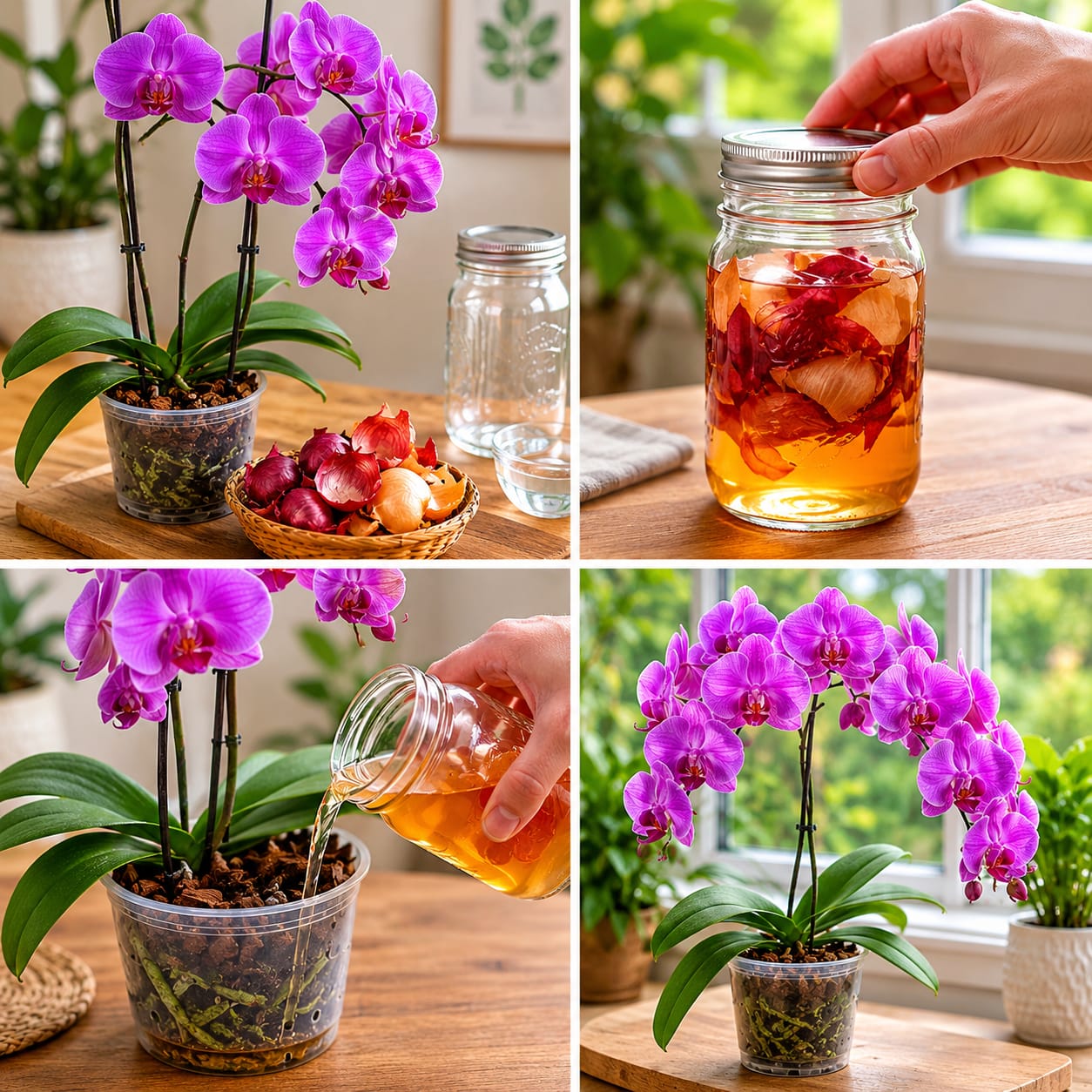
If you want to use onion skins later, store only the dry outer skins in a clean paper bag. Keep them dry and airy. Do not store wet onion pieces. If the skins smell bad or develop mold, throw them away.
Using kitchen scraps in plant care works best when everything is clean, fresh, and simple. Moldy scraps should never go into indoor plant pots.
A Gentle Monthly Orchid Routine
Once a month, inspect the roots, wipe the leaves, check the bark, clean the pot, and remove faded blooms. Water when roots are silver and bark is dry. Fertilize weakly during active growth. Use onion-skin water only occasionally as a mild rinse if the plant is healthy.
This kind of routine builds long-term orchid health. It also helps you notice small problems before they become serious.
Common Mistakes to Avoid
The biggest mistake is overwatering. Orchids need moisture, but they also need air. Another mistake is using regular soil instead of orchid bark. Dense soil can suffocate roots quickly.
With onion-skin water, the most common mistake is using it too strong or leaving onion pieces in the pot. Always strain and dilute. Never let the pot sit in the liquid. Never use old fermented water.
Another mistake is expecting instant blooms from one treatment. Orchids bloom when their whole care routine supports them over time.
Signs the Orchid Is Responding Well
A healthy orchid will have firm leaves, active root tips, and roots that turn green after watering. New leaves may emerge from the crown. New roots may push through the bark. Eventually, a flower spike may appear when the plant has enough energy and the conditions are right.
Do not judge the onion-skin rinse after one day. Plant care results are gradual. The best sign is that the roots remain firm and the plant continues growing steadily.
Final Thoughts
Onion-skin water can be a gentle, zero-waste orchid care idea when used carefully. It should be fresh, strained, diluted, and applied only as an occasional root rinse. It should never be thick, old, or filled with onion pieces. Orchids are elegant but sensitive plants, and their roots need air more than anything else.
The real secret to beautiful orchids is not one kitchen trick. It is the combination of bright indirect light, clean roots, airy bark, correct watering, proper drainage, and patient care. When these basics are in place, small natural routines can become a pleasant extra step in your plant-care ritual.
For a more elegant indoor display, keep the orchid near a bright window, use a clean clear pot, wipe the leaves, remove faded flowers, and let the blooms be the focus. With gentle care and a little patience, an orchid can rebloom beautifully and bring a soft, expensive-looking charm to your home again and again.