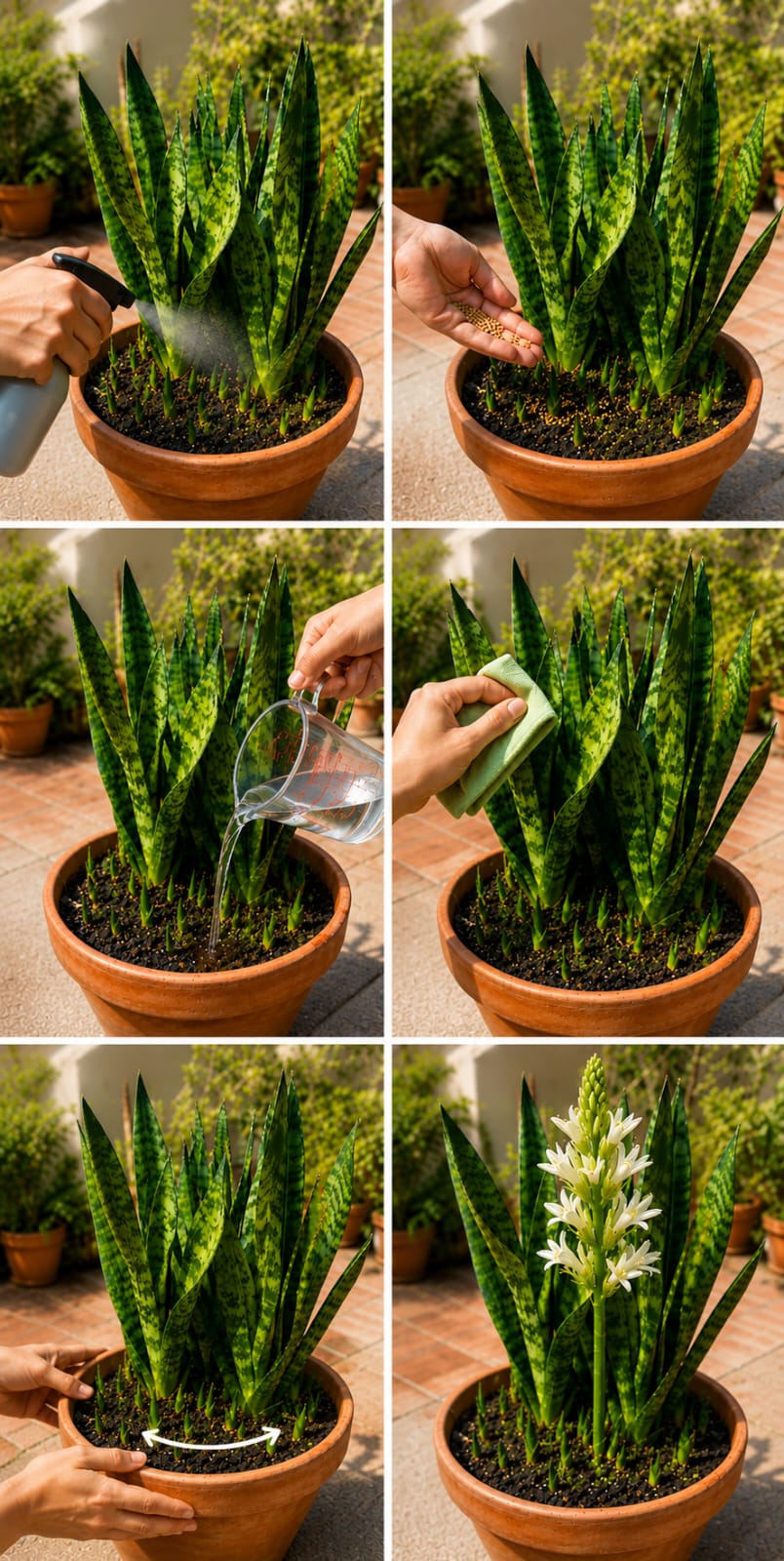
What Snake Plant Flowers Look Like
Snake plant flowers usually appear on a tall spike rising from the center or side of the plant. The flowers may be white, cream, pale green, or lightly fragrant. They can look delicate compared to the bold leaves.
The bloom spike gives the plant a very special appearance. A flowering snake plant on a patio or bright windowsill can become a striking focal point because many people have never seen one bloom.
Flowers are a sign that the plant is mature and has stored enough energy, but a non-flowering snake plant can still be perfectly healthy.
Common Snake Plant Mistakes
Overwatering
This is the biggest mistake. If leaves become mushy, yellow, or collapse at the base, the soil may be too wet. Let the soil dry completely and check roots if the plant continues to decline.
Using Heavy Soil
Dense soil keeps roots wet for too long. Use a chunky, fast-draining mix.
Too Little Light
A snake plant may survive in shade, but it may not produce pups or strong color. Move it to brighter indirect light for better growth.
Too Much Fertilizer
Overfeeding can burn roots and damage leaves. Feed lightly during active growth only.
Water Trapped in the Crown
Water sitting between leaves can cause rot. Water the soil, not the leaf center.
How to Fix a Weak Snake Plant
If the plant looks weak, first check the roots and soil. Remove the plant from the pot if necessary. Healthy roots are firm and pale or orange-tan. Rotten roots are mushy, dark, and may smell bad.
Cut away rotten parts with clean scissors. Let the remaining healthy rhizomes dry for a short time, then repot in fresh dry fast-draining soil. Wait several days before watering if rot was present.
Place the plant in bright indirect light and water sparingly until it recovers.
How to Style Snake Plants Indoors
Snake plants are ideal for modern indoor styling because their vertical shape adds structure. Use them beside sofas, entry doors, desks, beds, or low cabinets. A tall snake plant in a simple pot can make a room look organized and sophisticated.
For a clean style, choose white, black, or matte ceramic pots. For a warm natural look, use terracotta. For a luxury look, place the pot on a wooden plant stand or next to a soft curtain near a bright window.
Because snake plants have bold leaves, they do not need busy decoration. A simple pot and clean leaves are enough.
How to Style Snake Plants Outdoors
On patios and balconies, snake plants look excellent in terracotta pots, stone planters, or large bowls. Their upright leaves contrast beautifully with trailing plants, ferns, and flowering annuals.
Place them where they receive morning sun or bright shade. Use them as vertical accents near seating areas, balcony corners, outdoor shelves, or entry steps.
A large terracotta pot filled with a thick cluster of snake plants can look expensive, sculptural, and low-maintenance.
Creating a Cleaner Plant Display
A snake plant display looks best when the soil surface is tidy. Remove dead leaves, weeds, and fallen debris. Add a thin layer of decorative gravel only if the soil still dries well. Do not use a thick moisture-trapping layer.
Clean the outside of the pot and saucer. Wipe water marks from terracotta or ceramic if you prefer a polished look. Keep the area around the plant uncluttered.
Simple maintenance makes the plant look healthier and more intentional.
A Monthly Snake Plant Routine
Once a month, check the soil, inspect the base, wipe the leaves, rotate the pot, and look for pups. Water only if the soil is dry. During spring and summer, feed lightly if the plant is actively growing.
Every few months, check whether the plant is becoming too crowded. If the pot is cracking or roots are pushing strongly, repot or divide. Otherwise, allow the plant to remain slightly snug.
This calm routine is better than constant attention. Snake plants prefer to be cared for thoughtfully, not fussed over every day.
Safe Natural Additions for Snake Plants
If you enjoy natural plant care, use very mild options. A small amount of worm castings on the soil surface during spring can help. Diluted compost tea can be used rarely if the plant is outdoors and the soil drains well. Plain water is still the main requirement.
Avoid pouring kitchen liquids, milk, sugar water, oily mixtures, or thick homemade tonics into snake plant soil. These can attract pests and cause rot.
For snake plants, dry and airy is usually safer than rich and wet.
Signs Your Routine Is Working
Positive signs include firm upright leaves, brighter patterns, new pups at the base, stable growth, and soil that dries between waterings. The plant should not smell bad, wobble, or feel mushy at the base.
If a flower spike appears, keep caring for the plant normally. Do not increase watering heavily just because it is blooming. Keep the soil balanced and provide bright light.
The best snake plant growth is steady and strong, not rushed.
Final Thoughts
A beautiful snake plant does not need complicated care. It needs bright indirect light, fast-draining soil, careful watering, clean leaves, gentle feeding, and a stable pot. This simple 6-step routine helps create the conditions for fresh pups, stronger leaves, and possibly a rare flowering spike.
The most important rule is to avoid overwatering. Snake plants are strong because they store water, but that strength becomes a weakness when the soil stays wet too long. Let the roots breathe, give the plant enough light, and feed only lightly during active growth.
With patience, a snake plant can become a bold and elegant feature in your home or patio. Its upright leaves bring structure, its pups create fullness, and its occasional flowers add a surprising touch of beauty. Keep the routine simple, clean, and consistent, and your snake plant will reward you with a healthier, more refined display season after season.