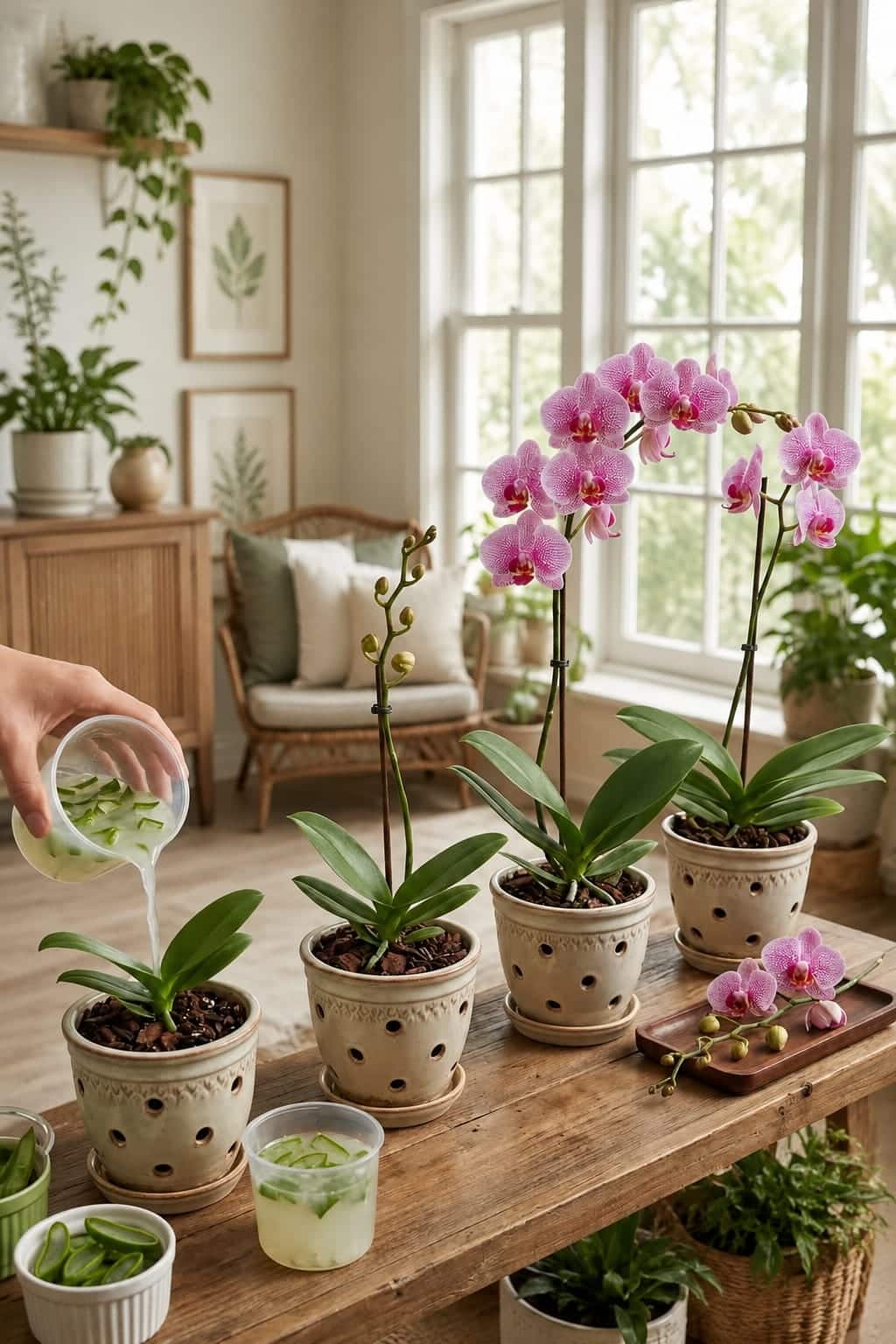
Step-by-Step Aloe Vera Water Routine for Orchids
Step 1: Check the Roots
Before applying aloe water, look at the roots. If your orchid is in a clear pot, inspect the roots through the sides. Healthy roots should look green when wet and silvery when dry. They should be firm, not mushy.
If most roots are rotten, skip the aloe water and repot the plant first. Trim dead roots with clean scissors and place the orchid in fresh bark.
Step 2: Check the Potting Medium
Look at the bark. Fresh bark should look chunky and airy. If it is broken down, soft, compacted, or sour-smelling, it may be holding too much moisture. Aloe water should not be poured into bad bark. Repotting is the better solution.
Step 3: Prepare a Mild Mixture
Blend a small amount of aloe gel with water, strain it, and dilute it. The final liquid should be watery and mild. If it looks too thick, add more water.
Step 4: Apply to the Bark Only
Pour the diluted aloe water around the potting medium, not into the crown. Keep the center of the orchid dry. The liquid should pass through the bark and reach the roots, then drain away.
Step 5: Let the Pot Drain Completely
After applying aloe water, let the pot drain fully. Do not allow the orchid to sit in a saucer or decorative pot filled with liquid. Standing water can lead to root rot.
Step 6: Wait Before Repeating
Do not repeat the treatment quickly. Watch the plant for a few weeks. If the leaves stay firm and new roots appear, the plant is responding well to the overall care routine. If the bark stays wet too long or smells bad, stop using aloe water.
How Often Should You Use Aloe Vera Water?
For orchids, aloe vera water should be used occasionally. Once every four to six weeks during active growth is enough for most plants. Some orchids may need it even less often. It should not be used every time you water.
If the orchid is in low light, growing slowly, or resting after blooming, reduce use. Plants need less support when they are not actively growing. Applying organic liquids too often during slow growth can create buildup in the bark.
If you already fertilize your orchid regularly, use aloe water separately. Do not mix aloe water with fertilizer in the same session unless you are using an extremely mild routine and know your plant tolerates it. Keeping treatments separate makes it easier to see how the orchid responds.
Plain water should still be the main watering method. Aloe water is only an occasional supplement.
Can Aloe Vera Water Save a Weak Orchid?
Aloe vera water may support a weak orchid if the plant still has living roots and the main care problems are corrected. But it cannot save an orchid that has no healthy roots, a rotten crown, or a completely decayed potting medium.
If your orchid is weak, start with diagnosis. Look at the roots. Check the crown. Smell the bark. Observe the leaves. If the leaves are wrinkled but the roots are dry and alive, the plant may need careful rehydration. If the leaves are wrinkled while the pot is wet, the roots may be rotten.
A weak orchid with healthy roots can sometimes improve with gentle care: bright indirect light, correct watering, fresh bark, and occasional mild support like aloe water. A weak orchid with rotten roots needs repotting and root recovery first.
Do not use aloe water as a way to avoid repotting. If the bark is bad, the orchid needs fresh medium.
Using Aloe Vera Water After Repotting
Repotting can stress orchids, especially if many old roots were removed. Aloe vera water may seem like a good idea immediately after repotting, but it is better to be cautious. Freshly trimmed roots can be sensitive.
If the orchid was repotted gently and has many healthy roots, you may use a very diluted aloe solution after the plant has had time to settle. Waiting one or two weeks is often safer than applying it immediately.
If the orchid had severe root rot and many roots were cut away, avoid aloe water at first. Use fresh bark, keep the crown dry, provide bright indirect light, and water carefully. Once new root tips appear, a mild aloe routine may be considered.
The plant’s response should guide you. New root growth is a better sign than any fixed schedule.
Using Aloe Vera Water for Orchid Cuttings or Keikis
Sometimes orchids produce keikis, which are small baby plants that grow on flower spikes or stems. Aloe vera water is sometimes used by plant owners as a gentle rooting support. If you use it for keikis, keep the mixture very weak.
Do not soak a keiki in thick aloe gel. Instead, use a diluted aloe water rinse or lightly moisten the potting medium after the keiki is planted. The young roots need air and gentle moisture.
For orchid cuttings, remember that Phalaenopsis orchids are not propagated the same way as many houseplants. A cut flower spike will not always create a new plant. If you are working with keikis, wait until they have enough roots before separating them from the mother plant.
Aloe water may support the process, but it does not replace proper timing and correct propagation methods.
Can Aloe Vera Water Replace Orchid Fertilizer?
No. Aloe vera water is not a complete orchid fertilizer. Orchids need balanced nutrients, including nitrogen, phosphorus, potassium, and trace elements. Aloe water may provide mild organic support, but it does not feed the plant in a predictable or complete way.
If your orchid is actively growing, a diluted orchid fertilizer can be used according to label directions. Many orchid growers prefer a weak fertilizer solution applied regularly during growth, then reduced during rest periods.
Aloe water can be used as an occasional natural supplement, but it should not be the only feeding method if your orchid needs nutrition.
How to Combine Aloe Water With Normal Orchid Fertilizer
The safest approach is to keep aloe water and fertilizer on separate schedules. For example, you might water with plain water most of the time, fertilize lightly during active growth, and use aloe water once every month or two as a separate gentle rinse.
Do not use strong fertilizer and aloe water together in the same watering. Too many inputs can stress the roots or make the bark hold residue.
If your orchid is growing well, do not keep increasing treatments. Healthy orchids often need less intervention, not more. Consistency is better than constant experimentation.
The Best Light for Orchid Blooming
Light is one of the most important parts of orchid flowering. A Phalaenopsis orchid usually needs bright indirect light to bloom well. If the plant is kept too far from a window, it may produce leaves but no flowers.
A bright room with filtered light is ideal. East-facing windows often work well. South or west windows may need a sheer curtain to prevent leaf burn. The leaves should be medium green. Very dark green leaves can mean too little light. Yellowish or scorched leaves can mean too much direct sun.
If your orchid is not blooming but the roots look healthy, try improving light before adding more treatments. Aloe water cannot replace the energy the plant gets from light.
Watering Orchids Correctly
Correct watering is more important than any homemade tonic. Orchids should be watered when the potting medium is nearly dry and the roots are turning silver-gray. After watering, the roots should turn green and the pot should drain completely.
Do not water on a strict calendar without checking the plant. A pot in bark dries differently from a pot in moss. A warm bright room dries faster than a cool shaded room. A clear pot helps you see what is happening inside.
When using aloe water, treat it as one watering session. Do not water with plain water and then immediately add aloe water. Too much liquid at once can keep the bark wet too long.
Always keep the crown dry. If water accidentally collects in the crown, gently blot it with a tissue.
Why Orchid Bark Matters
Orchid bark breaks down over time. When bark becomes old and soft, it holds more moisture and less air. This can lead to root rot. If your orchid has not been repotted in a long time and the bark looks decomposed, aloe water will not fix the problem.
Fresh bark gives orchid roots the air they need. A healthy potting medium should be chunky, clean, and well-draining. Some mixes include bark, charcoal, perlite, or sphagnum moss. The best mix depends on your environment and watering habits.
If you tend to overwater, a chunkier bark mix may be safer. If your home is very dry, a small amount of moss may help hold moisture. The goal is balance: enough moisture for the roots, enough air to prevent rot.
Can Aloe Water Help With Orchid Root Growth?
Aloe water may support root growth indirectly by providing a gentle, moist, organic rinse. Some growers like using aloe in rooting routines because it feels mild and natural. However, root growth depends mainly on the orchid’s overall condition.
New roots appear when the plant has enough energy, warmth, moisture balance, and healthy growing points. If the orchid is too cold, too dark, or sitting in rotten bark, aloe water will not create strong roots.
To encourage roots, place the orchid in bright indirect light, keep temperatures stable, use fresh bark, water correctly, and avoid disturbing the plant too often. Aloe water can be used occasionally as a supportive step, but the basics do most of the work.
Can Aloe Water Help Orchid Leaves?
Healthy orchid leaves are firm, smooth, and slightly glossy. Wrinkled leaves often indicate hydration problems, but the cause can be either underwatering or root rot. If the roots are healthy and dry, the plant may need better watering. If the roots are rotten, the leaves wrinkle because the plant cannot absorb water.
Aloe water may support a plant with healthy roots, but it will not restore leaves if the root system is failing. It also will not instantly remove wrinkles from old leaves. Leaf recovery can take time, and some damage may remain.
Do not wipe orchid leaves with thick aloe gel. It can leave residue and attract dust. If you want to clean leaves, use plain water and a soft cloth.
Should You Spray Aloe Water on Orchid Leaves?
For most home growers, it is better to apply aloe water to the potting medium rather than spraying it on the leaves. Spraying can leave residue, especially if the mixture is not strained well. It may also collect in the crown or leaf joints.
If moisture sits in the crown, crown rot can develop. This is one of the most dangerous problems for Phalaenopsis orchids. To avoid this risk, keep homemade liquids away from the crown and flowers.
Apply aloe water to the bark and roots only, then let the pot drain.
What Results Can You Realistically Expect?
Realistic results from aloe vera water are gradual. You may notice new root tips, firmer leaves over time, or steady growth during the active season. If the plant has proper light and care, it may eventually produce a new flower spike.
You should not expect flowers within a few days. Orchids bloom according to their own rhythm. Some bloom once a year. Some bloom more often when conditions are excellent. A homemade tonic can support the plant, but it cannot rewrite its natural cycle.
The best sign of success is root growth. If you see fresh green root tips, the orchid is moving in the right direction. Strong roots create the foundation for future blooms.
Warning Signs After Using Aloe Vera Water
If the bark becomes slimy, sour-smelling, or stays wet for too long after using aloe water, the mixture may have been too thick or used too often. Stop using it and flush the pot with plain water.
If fungus gnats appear, pause all homemade organic liquids. Gnats are attracted to moist organic environments. Let the bark dry properly between waterings and consider repotting if the medium has broken down.
If roots turn brown or mushy, check whether the pot is staying too wet. Aloe water may not be the direct cause, but extra moisture can contribute to problems if the orchid is already vulnerable.
If leaves become limp while the bark is wet, inspect the roots. This often points to root damage, not lack of water.
A Safer Orchid Recovery Plan With Aloe Vera
If your orchid is weak but still has living roots, start with plain care first. Place it in bright indirect light. Check the bark. Water only when nearly dry. Keep the crown dry. Remove any dead roots if repotting is needed.
After the orchid stabilizes, you may use a very diluted aloe water rinse once. Then wait. Do not keep applying more treatments because you are impatient. Orchids need time.
If new roots appear, continue with stable care. If the plant declines, stop aloe water and reassess the roots and medium.
Aloe water is safest when the plant is already moving toward recovery. It is not the first step for severe damage.
Common Mistakes to Avoid
- Using thick aloe gel directly on orchid roots – always dilute and strain.
- Pouring aloe water into the crown – the crown must stay dry to prevent rot.
- Using aloe water too often – once every 4–6 weeks is enough, many orchids need it less.
- Using aloe water on rotten roots – rotten roots need trimming and fresh bark, not a tonic.
- Expecting instant flowers – aloe supports indirectly; blooming depends on light, roots, temperature, and time.
- Storing aloe water for many days – fresh mixtures are safer; old mixtures can ferment.
Frequently Asked Questions
Can aloe vera water make orchids bloom?
Aloe vera water cannot force orchids to bloom by itself. It may support root health, but blooming depends mainly on light, healthy roots, proper watering, temperature cues, and plant maturity.
How often should I use aloe vera water on orchids?
Use it occasionally, about once every four to six weeks during active growth. Do not use it every time you water.
Can I put aloe gel directly on orchid roots?
It is better not to use thick gel directly on roots. Dilute the gel in water, strain it well, and apply it as a thin liquid through the bark.
Can aloe vera water save a dying orchid?
Not by itself. A dying orchid needs diagnosis first. Check for root rot, crown rot, dehydration, old bark, pests, or poor light. Aloe water may support recovery only if the plant still has living roots.
Should I spray aloe water on orchid leaves?
It is safer to avoid spraying orchid leaves, especially near the crown. Apply diluted aloe water to the potting medium instead.
Can I use store-bought aloe vera gel?
Only if it is pure aloe with no fragrance, alcohol, dyes, or additives. Fresh aloe from a plant is usually safer.
What should I do if the bark smells bad after using aloe water?
Stop using aloe water, flush the pot with plain water, and let it drain. If the smell continues, repot the orchid into fresh bark.
🌿 Remember: Aloe vera water is a gentle supplement, not a miracle cure. Healthy roots, bright indirect light, fresh bark, careful watering, and patience are the real foundations of orchid health. Use aloe water occasionally as a small supportive step, and let consistent care do the real work.