How Often Should You Use Onion and Garlic Water?
For orchids, once every four to six weeks is more than enough, and even that may be too frequent for some plants. This should be an occasional routine, not a weekly habit.
If your orchid is healthy and growing, one light application during active growth may be enough. If the orchid shows no need for it, you do not have to use it at all. More treatments do not mean better results.
If you already use a balanced orchid fertilizer, be careful not to overload the plant with too many different inputs. Onion and garlic water should not be mixed with fertilizer in the same session. Keep routines separate and gentle.
During winter or low-light periods, use less or stop completely. Orchids grow more slowly in lower light and may not need extra supplements.
Can Onion and Garlic Water Replace Orchid Fertilizer?
No. Onion and garlic water is not a complete orchid fertilizer. Orchids need balanced nutrition, including nitrogen, phosphorus, potassium, and trace elements. Onion and garlic water may contain small organic compounds, but it does not provide complete nutrition in predictable amounts.
If your orchid is actively growing, a diluted orchid fertilizer used according to label directions is more reliable for feeding. Many orchid growers use fertilizer weakly and regularly rather than heavily.
Onion and garlic water can be an occasional natural supplement, but it should not replace a proper feeding routine if your orchid needs nutrients.
How to Combine This Method With Normal Orchid Care
The best way to use onion and garlic water is to keep it separate from normal fertilizing. For example, you might water with plain water most of the time, fertilize lightly when the orchid is actively growing, and use onion-garlic water only occasionally as a separate gentle rinse.
Do not apply fertilizer, onion water, garlic water, and other homemade mixtures all in the same week. Orchids do not need complicated care. Too many treatments can stress the roots and make it harder to understand what is helping or hurting.
A simple routine is better: bright indirect light, careful watering, fresh bark, good drainage, occasional weak fertilizer, and rare homemade support if needed.
The Real Key to Orchid Root Health
Healthy roots are the foundation of orchid success. If the roots are strong, the plant can absorb water, support leaves, and eventually produce flowers. If the roots are damaged, everything else becomes harder.
To keep roots healthy, use a pot with drainage and airflow. Clear plastic orchid pots are helpful because they allow you to see the roots. Use chunky orchid bark or an appropriate orchid mix. Avoid regular potting soil for Phalaenopsis orchids because it holds too much moisture and suffocates the roots.
Water when the roots turn silver-gray and the potting medium is nearly dry. After watering, the roots should turn green. Then let the pot drain completely.
Do not let water sit in the crown. Do not leave the pot standing in water. Do not keep the bark constantly wet. These basics matter much more than any homemade tonic.
How Light Affects Orchid Blooming
Light is one of the biggest reasons orchids fail to rebloom. A Phalaenopsis orchid needs bright indirect light. If the plant is in a dark room, it may survive but not flower well.
A bright windowsill with filtered light is often ideal. East-facing windows are usually good. South or west windows may need a sheer curtain to prevent leaf burn. Leaves should be medium green. Very dark green leaves can mean the plant is not getting enough light. Yellowish or scorched leaves can mean too much direct sun.
If your orchid has healthy leaves and roots but refuses to bloom, move it gradually to brighter indirect light. Do not rely on onion and garlic water to solve a light problem.
Watering Orchids Correctly
Orchids should not be watered like ordinary houseplants. The best watering routine depends on the potting medium, pot type, temperature, humidity, and light. A plant in bark may dry faster than one in moss. A plant in a warm bright room may need water more often than one in a cool room.
Instead of watering on a strict calendar, look at the roots. When the roots are green, they are still hydrated. When they turn silver-gray and the bark feels nearly dry, it may be time to water.
Water thoroughly, then let the pot drain. Avoid small daily sips. Constant light moisture can keep the bark too damp and encourage rot.
If you use onion and garlic water, treat it as one watering session. Do not water normally and then add the mixture immediately after. Too much liquid at once can keep the pot wet for too long.
Repotting Orchids With Onion and Garlic Nearby
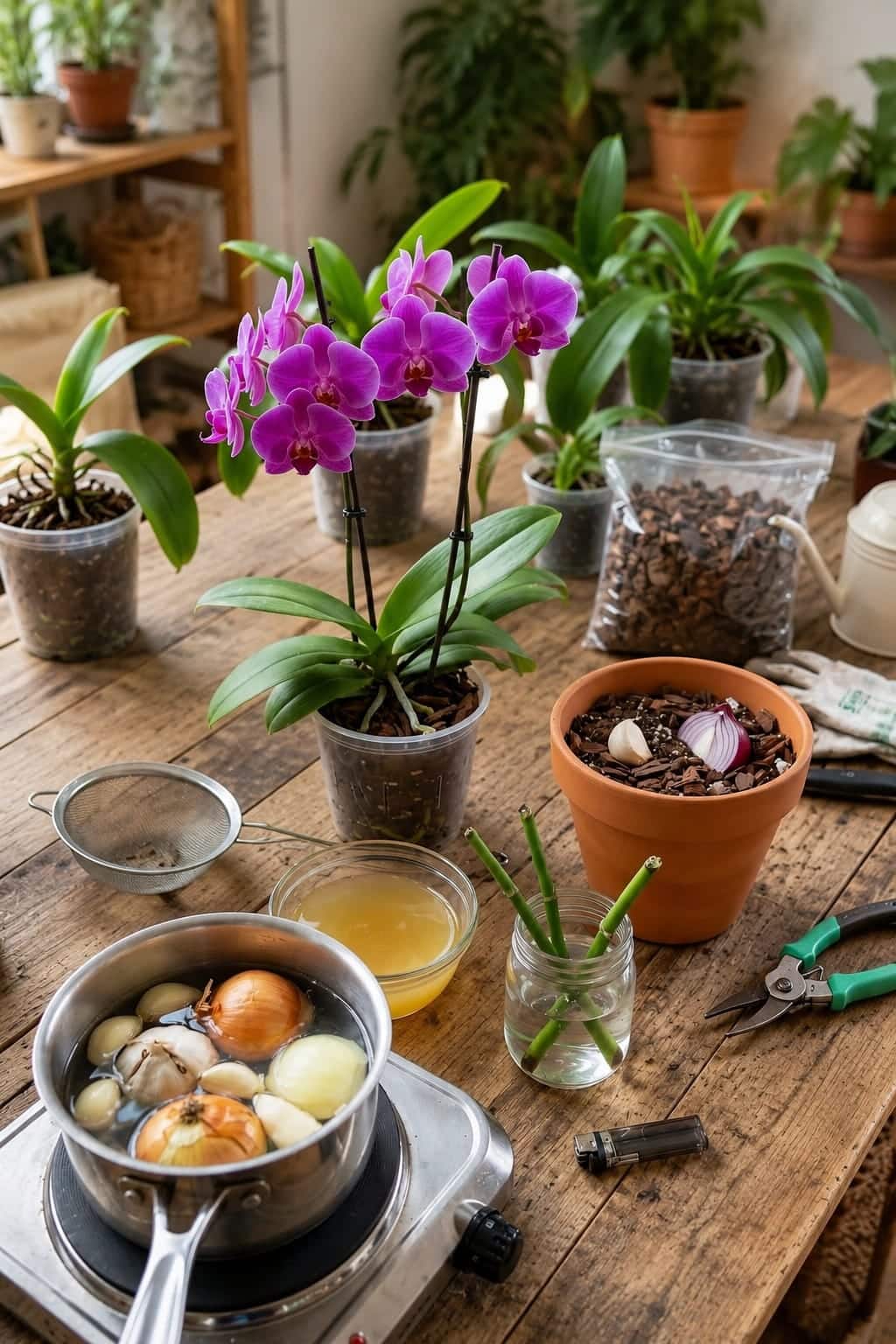
The image shows orchid bark and a pot prepared with onion and garlic pieces. If you are repotting, do not bury raw onion or garlic pieces directly into the orchid pot. They can rot inside the bark and damage the root environment.
Instead, repot the orchid into fresh bark without food scraps. If you want to use onion and garlic water, prepare the liquid separately, strain it, dilute it, and apply it only after the plant has settled and only if the roots are healthy enough.
After repotting, orchids often need time to adjust. If many roots were trimmed, wait a few weeks before adding any homemade supplement. Plain water and stable conditions are safer during the first recovery period.
Can Onion and Garlic Water Help With Pests?
Garlic and onion are often discussed in natural pest routines because of their strong smell. However, orchids are sensitive, and homemade pest treatments can cause leaf or root stress if they are too strong.
If your orchid has pests such as mealybugs, scale, or spider mites, first identify the pest correctly. Remove visible pests with a cotton swab and appropriate treatment. Do not rely only on onion and garlic water, especially for serious infestations.
Also, avoid spraying strong onion-garlic liquid on orchid flowers or leaves. It can leave residue, smell unpleasant, or irritate delicate tissues. For orchids, soil application in a weak dilution is safer than spraying, unless you are following a carefully tested pest-control method.
Should You Spray Onion and Garlic Water on Orchid Leaves?
For most home growers, it is better not to spray onion and garlic water on orchid leaves. The liquid can leave residue, collect in leaf joints, and create an unpleasant smell. If it runs into the crown, it may increase the risk of crown rot.
Orchid leaves can be cleaned with plain water and a soft cloth. If pest treatment is needed, use a method appropriate for the specific pest and avoid soaking the crown.
Keep onion and garlic water for the potting medium only, and use it lightly.
Can You Soak Orchid Roots in Onion and Garlic Water?
Root soaking should be done carefully. A short soak in a very diluted onion-garlic solution may be used by some growers, but it is safer to avoid soaking weak or damaged roots. Roots that are already stressed may react badly to strong organic liquids.
If you choose to soak, the solution must be very weak, fresh, and fully strained. The soak should be short, not overnight. After soaking, allow the plant to drain well and return it to fresh bark.
For beginners, a light drench through the pot is safer than removing the orchid and soaking the roots.
What Results Can You Realistically Expect?
Realistic results are gradual. Onion and garlic water will not create flowers in a few days. It will not turn dead roots green again. It will not save a plant with a rotten crown.
If the orchid is healthy, you may notice that the root environment stays fresh, the plant continues producing roots, or new growth appears during the growing season. If the plant has proper light and care, it may eventually bloom again.
Good orchid progress often looks small at first. A new green root tip, a firm leaf, or a fresh leaf emerging from the center can be a strong sign that the plant is improving.
Do not judge success by instant flowers. Judge it by root health and steady growth.
Warning Signs After Using Onion and Garlic Water
If the pot begins to smell sour or rotten after using the mixture, stop immediately. This may mean the mixture was too strong, not strained enough, used too often, or applied to old bark that was already breaking down.
If fungus gnats appear, stop using organic liquids and allow the medium to dry more properly. Remove any visible organic residue and consider repotting if the bark smells bad.
If roots become brown or mushy after application, the plant may be staying too wet or reacting to the mixture. Flush the pot with plain water, let it drain, and avoid further treatments.
If leaves become limp while the medium is wet, inspect the roots. Limp leaves with wet roots can be a sign of root rot.
A Safer Orchid Recovery Plan
If your orchid is weak, begin with diagnosis. Remove the decorative pot and look at the roots. If the roots are mostly healthy, improve care gradually. Give bright indirect light, water correctly, and use a gentle feeding routine during growth.
If roots are rotten, remove the orchid from the pot. Trim dead roots with sterilized scissors. Repot into fresh orchid bark. Keep the crown dry and place the plant in bright indirect light. Wait for signs of new root growth before using any homemade supplement.
If the orchid is dehydrated but roots are alive, rehydrate carefully with plain water first. Do not start with onion and garlic water. A stressed plant should recover with simple care before receiving extra treatments.
Once the plant is stable and growing, you can consider a mild onion-garlic rinse occasionally if you still want to use the natural routine.
How to Encourage Orchid Blooms Naturally
To encourage orchid blooms, focus on the conditions that trigger flowering. Give the plant bright indirect light. Keep the roots healthy. Water when the potting medium is nearly dry. Use a diluted orchid fertilizer during active growth.
Many Phalaenopsis orchids also respond to a slight drop in nighttime temperature for a few weeks. This can help signal the plant to produce a flower spike. The drop should be gentle, not cold damage.
After the orchid blooms, continue caring for the leaves and roots. The plant needs time to rebuild energy before the next bloom cycle. Do not force constant flowering with heavy feeding or repeated treatments.
A strong orchid blooms because it has stored enough energy. Your job is to help it build that energy safely.
Common Mistakes to Avoid
- Placing raw onion or garlic pieces directly into orchid bark (they can rot and attract pests).
- Using a strong, undiluted mixture (orchids need very gentle dilution).
- Pouring liquid into the crown (the crown must stay dry to prevent rot).
- Using the treatment too often (once every 4–6 weeks is enough, if at all).
- Using onion and garlic water to fix root rot (rotten roots need trimming, fresh bark, and better watering).
- Expecting instant blooms (flowering depends on light, root health, temperature, and time).
Frequently Asked Questions
Can onion and garlic water make orchids bloom?
It cannot force orchids to bloom by itself. It may support a healthy root-care routine, but blooming depends mostly on light, healthy roots, proper watering, temperature, and plant maturity.
Can I put onion and garlic pieces directly in orchid bark?
No. Fresh onion and garlic pieces can rot in the bark, smell bad, attract insects, and hold moisture around the roots. Use only strained and diluted liquid if you choose this method.
How often should I use onion and garlic water on orchids?
Use it only occasionally, such as once every four to six weeks during active growth. Do not use it weekly or every time you water.
Should I spray onion and garlic water on orchid leaves?
It is better not to spray it on orchid leaves or flowers. It can leave residue, smell strong, and collect in the crown or leaf joints. Apply only to the potting medium if used.
Can onion and garlic water save a dying orchid?
No. A dying orchid needs diagnosis first. Check for root rot, crown rot, dehydration, pests, or old bark. Onion and garlic water is not a rescue cure.
Can I use garlic water alone?
Garlic water alone can be very strong, so it must be diluted heavily. For orchids, any garlic-based liquid should be weak, fresh, strained, and used rarely.
Can I use onion water alone?
Onion water may also be used in a very diluted form, but it should still be strained well and applied only occasionally. Avoid using it on damaged roots.
What should I do if the pot smells bad after using it?
Stop using the mixture. Flush the pot with plain water and let it drain completely. If the bark continues to smell sour or rotten, repot into fresh orchid bark.
🌿 Remember: Onion and garlic water is a gentle homemade tonic, not a miracle treatment. Healthy orchid roots, bright indirect light, fresh bark, and careful watering are far more important than any single kitchen ingredient. Use this method rarely and always with respect for the delicate nature of orchid roots.