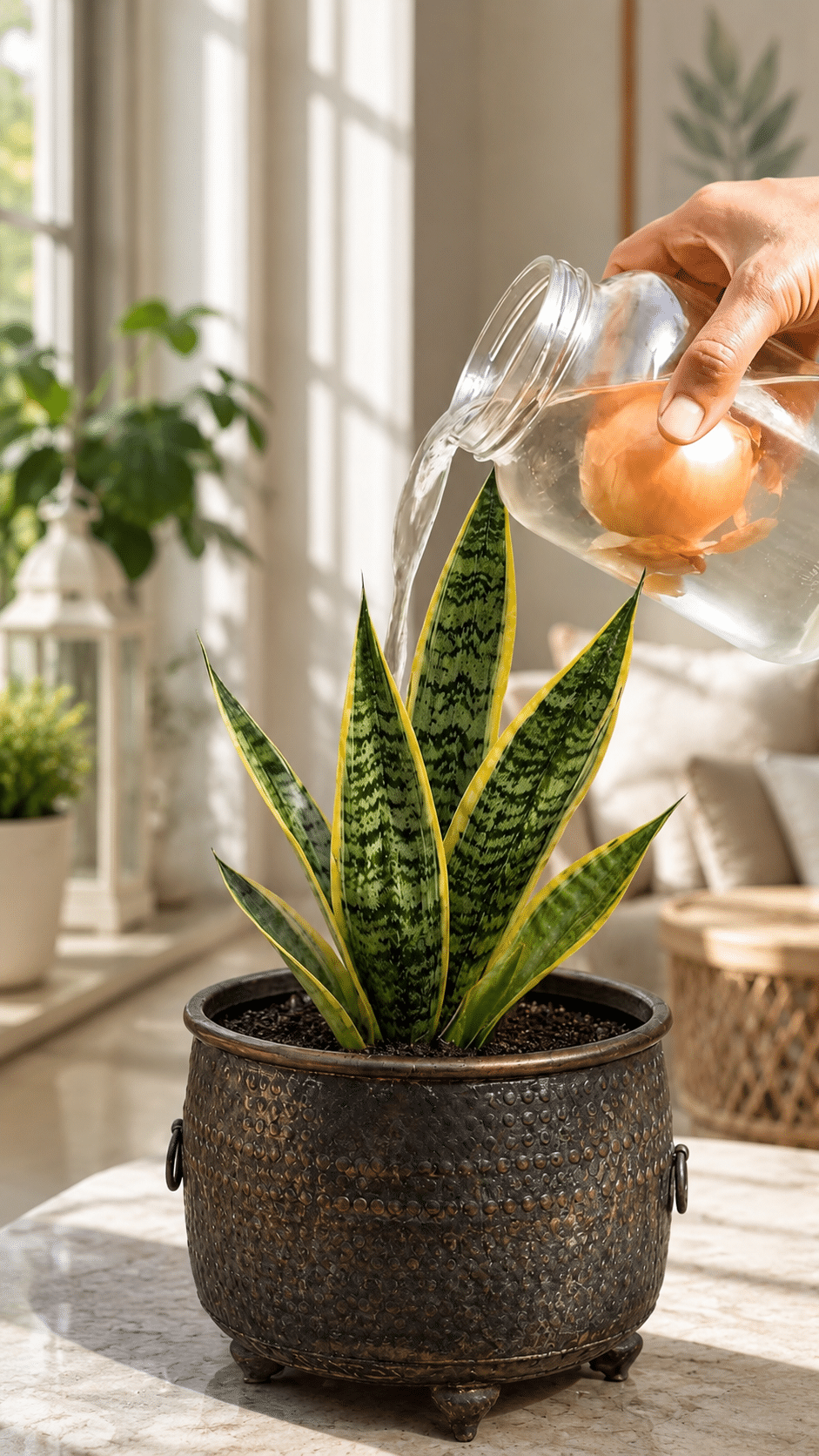
Choosing the Right Pot
A snake plant pot must have drainage holes. This is essential. Without drainage, water collects at the bottom and can rot the roots.
A pot that is too large can also be risky because extra soil holds extra moisture. Snake plants often grow best in a pot that is only slightly larger than the root system.
A slightly snug pot can encourage the plant to fill the space and produce pups, but the plant should not be so crowded that the container cracks or the soil becomes exhausted.
Terracotta pots can help because they dry faster. Plastic, ceramic, and metal-style decorative pots can work if drainage is good and watering is careful.
How to Water Snake Plants Correctly
Water a snake plant only when the soil is dry. Do not water on a strict schedule. The plant’s needs change depending on light, season, pot size, and temperature.
When it is time to water, water thoroughly and let the excess drain away. Then leave the plant alone until the soil dries again.
Avoid small daily sips. Frequent light watering can keep the surface damp and encourage pests without properly hydrating the deeper roots.
During winter or low-light periods, water much less often. A snake plant may go several weeks without needing water.
Onion water should follow the same rule: use it only when the plant is truly ready for watering.
Why Overwatering Stops Growth
Overwatering is the most common snake plant problem. The plant stores water in thick leaves and rhizomes, so it does not need constant moisture.
When the soil stays wet, roots lose oxygen. Rhizomes may soften and rot. Once this happens, the plant cannot produce strong new leaves or pups.
Signs of overwatering include yellow leaves, soft leaf bases, mushy rhizomes, sour-smelling soil, and leaves falling over. If these signs appear, stop watering and inspect the roots.
Onion water will not fix overwatering. It may make it worse because it adds more liquid and organic material to the pot.
How to Check Snake Plant Roots and Rhizomes
If your snake plant is yellowing, soft, or declining, remove it from the pot and inspect the roots. Healthy roots are firm, and healthy rhizomes feel solid.
Rotten roots may be brown, black, mushy, hollow, or smelly. Rotten rhizomes are soft and may collapse when touched. These parts must be removed with clean scissors or a clean knife.
After trimming rot, let healthy sections dry and callus before repotting. Use fresh fast-draining soil and a pot with drainage.
Do not apply onion water immediately after serious root trimming. Let the plant recover with simple care first.
Can Onion Water Help With Pests?
Onion has a strong smell, and some gardeners use onion-based mixtures as a mild pest deterrent. However, onion water is not a complete pest-control solution.
If your snake plant has mealybugs, scale, spider mites, or fungus gnats, identify the pest and treat it properly. Wiping leaves, isolating the plant, and using a suitable houseplant-safe treatment may be necessary.
Onion water may discourage some minor soil issues temporarily, but if left too strong or used too often, it can also attract fungus gnats by adding organic material to damp soil.
Use onion water only as mild support. Do not rely on it as your only pest treatment.
Can Onion Water Replace Fertilizer?
No. Onion water cannot replace fertilizer. It does not provide complete nutrition. Snake plants do not need heavy feeding, but they may benefit from light fertilizer during the growing season.
Use a cactus or succulent fertilizer diluted to half strength once or twice in spring or summer. Do not fertilize during winter if the plant is not actively growing.
If you use fertilizer, do not apply onion water on the same day. Keep treatments separate and gentle.
Too much feeding can cause brown tips and root stress. A snake plant needs light feeding, not constant boosting.
Can Onion Water Fix Yellow Leaves?
No. Onion water will not turn yellow snake plant leaves green again. Yellowing usually comes from overwatering, root rot, cold stress, poor drainage, or natural aging.
If one old leaf slowly turns yellow, it may simply be aging. If several leaves yellow or soften near the base, check the soil and roots immediately.
Do not use onion water on a yellowing plant if the soil is wet. That can worsen root problems.
Remove badly damaged leaves and correct the cause so future growth stays healthy.
Can Onion Water Fix Brown Tips?
Onion water usually does not fix brown tips. Brown tips can be caused by inconsistent watering, mineral buildup, overfertilizing, cold drafts, sunburn, or physical damage.
Old brown tissue will not turn green again. You can trim brown tips with clean scissors if you want the plant to look neater.
To prevent new brown tips, improve watering consistency, avoid overfeeding, protect the plant from cold drafts, and provide bright indirect light.
If brown tips are caused by mineral buildup, flushing the soil with plain water or repotting may help more than onion water.
How to Clean Snake Plant Leaves
Clean leaves help a snake plant absorb light better. Dust can reduce the amount of light reaching the leaf surface, which can slow growth.
Wipe the leaves gently with a damp cloth every few weeks. Use plain water only. Do not wipe leaves with onion water, milk, oil, or leaf-shine products.
Support each leaf as you clean it so it does not bend or crack. Clean leaves look better and function better.
Better light absorption means more energy for roots and rhizomes, which may help the plant produce new shoots over time.
How to Encourage Baby Shoots Naturally
To encourage pups, give the snake plant bright indirect light. Keep it warm. Use fast-draining soil. Water only when dry. Keep it in a pot with drainage holes.
During spring and summer, feed lightly with a diluted cactus fertilizer. Avoid heavy feeding. Snake plants are not hungry plants.
Let the plant become slightly snug in its pot. A slightly snug root system may encourage rhizomes to push out new shoots, but the plant should still be healthy and not rotting.
Be patient. Snake plants often produce pups suddenly after a long quiet period.
⚠️ Important: Never leave onion pieces in the pot. They can rot, attract pests, and harm the root environment. Always strain the liquid well.
What to Do If Onion Water Smells Bad
If your onion water smells sour, rotten, or fermented, do not use it. Throw it away and make a fresh mild batch another time.
If the soil smells bad after using onion water, stop using it immediately. Let the soil dry. Improve airflow. Check whether the pot is draining properly.
If the smell continues, repot the plant into fresh fast-draining mix and inspect the roots for rot.
A healthy snake plant pot should smell earthy and clean, not sour or like rotting food.
What to Do If Fungus Gnats Appear
If fungus gnats appear after onion water, stop using all homemade organic treatments. Let the top layer of soil dry properly between waterings.
Use yellow sticky traps to catch adult gnats. Remove any decaying material from the soil surface. Make sure the pot is not staying too wet.
If the problem continues, use a suitable houseplant-safe gnat treatment.
Fungus gnats are usually a sign of damp organic soil. Snake plants should not be kept in that kind of environment.
A Simple Onion Water Routine for Snake Plants
Use onion water only as a rare support. Place one small onion slice or a few onion peels in two cups of water for one to two hours. Remove all onion pieces and dilute the liquid with two more cups of plain water.
Apply a small amount to the soil only when the plant is due for watering. Let the pot drain fully. Do not repeat for at least six to eight weeks.
Between treatments, use plain water. Keep the plant in bright indirect light. Allow the soil to dry between waterings. Use fast-draining soil and a pot with drainage.
This routine is much safer than adding onion directly to the pot.
Common Mistakes to Avoid
- Putting onion pieces directly into the soil – they can rot and attract pests.
- Using onion water too strong – a mild diluted infusion is safer.
- Using onion water too often – once every six to eight weeks is enough if used at all.
- Applying onion water to wet soil – snake plants need dry-down between waterings.
- Expecting onion water to create instant pups – baby shoots come from healthy rhizomes.
- Using onion water as fertilizer – it is not complete plant food.
- Ignoring light – bright indirect light is the real growth driver.
Frequently Asked Questions
Is onion water good for snake plants?
Onion water can be used occasionally as a mild natural support, but it is not necessary for most snake plants. Proper light, soil, drainage, and watering are more important.
Can onion water make a snake plant grow faster?
Not directly. It may support the soil slightly, but faster growth depends mostly on bright indirect light, healthy roots, warmth, and correct watering.
Can onion water help snake plants produce pups?
Onion water cannot force pups. Baby shoots come from healthy rhizomes. Good light, fast-draining soil, and proper watering encourage pups best.
How do I make onion water?
Soak one small onion slice or a few onion peels in two cups of water for one to two hours. Remove all onion pieces, dilute with two more cups of water, and use fresh.
How often should I use onion water?
Use it rarely, about once every six to eight weeks during active growth. Do not use it weekly.
Can I put onion slices directly in the pot?
No. Onion slices can rot, smell bad, attract fungus gnats, and create sour soil. Use strained diluted onion water instead.
Can onion water replace fertilizer?
No. Onion water is not complete fertilizer. Use a diluted cactus or succulent fertilizer once or twice during the growing season if feeding is needed.
What should I do if the soil smells after onion water?
Stop using onion water, let the soil dry, check drainage, and repot if the smell continues. Inspect roots and rhizomes for rot.
🌿 Onion water is a gentle occasional supplement, not a miracle cure. For a fuller snake plant with strong roots and more baby shoots, focus on bright indirect light, fast-draining soil, proper watering, and warm, stable care. Use onion only as a rare support – and let healthy rhizomes do the real work.