How to Create a Cleaner Luxury Display With Vinca
Vinca flowers look beautiful when styled simply. Choose a neutral pot in beige, white, terracotta, stone gray, or matte black. A clean rounded pot makes the plant look fuller and more expensive. Avoid pots that are too small because cramped roots dry quickly and stress the plant.
For a balcony, place several vinca pots in matching containers along a railing or wall. Repeating the same pot color creates a designer look. Pink vinca looks especially elegant in cream or stone-colored containers. White vinca looks fresh in terracotta or charcoal pots. Purple vinca can look rich in dark planters.
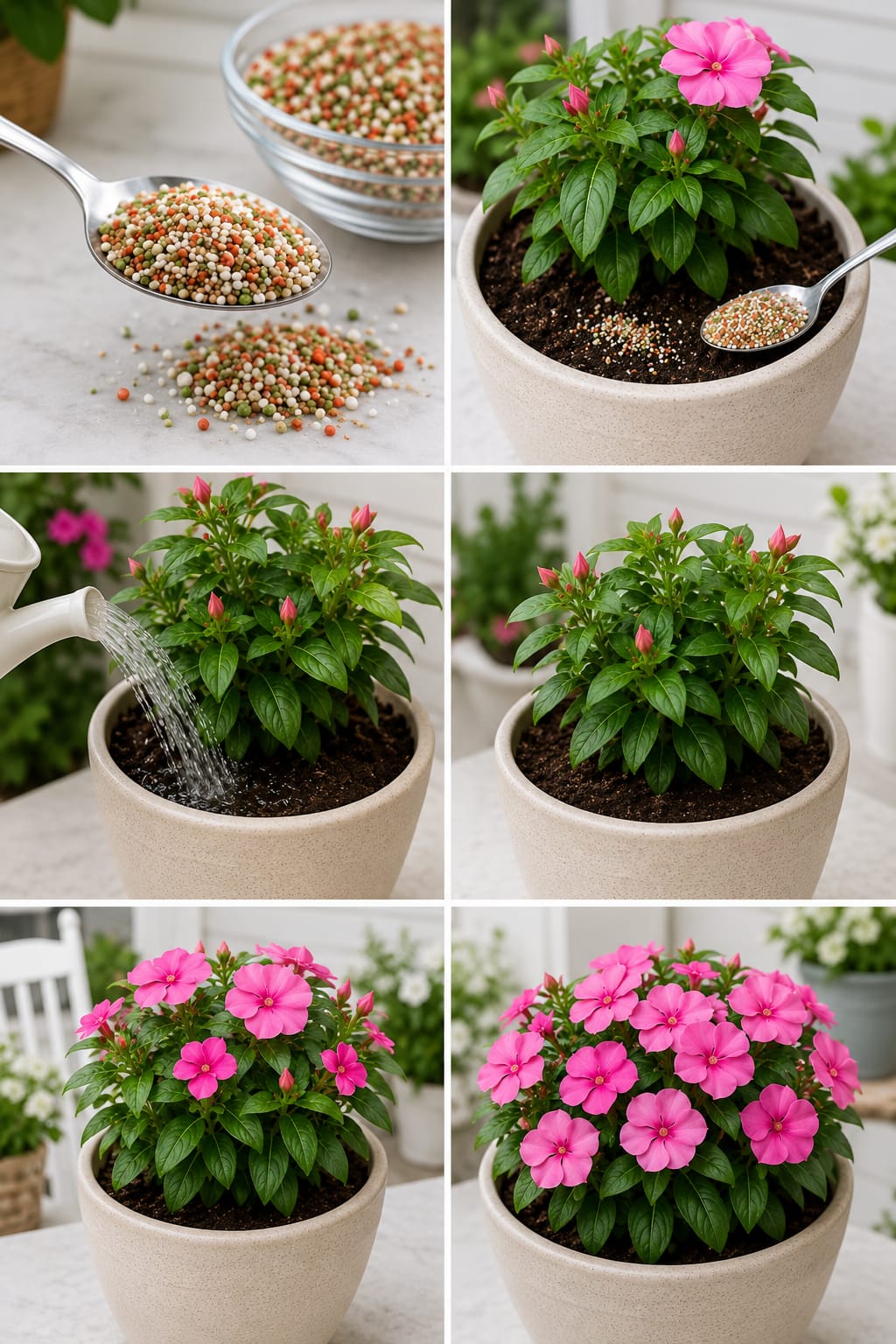
Keep the soil surface clean. After adding fertilizer, lightly mix it into the surface and remove spilled granules from the pot edge. Wipe the rim of the container after watering. Small details make the display look more polished.
Best Companion Plants for Vinca
Vinca can be grown alone or mixed with other sun-loving plants. Good companions include petunias, lantana, marigolds, ornamental grasses, and trailing sweet potato vine. Choose plants that also prefer good drainage and bright light.
Avoid mixing vinca with plants that need constantly wet soil. Different watering needs in one pot can cause problems. If one plant wants dryness and another wants moisture, one of them will suffer.
For an elegant container, plant vinca in the center and add a trailing plant around the edge. This creates height, fullness, and softness.
How to Encourage More Flower Buds
To encourage more buds, give the plant enough sun, avoid overwatering, feed lightly, and keep the plant tidy. Remove damaged leaves. Trim leggy stems. Make sure the pot is not overcrowded.
Vinca blooms best when it is warm and actively growing. If temperatures are too cool, blooming may slow. If the plant is stressed by soggy soil, it may drop buds or stop producing new flowers.
A steady routine is better than sudden changes. Vinca rewards consistency.
Can You Use Liquid Fertilizer Instead?
Yes, liquid fertilizer can also help vinca, but it must be diluted carefully. Some gardeners prefer liquid feeding because it gives quick results. Others prefer slow-release granules because they are easier and cleaner.
If using liquid fertilizer, choose a balanced formula for flowering plants and apply at half strength every two to four weeks during active growth. Do not use liquid fertilizer on dry, stressed plants. Water lightly first if the soil is very dry, then fertilize later.
Do not use liquid fertilizer and slow-release granules heavily at the same time. Combining too many feeding methods can overfeed the plant.
Seasonal Care for Vinca
During warm months, vinca grows and blooms strongly. This is the best time to feed lightly and maintain regular watering. During cooler months, growth slows. Reduce feeding and watering. If your climate is cold, vinca may be grown as an annual and replaced each season.
In warm climates, vinca can continue growing for a long time. In that case, refresh the potting mix when it becomes compacted and prune lightly to keep the plant neat.
Common Problems and Simple Fixes
If leaves turn yellow and soil is wet, reduce watering and improve drainage. If leaves wilt but soil is dry, water deeply. If flowers are few, increase light. If stems are leggy, trim lightly and move to a brighter location. If leaves have spots, avoid wetting foliage and improve airflow.
If the plant suddenly declines after fertilizing, remove extra granules and flush the soil with clean water. Let the pot drain fully. Avoid adding more fertilizer until the plant recovers.
Balcony Care Tips
Balcony vinca pots can dry faster because of wind and sun. Check moisture more often during hot days. Use heavier pots if the balcony is windy. Place pots where they receive light but are protected from extreme afternoon heat if temperatures are very high.
Group pots together for a lush look, but leave space for airflow. Crowding plants too tightly can increase humidity around leaves and encourage disease.
Final Thoughts
Slow-release fertilizer granules can be a simple and effective way to support vinca flowers when used correctly. A light sprinkle around the soil, followed by gentle watering and good drainage, can help the plant stay green, full, and productive through the warm season.
The secret is balance. Vinca needs sunlight, airy soil, careful watering, and only moderate feeding. Fertilizer is not a magic fix, but it can help a healthy plant perform beautifully. With the right routine, vinca can become one of the easiest plants for creating a colorful, clean, and elegant garden display.
Whether placed on a balcony, patio table, front step, or sunny windowsill, a well-fed vinca pot brings instant charm. Its glossy leaves and bright flowers create a fresh look that feels cheerful, polished, and naturally luxurious.