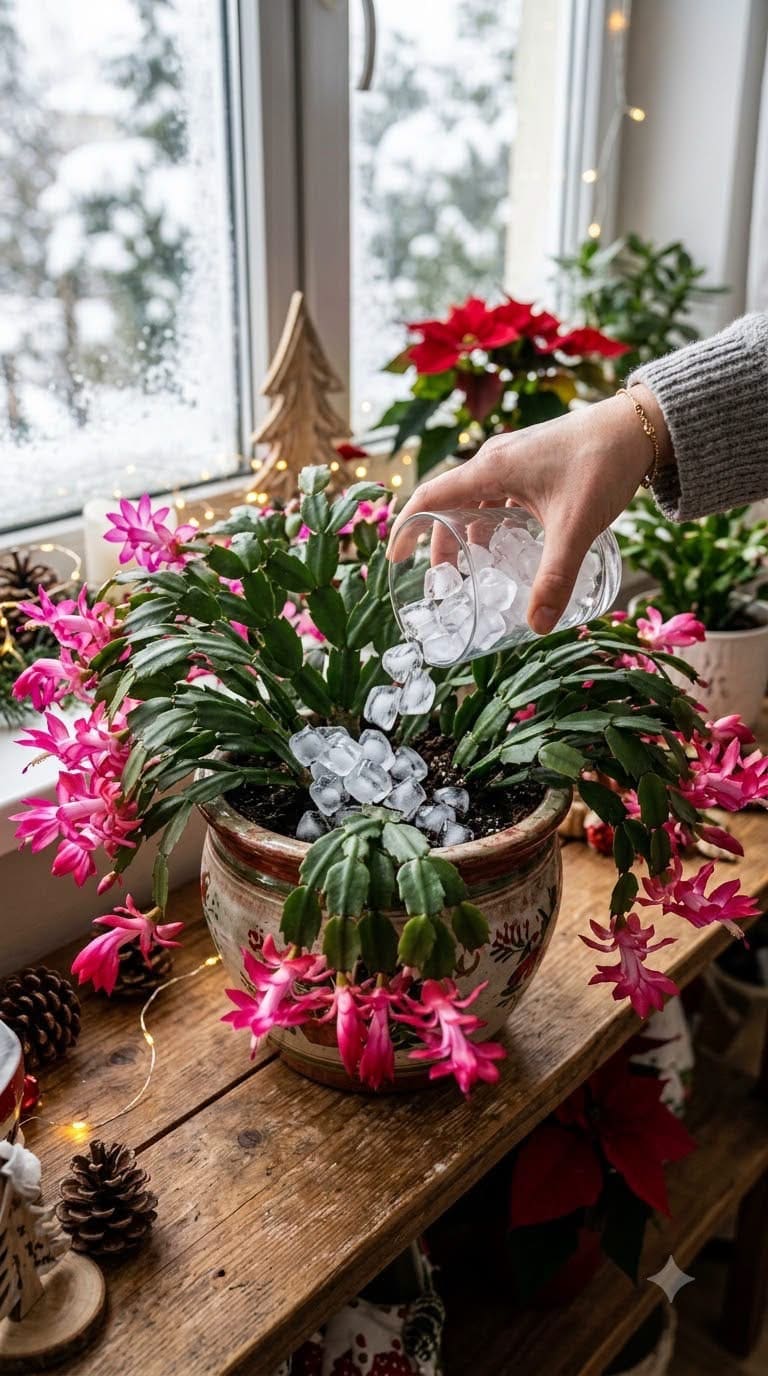
A Christmas cactus is one of the most rewarding houseplants to grow. Its arching, segmented stems and bright blooms bring color indoors just when many other plants are resting. With the right routine, a Christmas cactus can live for decades and flower year after year.
You may see advice suggesting that ice cubes are an easy way to water flowering houseplants. While the idea sounds convenient, it is not the best choice for a Christmas cactus. These plants prefer evenly moist—but never soggy—soil and room-temperature water applied gently around the root zone. Ice can chill the roots, create uneven moisture, and make it harder to judge whether the plant has received enough water.
The good news is that Christmas cactus care is simple once you understand its natural needs. This guide covers safe watering, light, soil, feeding, flowering, and the most common mistakes to avoid.
Why Christmas Cactus Care Is Different
Despite its name, a Christmas cactus is not a desert cactus. It is a tropical plant that naturally grows in the branches of trees in humid forests. That means it prefers more moisture than a typical cactus, but it still needs excellent drainage and should never sit in standing water.
The flat green segments store some moisture, which helps the plant tolerate short dry periods. However, letting the potting mix become bone-dry for too long can lead to limp, wrinkled stems and dropped flower buds. On the other hand, frequent heavy watering can damage the roots and cause the stems to soften.
The goal is simple: keep the soil lightly and consistently moist during active growth and blooming, then allow the top portion of the soil to dry before watering again.
The Best Way to Water a Christmas Cactus
Water your Christmas cactus slowly with room-temperature water until a little begins to drain from the holes at the bottom of the pot. This moistens the entire root ball instead of wetting only the surface.
After watering, empty the saucer within 10 to 15 minutes. A pot sitting in water is one of the fastest ways to create root problems.
Before watering again, check the top 1 to 2 inches of potting mix with your finger. If it feels dry, it is usually time to water. If it still feels damp, wait a few more days and check again.
How often you water will depend on the season, light level, indoor temperature, pot size, and soil mix. Many plants need water about every 7 to 10 days during active growth, but your plant may need more or less often. Always let the soil—not the calendar—make the decision.
Why Ice Cubes Are Not Recommended
Adding ice cubes directly to the soil may seem like a tidy watering trick, but Christmas cactus roots are sensitive to cold stress. As ice melts, it can create very cold pockets in the potting mix rather than providing the gentle, even moisture this tropical plant prefers.
Ice also makes it difficult to know how much water reached the roots. The cubes may melt slowly, roll away from the root zone, or leave part of the soil dry while another area becomes too wet.
For healthier roots and more dependable flowering, use room-temperature water in a watering can or cup. Pour it slowly onto the soil, keeping water off the crown and avoiding prolonged moisture around the base of the stems.
Signs Your Christmas Cactus Needs Water
A thirsty Christmas cactus often gives clear signals. Look for:
- Slightly wrinkled or thinner-looking stem segments
- Stems that feel less firm than usual
- Dry soil 1 to 2 inches below the surface
- Flower buds that look stressed during a dry spell
- A pot that feels much lighter when lifted
Watering early is better than waiting for dramatic wilting. Once the plant is deeply dehydrated, it may drop buds or take time to regain its normal firmness.
Signs of Overwatering
Overwatering is more common than underwatering, especially during winter or in pots without drainage holes. Watch for:
- Soft, mushy, or yellowing stem segments
- Soil that stays wet for many days
- A sour smell from the potting mix
- Stem segments dropping off easily
- Brown or blackened roots when the plant is removed from the pot
If you suspect overwatering, stop watering and let the potting mix dry out. Make sure the container has drainage holes. If the soil remains dense, soggy, or smells unpleasant, repot the plant into fresh, airy potting mix and trim away any dark, mushy roots with clean scissors.
Choosing the Right Pot and Soil
A Christmas cactus needs a pot with drainage holes. Decorative containers are fine, but the plant should be in a nursery pot or another container that allows excess water to escape.
Use a loose, well-draining mix. A quality indoor potting mix amended with perlite, pumice, or fine orchid bark works very well. The mix should hold some moisture without packing tightly around the roots.
A good basic blend can include:
- 2 parts quality indoor potting mix
- 1 part perlite or pumice
- 1 part fine orchid bark or coco coir
Repot every two to three years, ideally after flowering. Christmas cacti enjoy being slightly root-bound, so only move up one pot size when the roots have filled the current container.
Light Requirements for Strong Growth
Bright, indirect light is ideal. Place your plant near an east-facing window, or a few feet back from a south- or west-facing window with a sheer curtain.
Too much direct afternoon sun can scorch the stem segments, causing red or purple stress coloring and dry patches. Too little light can result in weak growth and fewer flowers.
A Christmas cactus often does especially well in a bright room where it receives soft morning light. Rotate the pot every week or two so all sides of the plant grow evenly.
Temperature and Humidity
Christmas cactus prefers average indoor temperatures between 60°F and 75°F. Keep it away from heating vents, radiators, fireplaces, cold drafts, and doors that open frequently.
Moderate household humidity is usually enough, but dry winter air can cause the plant to look tired. You can improve humidity by grouping plants together or placing the pot on a pebble tray filled with water. Keep the bottom of the pot above the water line so the roots do not sit in moisture.
Avoid misting heavily. Water left between the stems or on flower buds can encourage problems in stagnant air. Good airflow and correct soil moisture are more useful than frequent spraying.
How to Fertilize Safely
Fertilize only during active growth, generally from spring through late summer. Choose a balanced liquid houseplant fertilizer and dilute it according to the label directions. Apply it to already-moist soil every four to six weeks.
Do not fertilize a stressed, newly repotted, overly dry, or waterlogged plant. Avoid homemade mixtures such as milk, sugary drinks, coffee, tea, garlic water, fruit peels, or kitchen scraps. These can sour in the soil, attract pests, and upset the balance around the roots.
Stop feeding in early fall as the plant prepares to set buds. Resume fertilizer after the flowering period has ended and new growth begins.
How to Encourage Christmas Cactus Blooms
Flowering is connected to light, temperature, and consistency. To set buds, a Christmas cactus typically needs several weeks of cool nights and long periods of darkness.
In early fall, provide approximately 12 to 14 hours of uninterrupted darkness each night for six to eight weeks. A room that remains bright from lamps or television light late into the evening may delay blooming.
Cool nighttime temperatures around 55°F to 65°F can also help. Keep the plant’s watering routine steady during this period. Do not allow the soil to become waterlogged, but do not let it dry out completely either.
Once buds appear, avoid moving the plant from place to place. Sudden changes in temperature, light, or moisture can cause buds to drop.
Common Problems and Easy Fixes
Limp or Wrinkled Segments
This can mean the plant is too dry, but it can also happen when roots are damaged by excess moisture. Check the soil first. Dry soil calls for a thorough watering; wet soil calls for a pause in watering and a closer look at drainage.
Buds Falling Off
Bud drop is usually caused by stress. Common triggers include a dry spell, overwatering, cold drafts, hot air from heating, moving the plant, or inconsistent light. Keep the plant in one stable location once buds develop.
Red or Purple Stem Segments
A reddish tint can appear when the plant receives too much direct sun or experiences temperature stress. Move it slightly away from harsh sunlight and check that it is not near a cold window or heater.
No Flowers
A plant that does not bloom may need brighter indirect light during the day, cooler nights in fall, or longer uninterrupted darkness. Too much fertilizer late in the season can also encourage leaves instead of blooms.
Seasonal Care Guide
Spring and Summer
This is the active growing period. Provide bright indirect light, water when the top soil dries, and fertilize lightly every four to six weeks. You can move the plant outdoors to a shady, protected spot once temperatures are reliably warm, but bring it back indoors before nights become cool.
Fall
Begin reducing fertilizer and pay close attention to nighttime light. Give the plant long dark periods and cooler temperatures to encourage buds. Continue watering carefully, never allowing the soil to stay saturated.
Winter
During flowering, keep the soil lightly moist and the environment stable. Place the plant away from heaters and cold glass. Once blooming finishes, reduce watering slightly while the plant rests.
Frequently Asked Questions
Can I water a Christmas cactus with ice cubes?
It is better not to. Ice may chill the roots and does not provide even moisture through the potting mix. Room-temperature water is gentler and allows you to water thoroughly.
How do I know when to water?
Check the top 1 to 2 inches of soil. Water when it feels dry, then allow excess water to drain away completely.
Does a Christmas cactus need direct sun?
No. Bright, indirect light is best. Gentle morning sun can be helpful, but strong afternoon sun may scorch the plant.
How long can a Christmas cactus live?
With consistent care, Christmas cacti can live for several decades. Many are passed down through families because they can become large and reliable bloomers over time.
Should I prune my Christmas cactus?
Yes, light pruning after flowering can encourage fuller growth. Twist or cut off one or two segments from the tips of long stems. The removed pieces can be rooted to make new plants.
Final Thoughts
A healthy Christmas cactus does not need ice, complicated feeding tricks, or constant attention. Give it bright indirect light, a well-draining pot, room-temperature water when the top layer of soil dries, and a stable spot away from drafts.
With a steady routine, your plant can keep its deep green segmented stems, produce colorful seasonal blooms, and become one of the longest-lasting plants in your home. The simplest care is often the best: water deeply, drain well, and let the plant’s soil guide you.