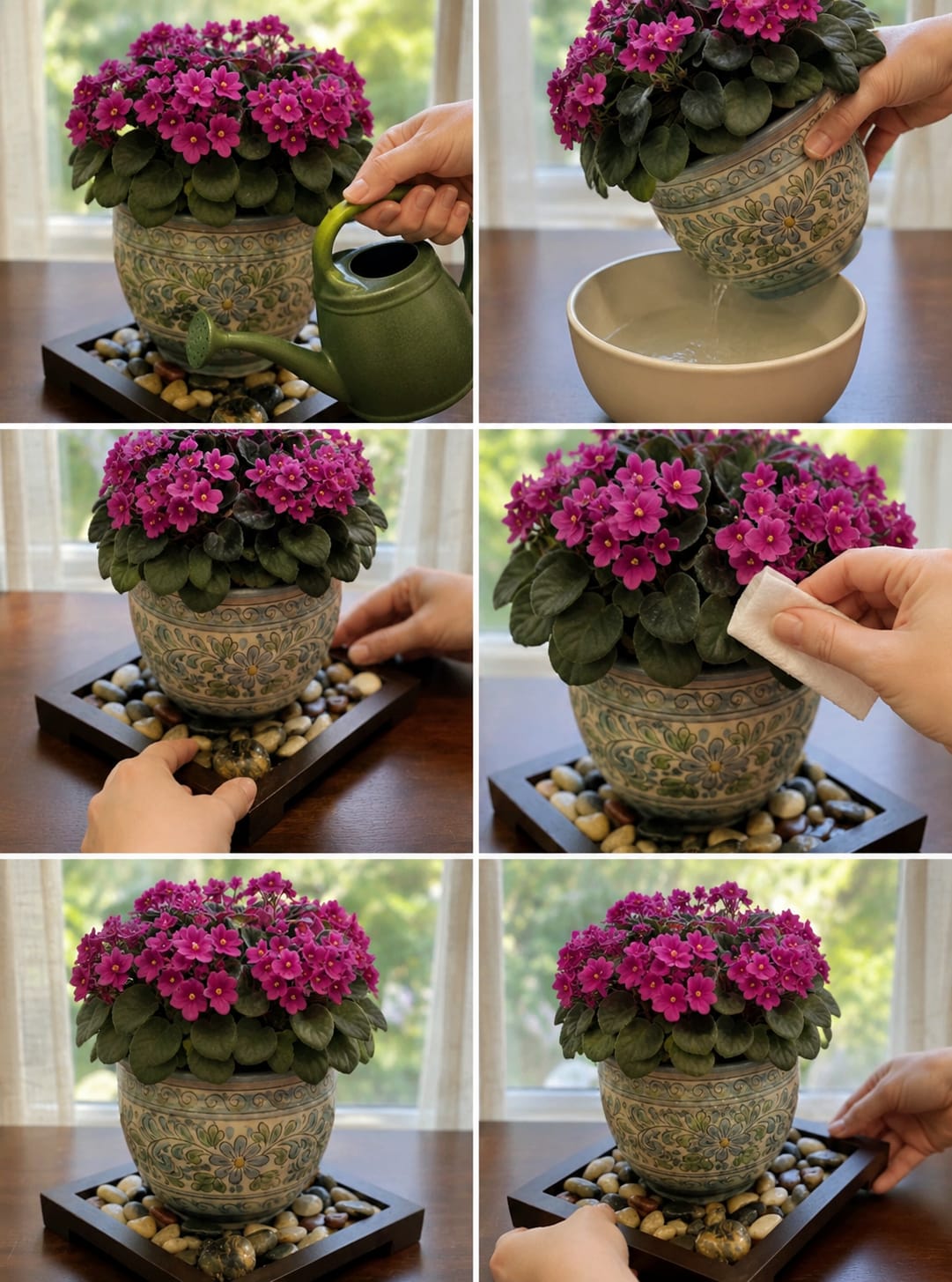
Repotting African Violets
Repotting may be needed when the soil becomes old, the plant develops a long neck, roots are crowded, or the potting mix drains poorly. African violets are often repotted into fresh mix periodically to keep the root environment healthy. The new pot should not be much larger than the old one.
The plant should be handled gently. Old lower leaves can be removed if they are damaged or create crowding. The crown should sit just above the soil surface. The plant should not be buried too deeply. If the plant has a long bare stem, it can be reset carefully, but the crown still needs to remain healthy and dry.
After repotting, the plant should be placed in bright indirect light and watered carefully. It may pause blooming briefly while adjusting. Once roots settle, the plant can resume steady growth. Repotting should support long-term health, not shock the plant through rough handling.
How to Encourage More Blooms
More blooms come from balanced care. African violets need bright indirect light, consistent moisture, gentle fertilizer, a snug pot, and a healthy crown. If any of these foundations are missing, blooms may slow. Light is especially important. A plant in too little light may produce leaves but few flowers.
Spent flowers should be removed when they fade. This keeps the plant looking clean and helps direct energy toward future growth. The flower stem can be pinched or cut near the base. Old flowers left on the plant can become messy and reduce the polished look.
The plant should also be turned occasionally so growth remains even. African violets can lean toward light. Rotating the pot helps maintain a balanced rosette. A symmetrical plant looks better in decorative displays and usually receives light more evenly.
Indoor Decor Value
African violets have strong indoor decor value because they are compact, colorful, and elegant. They can bring soft floral color to small spaces without needing a large floor plant. A blooming African violet in a decorative ceramic pot can look beautiful on a dining table, side table, windowsill, desk, bedroom shelf, or plant stand.
The pebble tray adds another decorative layer. Smooth stones, a dark tray, and a patterned pot can make the plant look like a finished display rather than a simple nursery plant. This is useful for premium indoor plant styling, apartment decor, and property staging. The tray should remain clean so the display looks fresh.
African violets look best when leaves are dust-free, blooms are fresh, and the pot is tidy. Water stains, dead flowers, algae, or dirty tray water reduce the premium effect. Clean maintenance is part of the plant’s beauty.
Room-by-Room Styling
In the living room, an African violet can sit on a side table, console, windowsill, or coffee table near bright indirect light. Its flowers add color without taking much space. A decorative ceramic pot can match traditional, cottage, vintage, or modern interiors depending on the pattern and color.
In the bedroom, African violet creates a soft and peaceful accent. It should be placed near a bright window or under a gentle grow light. The pebble tray should be kept clean and odor-free. A bedroom plant should feel fresh and calm, not damp or messy.
In a home office, African violet can brighten a desk or shelf. It is compact enough for small workspaces and adds a cheerful flowering detail. The plant should be watered carefully to avoid spills on furniture, electronics, or papers. A tray makes the display safer and more finished.
In a kitchen or dining area, African violet can look charming near a bright window. It should be protected from hot drafts, cold glass, and direct harsh sun. The plant should not be placed where water splashes constantly onto the leaves. Controlled care keeps blooms clean.
Office and Commercial Styling
African violets can work well in commercial interior styling when they are placed in bright protected areas. They are suitable for reception desks, boutique counters, waiting rooms, office shelves, salon spaces, wellness rooms, and staged homes. Their compact size and colorful blooms create a welcoming detail without taking up much space.
For professional displays, watering must be controlled. A pebble tray can protect furniture and improve the appearance, but it should not become dirty. Spent flowers should be removed, leaves should be kept clean, and the plant should be replaced or refreshed if it declines. A premium display depends on constant neatness.
African violets are more delicate than snake plants or pothos, so they need more careful maintenance in commercial spaces. They should be assigned to locations where someone can monitor moisture, remove old blooms, and keep the tray clean. With proper care, they can add a polished floral accent.
Product and Tool Guide
Helpful materials for African violet care include a small pot with drainage holes, African violet potting mix, perlite, a shallow pebble tray, clean decorative stones, a narrow-spout watering can, room-temperature water, a soft dry brush for leaves, clean scissors for spent blooms, a diluted African violet fertilizer, and a grow light if natural light is weak.
A self-watering African violet pot can also be useful when managed correctly. A humidity tray can help in dry homes. A moisture meter may be less reliable in very small pots, so pot weight, soil feel, and plant behavior are also important. Clean tools make care easier and safer.
These materials support a stable routine. African violets do not need complicated homemade tricks. They need the right pot, the right soil, clean water, careful humidity, and consistent light. Simple controlled care creates the best blooms.
Care Timeline After Setting Up a Pebble Tray
During the first 24 hours, the plant should be checked to make sure the pot sits above the water line. The tray should be level, and the stones should support the pot securely. Any water on the leaves or crown should be removed gently. The plant should be placed in bright indirect light.
During the first week, the soil moisture should be monitored. The tray water should be kept below the pot bottom. If the soil stays wet too long, reduce watering and check drainage. If the room is very dry, the tray may need fresh water as it evaporates.
After two to four weeks, the plant should remain stable if the setup is working. Leaves should stay firm, and blooms should last well. Spent flowers can be removed. After one to two months, consistent light, gentle feeding, and correct watering may support new bloom cycles. Long-term success depends on keeping the crown dry and the root zone evenly moist.
Professional Styling Note
In high-end indoor horticulture, African violet is valued because it offers compact flowering beauty in a refined form. It works well in premium windowsill displays, tabletop styling, boutique interiors, cozy bedrooms, office desks, and polished property presentation. Its soft flowers create a welcoming detail without needing a large plant arrangement.
However, the display only looks premium when it is clean. Dirty tray water, wet leaves, dead flowers, algae, and soil spills reduce the effect. A pebble tray should look decorative and intentional, not like a neglected water dish. The plant should remain tidy from every angle.
A beautiful African violet display depends on bright indirect light, careful watering, a dry crown, clean leaves, fresh blooms, and a pot that matches the room. The plant rewards gentle consistency. Overwatering, heavy misting, and careless handling can ruin the display faster than neglect.
Final Thoughts
Watering African violets safely is one of the most important parts of keeping them healthy and blooming. The plant needs room-temperature water, lightly moist soil, and a dry crown. Bottom watering, careful soil-level watering, and a clean pebble tray setup can all help protect the leaves while supporting root moisture. The pot should never sit in standing water for long periods.
A pebble tray can improve humidity and presentation when used correctly. The water should stay below the top of the pebbles, the pot should remain above the water line, and the tray should be cleaned regularly. Misting the fuzzy leaves is usually less safe than managing humidity around the plant. Clean leaves and dry crowns are essential for long-term success.
With the right care and presentation, African violet can remain a beautiful flowering accent for living rooms, bedrooms, home offices, kitchens, windowsills, modern apartments, commercial interior landscaping, luxury home staging, decorative ceramic planters, and polished property presentation. Healthy roots, clean foliage, controlled watering, and long-lasting blooms will always create a stronger display than careless watering or constantly wet leaves.