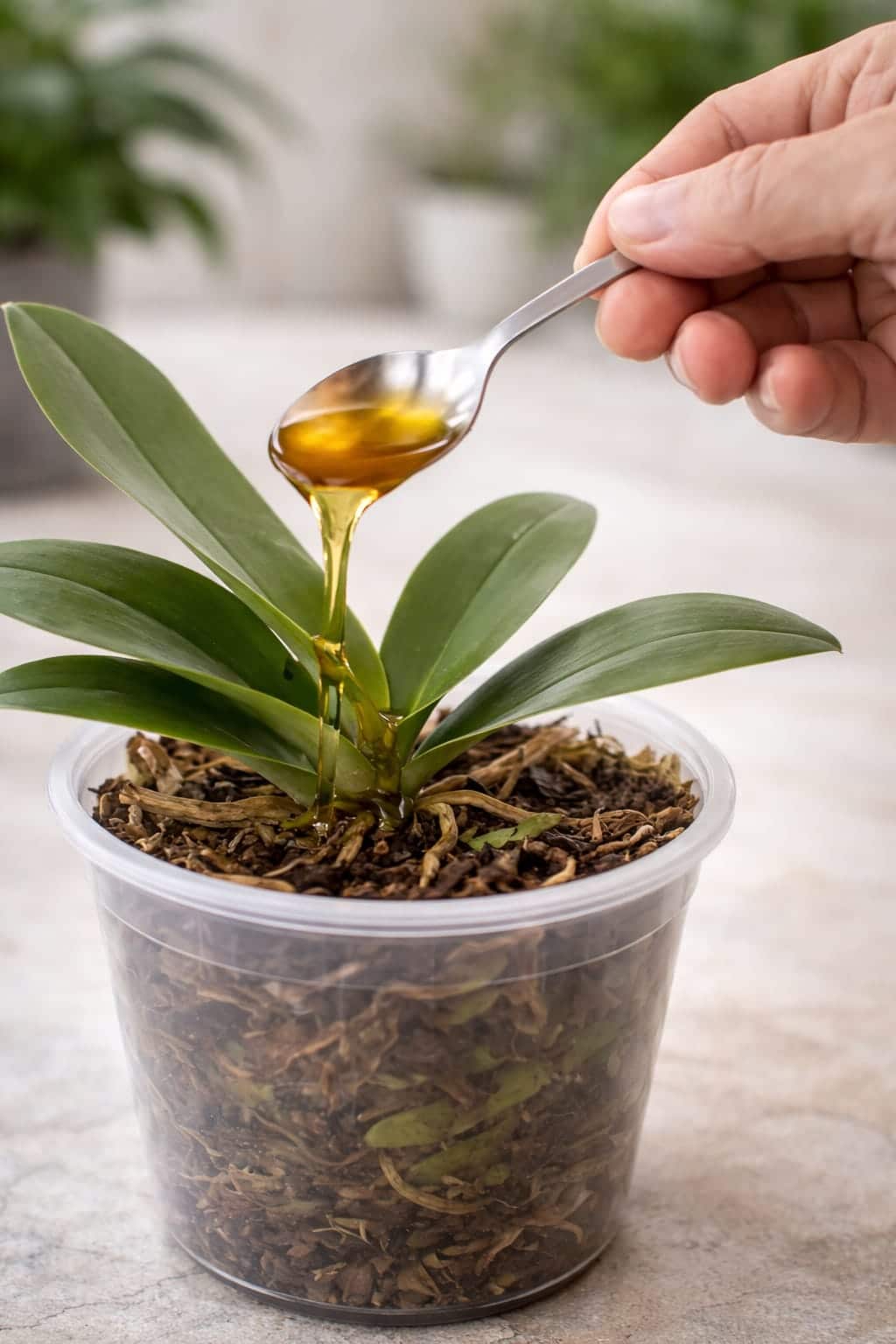
What Really Keeps Orchids Healthy (The Full Routine)
If you want the kind of obvious difference people notice — firm leaves, active roots, reliable reblooming — focus on the full routine, not just one trick.
- Bright Indirect Light
Orchids need enough light to stay strong and eventually rebloom.
· An east or south‑facing window with a sheer curtain is ideal.
· Leaves should be medium green (not dark green, which means too little light).
· If leaves turn reddish, the light is too intense.
- Good Airflow Around the Roots
Fresh bark and drainage are essential.
· Use a specialized orchid bark mix (not potting soil).
· Repot every 1–2 years when the bark breaks down.
· Choose a pot with plenty of drainage holes (clear plastic pots help you see roots).
- Smart Watering
Water thoroughly, then let the medium approach dryness before watering again.
· For bark‑grown orchids, water about once every 7–10 days.
· For moss‑grown orchids, water less often (every 10–14 days).
· Always water in the morning so the crown dries by evening.
- Light Support, Not Heavy Feeding
A mild tonic or balanced orchid fertilizer can help when used correctly.
· Use a fertilizer labeled for orchids (like 20‑20‑20) diluted to quarter strength.
· Feed every other week during active growth (spring and summer).
· Flush with plain water once a month to prevent salt buildup.
- Stability
Orchids do best when they are not constantly stressed by changing conditions.
· Avoid moving the plant from room to room.
· Keep temperatures steady (65–75°F during the day, slightly cooler at night).
· Protect from drafts, heaters, and air conditioners.
Grandma’s Exact Recipe (Safe for Any Orchid)
Here is the full, tested version of my grandmother’s weekly orchid tonic.
Ingredients
· 1 teaspoon raw, organic honey (or regular honey if raw is unavailable)
· 1 quart (4 cups) lukewarm, filtered water
· Optional: a drop of aloe vera gel (for extra gentle enzymes)
Instructions
- Warm the water slightly (not hot, just lukewarm).
- Stir in the honey until completely dissolved.
- Let the mixture cool to room temperature.
- Use within 24 hours (do not store longer).
How to Apply
· Water your orchid normally first (plain water).
· Wait 10–15 minutes.
· Pour 2–3 tablespoons of the honey tonic near the base, avoiding the crown.
· Do not pour on the leaves or into the center of the plant.
How Often
· Once a week during active growth (spring and summer).
· Reduce to once every 2–3 weeks in fall and winter.
· Stop completely if the orchid is in bloom (enjoy the flowers instead).
Signs Your Orchid Is Improving
If your orchid is responding well to gentle care — with or without a tonic — you may start noticing:
· firmer, more upright leaves (no wrinkling)
· greener, more active root tips (bright green or silvery with green ends)
· healthier overall leaf color (not yellow or dark green)
· better posture (leaves spread evenly, no drooping)
· new root growth emerging from the base
· stronger future flower spikes
That is the real “obvious difference.”
Not overnight magic. Just a healthier orchid building strength the right way.
Common Mistakes When Using Homemade Orchid Tonics
Even a good trick can go wrong. Avoid these pitfalls.
Using Too Much Honey
More is not better. Excess sugar can feed bacteria and fungus. Stick to 1 teaspoon per quart.
Pouring into the Crown
The crown (center where leaves meet) must stay dry. Water or tonic trapped there causes crown rot, which is almost always fatal.
Applying to a Stressed Orchid
If your orchid has root rot, yellow leaves, or pests, fix those problems first. A tonic will not cure serious issues.
Using It Too Often
Once a week is plenty. Daily applications can overwhelm the roots.
Storing the Tonic
Honey water can ferment or grow bacteria. Make it fresh each time. Do not keep it for more than 24 hours.
Ignoring the Basics
A tonic is a supplement, not a substitute for proper light, water, and potting mix.
Other Natural Orchid Boosters (Compared to Honey Water)
Tonic Potential Benefit Risk
Honey water Trace sugars, antimicrobial Can attract ants, sticky if overused
Rice water Starches, trace minerals Can ferment, may sour
Aloe water Enzymes, mild growth stimulant Low risk if diluted
Cinnamon water Antifungal Can dry roots if too strong
Banana peel water Potassium Ferments quickly, attracts pests
Coffee (diluted) Nitrogen, acidity Can lower pH too much
Among these, honey water is the most gentle and forgiving when diluted properly. It is also the one my grandmother trusted for decades.
When to Skip the Tonic Entirely
There are times when you should put away the homemade mixtures and focus on recovery.
Do Not Use Tonic If:
· The orchid has active root rot (brown, mushy roots)
· The bark smells sour or looks moldy
· The leaves are severely wrinkled or yellowing
· The orchid is in full bloom (enjoy the flowers)
· You just repotted (wait 2–3 weeks for roots to settle)
In these situations, plain water and good care are all you need.
The Lesson Behind the Trick
The most powerful part of this kind of plant care is not really the spoonful of golden liquid.
It is the gentle attention behind it.
My grandmother was not dumping random things into the pot hoping for a miracle. She was observing the plant, supporting it lightly, and staying consistent week after week.
That is why the orchid looked better.
Because in plant care, consistency often beats intensity.
A small, kind routine done regularly will always outperform a harsh treatment done once in desperation.
Frequently Asked Questions (Orchid Tonic)
Can I use honey water on all types of orchids?
Yes, with caution. Phalaenopsis (moth orchids), Dendrobiums, Cattleyas, and Oncidiums all tolerate a very diluted honey tonic. Always avoid the crown.
Will honey water make my orchid bloom?
Not directly. Blooming requires proper light, temperature changes (for some orchids), and a healthy root system. Honey water may support overall health, which can lead to better blooming over time.
How do I know if I am using too much?
Signs of overuse include sticky residue on bark, mold growth, ants or fungus gnats, and leaves turning yellow. If you see these, stop the tonic and flush the pot with plain water.
Can I use sugar instead of honey?
No. White sugar lacks the trace minerals and antimicrobial properties of honey. It also attracts pests more readily. Stick with raw honey.
Is rice water better than honey water?
Rice water contains starches and some minerals. It is also very mild. Some growers prefer it. Experiment carefully. Both are fine as long as they are highly diluted and used sparingly.
How often should I fertilize my orchid instead of using a tonic?
Use a balanced orchid fertilizer (diluted to quarter strength) every other week during spring and summer. Alternate with plain water. The tonic can replace one of the fertilizer applications if you wish.
My orchid leaves are wrinkled. Will honey water help?
Wrinkled leaves usually indicate dehydration from either underwatering or root loss. Check the roots first. If roots are healthy, water more frequently. If roots are rotted, repot. A tonic will not fix the underlying issue.
Can I use this on other houseplants?
Yes, very diluted honey water can be used on many houseplants as a mild tonic. Test on one plant first. Avoid succulents and cacti, which prefer very dry conditions.
Final Thoughts: The Real Secret to Obvious Orchid Health
Watching my grandma pour that simple homemade liquid on her orchid once a week taught me something important:
A plant does not always need more products.
Sometimes it just needs the right care, done gently and regularly.
So yes, the difference was obvious.
But not because of magic.
It was obvious because the orchid had:
· healthy bark (repotted when needed)
· careful watering (dry between waterings)
· enough light (bright indirect)
· and one small supportive habit that fit into a good routine
And when you combine those things, orchids really do start looking stronger, healthier, and far more beautiful over time.
So go ahead. Try the honey tonic if you like. But more importantly, commit to the basics. Watch your orchid. Learn its rhythms. Give it stability.
That is the real trick. And it works every time.
Did your grandmother have a secret plant trick? Share your story in the comments below. And if you found this guide helpful, save it for later or send it to an orchid lover who needs a little gentle support.