Best Rooms for Hoop Ivy
- Bright living room
- Kitchen windowsill
- Home office
- Bedroom with filtered light
- Plant shelf area
- Sunroom
- Covered balcony
- Entry table with indirect light
Choose a place with bright indirect light and good airflow. Avoid hot vents and harsh direct sun.
Repotting Schedule
Indoor ivy usually needs repotting every 1 to 2 years. Repot when roots fill the pot, soil becomes compacted, or watering becomes difficult.
Repotting Signs
- Roots coming from drainage holes
- Plant dries out too quickly
- Soil stays wet and sour
- Growth slows
- Pot becomes unstable
- Root ball is tightly packed
How to Refresh the Soil Without Full Repotting
If the plant is healthy but the soil surface looks old, you can refresh the top layer. Remove a small amount of old soil and add fresh potting mix. Be gentle around roots.
This gives the pot a cleaner look and helps improve the top layer without disturbing the entire plant.
Common Mistakes to Avoid
- Using a pot without drainage
- Keeping the plant in strong direct sun
- Letting soil stay soggy
- Forgetting to prune
- Tying vines too tightly
- Using wire that cuts stems
- Ignoring spider mites
- Placing ivy near heaters
- Using heavy garden soil indoors
- Moving the plant constantly
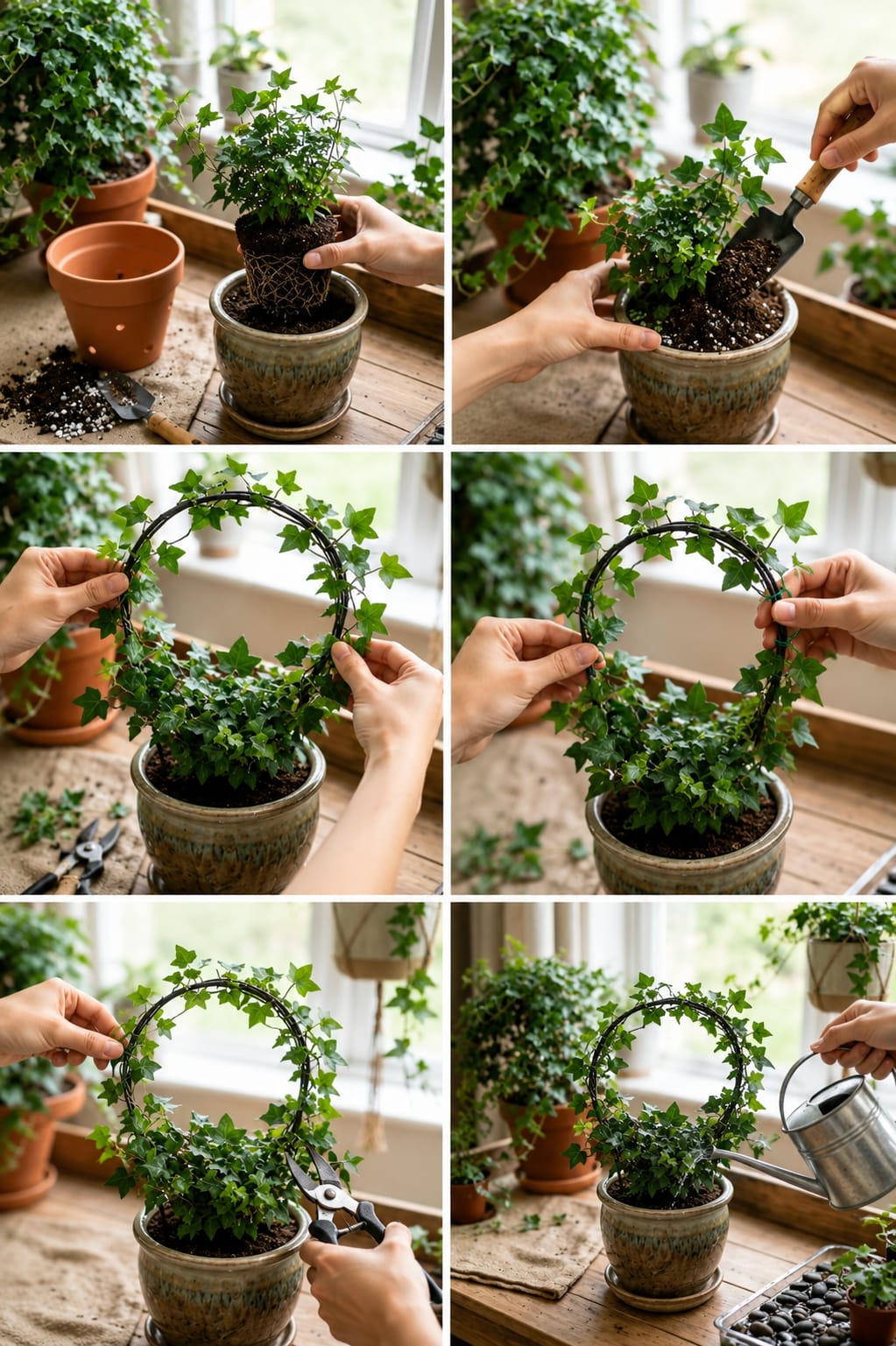
Simple Step-by-Step Summary
- Choose a healthy ivy plant.
- Prepare a pot with drainage holes.
- Use light well-draining soil.
- Repot the ivy gently.
- Insert a hoop support.
- Wrap vines loosely around the hoop.
- Secure with soft ties.
- Prune long uneven stems.
- Water gently and drain well.
- Place in bright indirect light.
Weekly Care Routine
- Check soil moisture.
- Inspect leaves for pests.
- Guide new vines around the hoop.
- Remove yellow leaves.
- Empty saucer water.
- Rotate the pot slightly.
Monthly Care Routine
- Prune long vines.
- Clean leaves if dusty.
- Check ties and loosen if needed.
- Inspect soil condition.
- Feed lightly during active growth.
- Propagate healthy cuttings if desired.
Frequently Asked Questions
Can ivy grow indoors?
Yes. Ivy can grow well indoors when it receives bright indirect light, proper watering, and good airflow.
Can I train ivy around a hoop?
Yes. Ivy has flexible vines that can be guided around a hoop with soft ties or clips.
How often should I water indoor ivy?
Water when the top inch of soil feels slightly dry. Do not keep the soil soggy.
Why is my ivy getting crispy leaves?
Crispy leaves can come from dry soil, dry air, too much sun, or heat from vents.
Why is my ivy losing leaves?
Leaf loss may come from stress, low humidity, pests, inconsistent watering, or poor light.
Does ivy need fertilizer?
Yes, but only lightly. Feed every 4 to 6 weeks during spring and summer with diluted fertilizer.
Can I grow ivy in a decorative pot?
Yes, but the pot must have drainage holes. If it does not, use it as a cover pot only.
Final Thoughts
Indoor ivy can be much more than a trailing plant. With a simple hoop support, it becomes a living decoration that looks elegant, controlled, and artistic. The process is easy: repot the plant in fresh soil, insert a hoop, guide the vines gently, prune for fullness, and water carefully.
The most important parts of ivy care are bright indirect light, evenly moist but not soggy soil, good drainage, regular pruning, and pest checks. If you keep the plant healthy and continue guiding new growth, the hoop will become fuller and more beautiful over time.
This project is perfect for anyone who wants a stylish indoor plant display without needing a large space. With patience and gentle care, your ivy can grow into a neat green circle that brings natural charm, soft texture, and fresh life into your home.