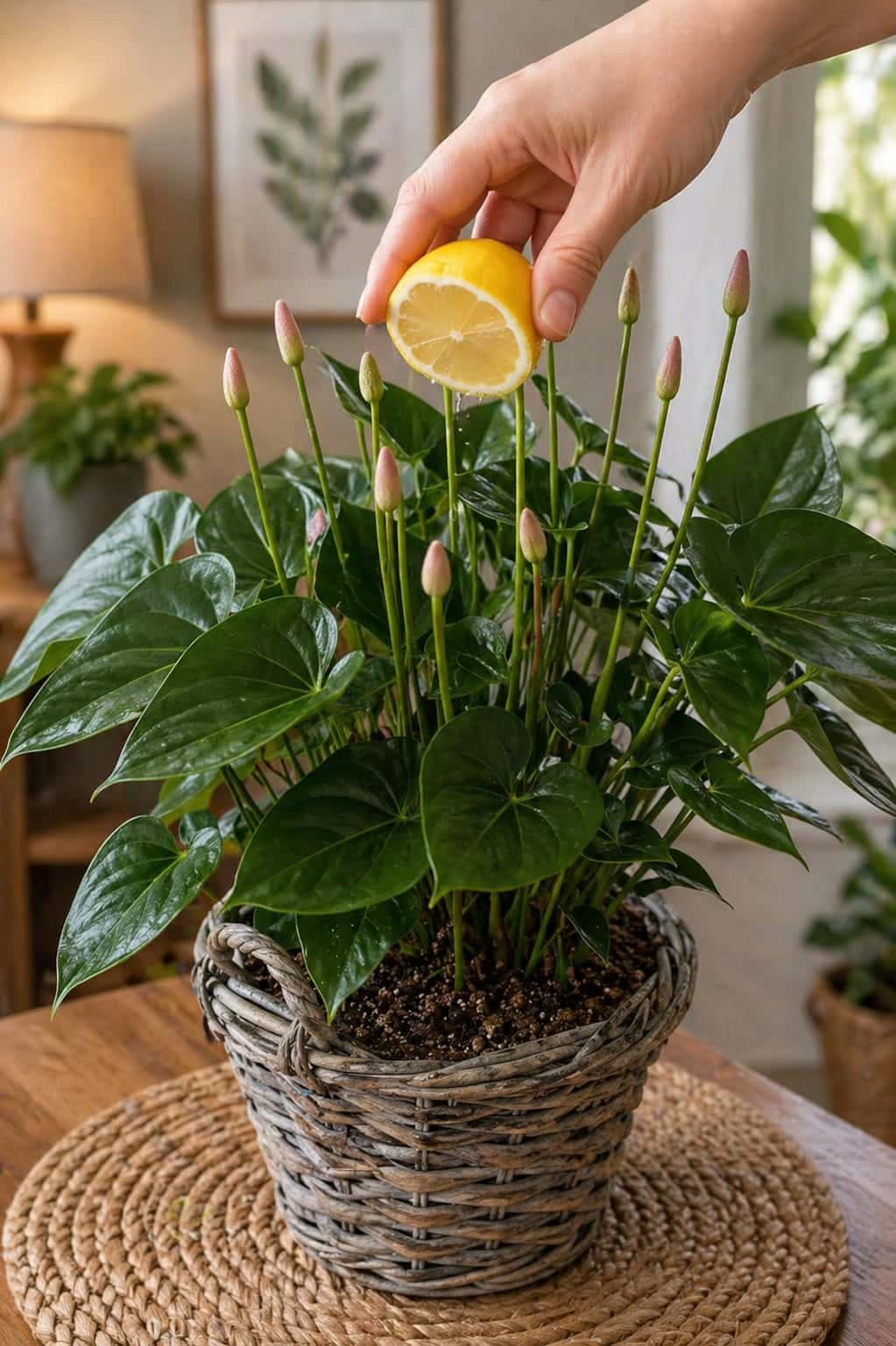
A Smarter Way to Use “Acidic Support” (If You Really Want To)
If you like the idea behind the lemon trick — adjusting soil pH — there is a much safer approach.
Do a Soil pH Test First
Before adding anything acidic, test your soil pH. Most potting mixes are already slightly acidic (6.0–6.5). If your pH is above 7.0 (alkaline), you may need to lower it. You can buy an inexpensive soil pH meter or test kit.
Use Diluted Vinegar or Lemon Juice (Very Carefully)
If your pH is too high, mix 1 teaspoon of white vinegar or lemon juice with 1 gallon of water. Use this mixture to water your plant once a month. Never pour concentrated lemon juice directly onto the soil.
Use Acidifying Fertilizers
There are fertilizers formulated for acid‑loving plants (like azaleas and gardenias). These are safer and more predictable than raw lemon juice.
Flush the Soil Occasionally
Over time, minerals from tap water can raise soil pH. Flushing the pot with plain water (run water through for 1–2 minutes) every few months helps prevent buildup.
The Best Approach: Don’t Chase pH
For most home growers, soil pH is not a problem. Anthuriums are adaptable. Focus on light, water, and humidity first. Only if you have confirmed a pH issue should you consider acidifying.
What You’re Really Seeing in Those Viral Videos
Let us be honest for a moment. The plant shown in the video is already:
· Mature – Old enough to bloom regularly.
· Well‑lit – Placed in bright indirect light.
· Properly watered – Not overwatered or underwatered.
· Actively growing – Healthy roots, good humidity.
The lemon is added after the plant is already thriving. It looks like the cause, but it is not the real reason. The video creator likely added the lemon for visual effect, knowing that viewers would associate the fresh citrus with “natural” plant care. The actual blooming came from weeks or months of consistent care.
Do not be fooled by the editing. A single lemon squeeze will not turn a struggling anthurium into a blooming masterpiece.
The Real “Secret” to Nonstop Blooms (No Lemon Needed)
If you want a blooming anthurium, focus on consistency. Here is a simple, proven routine that works every time.
Daily / Weekly
· Check light exposure – Ensure the plant is getting bright indirect light.
· Check soil moisture – Water when the top inch of soil is dry.
· Wipe leaves with a damp cloth to remove dust.
Monthly
· Flush the soil with plain water to prevent salt buildup.
· Inspect for pests (mealybugs, spider mites, aphids).
· Rotate the pot for even light.
Spring & Summer (Active Growth)
· Bright indirect light (10–12 hours).
· Water every 5–7 days (when top inch dries).
· Feed once a month with half‑strength balanced fertilizer or use slow‑release granules.
· Maintain humidity (60–80%).
· Watch for new leaves and flower buds.
Fall & Winter (Resting Period)
· Still bright light, but days are shorter — consider a grow light.
· Water less often (every 10–14 days).
· Stop fertilizing.
· Maintain moderate humidity (50–60%).
· Keep away from cold drafts (below 60°F / 15°C).
Annually
· Repot every 1–2 years with fresh, well‑draining aroid mix.
· Divide if the plant is overcrowded.
· Trim any dead or brown roots.
This routine is the real secret to nonstop blooms. No lemon required.
Frequently Asked Questions (Lemon on Anthuriums)
Can I use lemon juice on anthuriums?
It is not recommended. While anthuriums prefer slightly acidic soil, fresh lemon juice is too concentrated and can shock the roots. If you must acidify, use a very diluted solution (1 teaspoon per gallon of water) once a month, and only if you have confirmed a pH issue.
Will lemon juice make my anthurium bloom?
No. Blooming is triggered by light, water, humidity, and nutrition. Lemon juice may temporarily lower pH, but it will not force flowers.
What are the signs of over‑acidifying the soil?
Yellowing leaves, brown leaf tips, slowed growth, and root rot. If you see these, flush the soil with plain water and stop all acidic additives.
Is there any natural way to boost anthurium blooms?
Yes. Provide bright indirect light, high humidity, consistent watering, and a balanced fertilizer. These natural methods are far more effective than kitchen experiments.
Can I use vinegar instead of lemon?
Vinegar is also acidic and carries the same risks. Dilute 1 teaspoon per gallon of water if you must use it, but it is better to use a proper fertilizer.
How do I know if my anthurium needs more acidity?
Test your soil pH. If it is above 7.0, consider a mild acidifier. Most commercial potting mixes are already slightly acidic, so you likely do not need to adjust.
What is the best fertilizer for anthurium blooms?
A balanced, water‑soluble fertilizer (10‑10‑10 or 20‑20‑20) diluted to half strength, applied once a month in spring and summer. For convenience, use slow‑release granules.
My anthurium has brown tips. Is lemon the answer?
No. Brown tips are usually caused by low humidity, fluoride in tap water, or salt buildup. Increase humidity, use filtered water, and flush the soil. Lemon will not fix this.
The Bottom Line: Skip the Lemon, Stick to the Basics
The lemon trick is not pure nonsense — but it is definitely oversimplified. In small, controlled conditions, adjusting soil pH can help anthuriums absorb nutrients more efficiently. However, randomly squeezing a lemon onto the soil is not a reliable or safe method.
Your anthurium does not need a dramatic hack. It needs balance, stability, and thoughtful care. Give it bright indirect light, consistent moisture, high humidity, well‑draining soil, and gentle feeding. That is what creates those stunning red (or pink, white, or purple) blooms — not a citrus shortcut.
So step away from the lemon. Open the blinds. Water when the soil is dry. Add a little fertilizer in spring. And watch your anthurium reward you with months of glossy leaves and beautiful, long‑lasting flowers. No gimmicks. Just good care.
Have you ever tried the lemon trick on your anthurium? Share your experience in the comments below. And if you found this guide helpful, save it for later or send it to a friend who needs real anthurium care advice.
This article is for informational purposes only. Always test a small area before applying any new treatment to your plants. When in doubt, stick to proven care methods: light, water, and humidity first.