Can You Spray This Treatment on Anthurium Leaves?
The user text suggests spraying lightly on the leaves. This can be done only if the liquid is extremely well strained and heavily diluted. However, root application is usually safer. Anthurium leaves are glossy and can show spots if sprayed with organic liquids.
If you spray the leaves, follow these rules:
- Use only the heavily diluted tonic
- Strain it very well
- Spray lightly, not heavily
- Do not spray flowers
- Do not spray in direct sun
- Do not leave leaves dripping wet
- Test on one leaf first
- Wipe leaves with plain water if residue appears
For most indoor growers, it is better to apply this tonic to the soil and clean leaves separately with plain water.
How Often Should You Use This Treatment?
Use the orange peel and coffee tonic no more than once every 4 to 6 weeks during active growth. Active growth usually happens in spring and summer, or year-round if the plant is kept warm with good light.
Do not use it every week. Do not use it every time you water. Too much homemade tonic can create soil problems.
A good routine might look like this:
- Plain water most of the time
- Orange peel and coffee tonic once every 4 to 6 weeks
- Balanced fertilizer at half strength in a separate month
- Plain water flush between feedings
This keeps the plant supported without overwhelming the roots.
When Not to Use This Treatment
Do not use the tonic if your anthurium is already stressed by wet soil or root problems.
Avoid this treatment if:
- The soil is wet
- The pot has no drainage
- The plant smells sour
- The roots are mushy
- There is mold on the soil
- Fungus gnats are already present
- The plant was recently repotted
- The plant is in a cold room
- The liquid smells fermented
- The leaves are already damaged or spotted
In these situations, correct the basic problem first.
Why Anthuriums Need Bright Indirect Light to Bloom
If your goal is more blooms, light matters more than any tonic. Anthuriums need bright indirect light to produce strong growth and colorful spathes. They can survive in lower light, but they may not bloom well.
Place your anthurium near a bright window, but protect it from harsh direct afternoon sun. A sheer curtain, east-facing window, or bright room with filtered light is ideal.
Signs your anthurium has enough light include:
- Strong upright stems
- Glossy leaves
- New leaves forming
- New flower spathes appearing
- Compact growth
Signs of too little light include:
- No blooms
- Long weak stems
- Small leaves
- Slow growth
- Plant leaning toward the window
If your anthurium is not blooming, move it to brighter indirect light before increasing homemade treatments.
Why Watering Matters So Much
Anthuriums like moisture, but they do not like wet feet. Their roots need air. If the potting mix stays soggy, roots can rot. If the mix dries completely for too long, the plant may wilt and produce crispy edges.
The best approach is even moisture with good drainage.
Simple Watering Method
- Check the top inch of soil.
- Water when it feels slightly dry.
- Water thoroughly until excess drains out.
- Empty the saucer.
- Wait before watering again.
Do not water on a strict schedule. Water based on the plant’s actual needs.
Best Soil Mix for Anthuriums
Anthuriums need an airy potting mix. Dense soil can suffocate the roots. A good mix should hold some moisture but drain quickly.
Simple Anthurium Potting Mix
- 2 parts orchid bark
- 1 part indoor potting mix
- 1 part perlite
- Optional: a small amount of coco chips or charcoal
This creates a loose, chunky mix that supports root oxygen. If your anthurium is planted in heavy soil, homemade tonic will not fix the drainage problem. Repotting into a better mix may be necessary.
Why Clear Containers Can Help
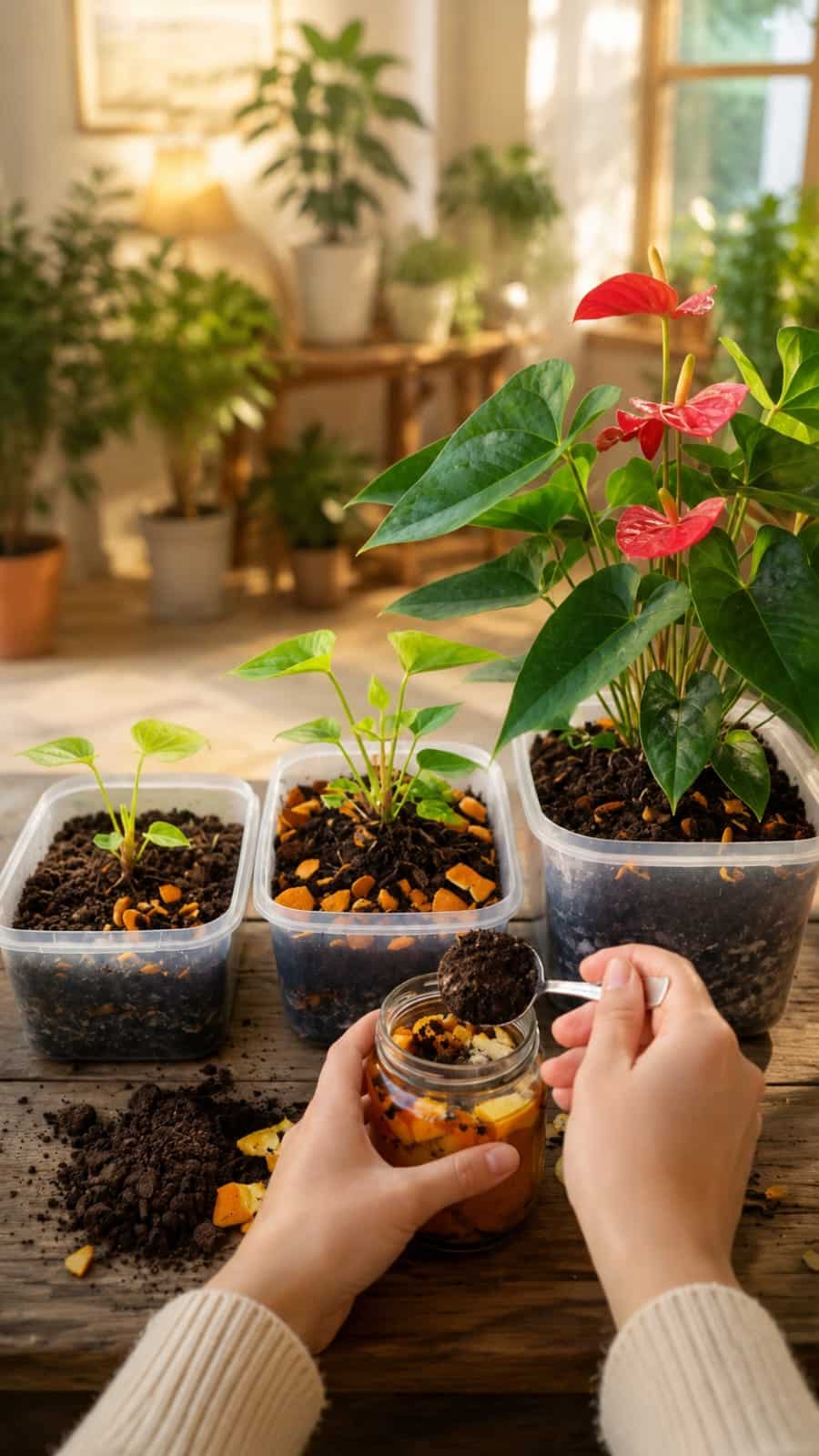
The image shows anthuriums growing in clear containers. Clear containers can be useful because they let you see root development and moisture levels. However, they must have drainage holes. Clear plastic without drainage can trap water and cause root rot.
If using clear containers, make sure:
- There are drainage holes
- The mix is chunky and airy
- Water does not collect at the bottom
- Roots are not exposed to harsh direct sun through the sides
- The container is not too large
Clear pots are helpful, but drainage is still more important than appearance.
Should You Place Orange Peel Pieces on the Soil?
The image shows orange peel pieces in the growing containers. This may look attractive, but it is not the safest long-term method indoors. Fresh orange peel can mold, attract pests, and create sour spots in the potting mix.
Instead of placing peel pieces in the pot, use them only to make the strained tonic. After soaking, throw the peel away or compost it outside.
If you already placed orange peel pieces on the soil, remove them after a few hours. Do not leave them there for days.
Should You Add Coffee Grounds Directly to the Pot?
Direct coffee grounds can be risky indoors. They may compact the soil, hold moisture, and encourage mold if used heavily. A tiny sprinkle may not destroy a plant, but it is not the best habit for anthuriums.
The safer method is to steep one spoon of grounds in hot water, strain thoroughly, dilute well, and use the liquid occasionally. This gives a mild effect without burying dense grounds around the roots.
How to Keep Anthurium Leaves Glossy
Glossy leaves come from good care and clean leaf surfaces. Anthurium leaves naturally shine when healthy, but dust can make them look dull.
To keep leaves glossy:
- Wipe leaves with a soft damp cloth
- Use plain water only for cleaning
- Avoid oily leaf shine products
- Keep the plant in bright indirect light
- Maintain moderate humidity
- Water consistently
- Remove old yellow leaves
If you spray the orange-coffee tonic and it leaves residue, wipe the leaves with plain water.
How to Encourage More Anthurium Blooms
Anthurium blooms are actually colorful spathes with a central spadix. To encourage more of them, the plant needs enough energy and stable care.
For better blooms:
- Give bright indirect light
- Keep the plant warm
- Use airy soil
- Water when the top inch begins to dry
- Feed lightly during active growth
- Maintain humidity
- Remove faded blooms
- Avoid sudden cold drafts
The orange peel and coffee tonic can support the routine, but it cannot replace these basics.
How to Remove Faded Anthurium Flowers
Old anthurium blooms eventually fade, turn dull, or dry out. Removing them helps the plant direct energy into new growth.
Steps
- Wait until the bloom is clearly fading.
- Use clean scissors.
- Cut the flower stem near the base.
- Do not pull or twist hard.
- Clean the scissors afterward.
Removing old blooms also keeps the plant looking fresh and decorative.
Common Anthurium Problems
Yellow Leaves
Yellow leaves can be caused by overwatering, poor drainage, aging leaves, low light, or root stress. Check soil moisture first.
Brown Leaf Tips
Brown tips may come from low humidity, inconsistent watering, fertilizer buildup, or dry air.
No Blooms
No blooms usually means not enough bright indirect light, low nutrients, or general stress.
Drooping Leaves
Drooping can mean underwatering, overwatering, cold stress, or root problems. Check the soil and roots.
Mold on Soil
Mold often appears when organic material stays damp. Remove food scraps, improve airflow, and water less often.
What to Do If the Soil Smells Sour
If the pot smells sour after using homemade treatments, stop immediately. Sour smell usually means the soil is staying too wet or organic material is decomposing badly.
To fix it:
- Remove any visible orange peel or coffee grounds.
- Let the soil dry slightly.
- Improve airflow.
- Check drainage holes.
- Repot if the smell continues.
- Use plain water only for a while.
Do not cover a bad smell with more citrus. Fix the cause.
Can This Treatment Attract Pests?
Yes, if used incorrectly. Orange peel pieces, coffee grounds, or strong organic liquid can attract fungus gnats, ants, and mold. That is why filtering and dilution are so important.
To avoid pests:
- Never leave peel pieces in the pot
- Never leave coffee grounds on the soil
- Use the tonic fresh
- Dilute heavily
- Do not overwater
- Remove dead leaves
- Keep the soil surface clean
Can You Use This Treatment on Other Houseplants?
This diluted tonic may be used occasionally on some tropical foliage plants, but not all plants need it. Avoid using it on succulents, cacti, snake plants, jade plants, and plants that prefer dry soil. These plants may suffer from extra organic moisture.
It is more suitable for tropical plants that enjoy steady moisture, such as anthuriums, peace lilies, pothos, philodendrons, and some calatheas, but always use it weakly and test first.
Quick Recipe Card
Orange Peel and Coffee Anthurium Tonic
Ingredients
- Small pieces of orange peel
- 1 spoon used coffee grounds
- 300 ml hot water
- Clean water for dilution
Instructions
- Wash the orange peel.
- Cut it into small pieces.
- Add the peel and one spoon of coffee grounds to a jar.
- Pour 300 ml hot water over them.
- Let the mixture cool completely.
- Filter very well.
- Dilute the strained liquid to around 3 liters with clean water.
- Apply a small amount to the soil when the plant is due for watering.
- Use once every 4 to 6 weeks during active growth.
- Do not leave peel or coffee grounds in the pot.
Short Caption for Social Media
Anthurium Care Hack 🌿❤️: Mix small orange peel pieces and one spoon of used coffee grounds in 300 ml hot water. Let it cool, strain completely, then dilute to about 3 liters with clean water. Use a small amount on the soil once every 4 to 6 weeks to refresh the root zone and support greener leaves and stronger blooms. Never leave orange peel or coffee grounds in the pot, and avoid using this on wet soil. Bright indirect light, airy soil, and good drainage are still the real secrets to beautiful anthuriums.
Frequently Asked Questions
Is orange peel good for anthuriums?
Orange peel can be used to make a mild diluted tonic, but it should not be left in the pot. Fresh peel can mold and attract pests.
Are coffee grounds good for anthuriums?
Coffee grounds should be used carefully. A small spoon steeped in water and strained is safer than adding grounds directly to the soil.
Can this treatment make anthuriums bloom?
It may support healthy growth, but blooms depend mostly on bright indirect light, healthy roots, warmth, and proper feeding.
How often should I use orange peel and coffee water?
Use it once every 4 to 6 weeks during active growth. Do not use it every week.
Can I spray it on anthurium leaves?
You can spray only if it is heavily diluted and well strained, but root application is safer. Avoid spraying flowers.
Can I leave orange peels on the soil?
No. Remove orange peels after making the tonic. Leaving them on soil can cause mold and pests.
Can I add coffee grounds directly to the pot?
It is better not to. Direct coffee grounds can compact soil and hold too much moisture indoors.
Why is my anthurium not blooming?
The most common reason is insufficient bright indirect light. Low nutrients, cold temperatures, or root stress can also reduce blooming.
What is the best soil for anthuriums?
A loose mix with orchid bark, perlite, and a little potting mix works well. Anthurium roots need air and drainage.
What should I do if the pot smells bad after using the tonic?
Stop using homemade treatments, remove any organic pieces, check drainage, and repot if the soil is sour or soggy.
Final Thoughts
The orange peel and coffee treatment can be a lovely natural addition to anthurium care when it is used correctly. It feels simple, affordable, and satisfying because it turns everyday kitchen scraps into a gentle plant tonic. When strained, diluted, and applied occasionally, it may help refresh the soil and support healthier-looking leaves and blooms.
But the safest method is moderation. Do not bury orange peels in the pot. Do not sprinkle coffee grounds heavily on the soil. Do not use strong coffee. Do not add sugar. Do not apply the tonic to wet soil. Do not expect instant flowers from one treatment.
Anthuriums bloom beautifully when their basic needs are met: bright indirect light, airy potting mix, drainage, warmth, humidity, clean leaves, and gentle feeding. This homemade tonic can support that routine, but it should never replace it.
Use a small amount, watch how your plant responds, and keep the pot clean. With patient care and the right balance, your anthurium can stay greener, fresher, glossier, and more decorative inside your home year round.