Common Mistakes With Spider Plant Care
One common mistake is watering too often. Spider plants like moisture, but they still need airflow around the roots. Another mistake is placing the plant in very low light and expecting fast growth. A third mistake is overfertilizing, which can lead to brown tips.
A fourth mistake is assuming brown tips mean the plant needs milk or calcium. Brown tips are often connected to water quality, dry air, or salt buildup. A fifth mistake is keeping the plant in old compacted soil for too long. Fresh airy soil can make a big difference.
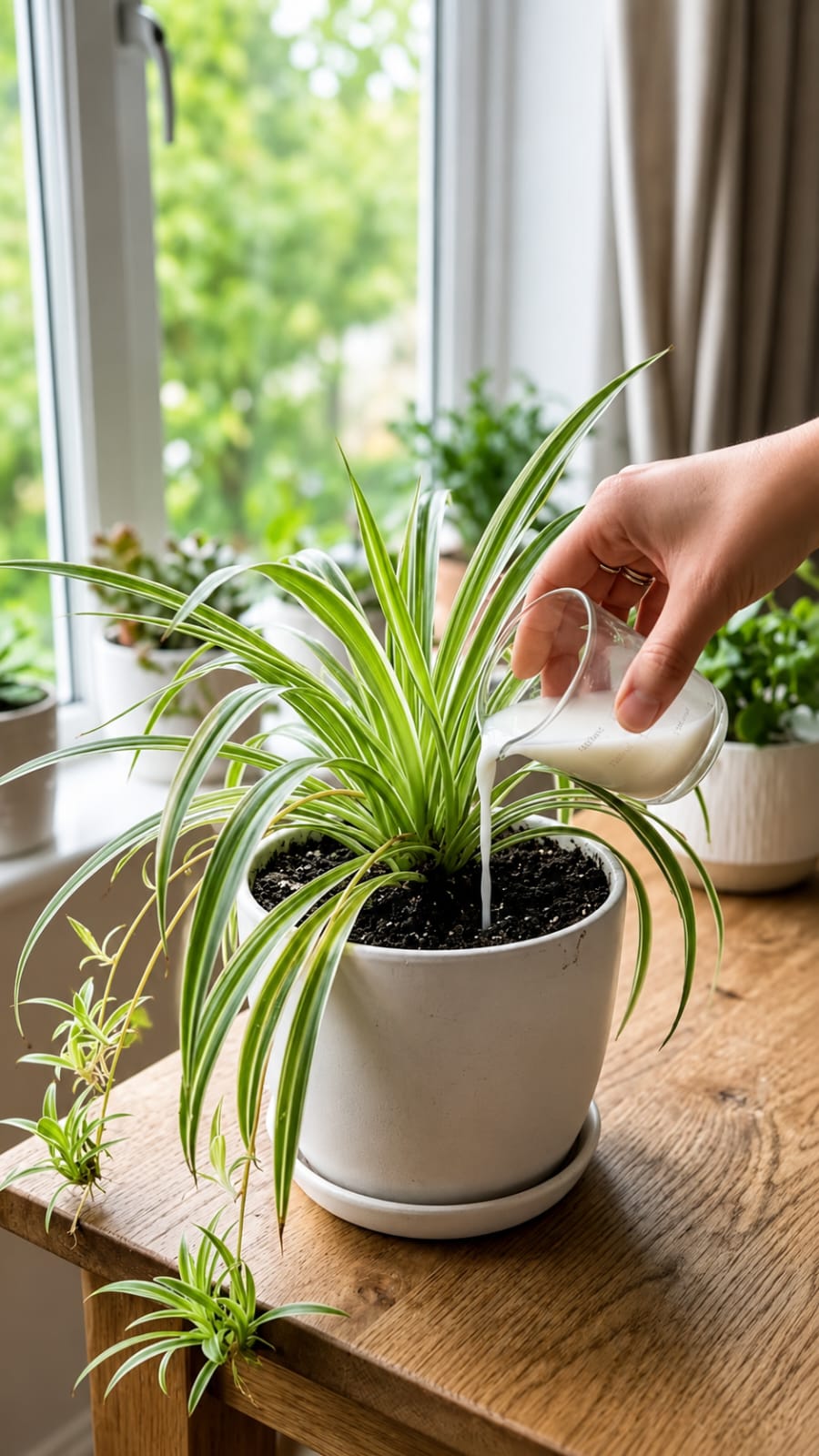
A sixth mistake is using too many homemade liquids. Milk, coffee, sugary water, baking soda water, and thick rice water can all create residue or root stress. Spider plants are easy because they do not need complicated care.
Final Thoughts
Milk for spider plants may sound like a simple natural trick, but it is usually not worth the risk. Milk can sour in the soil, attract fungus gnats, leave residue, create odor, and disturb the root zone. Spider plants do not need milk to grow fuller leaves or produce babies.
The real foundation of spider plant health is bright indirect light, proper watering, drainage holes, airy soil, clean leaves, moderate humidity, and gentle feeding during active growth. If the plant has brown tips, check water quality and fertilizer buildup. If it looks thin, improve light. If it is crowded, repot carefully.
With simple care and clean styling, spider plants can remain beautiful indoor plants for living rooms, bedrooms, kitchens, bathrooms, home offices, apartments, bright windowsills, hanging baskets, commercial interiors, luxury home staging, and premium plant displays. Fresh leaves, healthy roots, baby plantlets, tidy soil, and balanced maintenance will always create a safer and more elegant result than relying on risky milk shortcuts.