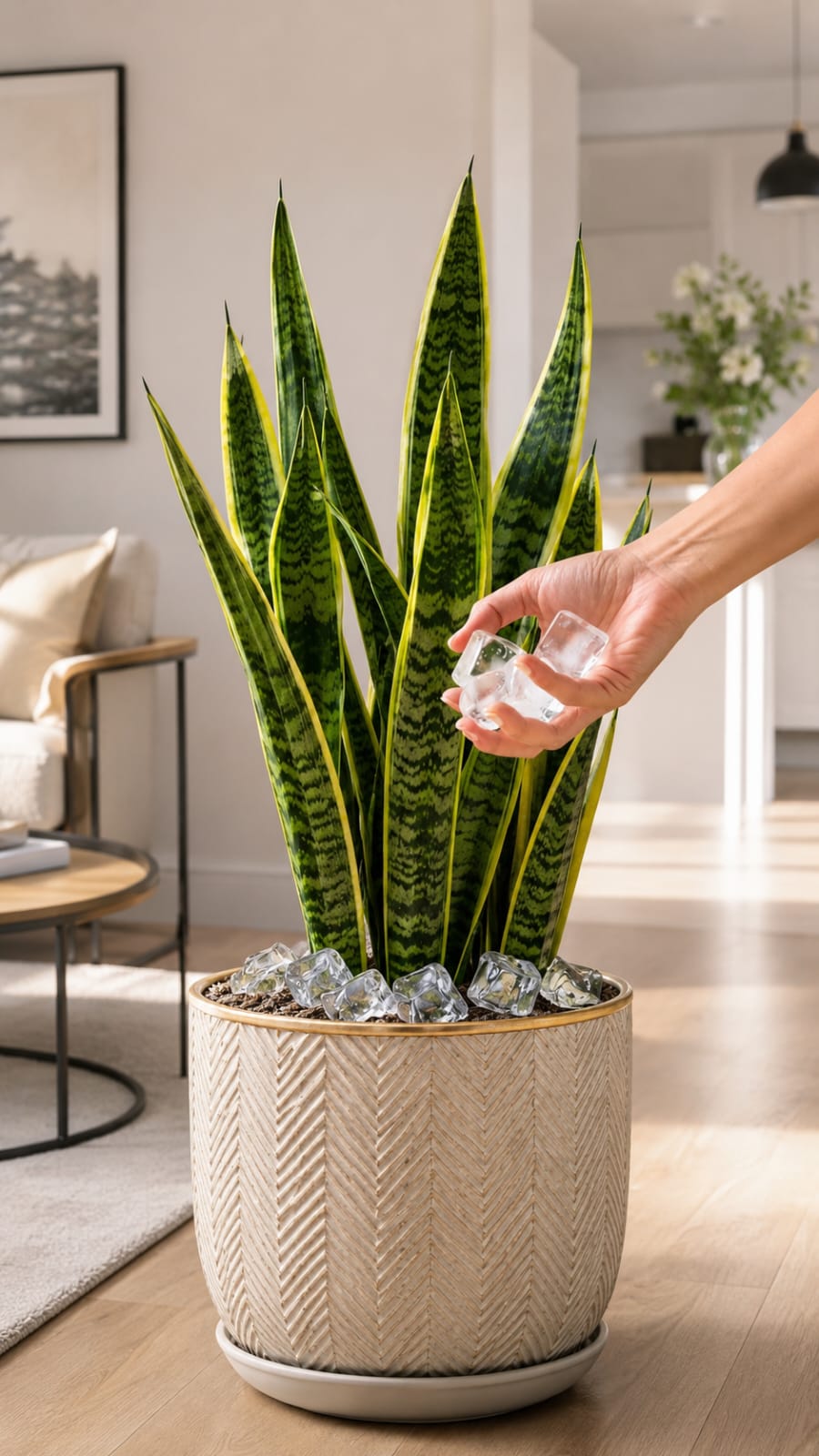
Snake plant is one of the most popular indoor plants for homeowners who want strong upright leaves, bold green patterns, yellow-edged variegation, simple care, and a clean decorative display that fits beautifully in living rooms, bedrooms, home offices, apartments, bright entryways, plant shelves, office corners, commercial interiors, luxury home staging, and premium indoor plant styling. Its tall sword-shaped leaves create structure in a room, and its ability to tolerate dry indoor air makes it one of the easiest plants to keep looking elegant with very little daily attention.
Many plant lovers become curious when they see ice cubes placed around the top of a snake plant pot. This method is often described as a simple watering trick that gives the plant slow moisture without overwatering. It may look clean, modern, and easy, especially in a decorative pot where the ice cubes melt slowly across the soil surface. However, snake plants are succulents with thick leaves and underground rhizomes that prefer warmth, drainage, and dry-down time. Ice can shock roots, chill the potting mix, and create uneven moisture if used carelessly.
The safest way to understand ice cube watering is to treat it as a risky convenience method, not a best-practice snake plant care routine. A snake plant does not become healthier because of cold water melting on its roots. It grows best when it receives bright indirect light, fast-draining soil, drainage holes, infrequent watering, warm stable conditions, clean leaves, and gentle feeding only during active growth. If the plant is healthy, plain room-temperature water is usually better than ice. If the plant is struggling, ice is not the solution. The first step is checking soil moisture, root health, drainage, light, and temperature.
Why Snake Plants Are Different From Moisture-Loving Houseplants
Snake plants store water in their thick leaves and underground rhizomes. This storage system allows them to tolerate dry periods much better than many leafy tropical plants. A snake plant does not need constant moisture around its roots. In fact, too much moisture is one of the fastest ways to damage it. The roots and rhizomes need oxygen and dry-down time between waterings.
Because snake plants are so drought-tolerant, many owners accidentally harm them by trying too hard. Frequent watering, heavy soil, decorative pots without drainage, and damp surfaces can all lead to root rot. The plant may look strong for a while, then suddenly soften at the base, yellow, or collapse. Once the rhizomes rot, recovery becomes more difficult.
Ice cubes may seem like a way to avoid overwatering because they melt slowly, but they still add water. If the soil is not ready for moisture, ice can make the root zone too wet. If the pot is cold or the room is cool, melted ice can keep the soil chilled and damp longer than expected.
What Ice Cube Watering Is Supposed to Do
The idea behind ice cube watering is simple. Instead of pouring water quickly into the pot, the ice melts slowly and releases small amounts of water over time. Some homeowners like this because it feels controlled. It can also reduce sudden overflow from the top of the pot, especially in decorative containers.
For certain plants sold in small pots, ice cube watering is sometimes promoted as a measured way to water. However, that does not mean it is ideal for snake plants. Snake plants prefer a full watering when the soil is dry, followed by a long dry period. A few ice cubes melting on top may wet only part of the root zone while leaving other areas dry. This can create uneven watering rather than healthy watering.
Another issue is temperature. Snake plant roots prefer room-temperature water. Ice is much colder than the plant’s natural comfort zone. Cold water can stress roots, especially in winter or in a cool room near a window.
Why Ice Can Be Risky for Snake Plant Roots
Snake plant roots and rhizomes are adapted to warm, dry-leaning conditions. Placing ice directly on the soil can create a cold spot around the upper root zone. If the ice touches the base of the leaves or rhizomes, the cold moisture may sit too close to sensitive tissue. This is not ideal for a plant that already dislikes prolonged dampness.
Cold moisture can also slow drying. In a warm bright room, ice may melt and dry quickly. In a cool room, the potting mix may stay cold and damp. If the plant is in a dense potting mix, the risk increases. The soil may hold the melted ice water around the roots for too long.
The biggest danger is not one single ice cube used once. The bigger danger is making it a routine. Repeated cold watering can weaken roots over time, especially if the plant is not receiving enough light or the pot does not drain properly.
Best Watering Method for Snake Plants
The best watering method for snake plants is simple. Wait until the soil has dried well. Then water thoroughly with room-temperature water until excess drains from the bottom. Let the pot drain completely, empty the saucer, and do not water again until the soil dries properly.
This method hydrates the root zone evenly while still respecting the plant’s need for dryness between waterings. It also helps flush minor mineral buildup from the soil, which ice cubes usually do not do well. A small amount of melting ice may not move through the whole pot, so salts and residue can remain in the mix.
Snake plants should not receive little sips every few days. They prefer deep watering followed by a dry period. If the plant is in bright light and a fast-draining mix, this routine keeps the roots healthier and stronger.
How Often Should a Snake Plant Be Watered?
There is no perfect calendar for watering a snake plant. The timing depends on light, temperature, pot size, soil mix, humidity, and season. A snake plant in a bright warm room may need water more often than one in a cool shaded corner. A plant in terracotta may dry faster than one in plastic or glazed ceramic.
In general, wait until the soil is dry deeper down, not just at the surface. The top inch can dry while the bottom remains damp. Use your finger, a wooden skewer, or pot weight to judge moisture. If the pot still feels heavy or the skewer comes out damp, wait longer.
During winter or low-light periods, snake plants use less water. This is when ice cube watering becomes especially risky. The plant is already growing slowly, and cold moisture can remain too long in the pot. In cooler months, less frequent room-temperature watering is safer.
Best Soil for Snake Plants
Snake plants need fast-draining soil. A cactus or succulent mix is a good base, but it can be improved with perlite, pumice, coarse sand, lava rock, or small bark pieces. The goal is a mix that drains quickly and allows air to reach the roots.
Dense regular potting soil can stay wet for too long. If a snake plant is growing in heavy soil, ice cubes will not make watering safer. The melted water may still remain trapped around the roots. In that case, repotting into a gritty mix is a much better solution.
The pot should have drainage holes. A decorative pot without drainage is a hidden danger. Even if ice cubes seem controlled, melted water can collect at the bottom. Roots sitting in trapped water may rot. For a stylish look, use a draining inner pot inside a decorative outer container and remove it for watering.
Why Drainage Holes Matter More Than Ice Cubes
Drainage holes are one of the most important parts of snake plant care. They allow extra water to escape and help prevent the bottom of the pot from becoming soggy. Without drainage, the owner cannot easily know how much water is sitting under the soil.
Ice cubes do not solve drainage problems. They only change how water enters the soil. If the pot has no exit, water still remains inside. Over time, this can lead to root rot even when the amount of water seems small.
A beautiful decorative planter can still be used, but the plant should sit in a separate nursery pot with holes. After watering, let the inner pot drain fully before placing it back. This keeps the display attractive and the roots safer.
Best Light for Strong Snake Plant Growth
Snake plants tolerate low light, but they grow stronger in bright indirect light. Better light helps them produce firmer leaves, stronger patterns, and healthier rhizomes. Low-light survival is not the same as active growth. A plant in a dim corner may stay alive but grow slowly and use water slowly.
If the snake plant is in low light, it needs less water. Ice cubes in a low-light corner can create damp soil that lingers. This increases the chance of root problems. Before changing the watering method, improve the plant’s location if possible.
A bright room with filtered light is ideal. Morning sun can work well if the plant is acclimated. Harsh direct afternoon sun can scorch leaves, especially if the plant was previously kept indoors in shade. Move the plant gradually when changing light conditions.
When Ice Cubes Might Cause the Most Trouble
Ice cubes are most risky in winter, in cold rooms, near drafty windows, in low light, in pots without drainage, and in dense soil. They are also risky for newly repotted plants, plants with root rot, and plants with soft or yellowing leaves.
If the snake plant already has signs of stress, do not use ice. Soft bases, mushy leaves, yellowing, drooping, sour soil smell, fungus gnats, or wet soil are all warning signs. The plant needs root inspection and better drainage, not cold water.
Ice should also be avoided if it touches the leaves directly. Cold wet contact at the base of leaves can stress tissue. If ice is used despite the risks, it should never be packed against the crown or leaf base.
What to Do If You Already Used Ice Cubes
If ice cubes were used once and the plant looks healthy, do not panic. Let the soil dry fully before watering again. Watch the plant for signs of softness, yellowing, or sour soil. One occasional use may not harm a strong plant in fast-draining soil.
If ice has been used regularly, check the soil more carefully. If the mix is staying damp, stop using ice and switch to room-temperature watering only when dry. If the pot has no drainage, repot into a safer container.
If leaves are soft at the base or the soil smells bad, remove the plant from the pot and inspect the rhizomes. Healthy rhizomes should be firm. Rotten parts should be removed with clean tools, and the plant should be repotted into fresh dry succulent mix.
How to Keep Snake Plant Leaves Clean and Glossy
Snake plant leaves can collect dust, especially in living rooms and offices. Dust dulls the leaf pattern and reduces light absorption. Wipe the leaves gently with a soft damp cloth. Support each leaf while wiping so it does not bend or crack.
Do not use oily leaf shine products. Snake plants already have a natural surface. Oils can attract dust and make the plant look artificial. Plain water and a soft cloth are enough for clean, elegant leaves.
If ice water splashes on the leaves, wipe it away. Water spots can leave marks, especially if your water has minerals. Clean leaves make the plant look more luxurious and help the variegation stand out.
Feeding Snake Plants Safely
Snake plants are light feeders. During spring and summer, a diluted cactus or balanced houseplant fertilizer can be used occasionally. The dose should be weak. Too much fertilizer can cause salt buildup, brown tips, and root stress.
Do not fertilize during winter or when the plant is in low light. Do not fertilize a plant with wet soil or soft leaves. Fertilizer helps healthy plants grow, but it does not rescue damaged roots.
Ice cubes should not be used as a way to apply fertilizer. Fertilizer should be diluted in room-temperature water and applied only when the plant needs watering. Strong fertilizer, cold temperature, and damp soil are a bad combination for snake plant roots.
Encouraging Offshoots and Fuller Growth
Snake plants produce offshoots from underground rhizomes when they are healthy and established. A slightly snug pot, bright indirect light, and correct watering can encourage new shoots. However, the plant should not be severely stressed or trapped in rotten soil.
If the goal is more offshoots, focus on root health. Use a fast-draining mix, keep the pot warm, provide bright filtered light, and water only when dry. A healthy rhizome system is what creates new pups.
Ice cubes do not force offshoots. If the plant is already mature and conditions are right, new shoots may appear naturally. Patience is part of snake plant care.
Indoor Decor and Styling Ideas
Snake plants are excellent for interior styling because their vertical leaves create height and structure. A textured cream planter gives a soft modern look. A black pot creates contrast. A terracotta pot adds warmth. A woven basket makes the plant feel natural and cozy.
Place the plant where the leaves have space to stand upright. A living room corner, entryway, bedroom, office, hallway, plant stand, or bright window area can work beautifully. Snake plants pair well with pothos, ZZ plants, peace lilies, rubber plants, and trailing vines.
Ice cubes may look decorative for a moment, but they should not be used as a styling layer. Decorative stones, bark, or a clean visible soil surface are safer than cold melting cubes. A premium plant display should look clean and intentional without putting the roots at risk.
Common Mistakes With Snake Plant Watering
One common mistake is watering too often. Snake plants need dry-down time. Another mistake is using a pot without drainage. A third mistake is assuming the plant needs water because the soil surface looks dry, even when the lower soil is still damp.
A fourth mistake is using cold water or ice regularly. Snake plants prefer warmth and stability. A fifth mistake is keeping the plant in low light and watering as if it were in bright sun. Low-light plants use water slowly.
A sixth mistake is treating snake plants like tropical moisture-loving plants. They are tough, dry-leaning plants that need less attention than many houseplants. Their care should be simple and controlled.
Continue to Page 2
Continue to page 2 for more details about this article and the key points many readers miss on the first page.