Better Alternatives to Ice Cube Watering
If the goal is controlled watering, use a small watering can with room-temperature water. Water slowly and evenly around the soil. Let excess drain out. This gives control without cold shock.
If the goal is preventing overwatering, improve soil and drainage. A gritty mix and a pot with holes are much safer than ice cubes. If the goal is remembering when to water, check the soil weekly but water only when dry.
If the goal is a clean decorative look, use a beautiful planter with a draining inner pot. Keep the leaves wiped and the soil surface tidy. The plant will look better and stay healthier.
Final Thoughts
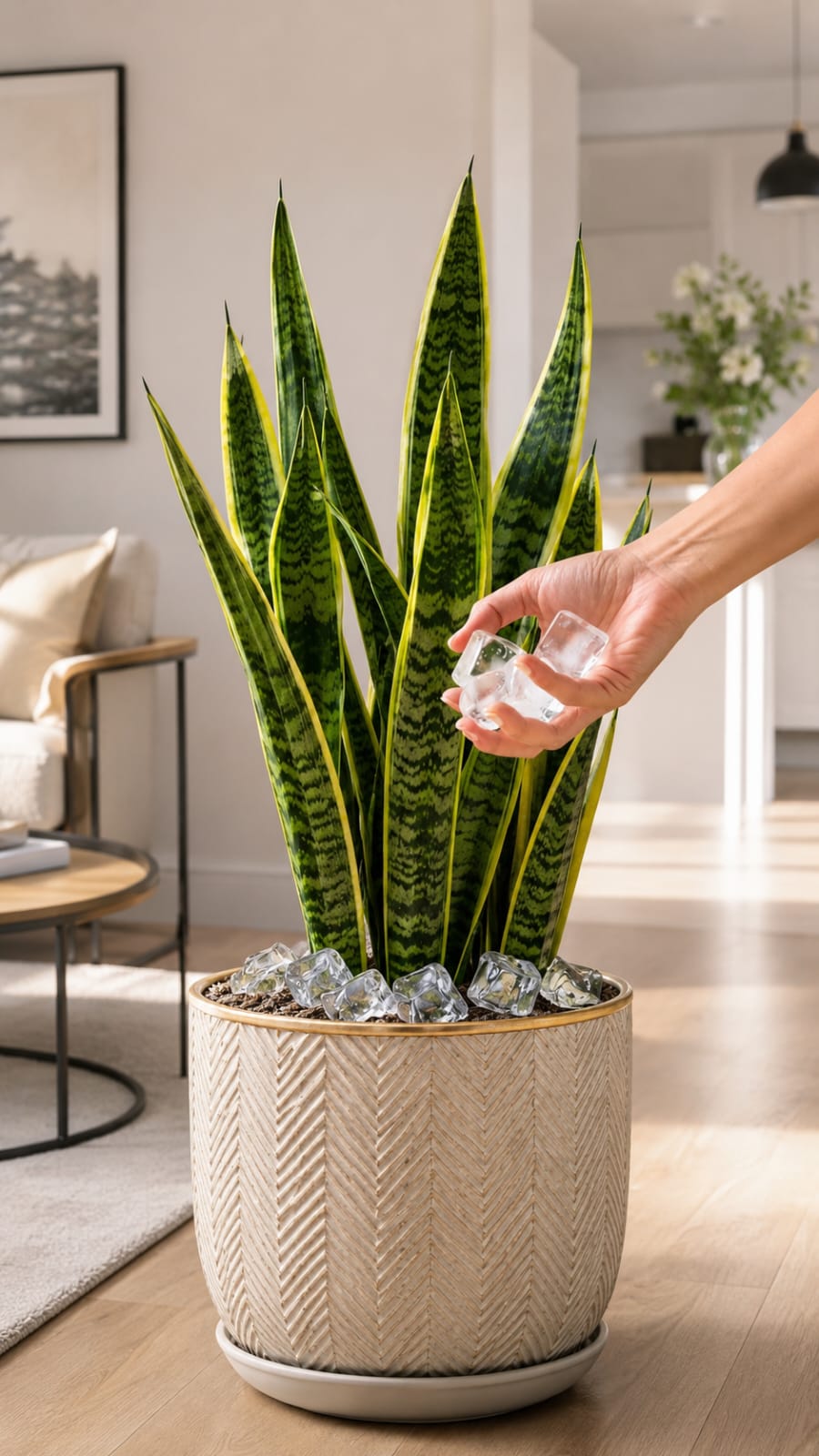
Ice cubes around a snake plant may look like a simple modern watering trick, but they are not the best choice for long-term care. Snake plants prefer warmth, fast drainage, and dry-down time between waterings. Ice can chill the root zone, create uneven moisture, and become risky in cool rooms, low light, dense soil, or pots without drainage.
The real foundation of snake plant health is bright indirect light, fast-draining soil, drainage holes, infrequent room-temperature watering, firm rhizomes, clean leaves, warm stable conditions, and gentle feeding only during active growth. If the plant is healthy, keep the routine simple. If the plant is struggling, check roots and soil before adding any watering trick.
With patient care and clean styling, snake plants can remain beautiful indoor plants for living rooms, bedrooms, home offices, apartments, bright windowsills, commercial interiors, luxury home staging, and premium plant displays. Strong upright leaves, healthy roots, tidy soil, and balanced maintenance will always create a safer and more elegant result than relying on risky ice cube shortcuts.