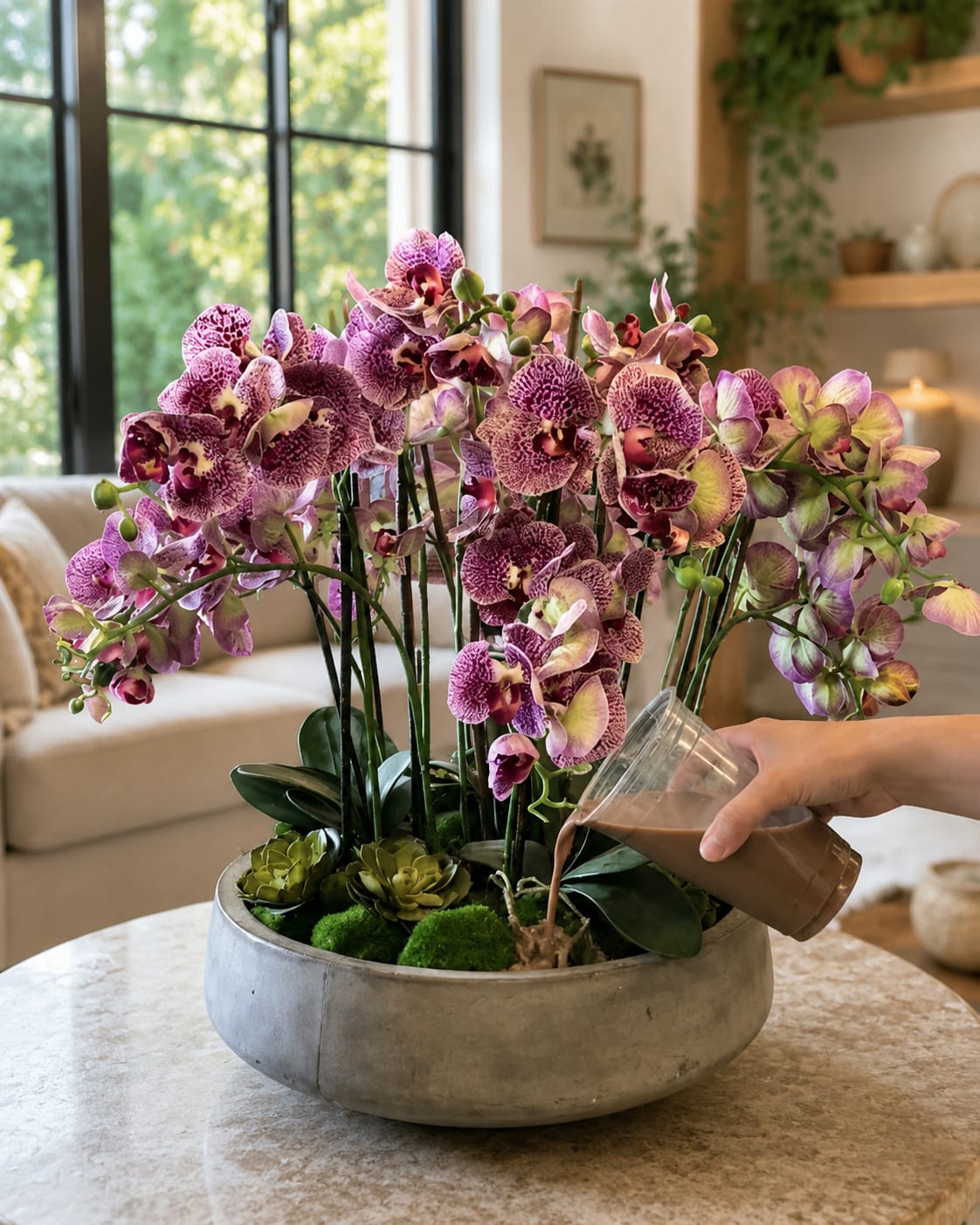
How to Encourage New Roots
New roots grow when the plant has warmth, light, humidity, and proper moisture. Keep the orchid stable in its pot. Do not keep moving it. Do not overwater.
New root tips are often bright green or reddish depending on the orchid. They are delicate, so avoid touching or breaking them.
Healthy new roots are a better sign than temporary leaf shine.
Decor Styling With Blooming Orchids
Orchids are not just plants. They are living decor pieces. A blooming orchid arrangement can become the centerpiece of a room. Their tall flower spikes add height, elegance, and color.
- Use a shallow ceramic bowl for a luxury centerpiece look.
- Place a single orchid in a white pot for modern style.
- Group several orchids for a hotel-lobby effect.
- Add moss on top for a clean finished look.
- Use natural stones around the pot for texture.
- Place orchids on a console table near indirect light.
- Use them in a bathroom with bright natural light.
- Style them with candles, books, and neutral decor.
Always make sure decorative styling does not block drainage. Beauty should not trap water around the roots.
Best Rooms for Orchids
- Bright living room
- Bathroom with a window
- Kitchen window with filtered light
- Bedroom near an east window
- Dining table with bright indirect light
- Home office shelf
- Sunroom with filtered light
Avoid dark corners, hot direct sun, cold drafts, and heater vents.
How to Support Heavy Orchid Spikes
Blooming orchids can become top-heavy. Use thin stakes and soft clips to support flower spikes. Insert the stake carefully without damaging roots. Clip the flower spike loosely to the stake.
Do not force a flower spike into a harsh curve. Support it naturally. Heavy blooms should be held upright but not squeezed.
Staking keeps the display elegant and prevents breakage.
Cleaning Orchid Leaves
Dusty leaves reduce light absorption and make the plant look dull. Wipe leaves gently with a damp cloth. Support each leaf while wiping.
Do not use oily leaf shine products. Orchids look best with clean natural leaves. Avoid getting water trapped between leaves at the crown.
Clean leaves help the plant stay healthy and attractive.
Seasonal Orchid Care
Spring
Spring is a good time for repotting, light feeding, and encouraging new root growth. Use brown tonic only if roots are healthy.
Summer
Orchids may need more frequent watering in warm conditions. Protect from harsh sun. Maintain humidity and airflow.
Fall
Some orchids prepare to bloom after a slight nighttime temperature drop. Reduce heavy feeding and monitor light.
Winter
Water carefully. Keep away from cold windows and drafts. Avoid overfeeding if growth slows.
Weekly Orchid Care Routine
- Check root color and firmness.
- Check whether the bark is nearly dry.
- Look for water in the crown.
- Inspect leaves for yellowing or pests.
- Check flower spikes and clips.
- Rotate slightly for even light.
- Water only when needed.
Monthly Orchid Care Routine
- Flush the pot with plain water if feeding regularly.
- Check if bark is breaking down.
- Clean leaves gently.
- Trim dead flower spikes.
- Inspect roots through the clear pot.
- Apply weak tonic only during active growth if desired.
- Adjust light as seasons change.
Common Mistakes to Avoid
- Using strong brown liquid
- Using coffee with sugar or milk
- Pouring tonic into the crown
- Letting orchids sit in runoff
- Using regular potting soil
- Using a pot without drainage
- Feeding a plant with rotten roots
- Using tonic every watering
- Ignoring sour-smelling bark
- Keeping orchids in dark corners
Safe Brown Tonic Routine Summary
- Make sure the orchid roots are healthy.
- Use a clean, mild, diluted brown tonic.
- Apply only when the bark is nearly dry.
- Pour gently through the potting mix.
- Avoid the crown and leaves.
- Let the pot drain completely.
- Use no more than once every 4 to 6 weeks.
- Flush with plain water between feedings.
- Stop if smell, mold, gnats, or root damage appears.
Frequently Asked Questions
Can I water orchids with coffee?
Only very diluted plain black coffee can be used rarely. It should never contain sugar, milk, cream, or flavoring. For most growers, orchid fertilizer is safer.
Can brown tonic make orchids bloom?
It may support general health, but blooms depend mostly on roots, light, temperature, and maturity.
Can I use compost tea on orchids?
Only if it is very weak, fresh, clean-smelling, and strained. Use rarely and let it drain fully.
Should I use tonic during bloom?
Use very lightly if the plant is healthy. Do not overfeed during bloom, because stress can shorten flower life.
What is the safest feeding method?
A balanced orchid fertilizer diluted to weak strength is the most predictable option.
Final Thoughts
A brown orchid tonic can be a gentle support for healthy orchids, but it must be used with care. Orchids do not like heavy, sticky, sour, or frequent homemade liquids. Their roots need air, drainage, and cleanliness. A tonic should never be used to hide poor care, old bark, root rot, or bad drainage.
The safest routine is simple. Use bright indirect light, a pot with drainage, fresh orchid bark, careful watering, good airflow, and weak feeding during active growth. If you want to use a brown tonic, keep it mild, fresh, strained, and rare. Watch the roots closely. If the plant shows signs of stress, stop and return to plain water and proper orchid care.
With balanced care, orchids can stay beautiful for a long time. Their blooms can last for weeks, their roots can grow strong, and their leaves can remain firm and glossy. A gentle tonic may support that beauty, but the real secret is always healthy roots, clean moisture, and patient care.