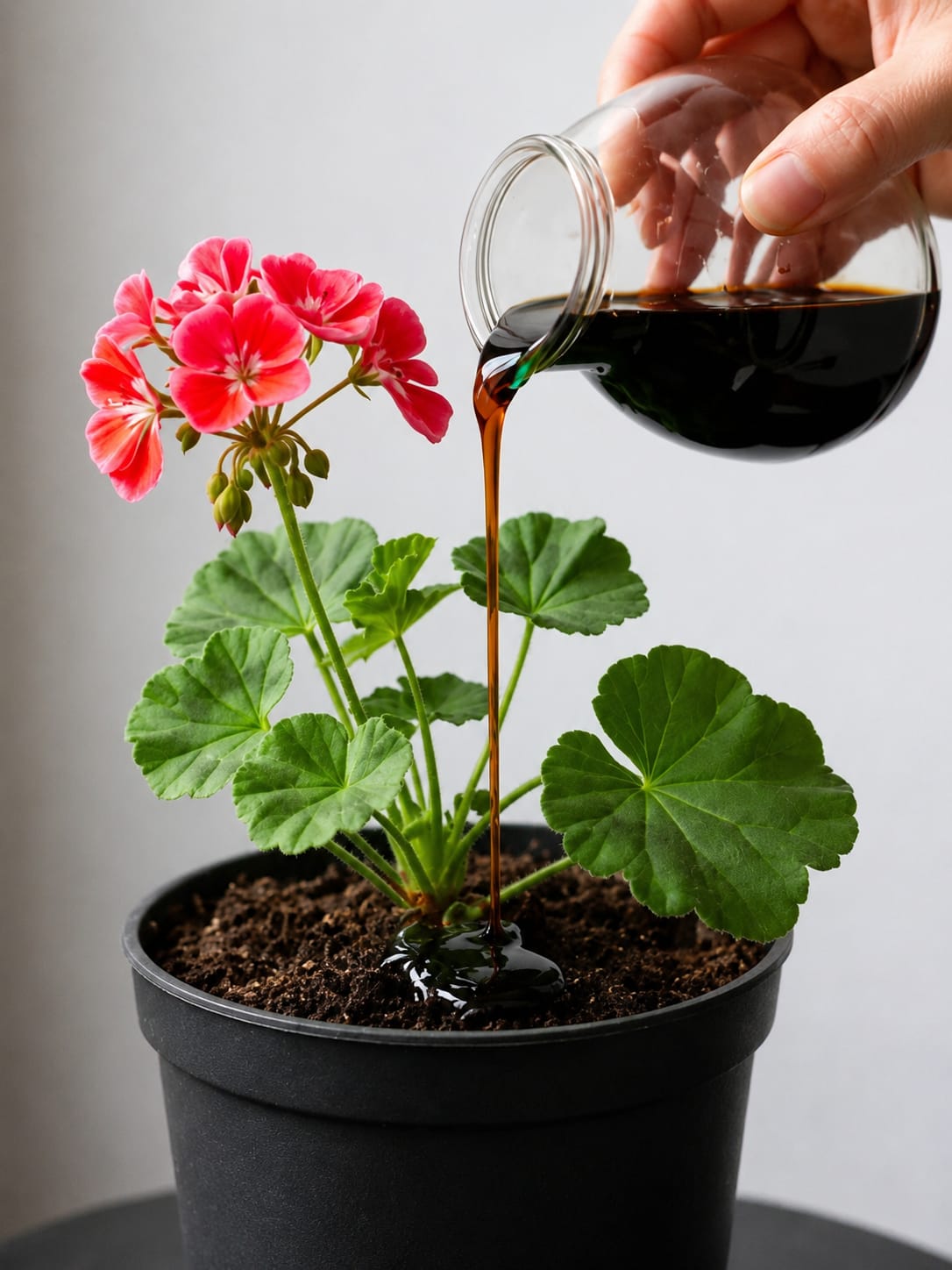
Geraniums are some of the most cheerful flowering plants you can grow in pots. Their round green leaves, bright flower clusters, long bloom season, and easy-care nature make them perfect for windowsills, balconies, patios, sunny porches, kitchen corners, and bright indoor plant displays. A healthy geranium can bloom again and again with the right care, giving you red, pink, coral, white, salmon, purple, or two-toned flowers for months.
One simple plant-care idea that many gardeners talk about is using a dark brown tonic around flowering plants. For geraniums, this is often linked to a very diluted blackstrap molasses water, weak compost tea, or mild worm casting tea. These liquids look dark and rich, so people often believe they can “wake up” flowering plants and help them push more blooms. But geraniums are potted plants with sensitive roots, so this trick must be used carefully.
The most important thing to know is this: a brown plant tonic is not magic. It cannot fix root rot, low light, poor drainage, compacted soil, pests, or severe neglect. It can only support a geranium when the basic care routine is already healthy. If the plant has enough light, good airflow, a pot with drainage, balanced watering, and a light feeding routine, then a gentle homemade tonic may give a small boost to soil life and plant energy.
This complete guide explains how to use a dark brown geranium tonic safely, what ingredients are safer, what ingredients to avoid, how often to apply it, how to keep geranium roots healthy, how to encourage more flowers, and how to style blooming geraniums beautifully indoors and outdoors. The goal is to help your plant look lush, fresh, and full of blooms without risking sticky soil, pests, mold, or root damage.
What Is the Geranium Brown Tonic Trick?
The geranium brown tonic trick usually means watering the plant occasionally with a diluted dark liquid made from natural ingredients. The most common safe versions are blackstrap molasses water, weak worm casting tea, or very mild compost tea. The liquid is used in small amounts to support the soil and provide gentle nourishment.
Blackstrap molasses is often used in gardening because it contains natural sugars and small amounts of minerals. In outdoor soil, it can help feed beneficial microbes. In indoor pots, it must be used much more carefully because containers do not flush or breathe the same way open garden soil does.
Geraniums like feeding, but they do not like heavy, sticky, wet soil. A thick molasses mixture can attract fungus gnats, ants, mold, and bacteria. That is why the tonic must be extremely diluted. A little goes a long way.
Best Safe Brown Tonic for Geraniums
The safest brown tonic for geraniums is a very diluted blackstrap molasses water. It should be thin, watery, and lightly colored, not thick like syrup. It should be used only when the plant actually needs watering.
Gentle Blackstrap Molasses Tonic Recipe
- 1/4 teaspoon unsulfured blackstrap molasses
- 1 liter of room-temperature water
- Mix until completely dissolved
- Use only on soil that is slightly dry
- Apply once every 4 to 6 weeks during active growth
This weak mixture is much safer than pouring thick molasses directly onto the soil. Never use straight molasses. Never use a large spoonful in a small pot. The goal is a mild tonic, not a sticky sugar bath.
Why Unsulfured Blackstrap Molasses Is Preferred
If you use molasses, choose unsulfured blackstrap molasses. Unsulfured versions are usually preferred for garden use because they do not contain added sulfur dioxide. Blackstrap molasses is also more mineral-rich than light molasses, but that does not mean more is better.
Geraniums need balanced nutrition. Too much of any one material can disturb the soil. Use the smallest amount possible and watch the plant’s response.
If you do not have blackstrap molasses, skip the trick. Do not replace it with pancake syrup, corn syrup, honey, caramel syrup, chocolate syrup, or sweet drink mixes. These are not plant tonics and can create serious soil problems.
What This Tonic May Do
A very weak molasses water may support microbial activity in the potting mix. It may also provide tiny amounts of minerals. This can be useful during active growth when the geranium is producing leaves, stems, buds, and flowers.
However, the effect is gentle. It will not instantly create flowers overnight. It will not turn a weak, shaded, overwatered geranium into a blooming plant in one day. Think of the tonic as a small support added to an already good care routine.
The real bloom boosters are sunlight, proper watering, regular deadheading, healthy roots, and balanced fertilizer.
What This Tonic Cannot Do
- It cannot fix a plant with rotten roots.
- It cannot replace sunlight.
- It cannot replace balanced fertilizer completely.
- It cannot revive a plant in soggy soil.
- It cannot cure pests.
- It cannot repair burned leaves.
- It cannot force flowers in deep shade.
- It cannot save a pot with no drainage.
- It cannot undo years of compacted soil.
If your geranium is not blooming, the first thing to check is light. Geraniums need strong bright light to bloom well. A dark corner will not produce many flowers, no matter what tonic you use.
Important Safety Warning
Do not pour thick dark liquid directly onto geranium soil. Thick molasses, strong coffee, concentrated compost tea, or sugary liquids can create sticky soil and attract pests. They can also feed the wrong kinds of microbes when the potting mix stays damp.
Use only a weak solution. Apply it rarely. Let extra liquid drain. Do not use it when the soil is already wet. Do not let the pot sit in a saucer full of tonic.
When using any homemade plant tonic, less is safer.
When to Use the Brown Tonic
The best time to use a brown geranium tonic is during active growth, usually spring and summer. This is when the plant is producing new leaves and flowers. The plant can use nutrients better when light is strong and growth is active.
Use the tonic only when the top inch of soil feels dry. If the soil is wet, wait. Geraniums do not like constantly soggy roots.
Do not use the tonic during cold winter dormancy unless the plant is growing actively under bright light. In winter, geraniums usually need less water and less feeding.
How Often to Use It
Use the tonic once every 4 to 6 weeks at most during active growth. If your geranium is already receiving regular fertilizer, use the tonic even less often. Too much feeding can cause soft leafy growth and fewer flowers.
If the plant is in a small pot, use a smaller amount. If it is outdoors in a large container with fast drainage, it may tolerate more than an indoor pot. Still, keep the mixture weak.
After using the tonic, continue normal watering with plain water.
How to Apply It Correctly
- Check that the top inch of soil is dry.
- Mix the tonic until fully dissolved.
- Pour slowly around the outer soil area.
- Avoid pouring directly onto the crown of the plant.
- Use enough to lightly water, not flood.
- Let excess liquid drain from the pot.
- Empty the saucer after watering.
- Watch the plant for several days.
Do not splash the tonic onto flowers or leaves. If it gets on leaves, wipe gently with clean water. Sticky residue can attract dust and pests.
Signs the Tonic Is Safe for Your Plant
- The soil does not smell sour.
- No mold appears on the surface.
- No gnats appear around the pot.
- Leaves stay firm and green.
- New growth continues normally.
- Flowers open without wilting suddenly.
- The soil dries at a normal pace.
These signs mean the plant is tolerating the routine. It does not mean you should increase the strength. Keep the tonic weak and occasional.
Signs You Should Stop Immediately
- Soil smells fermented or sour.
- White mold appears on the soil.
- Fungus gnats appear.
- Leaves yellow soon after application.
- The pot stays wet too long.
- The plant wilts even though soil is wet.
- Stems become soft at the base.
- Ants are attracted to the pot.
If these signs appear, stop using the tonic. Flush the soil with plain water if the pot drains well. If the smell continues, repot the geranium in fresh soil.
What to Do if You Used Too Much Molasses
If you accidentally poured a strong molasses mixture into the pot, act quickly. Take the plant to a sink or outdoor area. Run plenty of room-temperature water through the soil to flush out excess sugar, but only if the pot has drainage holes.
Let the pot drain completely. Empty the saucer. Place the plant in bright light with good airflow and allow the soil to dry slightly before watering again.
If the soil becomes sticky, smells bad, or attracts gnats, repot the plant. Remove as much old soil as possible without destroying healthy roots. Replant in fresh, well-draining potting mix.
Best Soil for Geraniums
Geraniums like a potting mix that drains well but still holds enough moisture to support flowering. Dense garden soil is not ideal for pots because it can compact and stay wet too long.
Simple Geranium Potting Mix
- 2 parts quality potting mix
- 1 part perlite
- 1 part compost or coco coir
- A small amount of slow-release fertilizer, optional
This type of mix allows roots to breathe. Healthy roots are essential for flowers. If your soil is heavy, sour, or compacted, no tonic will work well until the soil is improved.
Why Drainage Matters
Geraniums do not like sitting in water. Their roots need oxygen. A pot without drainage holes can cause root rot, yellow leaves, and weak flowering.
Use a pot with drainage holes. If you use a decorative cover pot, keep the geranium in a nursery pot inside it. After watering, let the plant drain fully before placing it back.
Drainage is one of the simplest ways to keep geraniums healthy.
Best Light for Geranium Blooms
Geraniums need bright light to bloom. Indoors, they should be placed near the brightest window you have. A south-facing or west-facing window can work well if the plant is not overheating. East-facing windows give gentler morning sun.
Outdoors, geraniums usually bloom best with several hours of sun each day. In very hot climates, they may appreciate some afternoon shade.
If your geranium has lush leaves but few flowers, it may need more light or less nitrogen-heavy feeding.
Watering Geraniums Correctly
Water geraniums when the top inch of soil feels dry. Water deeply until excess drains from the bottom, then empty the saucer. Do not keep the soil constantly wet.
Geraniums can handle slight dryness better than soggy soil. However, repeated severe dryness can cause buds to drop and leaves to crisp.
Balanced watering supports strong roots and steady blooming.
How to Tell if a Geranium Needs Water
A thirsty geranium may have slightly limp leaves, dry soil, and a light pot. The leaves may look dull. If the soil is dry several inches down, water thoroughly.
Do not wait until the plant collapses repeatedly. Geraniums bloom best with consistent care.
Check the soil with your finger instead of watering only by schedule.
How to Tell if a Geranium Is Overwatered
An overwatered geranium may have yellow leaves, soft stems, wet soil, and a sour smell from the pot. The plant may wilt even though the soil is damp because damaged roots cannot absorb water properly.
If this happens, stop watering. Move the plant to brighter light and better airflow. If the soil remains wet too long or stems are soft, repot into fresh dry mix and trim damaged roots.
Do not add brown tonic to an overwatered geranium.
Feeding Geraniums for More Flowers
Geraniums need nutrients to bloom well, especially in pots. Use a balanced fertilizer or a bloom-supporting fertilizer during active growth. Follow the label and avoid overfeeding.
Too much nitrogen can produce lots of leaves but fewer flowers. A fertilizer with balanced nutrients is usually better than strong homemade feeding.
If using the brown tonic, use it between regular feedings or instead of one feeding, not on top of a heavy fertilizer routine.
Deadheading for Continuous Blooms
Deadheading is one of the best tricks for more geranium flowers. When a flower cluster fades, remove it. This stops the plant from spending energy on seed production and encourages new buds.
Follow the faded flower stem down to where it joins the main stem and snap or cut it off cleanly. Remove yellow leaves as well.
A clean geranium blooms better and looks more attractive.
Pinching for a Bushier Plant
If your geranium becomes tall and leggy, pinch back the growing tips. This encourages side branches and creates a fuller plant. Bushier plants usually produce more flowering points.
Pinch lightly during active growth. Do not remove too much at once from a weak plant.
Use clean scissors or your fingers, and cut just above a leaf node.
How to Revive a Weak Geranium
If your geranium looks weak, do not start with tonic. Start with diagnosis.
- Check the soil moisture.
- Check whether the pot has drainage.
- Look for soft stems.
- Check for pests under leaves.
- Move the plant to brighter light if needed.
- Trim dead flowers and yellow leaves.
- Refresh old soil if compacted.
- Water correctly.
- Feed lightly only after the plant stabilizes.
Once the plant is stable, you can consider a gentle brown tonic during active growth.
Pest Problems on Geraniums
Geraniums can attract aphids, spider mites, whiteflies, fungus gnats, and mealybugs. A sugary tonic can make pest problems worse if used too strongly.
Inspect the plant regularly. Look under leaves, near flower buds, and along stems. If pests appear, isolate the plant and treat the problem before using any tonic.
A clean plant responds better to feeding.
Fungus Gnats and Brown Tonic
Fungus gnats are small flying insects that love damp organic soil. If you use too much molasses or compost tea, gnats may appear. The best prevention is letting the top layer of soil dry between waterings and avoiding heavy organic liquids.
If gnats appear, stop using the tonic. Let the soil dry more, use sticky traps, and consider refreshing the top layer of soil.
Healthy watering habits are the best gnat control.
Can You Use Coffee on Geraniums?
Plain diluted coffee is sometimes used as a brown plant tonic, but it should be used carefully. Coffee can be acidic and can create buildup in pots. It should never contain sugar, milk, cream, or flavoring.
If using coffee, dilute it heavily: 1 part plain cooled black coffee with 6 to 8 parts water. Use rarely and only when the soil is ready for watering.
For geraniums, diluted molasses water or balanced fertilizer is usually a better choice than coffee.
Can You Use Compost Tea?
Compost tea can be helpful if it is mild, fresh, and well-strained. Strong or smelly compost tea should not be used indoors. It can smell bad and attract insects.
If using compost tea, dilute it until it looks like weak tea. Apply only to soil, not flowers. Let the pot drain fully.
For indoor geraniums, keep compost tea very light.
Can You Use Worm Casting Tea?
Worm casting tea is one of the gentler options. It can support soil health and provide mild nutrients. Use only a weak mixture and strain it well.
Mix one teaspoon of worm castings in one liter of water. Let it sit for a few hours, strain, and use as a light watering. Do not store it for long. Fresh is best.
Use once every 4 to 6 weeks during active growth.
How to Keep Geranium Flowers Bright
Bright blooms come from light, feeding, and plant health. Place the geranium in strong bright light. Remove spent flowers. Feed lightly but regularly. Avoid soggy soil. Keep pests away.
Flowers may fade faster in extreme heat, dry air, or harsh sun. If blooms dry too quickly, move the plant to a spot with morning sun and afternoon shade.
Healthy roots and steady care create better flowers than one strong feeding trick.
Indoor Geranium Care
Indoor geraniums need the brightest spot possible. A sunny windowsill is ideal. Without enough light, they may survive but produce fewer flowers. Rotate the pot weekly so growth stays even.
Water carefully. Indoor pots dry more slowly than outdoor pots. Always check the soil first.
Use a saucer to protect furniture, but never leave water sitting in it.
Outdoor Geranium Care
Outdoor geraniums usually bloom more heavily because they receive stronger light. Place them in a sunny spot with good airflow. Water when the top soil dries. In hot weather, container geraniums may need more frequent watering.
Deadhead often. Feed lightly during the growing season. Protect from heavy rain if pots become waterlogged.
Outdoor geraniums in containers still need drainage holes.
Best Pots for Geraniums
Terracotta pots are excellent for geraniums because they breathe and allow soil to dry more evenly. Plastic pots hold moisture longer, which can be useful in hot weather but risky indoors. Ceramic pots are decorative, but they should have drainage.
Choose a pot that fits the root system. A pot that is too large can hold too much wet soil. A pot that is too small can dry too fast and limit growth.
Stable pots are best for blooming plants because flower stems can make the plant top-heavy.
Decor Styling With Geraniums
Geraniums are classic decor plants. Their bright flowers and rounded leaves look cheerful in many spaces.
- Place a pink geranium in a white pot for a clean cottage look.
- Use terracotta for a warm Mediterranean style.
- Group red geraniums near a sunny balcony door.
- Place small geraniums on a kitchen windowsill.
- Use a black pot for modern contrast.
- Style with herbs like basil, mint, or rosemary nearby.
- Place on a wooden plant stand for height.
- Use matching pots for a bright window display.
Geraniums add color without needing complicated floral arrangements.
Continue to Page 2
Continue to page 2 for more details about this article and the key points many readers miss on the first page.