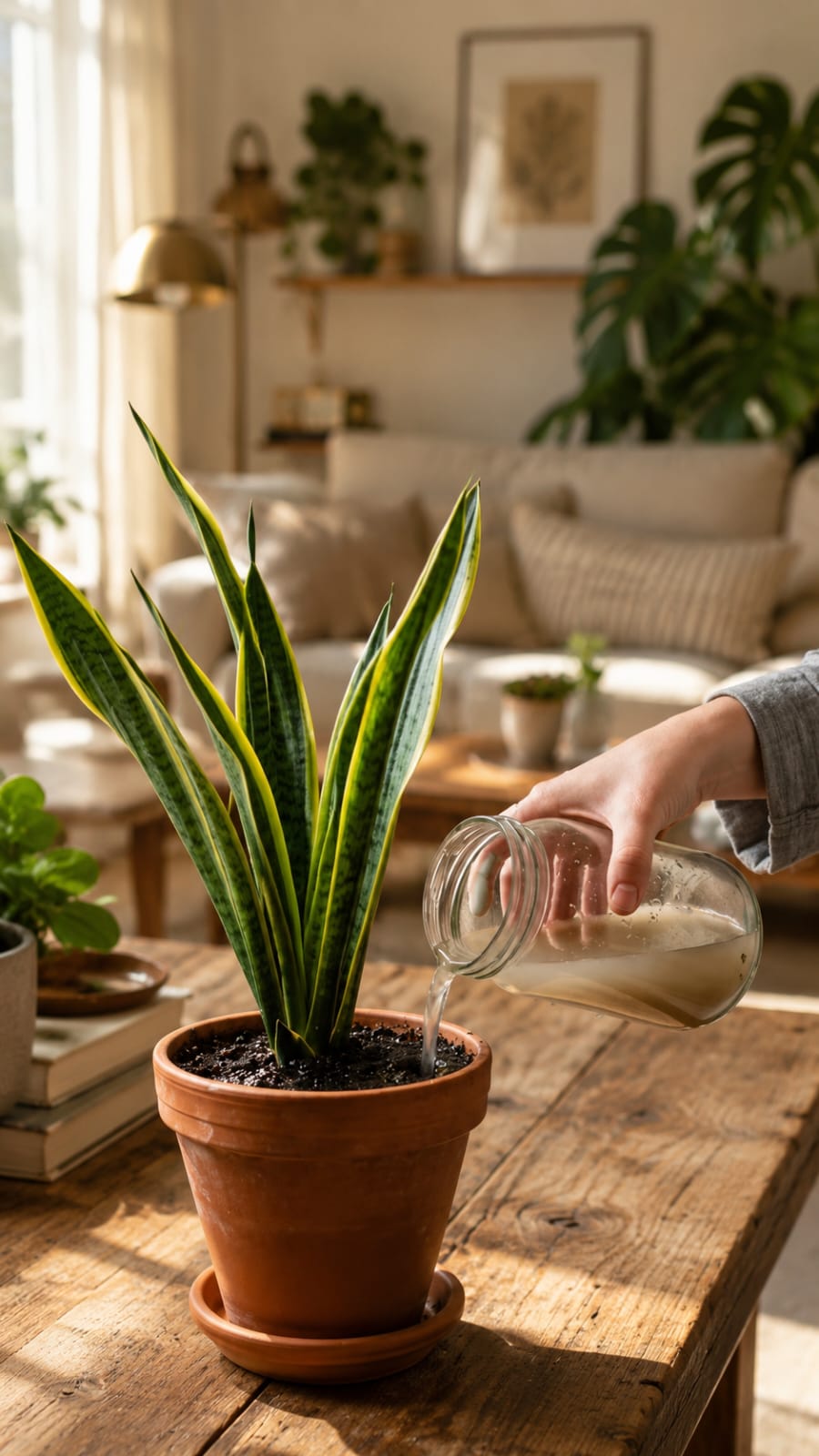
Snake plants are some of the most stylish and forgiving houseplants you can grow indoors. Their tall upright leaves, bold green patterns, yellow edges, and sculptural shape make them perfect for modern living rooms, cozy bedrooms, offices, entryways, sunny corners, and warm natural home decor. They look clean, strong, and elegant without needing constant attention.
One simple care idea many plant lovers enjoy is using a clear homemade watering tonic for snake plants. This usually means a mild, strained liquid such as rice water, diluted aloe water, or plain filtered water used as a gentle root-supporting drink. The idea is to give the plant a small natural boost while keeping the routine simple and safe.
But snake plants are different from thirsty tropical plants. They store water in their thick leaves and prefer their soil to dry between waterings. This means any watering trick must be used carefully. A snake plant can handle dryness much better than soggy soil. Too much liquid, even if it looks natural and harmless, can lead to yellow leaves, mushy bases, root rot, fungus gnats, and weak growth.
This guide explains how to use a clear water tonic safely for snake plants, how to avoid overwatering, how to choose the right soil, how to keep leaves firm and upright, how often to water, how to style snake plants indoors, and how to know when your plant actually needs moisture. The goal is not to water more. The goal is to water smarter.
What Is the Snake Plant Clear Water Trick?
The snake plant clear water trick is a gentle watering method where a mild liquid is poured into the soil only when the plant is ready for water. The liquid may be plain filtered water, cooled rice water, or a very diluted natural plant tonic. It is usually used to support root health and steady growth.
The most important word is “gentle.” Snake plants do not need strong tonics or frequent feeding. A clear tonic should be light, clean, fresh, and free from sugar, salt, milk, oil, or thick residue.
For most snake plants, plain water is enough. A homemade tonic can be used occasionally, but it should never replace proper light, drainage, soil quality, and dry rest periods.
Best Safe Clear Tonic Options
There are a few clear or lightly cloudy liquids that can be used carefully for snake plants. Some are safer than others.
- Filtered water: The safest everyday option, especially if tap water is very hard.
- Rainwater: A gentle natural option if collected cleanly.
- Cooled rice water: Can be used rarely if unsalted and well strained.
- Diluted aloe water: Can be used occasionally if very weak and strained.
- Diluted liquid fertilizer: More predictable than homemade tonics during active growth.
The safest regular choice is plain water. Rice water or aloe water should be treated as occasional extras, not a weekly habit.
What Not to Use
Snake plants should never receive random kitchen liquids. Many homemade tricks can damage roots or make soil sour.
- Do not use salted rice water.
- Do not use sugary water.
- Do not use milk water.
- Do not use oily kitchen water.
- Do not use coffee with milk or sugar.
- Do not use thick aloe gel directly in the soil.
- Do not use fermented liquid that smells bad.
- Do not use strong fertilizer on dry roots.
- Do not pour liquid into the center of the leaf rosette.
If a liquid smells sour, sticky, salty, or spoiled, do not use it on a snake plant.
The Safest Rice Water Recipe for Snake Plants
Rice water is one of the common clear plant tonics people try. It may contain tiny amounts of starch and minerals, but it can also create problems if used too often. For snake plants, it must be weak and occasional.
Gentle Rice Water Recipe
- Rinse plain uncooked rice with clean water.
- Use only the second rinse water, not thick starchy water.
- Do not add salt.
- Strain well.
- Dilute 1 part rice water with 3 parts clean water.
- Use only once every 6 to 8 weeks during active growth.
The liquid should look light and watery. If it looks thick, milky, or heavy, dilute it more. Thick rice water can feed mold or fungus gnats in indoor soil.
How to Use Aloe Water Safely
Aloe water is another gentle option some plant lovers use. Aloe contains natural compounds that may support plant care, but thick aloe gel can make potting soil sticky. For snake plants, keep it very diluted.
Gentle Aloe Water Recipe
- Use a tiny piece of fresh aloe gel.
- Blend it with 1 liter of water.
- Strain the liquid well.
- Dilute again if it feels thick.
- Use only on dry soil.
- Apply once every 6 to 8 weeks at most.
Do not pour pure aloe gel into the pot. It can sit in the soil and create rot problems.
Why Plain Water Is Often Best
Snake plants are low-feeding plants. They do not need constant extra ingredients. The biggest danger is not lack of tonic. The biggest danger is overwatering.
Plain water used at the right time is better than special water used too often. A snake plant with dry periods, bright indirect light, and fast-draining soil will usually grow better than a plant receiving frequent homemade mixtures in damp soil.
Before trying any tonic, make sure your basic watering routine is correct.
How Often Should You Water a Snake Plant?
There is no perfect calendar for every home. A snake plant in bright light and warm air may need water every 2 to 4 weeks. A snake plant in lower light or winter conditions may need water only once every 4 to 8 weeks.
The best method is to check the soil. Water only when the soil is dry deep into the pot. The top layer drying is not always enough, especially in a large pot. Use your finger, a wooden stick, or a moisture meter if needed.
Snake plants like to dry between waterings. This dry rest period keeps roots healthy.
How to Check if Your Snake Plant Needs Water
- Touch the top soil.
- Push your finger 2 inches deep.
- Lift the pot to feel its weight.
- Look for slightly wrinkled leaves.
- Check if the soil pulls slightly from the pot edge.
- Water only if the soil is dry.
If the pot still feels heavy, wait. If the soil is damp, wait. If the leaves are firm and the soil is not dry, wait.
How to Water Correctly
When your snake plant is ready, water thoroughly. Pour slowly around the soil until water drains from the bottom. Then let the pot drain completely. Empty the saucer after watering.
Do not give tiny sips every few days. Small frequent watering can keep the top soil damp and encourage weak shallow roots. Deep watering followed by drying is better.
Also avoid pouring water directly into the center of the plant. Water trapped between leaves can cause rot.
Why Drainage Is Essential
A snake plant should always be in a pot with drainage holes. Without drainage, water collects at the bottom. The top may look dry while the lower soil stays wet. This is one of the easiest ways to rot a snake plant.
If you love decorative pots, use a nursery pot inside a cover pot. Remove the nursery pot for watering, let it drain, then place it back.
Drainage is more important than any homemade tonic.
Best Soil for Snake Plants
Snake plants need fast-draining soil. Standard heavy potting mix can hold too much moisture. A better mix is chunky, airy, and gritty.
Simple Snake Plant Soil Mix
- 2 parts cactus or succulent mix
- 1 part perlite
- 1 part pumice or coarse sand
- A little orchid bark, optional
This mix helps water move through quickly and gives roots oxygen. Healthy roots create firm upright leaves.
Signs of a Healthy Snake Plant
- Leaves stand upright.
- Leaf bases feel firm.
- Color is rich and clear.
- New growth appears during warm seasons.
- Soil dries between waterings.
- No sour smell comes from the pot.
- Roots are firm and light-colored.
A healthy snake plant may still grow slowly. Slow growth is normal for this plant, especially indoors.
Signs of Overwatering
- Yellow leaves
- Mushy leaf bases
- Soft collapsing leaves
- Wet soil that does not dry
- Sour smell from the pot
- Black or brown roots
- Fungus gnats
If you see these signs, stop watering immediately. Remove the plant from the pot if the problem is serious. Trim rotten roots and repot into dry, fresh, fast-draining soil.
Signs of Underwatering
- Wrinkled leaves
- Very dry soil
- Pot feels extremely light
- Leaf edges curl slightly
- Leaves lose firmness
Underwatering is usually easier to fix than overwatering. Water thoroughly and let the pot drain. The leaves may firm up slowly.
Can Clear Tonic Make Snake Plants Grow Faster?
A clear tonic may support growth a little if the plant is already healthy, but it will not create instant growth. Snake plants are naturally slow to moderate growers indoors. Growth depends mostly on light, temperature, roots, pot size, and season.
If your snake plant is not growing, check light first. A plant in a dark corner may survive, but it will grow very slowly. Move it to brighter indirect light for better results.
Do not keep adding tonic to force growth. Too much liquid causes more harm than good.
Best Light for Snake Plants
Snake plants tolerate low light, but they grow best in bright indirect light. They can handle some gentle morning sun. Harsh afternoon sun may burn leaves, especially if the plant was used to low light.
Place your snake plant near a bright window, a few feet from strong sun, or in a room with good natural light. Rotate the pot every couple of weeks so growth stays even.
Better light helps the plant use water more efficiently.
Temperature and Airflow
Snake plants prefer warm indoor temperatures. Keep them away from cold drafts, air conditioners, and freezing windows. Cold wet soil is especially dangerous.
Good airflow helps soil dry at a healthy pace. Do not place the plant in a damp, dark corner with no air movement.
A warm bright room is ideal.
Should You Fertilize Snake Plants?
Snake plants do not need heavy feeding. During spring and summer, you can use a balanced houseplant fertilizer or cactus fertilizer diluted to half strength. Feed once every 6 to 8 weeks during active growth.
Do not fertilize in winter if the plant is not growing. Do not fertilize a sick or root-rotted plant. Do not combine fertilizer and homemade tonic in the same watering.
Light feeding is enough.
Clear Tonic vs Fertilizer
A homemade clear tonic is mild and unpredictable. A fertilizer has measured nutrients. If your goal is reliable feeding, diluted fertilizer is more consistent. If your goal is a gentle natural routine, a weak rice water or aloe water can be used rarely.
Both should be used carefully. Neither should be poured into wet soil or used too often.
How to Flush Soil Buildup
If you use tonics or fertilizer, buildup can happen over time. To flush soil, run room-temperature water through the pot and let it drain fully. This helps remove excess minerals and residues.
Only flush pots with drainage holes. Do not flush a pot that traps water.
After flushing, let the soil dry before watering again.
Repotting a Snake Plant
Repot only when needed. Snake plants like being slightly snug in their pots. Repot if the roots are crowded, the pot cracks, the soil is old and compacted, or the plant keeps tipping over.
Choose a pot only slightly larger than the root ball. A huge pot holds too much soil and moisture.
After repotting, wait a few days before watering if roots were disturbed heavily.
How to Save a Rotting Snake Plant
If your snake plant has mushy leaves or rotten roots, remove it from the pot. Cut away soft rotten parts with clean scissors. Keep only firm healthy sections. Let cut ends dry and callus before replanting.
Use fresh dry cactus mix. Place the plant in bright indirect light. Water very lightly only after the plant has settled.
Do not use rice water, aloe water, or fertilizer during rot recovery.
How to Propagate Snake Plants
Snake plants can be propagated by division or leaf cuttings. Division is the easiest and best method for variegated snake plants. Separate a healthy section with roots and plant it in its own pot.
Leaf cuttings can root in water or soil, but variegated types may lose their yellow edges when grown from leaf cuttings. For keeping the same look, divide the plant.
New divisions should be watered carefully until established.
Cleaning Snake Plant Leaves
Dust collects on snake plant leaves and makes them look dull. Wipe leaves with a damp cloth. Support the leaf while cleaning. Do not use oily leaf shine sprays.
Clean leaves absorb light better and look more polished in home decor.
Wipe both sides if the leaves are dusty.
Indoor Styling With Snake Plants
Snake plants are excellent decor plants because they have strong vertical lines. They work well in many interior styles, from modern minimal homes to warm rustic spaces.
- Use terracotta for a natural earthy look.
- Use a white ceramic pot for modern decor.
- Place a tall snake plant beside a sofa.
- Use small snake plants on desks or shelves.
- Group with monstera, pothos, and peace lily.
- Place near a sunny window for stronger growth.
- Use a woven basket cover for cozy styling.
- Set it on a wooden table for warmth.
The plant’s upright shape adds height without taking up much space.
Continue to Page 2
Continue to page 2 for more details about this article and the key points many readers miss on the first page.