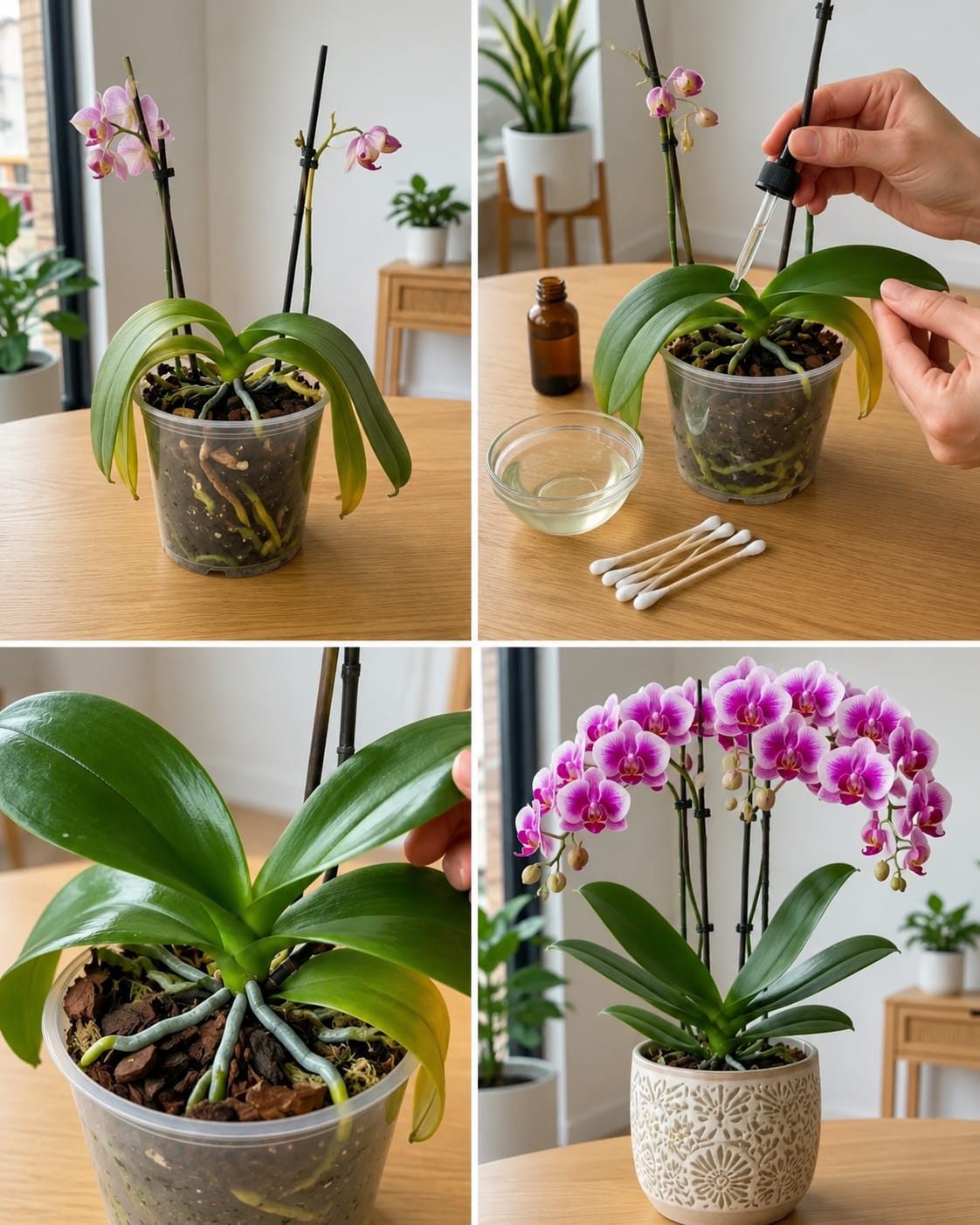
Orchids are elegant indoor plants that can make any room feel fresh, calm, and expensive. Their glossy leaves, thick silver-green roots, tall flower spikes, and delicate blooms create a beautiful display on tables, shelves, windowsills, and plant stands. But orchids can also worry plant owners when their leaves turn yellow, their flowers fade, or their roots begin to look dry, brown, or weak.
One popular orchid-care idea is using lemon water as a simple natural trick. Lemon water is often talked about because orchids can prefer slightly acidic conditions, and many people believe lemon juice can refresh leaves, clean surfaces, or support the plant when used carefully. But orchids are sensitive. Lemon juice is acidic, and if it is used too strongly or too often, it can burn roots, damage leaves, stress the plant, and make a weak orchid worse.
This guide explains the safe way to understand the orchid lemon water trick. It covers when lemon water may be useful, when it should be avoided, how to dilute it, how to clean leaves safely, how to inspect orchid roots, how to repot a struggling orchid, how to encourage new blooms, and how to keep orchids beautiful indoors without risky shortcuts.
The most important message is simple: lemon water is not a miracle cure. It cannot save a rotten crown, repair dead roots, or force instant blooms. It can only be used as a very mild support in a careful orchid routine. The real secret to orchid success is healthy roots, fresh bark, bright indirect light, good drainage, proper watering, and patience.
What Is the Orchid Lemon Water Trick?
The orchid lemon water trick usually means using a very diluted lemon-water solution for one of two purposes. Some plant lovers use it to gently wipe orchid leaves. Others use a tiny amount in water to slightly acidify hard tap water. The goal is not to pour strong lemon juice into the pot. The goal is to use a weak solution carefully and rarely.
Orchid roots are not like ordinary houseplant roots. Common indoor orchids, especially Phalaenopsis orchids, often grow in chunky bark, moss, or orchid mix instead of dense soil. Their roots need air as much as moisture. Strong acidic liquids can damage the root surface and disturb the potting mix.
For that reason, lemon water must be weak. If you can smell strong lemon or taste strong sourness, it is likely too strong for an orchid.
Important Safety Warning
Never pour straight lemon juice onto orchid roots, leaves, flowers, or crown. Lemon juice is acidic and can burn plant tissue. Never use lemon water every week. Never use it on a sick orchid without checking the real problem first.
If an orchid has yellow leaves, limp roots, or faded flowers, the issue may be overwatering, root rot, old bark, low light, temperature stress, or natural flower aging. Lemon water will not fix those problems by itself.
Use lemon water only as a mild tool, not as the main care routine.
Safe Lemon Water Ratio for Orchids
If you choose to use lemon water, keep the mixture extremely light.
- 1 liter room-temperature water
- 2 to 3 drops fresh lemon juice
- Mix well
- Use only occasionally
- Do not use on damaged roots
- Do not pour into the crown
This mixture should be very weak. It should not feel sticky, oily, or strongly sour. For leaf wiping, dip a cloth or cotton pad into the diluted water and wipe gently. For watering, it is safer to use plain water unless you know your tap water is very alkaline.
When Lemon Water May Be Useful
Lemon water may be useful in very limited situations. It can help remove light mineral marks from orchid leaves when used as a weak wipe. It may also slightly adjust very hard water when used carefully. Some growers use mild acidity to reduce white residue on leaves caused by mineral-heavy water.
Still, it should not replace proper orchid fertilizer, fresh orchid mix, or good watering habits. If leaves are dusty, plain water is often enough. If tap water is very hard, rainwater, filtered water, or distilled water mixed with fertilizer may be safer than lemon juice.
When Not to Use Lemon Water
- Do not use it on orchids with root rot.
- Do not use it on mushy or soft leaves.
- Do not use it on a rotten crown.
- Do not use it on flowers.
- Do not use it on fresh root tips.
- Do not use it right after repotting.
- Do not use it on orchids sitting in wet bark.
- Do not use it if the pot smells sour.
- Do not use it every watering.
A stressed orchid needs diagnosis first. If roots are rotten, lemon water can make the situation worse by adding more stress to already damaged tissue.
How to Use Lemon Water to Clean Orchid Leaves
Leaf cleaning is the safest way to use diluted lemon water. Orchid leaves can collect dust, water spots, and mineral residue. Clean leaves absorb light better and look healthier.
- Mix 1 liter water with 2 drops lemon juice.
- Dampen a soft cloth or cotton pad.
- Support the orchid leaf with one hand.
- Wipe the top of the leaf gently.
- Avoid the crown where leaves meet.
- Do not soak the leaf.
- Wipe again with plain water if needed.
- Dry the leaf with a soft clean cloth.
Do not clean leaves in direct sun. Wet leaves in strong sun can mark or burn. Clean the plant in soft light and allow it to dry with gentle airflow.
Should Lemon Water Be Poured Into Orchid Bark?
In most cases, plain water is safer. Orchid bark already changes over time, and adding acidic liquids too often can disturb the root zone. If you have very hard tap water and want to use lemon water, use only a very weak solution and apply rarely.
When watering orchids, always let water drain fully through the pot. Never leave the orchid sitting in lemon water or any tonic. Standing liquid around roots can cause rot.
The best watering routine is simple: water when the orchid mix is nearly dry, let it drain completely, and keep the crown dry.
Understanding Yellow Orchid Leaves
Yellow leaves are one of the most common orchid worries. But a yellow leaf does not always mean disaster. A single lower leaf may turn yellow naturally as the orchid ages. This is normal if the rest of the plant is healthy.
If many leaves turn yellow at once, the problem is more serious. Common causes include overwatering, root rot, low light, too much direct sun, fertilizer burn, cold stress, or old potting mix.
Before using lemon water, inspect the roots and crown. The roots usually reveal the real issue.
How to Check Orchid Roots
Healthy orchid roots are firm. They may look green when wet and silvery when dry. Roots inside the pot can also look cream or pale tan. Firmness matters more than perfect color.
Rotten roots are mushy, hollow, black, brown, slimy, or smelly. If the outer layer slides off when touched, the root is dead. Rotten roots cannot drink water, so the leaves may wrinkle even when the pot is wet.
If roots are rotten, do not use lemon water. Remove the orchid from the pot, trim dead roots, and repot into fresh orchid mix.
How to Rescue an Orchid With Root Problems
- Remove the orchid from its pot.
- Take away old bark or moss.
- Inspect every root.
- Trim mushy roots with clean scissors.
- Keep firm healthy roots.
- Let cuts dry briefly.
- Repot into fresh orchid bark.
- Use a pot with drainage holes.
- Keep the crown above the mix.
- Water carefully after the plant settles.
This rescue method is more important than any lemon trick. A plant with rotten roots needs fresh air and clean bark, not acidic liquid.
Best Pot for Orchids
A clear plastic orchid pot with drainage holes is one of the best choices. It lets you see root color and moisture levels. Side holes also improve airflow. Orchids like roots that can breathe.
Decorative pots are fine as cover pots, but they should not trap water. Remove the orchid from the cover pot when watering. Let it drain fully before placing it back.
Never let water collect around the roots for long periods.
Best Orchid Potting Mix
Orchids should not be planted in regular dense soil. Most common indoor orchids need chunky, airy media.
- Medium orchid bark
- Perlite
- Charcoal
- A little sphagnum moss if your home is dry
If your home is humid or you tend to overwater, use more bark and less moss. If your home is dry and warm, a little moss can help hold moisture. The mix should never feel compacted or sour.
How to Water Orchids Correctly
Water orchids when the bark is nearly dry. In a clear pot, roots often turn silvery when dry and green when wet. This visual clue helps prevent overwatering.
Take the orchid to a sink. Run room-temperature water through the bark. Let the water drain completely. Avoid getting water trapped in the crown. If water enters the crown, blot it dry with tissue.
Do not water on a strict calendar without checking the plant. Your home’s light, humidity, temperature, pot size, and potting mix all affect watering frequency.
Why Crown Rot Happens
Crown rot happens when water sits in the center of the orchid where the leaves meet. This area can rot if it stays wet, especially in cool rooms or low airflow.
To prevent crown rot, water the potting mix instead of the leaves. If you rinse leaves, dry the crown afterward. Keep the orchid in a spot with gentle airflow.
A rotten crown is serious. Lemon water cannot fix advanced crown rot.
How to Encourage New Orchid Roots
New roots appear when the orchid has warmth, bright indirect light, good airflow, and proper moisture. A stable plant grows roots better than one that wobbles in the pot.
Keep the orchid in a small enough pot so the roots are not surrounded by too much wet bark. Provide humidity around the plant, but do not keep the crown wet. Avoid frequent repotting and unnecessary treatments.
New root tips are delicate. Do not rub them with lemon water or fertilizer.
Can Lemon Water Help Orchids Bloom?
Lemon water does not force orchid blooms. Orchids bloom when they have mature growth, healthy roots, enough light, and the right seasonal signals. For Phalaenopsis orchids, a slight drop in nighttime temperature can help trigger flower spikes.
If your orchid has not bloomed, check light first. Many orchids fail to rebloom because they are kept in too much shade. Bright indirect light is key.
Feeding helps only when the plant already has healthy roots and enough light.
Best Light for Orchids
Most common orchids prefer bright indirect light. An east-facing window is often ideal. South or west windows may work if filtered by a sheer curtain. Direct harsh sun can burn leaves.
Leaves can help you judge light. Very dark green leaves may mean too little light. Yellow-green leaves or scorched patches may mean too much sun. Medium green leaves usually mean balanced light.
Good light is one of the strongest bloom boosters.
Feeding Orchids Safely
Use a balanced orchid fertilizer diluted to weak strength during active growth. Orchids do not need heavy feeding. Strong fertilizer can burn roots.
A simple routine is weak fertilizer every few waterings during growth, with plain water flushes in between. Do not fertilize a sick orchid with rotten roots.
Lemon water should not be mixed with fertilizer unless you understand water chemistry. For simple home care, keep routines separate and mild.
How to Extend Orchid Blooms
- Keep the orchid in bright indirect light.
- Avoid direct hot sun on flowers.
- Keep away from heaters and cold drafts.
- Do not move the plant constantly.
- Water when the bark is nearly dry.
- Support flower spikes with clips.
- Keep away from ripening fruit.
- Avoid overfeeding during bloom.
Orchid flowers can last for weeks or months when the plant is stable and not stressed.
What to Do After Orchid Flowers Fade
When blooms fade, the orchid is not dead. It is entering a rest or growth phase. If the flower spike turns brown and dry, cut it near the base. If it stays green, you can cut above a node or leave it to see if it produces another branch.
After blooming, focus on roots and leaves. This is the stage when the plant rebuilds energy for the next bloom cycle.
How to Clean Orchid Leaves Without Damage
Leaf cleaning should be gentle. Use a soft damp cloth. Support the leaf from underneath. Wipe slowly. Avoid rough rubbing. Do not use oily leaf shine products.
If using diluted lemon water for mineral marks, follow with a plain-water wipe. This reduces residue and protects the leaf surface.
Clean leaves make the orchid look glossy and help it capture light.
Common Orchid Mistakes
- Using regular soil instead of orchid bark
- Watering too often
- Leaving water in the crown
- Using a pot without drainage
- Keeping orchids in deep shade
- Using strong lemon juice
- Feeding a sick plant
- Ignoring rotten roots
- Letting bark become old and sour
- Moving the plant too often during bloom
Signs Lemon Water Is Too Strong
- Leaf surface looks dull or marked
- Root tips turn brown
- Bark smells sour
- Leaves yellow after use
- Flowers wilt suddenly
- Roots look dry or burned
If any of these signs appear, stop using lemon water. Flush the pot with plain water if the pot drains well. If the bark smells bad, repot the plant.
Better Alternatives to Lemon Water
If your goal is healthier orchids, safer alternatives may work better.
- Filtered water for regular watering
- Rainwater if collected cleanly
- Fresh orchid bark mix
- Weak orchid fertilizer
- Good airflow
- Bright indirect light
- Humidity tray without standing water
These basics make a bigger difference than lemon water for most orchids.
Decor Styling With Orchids
Orchids are beautiful decor plants. Their graceful flower spikes and clean leaves look elegant in many spaces.
- Use a white ceramic pot for a modern look.
- Place orchids on a wooden table for warmth.
- Style with neutral decor and soft light.
- Use a clear inner pot inside a decorative cover pot.
- Group orchids with snake plants and pothos.
- Place near a bright window with filtered light.
- Add a simple stake to support blooms.
- Use a patterned ceramic pot for a finished display.
Never sacrifice drainage for beauty. A decorative pot should not trap water around the roots.
Continue to Page 2
Continue to page 2 for more details about this article and the key points many readers miss on the first page.