Best Rooms for Snake Plants
- Living room
- Bedroom
- Office
- Entryway
- Dining room
- Bright hallway
- Kitchen corner away from heat
- Bathroom with good light and dry periods
A snake plant can tolerate many rooms, but it still needs some light to stay strong long-term.
Seasonal Snake Plant Care
Spring
Spring is a good time for repotting, dividing, light feeding, and trying a very gentle tonic if desired.
Summer
The plant may use more water in warm bright conditions. Check soil more often, but still let it dry.
Fall
Growth slows as light decreases. Reduce watering and stop extra tonics.
Winter
Water very carefully. Cold wet soil can cause rot. Avoid feeding unless the plant is actively growing under strong light.
Weekly Snake Plant Check
- Check soil dryness.
- Look at leaf firmness.
- Check for yellow or soft bases.
- Make sure saucer is empty.
- Rotate the pot if needed.
- Wipe dust from leaves.
- Look for pests or mold.
Monthly Snake Plant Routine
- Inspect the pot and drainage holes.
- Check if soil is compacted.
- Clean leaves well.
- Use fertilizer only during active growth.
- Use clear tonic only rarely if desired.
- Remove dead or damaged leaves.
- Check if the plant needs brighter light.
Common Mistakes to Avoid
- Watering every few days
- Using a pot without drainage
- Using heavy soil
- Pouring liquid into the leaf center
- Using thick rice water
- Using salted kitchen water
- Feeding during winter dormancy
- Keeping the plant in a dark wet corner
- Ignoring mushy leaves
- Repotting into a huge pot
Safe Clear Water Tonic Routine
- Choose plain filtered water, weak rice water, or diluted aloe water.
- Make sure the tonic is fresh and strained.
- Check that the soil is dry before applying.
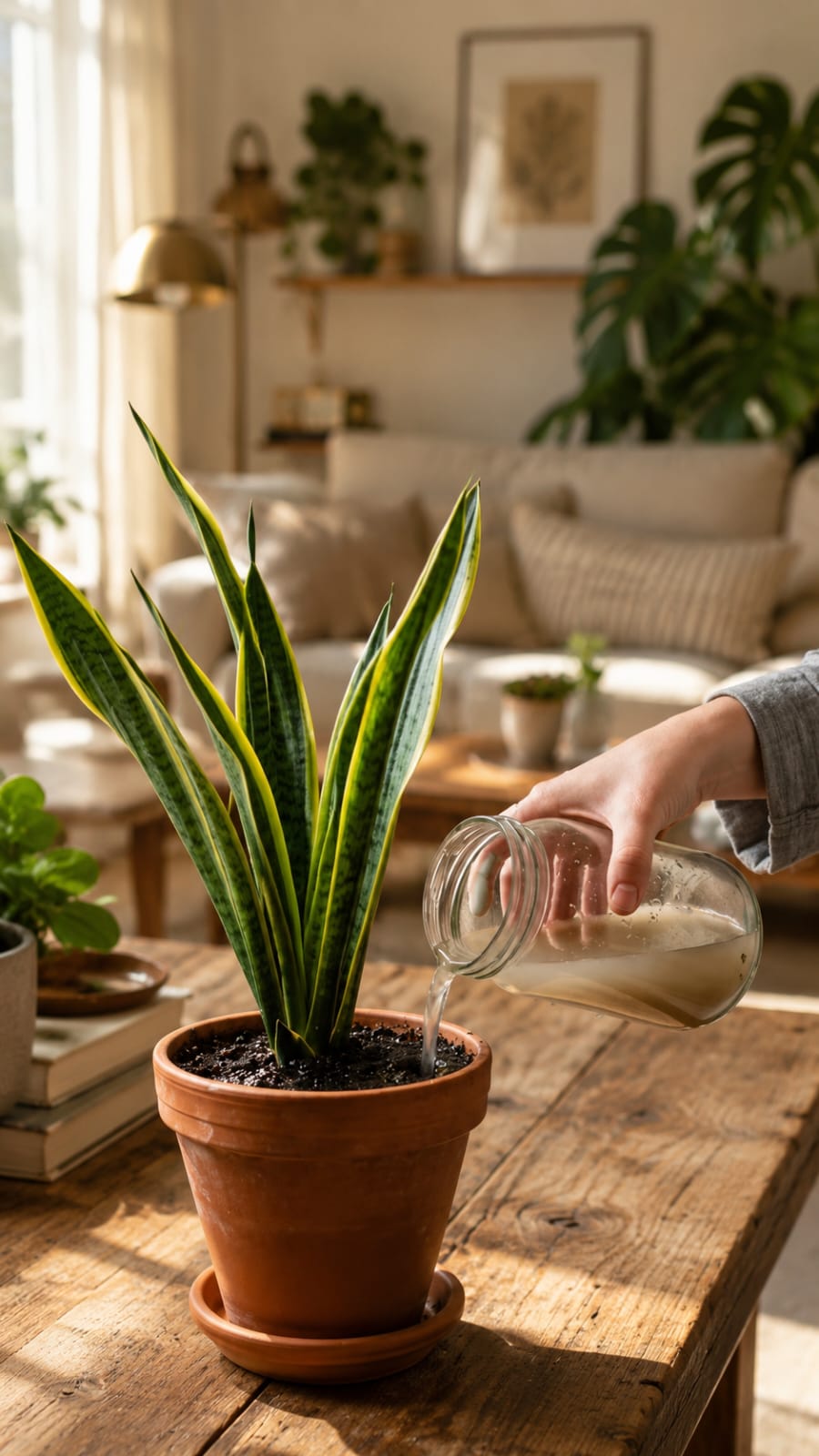
- Pour slowly around the soil edge.
- Do not pour into the center leaves.
- Let excess water drain completely.
- Empty the saucer.
- Use homemade tonic only every 6 to 8 weeks during active growth.
- Use plain water the rest of the time.
Frequently Asked Questions
Can I water snake plants with rice water?
Yes, but only if it is unsalted, strained, diluted, and used rarely. Plain water is safer for regular watering.
Can I use rice water every week?
No. Weekly rice water can create buildup, mold, or gnats in indoor pots. Use it only occasionally.
Can snake plants grow in low light?
They can survive in low light, but they grow better in bright indirect light.
Why are my snake plant leaves turning yellow?
The most common reason is overwatering or poor drainage. Check the soil and roots.
Should I mist snake plants?
No. Snake plants do not need misting. Wet leaves can create problems if moisture sits between them.
Final Thoughts
The snake plant clear water trick can be useful only when it is done gently and rarely. A mild rice water, diluted aloe water, or filtered water routine can support care, but it will not replace the basics. Snake plants need dry periods, fast-draining soil, a pot with drainage, bright indirect light, and careful watering.
The biggest mistake is loving the plant too much with too much water. Snake plants prefer patience. Let the soil dry. Water deeply when needed. Keep the roots airy. Use any tonic as a small extra, not a regular flood.
With balanced care, your snake plant can stay upright, firm, and beautifully green for years. It can become a calm, sculptural decor piece that brings fresh natural style into your home without needing complicated care or risky tricks.