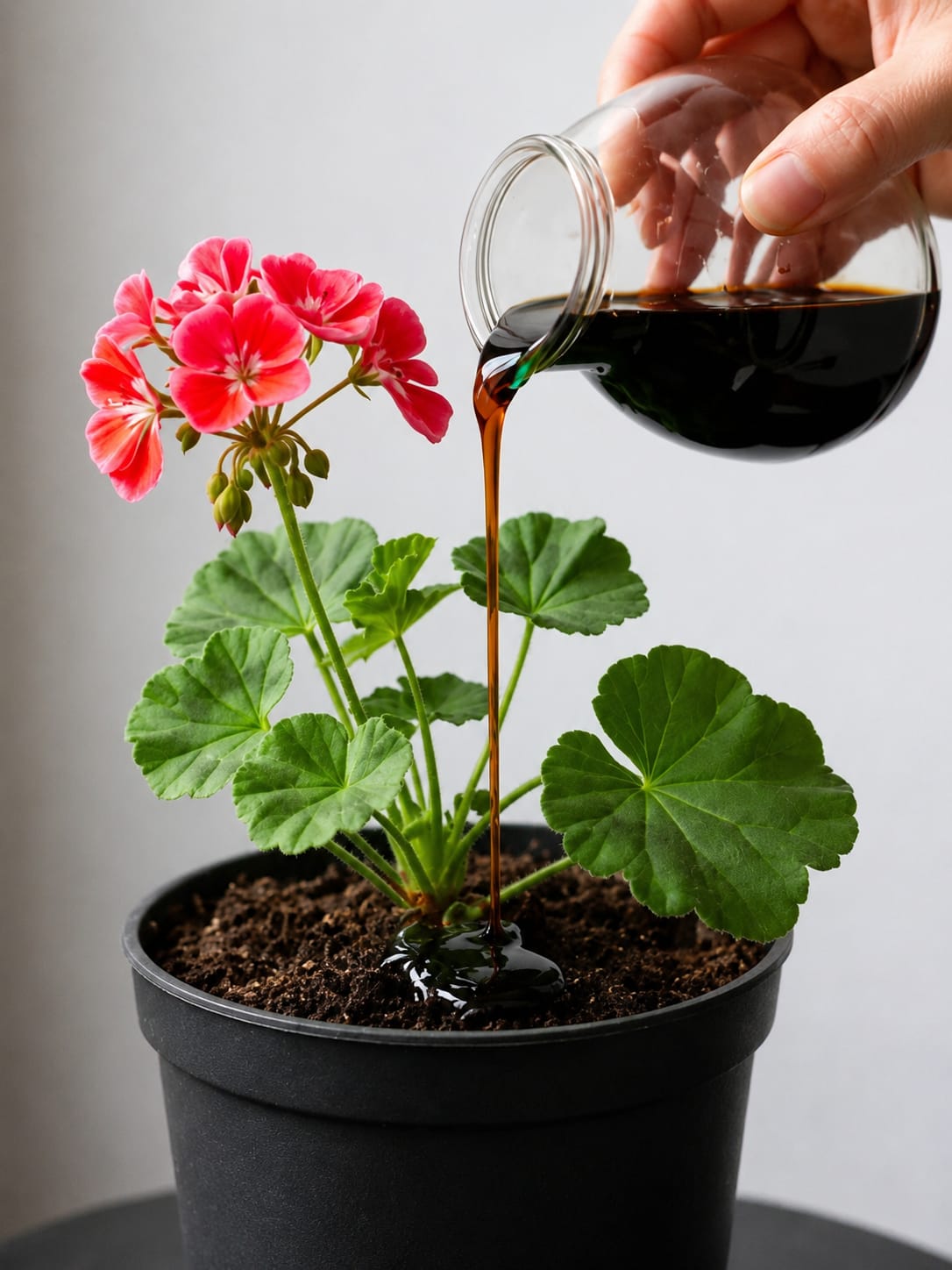
Best Rooms for Indoor Geraniums
- Sunny kitchen
- Bright living room
- Sunroom
- Bedroom with strong window light
- Enclosed balcony
- Home office near a sunny window
- Dining room window ledge
A dark room is not ideal. Geraniums need strong light to flower.
Seasonal Geranium Care
Spring
Spring is a great time to prune, repot, start feeding, and begin the brown tonic routine if desired. New growth begins as light increases.
Summer
Geraniums bloom strongly in summer with enough light and water. Deadhead regularly. Use tonic only occasionally.
Fall
Growth may slow as days shorten. Reduce feeding slightly. Bring outdoor pots inside before cold weather if needed.
Winter
Indoor geraniums need bright light and careful watering. Do not overfeed. Avoid using brown tonic unless the plant is actively growing.
Overwintering Geraniums
Geraniums can be overwintered indoors in bright light. Trim them back slightly, check for pests, and place them near a sunny window. Water less often during winter because growth slows.
Do not use molasses tonic during dormancy. Wait until spring growth begins.
In spring, prune lightly and resume feeding gradually.
How to Propagate Geraniums
Geraniums are easy to propagate from stem cuttings. Cut a healthy stem, remove lower leaves, and let the cut end dry for a short time. Place it in moist potting mix and keep it in bright indirect light.
Do not use brown tonic on fresh cuttings. Young roots are sensitive. Use plain water and gentle care until the cutting is established.
Once rooted, move the young plant into brighter light.
Common Geranium Problems
Few Flowers
Usually caused by low light, too much nitrogen, lack of deadheading, or a stressed root system.
Yellow Leaves
Can be caused by overwatering, underwatering, low light, pests, or old leaves aging naturally.
Soft Stems
Often a sign of rot from too much moisture or poor drainage.
Leggy Growth
Usually caused by low light or lack of pruning.
Bud Drop
Can happen from drought stress, heat stress, moving the plant, or inconsistent watering.
Weekly Geranium Care Routine
- Check soil moisture.
- Water only when the top inch is dry.
- Remove faded flowers.
- Remove yellow leaves.
- Check for pests.
- Rotate the pot for even growth.
- Make sure the saucer is empty.
Monthly Geranium Care Routine
- Feed lightly during active growth.
- Use brown tonic only if desired and only rarely.
- Prune leggy stems.
- Check root crowding.
- Refresh the top layer of soil if compacted.
- Inspect drainage holes.
- Clean the pot area.
Safe Brown Tonic Routine Summary
- Use unsulfured blackstrap molasses.
- Mix only 1/4 teaspoon into 1 liter of water.
- Apply only when soil is slightly dry.
- Pour around the soil, not on leaves or flowers.
- Let the pot drain completely.
- Use once every 4 to 6 weeks during active growth.
- Stop if smell, mold, gnats, or yellowing appears.
- Do not use on weak, rotten, or soggy plants.
Frequently Asked Questions
Can molasses make geraniums bloom?
Molasses water may support soil life in small amounts, but blooms mainly depend on bright light, healthy roots, deadheading, and balanced feeding.
Can I pour straight molasses on the soil?
No. Straight molasses is too thick and sugary. It can attract pests, create mold, and damage the potting environment.
Can I use brown sugar water instead?
No. Brown sugar water is not recommended for potted geraniums. It can attract insects and create sticky soil.
Can I use coffee instead?
Only plain black coffee diluted heavily can be used rarely, but it is not necessary. A balanced fertilizer is safer.
Should I use the tonic on a dying geranium?
No. First diagnose the problem. Check roots, drainage, light, pests, and watering. Use tonic only on stable plants.
Final Thoughts
The geranium brown tonic trick can be a gentle support when used correctly, but it should never be treated as a miracle solution. A very diluted blackstrap molasses water, weak worm casting tea, or mild compost tea can be used occasionally during active growth. The mixture must be light, clean, and rare.
The real secret to blooming geraniums is simple: strong bright light, good drainage, balanced watering, regular deadheading, light feeding, and healthy soil. If those basics are missing, no tonic will create lasting results.
Use the brown tonic only as a small extra boost. Keep the soil fresh, avoid soggy roots, remove faded flowers, and give your geranium enough sun. With patient care, your geranium can stay full, green, and colorful, producing cheerful blooms that brighten your indoor or outdoor space for a long season.