Brown Tips on Peace Lily Leaves
Brown tips are common on peace lilies. They can happen from underwatering, overwatering, low humidity, fertilizer burn, mineral buildup, dry air, or inconsistent care. The brown part will not turn green again, but you can prevent new damage by improving the routine.
Use room-temperature water. Avoid overfertilizing. Keep the soil evenly moist but not soggy. If your tap water is very hard, try filtered water or let tap water sit out before use.
You can trim brown tips with clean scissors by following the natural shape of the leaf. This makes the plant look neater, but the real solution is correcting the cause.
Yellow Leaves on Peace Lilies
Yellow leaves can mean several things. One old yellow leaf may simply be aging. But several yellow leaves can indicate overwatering, underwatering, poor drainage, low light, or root stress.
If the soil is wet and leaves are yellow, check drainage and reduce watering. If the soil is dry and the plant is drooping, water thoroughly. If the plant is in a dark corner, move it to brighter indirect light.
Do not add fertilizer or homemade tonics to a stressed plant until you understand the cause. A struggling peace lily often needs better watering and light first.
How to Encourage More White Blooms
Peace lily flowers are often called blooms, but the white part is actually a spathe surrounding the spadix. To encourage more blooms indoors, give the plant bright indirect light, consistent watering, and gentle feeding during active growth.
Low light is one of the biggest reasons peace lilies stop blooming. The plant may keep producing leaves, but flowers need more energy. Move it closer to a bright window, but avoid harsh direct sun.
Feeding can help, but only lightly. Use a balanced houseplant fertilizer diluted to half strength during spring and summer. Once every four to six weeks is enough for many peace lilies. Too much fertilizer can cause brown tips and root stress.
Should You Mist a Peace Lily?
Misting can briefly increase moisture on the leaves, but it does not raise humidity for long. It can make the plant look fresh, but too much misting in a low-airflow room may encourage leaf spots or fungal issues.
If your home is very dry, a humidifier is more effective. You can also group plants together or place the pot near a humidity tray, making sure the pot does not sit directly in water.
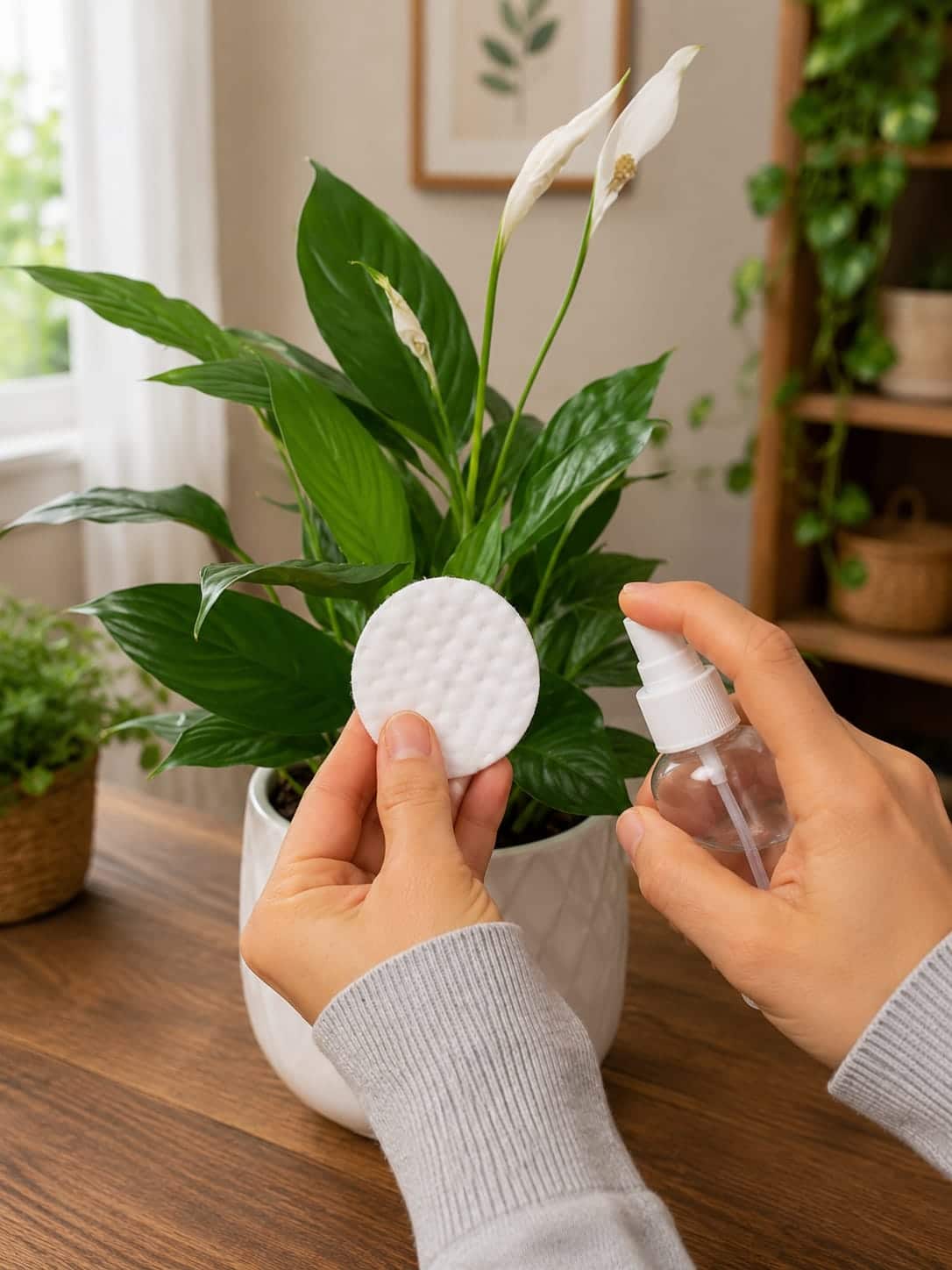
For leaf cleaning, spraying water onto a cotton pad or cloth is better than constantly spraying the leaves. This removes dust without leaving the plant wet for too long.
Can You Use Homemade Leaf Shine?
It is better to avoid homemade leaf shine mixtures made with oil, milk, mayonnaise, or other kitchen ingredients. These can leave residue, attract dust, block the leaf surface, or smell bad over time.
Peace lily leaves naturally shine when they are clean and healthy. Plain water and a soft cloth are enough. If the plant is receiving good light and proper watering, the leaves will look glossy without artificial shine.
When to Repot a Peace Lily
Repot your peace lily when roots are crowded, the plant dries out too quickly, water runs straight through the pot, or growth has slowed even with good care. You may also need to repot if the soil smells sour or stays wet too long.
Choose a pot only one size larger. A pot that is too large can hold too much wet soil and increase root rot risk. Use fresh airy soil and water gently after repotting.
After repotting, the plant may droop slightly while adjusting. Keep it in bright indirect light and avoid heavy fertilizer until it settles.
Peace Lily Safety Note
Peace lilies are not true lilies, but they can still be irritating if chewed by pets or children. Their tissues contain compounds that may cause mouth irritation, drooling, or stomach discomfort. Keep the plant out of reach of curious pets and small children.
Easy Peace Lily Home Routine
Place your peace lily in bright indirect light. Check the soil every few days and water when the top inch begins to dry. Use a pot with drainage holes. Empty the saucer after watering. Wipe the leaves with a damp cotton pad or soft cloth every few weeks. Remove yellow or damaged leaves. Feed lightly during active growth.
This routine is simple, but it works. Peace lilies do not need constant tricks. They need consistent care.
Frequently Asked Questions
Is peace lily easy to care for?
Yes. Peace lily is a resilient indoor plant when given bright indirect light, proper watering, clean leaves, and good drainage.
How often should I water a peace lily?
Water when the top inch of soil feels dry. Do not water on a fixed schedule without checking the soil.
Should I clean peace lily leaves?
Yes. Clean leaves absorb light better and look fresher. Use plain water and a soft cloth or cotton pad.
Why is my peace lily not blooming?
The most common reason is not enough light. Move it to brighter indirect light and feed lightly during active growth.
Can I put peace lily in direct sunlight?
A little gentle morning sun may be fine, but harsh direct sun can burn the leaves. Bright indirect light is best.
Why are the leaf tips brown?
Brown tips can come from inconsistent watering, dry air, mineral buildup, too much fertilizer, or root stress.
Can I use leaf shine products?
It is better to avoid oily leaf shine products. Plain water and a soft cloth are safer.
Final Thoughts
The peace lily, or Moses cradle, is a beautiful indoor plant that does not need complicated care. Its needs are simple: bright indirect light, water when the soil begins to dry, good drainage, clean leaves, and gentle feeding during active growth.
The cotton pad and spray bottle method is one of the easiest ways to keep your peace lily looking fresh. By wiping dust from the leaves, you help the plant absorb light and maintain its natural glossy beauty.
Do not overcomplicate the routine. Avoid heavy homemade mixtures, oily leaf shine, and constant watering. Pay attention to the soil, light, and leaves. With steady care, your peace lily can stay green, elegant, and peaceful indoors for a long time.