How to Style Orchids for a Luxury Indoor Look
Orchids are naturally elegant, but styling makes them look even more expensive. The best orchid displays are clean, balanced, and uncluttered. A blooming orchid should be treated like a living sculpture.
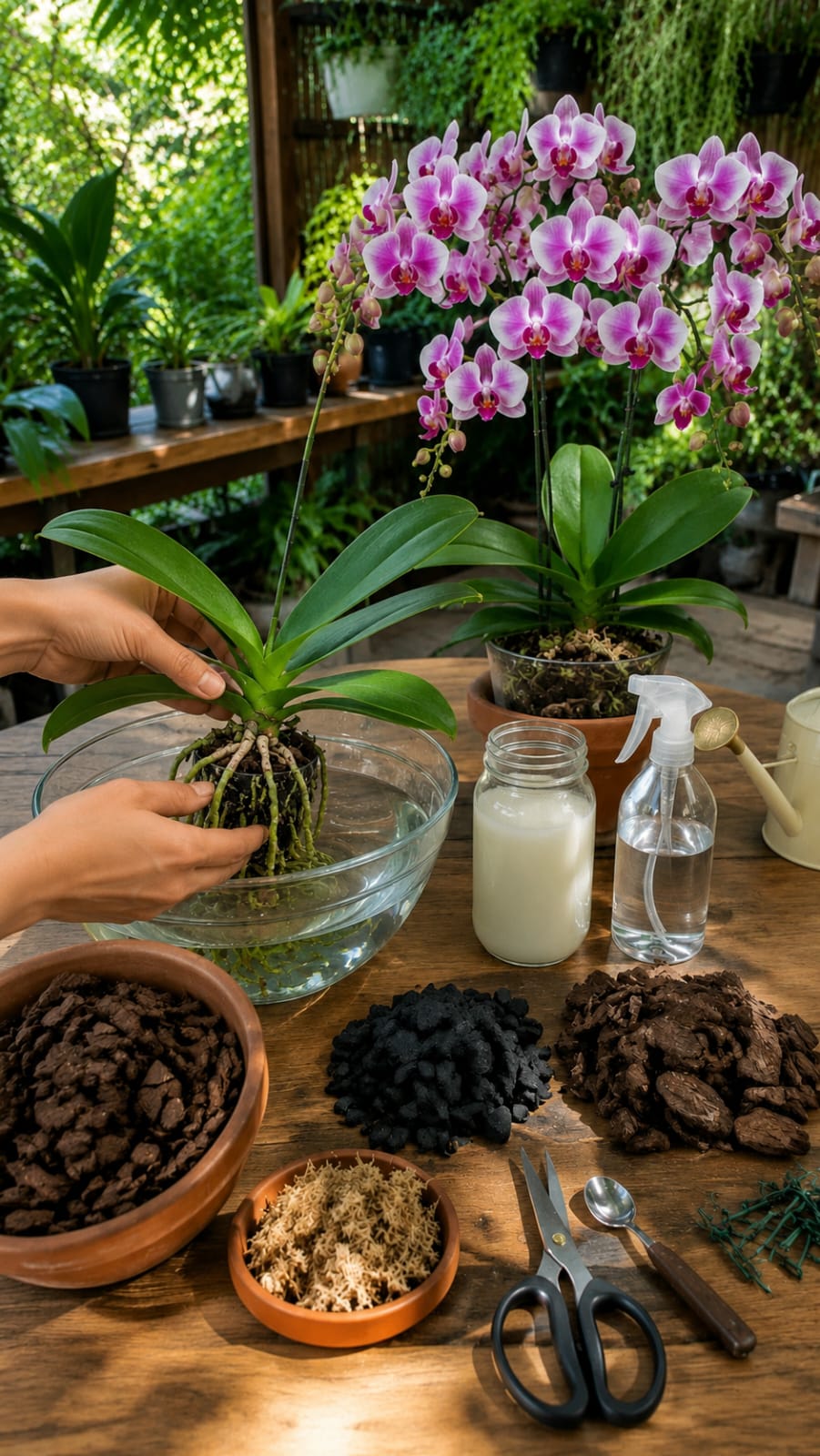
For a refined look, use:
- Clear pots inside decorative cachepots
- Neutral ceramic containers
- Wooden trays
- Natural bark top dressing
- Simple black flower stakes
- Soft indirect window light
- Minimal surrounding decor
Clear pots are especially useful because they allow root inspection. They also create a modern, greenhouse-style look. If using a decorative outer pot, make sure water does not collect at the bottom.
Best Places to Display Orchids
Orchids look beautiful in rooms where they receive bright filtered light. They can soften modern interiors, brighten neutral rooms, and make small spaces feel more polished.
Good display spots include:
- Bright living room shelves
- Kitchen windows with filtered light
- Bathroom counters with good brightness
- Bedroom dressers near a window
- Office desks with indirect light
- Covered balconies
- Dining room sideboards
- Plant stands near sheer curtains
Avoid placing orchids near heating vents, cold drafts, dark hallways, or harsh afternoon sun. Stable conditions help blooms last longer.
Orchid Balcony Styling Ideas
On a shaded balcony, orchids can create a tropical luxury effect. They look beautiful when grouped with ferns, trailing plants, mossy textures, and natural wood. The key is protection. Orchids should not be exposed to harsh sun, strong wind, or heavy rain for long periods.
For a balcony orchid corner, try:
- A wooden plant bench
- Hanging ferns above the orchids
- Clear orchid pots inside clay cachepots
- A small watering tray nearby
- Natural bark and moss accents
- Soft morning light
- A clean spray bottle for humidity support
This creates a fresh greenhouse feeling without making the space messy. Orchids look best when their roots and blooms feel intentional, not crowded.
Orchid Root-Care Table
| Care Factor | Best Choice | Why It Matters |
|---|---|---|
| Root tonic amount | One spoonful only | Supports roots without flooding the medium |
| Application area | Roots and bark surface | Avoids crown rot and leaf damage |
| Watering | When medium is nearly dry | Prevents root rot |
| Light | Bright indirect light | Supports leaves and blooming |
| Medium | Orchid bark, moss, charcoal, perlite | Keeps roots airy |
| Decor | Clear pot plus elegant outer pot | Combines beauty with root visibility |
| Airflow | Gentle ventilation | Helps roots dry properly |
Frequently Asked Questions
Can one spoonful really revive an orchid immediately?
A spoonful can lightly refresh the root zone, but true recovery takes time. If the orchid is dehydrated, stressed, or recovering after blooming, gentle root care may help. If the roots are rotten, the plant needs cleaning and repotting first.
Should I pour the liquid on orchid leaves?
No. Apply it near the roots or growing medium only. Avoid the crown where the leaves meet, because trapped moisture can cause rot.
Can I use this trick on a blooming orchid?
Yes, but use it very lightly. Blooming orchids should not be stressed with strong treatments. One mild spoonful near the roots is safer than soaking the whole pot.
How often should I use it?
Use it occasionally, not daily. Once every few weeks is enough for a gentle support step. Plain water should remain the main watering method.
Can this make orchids bloom all year?
No single trick can guarantee year-round blooms. Healthy roots, bright indirect light, proper watering, and patience are what support better blooming over time.
What should I do if the orchid roots are black?
Remove the orchid from the pot, trim mushy roots with clean tools, and repot in fresh orchid medium. Do not keep adding liquid to rotten roots.
Final Thoughts
A one-spoonful orchid root trick can be a gentle way to support cleaner root care, fresher leaves, and a stronger blooming routine. The key is control. Orchids do not need heavy liquids, thick homemade mixtures, or constant feeding. They need airy roots, bright indirect light, careful watering, and a clean environment.
Used correctly, a small spoonful near the roots can become part of a thoughtful orchid-care ritual. It encourages the grower to look closely at the roots, avoid overwatering, and treat the plant with patience. The strongest orchids are not created by one dramatic trick. They come from consistent care, healthy roots, and a growing setup that allows the plant to breathe.
When paired with elegant styling, clear pots, natural bark, soft light, and clean indoor decor, orchids become more than houseplants. They become living displays that bring color, calm, and luxury into the home all year long.