Can You Use Coffee?
Coffee is not recommended for snake plants. Coffee can make soil stay moist longer, and coffee grounds can compact the potting mix. This is the opposite of what snake plant roots need.
Snake plants prefer dry, breathable soil. Coffee-based plant hacks can increase the risk of fungus gnats and root problems indoors.
For this trick, use diluted worm casting tea instead.
Can You Use Banana Peel Water?
Banana peel water is popular in homemade plant fertilizer recipes, but it can become smelly or attract pests if used too strong. Snake plants do not need fruit water to grow well.
If you use banana peel water, it must be very diluted and used rarely. But for a clean indoor plant care routine, worm casting tea is safer and more suitable.
Snake plants respond best to light feeding and dry-down time.
Can You Use Rice Water?
Diluted rice water can be used occasionally on some houseplants, but snake plants do not need frequent starchy liquids. Rice water can sour in soil if used too often or too strong.
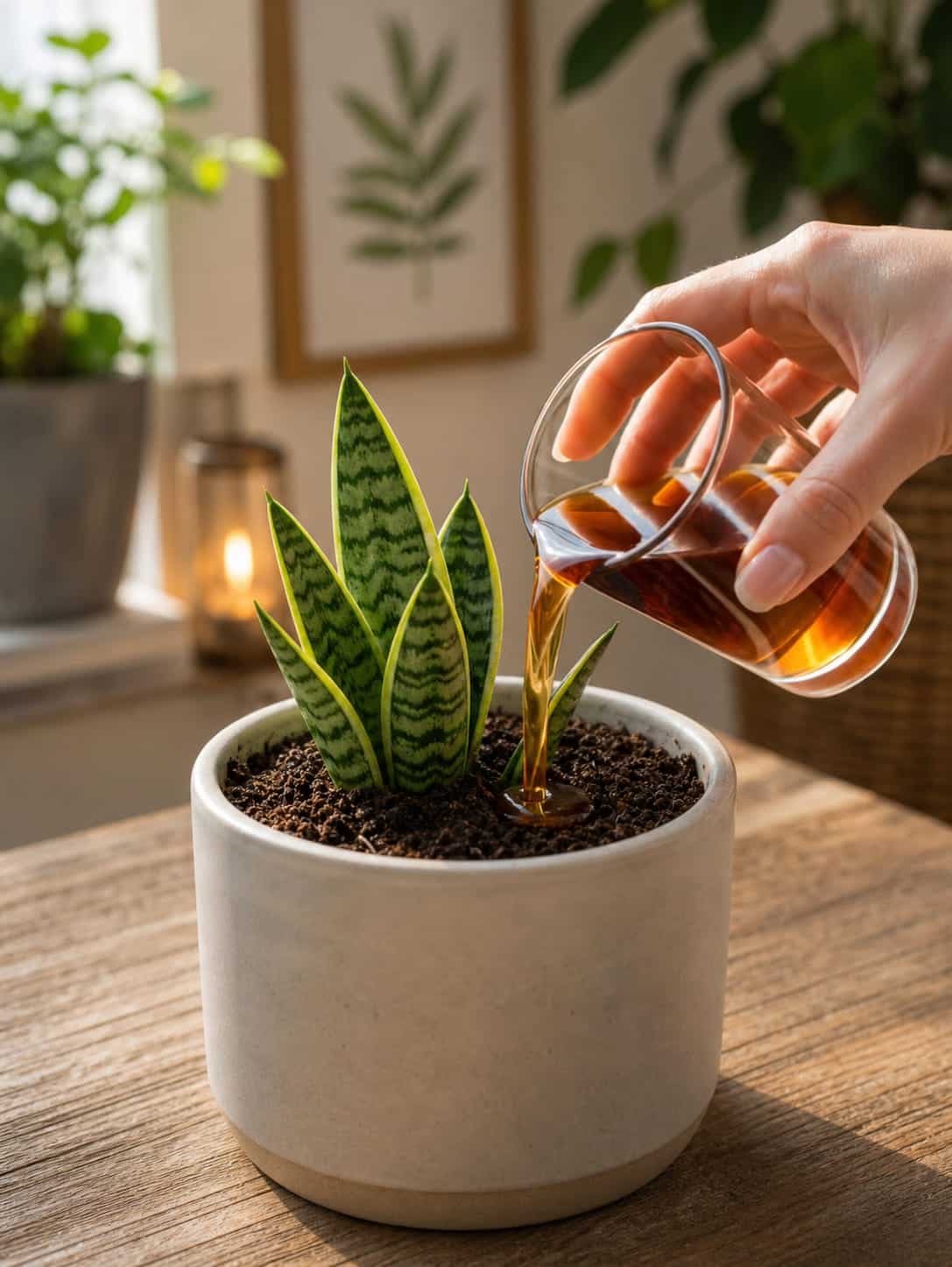
If you choose rice water, use it very weak and only on dry soil. Still, worm casting tea is the better match for the amber liquid in the image.
Signs the Tonic Is Working
Snake plants grow slowly, so look for gradual signs rather than instant results. Over several weeks, you may notice:
- Leaves staying firm and upright
- Richer green color
- New leaf growth
- Small pups appearing near the soil
- Clean earthy soil smell
- No fungus gnats
- No yellowing or soft leaf bases
If the plant remains strong and begins growing during warm months, your care routine is working.
Signs You Used Too Much
Stop using the tonic if you notice:
- Yellow leaves
- Mushy leaf bases
- Wet soil that does not dry
- Sour smell
- Mold on the soil
- Fungus gnats
- Leaves collapsing
These signs usually point to too much moisture, poor drainage, or root rot. Let the soil dry and inspect the roots if the plant looks soft or yellow.
How to Fix an Overwatered Snake Plant
If your snake plant has been overwatered, remove it from the pot and check the roots. Healthy roots are firm. Rotten roots are mushy, dark, and may smell bad.
Trim away rotten roots with clean scissors. Let the plant dry for a day, then repot into fresh dry cactus mix. Do not water immediately if the roots were damaged. Wait several days before giving a small amount of water.
Do not use tonic again until the plant is stable.
Best Light for Snake Plant
Snake plants survive in low light, but they grow better in bright indirect light. Place the plant near a window where it receives filtered sunlight. Gentle morning sun is usually fine.
If the plant is too far from a window, it may stop producing new leaves and pups. Better light is often the easiest way to improve snake plant growth indoors.
A plant tonic helps most when the plant already has enough light.
How to Water Snake Plant Correctly
Water deeply, then let the soil dry. Do not water on a fixed schedule without checking the soil. Depending on light, pot size, and season, a snake plant may need water every two to four weeks, sometimes less.
During winter, it may need very little water. In summer, it may dry faster.
Always check the soil first. Dry soil is safer than soggy soil for this plant.
How to Keep Snake Plant Leaves Upright
Firm upright leaves come from healthy roots, enough light, and correct watering. If leaves bend, flop, or wrinkle, check the soil and roots.
Common causes of weak leaves include:
- Low light
- Overwatering
- Root rot
- Old compacted soil
- Cold damage
- A pot that is too large
A mild root tonic can support the plant, but it cannot fix poor drainage or rotten roots.
Can You Use This on Snake Plant Cuttings?
Do not use worm casting tea on fresh unrooted cuttings. Snake plant cuttings need to callus first, then root slowly in clean, lightly moist soil or water. Extra organic liquid can encourage rot before roots form.
Once cuttings are rooted and growing, you can use a very diluted tonic occasionally.
For propagation, patience is more important than fertilizer.
How to Propagate Snake Plant
The easiest way to propagate snake plant is by division. Remove the plant from the pot, separate a section with roots and leaves, and repot it into dry succulent soil.
You can also propagate by leaf cuttings. Cut a healthy leaf into sections, let the cut ends dry, then plant them upright in gritty soil. Keep the bottom side facing down.
Variegated snake plants may lose yellow edges when grown from leaf cuttings, so division is best if you want to keep the same leaf pattern.
Quick Amber Root Tonic Routine
- Mix one teaspoon worm castings with one cup water.
- Let it sit for 20 to 30 minutes.
- Strain the liquid well.
- Make sure the snake plant soil is dry.
- Pour two to four tablespoons around the outer soil.
- Keep liquid away from the leaf crown.
- Let the pot drain completely.
- Use once every six to eight weeks in spring or summer.
- Skip during winter unless the plant is actively growing.
- Stop if the soil smells sour or leaves turn soft.
Common Mistakes to Avoid
- Using the tonic on wet soil
- Pouring too much into the pot
- Using a container without drainage
- Using coffee or sweet tea
- Adding honey, sugar, or molasses
- Feeding every week
- Pouring liquid into the crown
- Ignoring yellow leaves
- Keeping the plant in very low light
- Using dense soil that stays wet
Short Caption for This Trick
“Give a slow-growing snake plant a gentle amber root tonic made from diluted worm casting tea. Mix one teaspoon of worm castings with one cup of water, strain it, and pour only a few tablespoons around dry soil. Use it every six to eight weeks during warm months to support healthy roots, upright leaves, and new pups.”
Frequently Asked Questions
What is the amber liquid for snake plant?
The safest version is diluted worm casting tea. It is a mild organic tonic that supports soil health and root growth.
How often should I use it?
Use it once every six to eight weeks during spring and summer. Avoid frequent feeding, especially in winter.
Can it help my snake plant grow faster?
It can support growth, but snake plants grow slowly indoors. Bright indirect light, fast-draining soil, and correct watering are more important.
Can it help produce snake plant pups?
Healthy roots can encourage pups. This tonic may support the root zone, but pups also depend on light, pot size, and plant maturity.
Can I pour it on wet soil?
No. Use it only when the soil is dry or nearly dry. Wet soil increases the risk of root rot.
Can I use coffee instead?
No. Coffee can keep soil too moist and may attract pests. Snake plants prefer dry, airy soil.
Can I use tea instead?
Plain weak tea is sometimes used, but worm casting tea is a better and cleaner choice for soil health.
What is the best soil for snake plant?
Use cactus or succulent soil mixed with perlite, pumice, coarse sand, or orchid bark for fast drainage.
Why is my snake plant turning yellow?
Yellowing is usually caused by overwatering, poor drainage, cold damage, or root rot. Check the soil and roots before feeding.
Should snake plants be fertilized?
Yes, but lightly. Feed only during active growth with diluted fertilizer or a mild organic tonic.
Final Thoughts
The amber root tonic trick is a simple way to support snake plant care without using harsh fertilizer. A weak worm casting tea can refresh tired soil, support healthy roots, and encourage steady indoor plant growth when used correctly.
But the trick only works if the basics are right. Snake plants need fast-draining soil, a pot with drainage holes, bright indirect light, and careful watering. They should never sit in soggy soil, and they do not need constant feeding.
Use the amber tonic lightly, only on dry soil, and only during the growing season. Keep it away from the crown, let the pot drain, and watch for firm leaves and new pups. With patience and the right care, your snake plant can stay strong, upright, and beautiful for years.