Snake plants are some of the easiest indoor plants to grow, but even these tough houseplants can sometimes stop growing. The leaves stay the same size, no new pups appear, and the soil begins to look tired and dry. When a snake plant sits still for months, it usually does not need a dramatic rescue. It needs better light, careful watering, fast-draining soil, and a gentle root boost that does not overwhelm the plant.
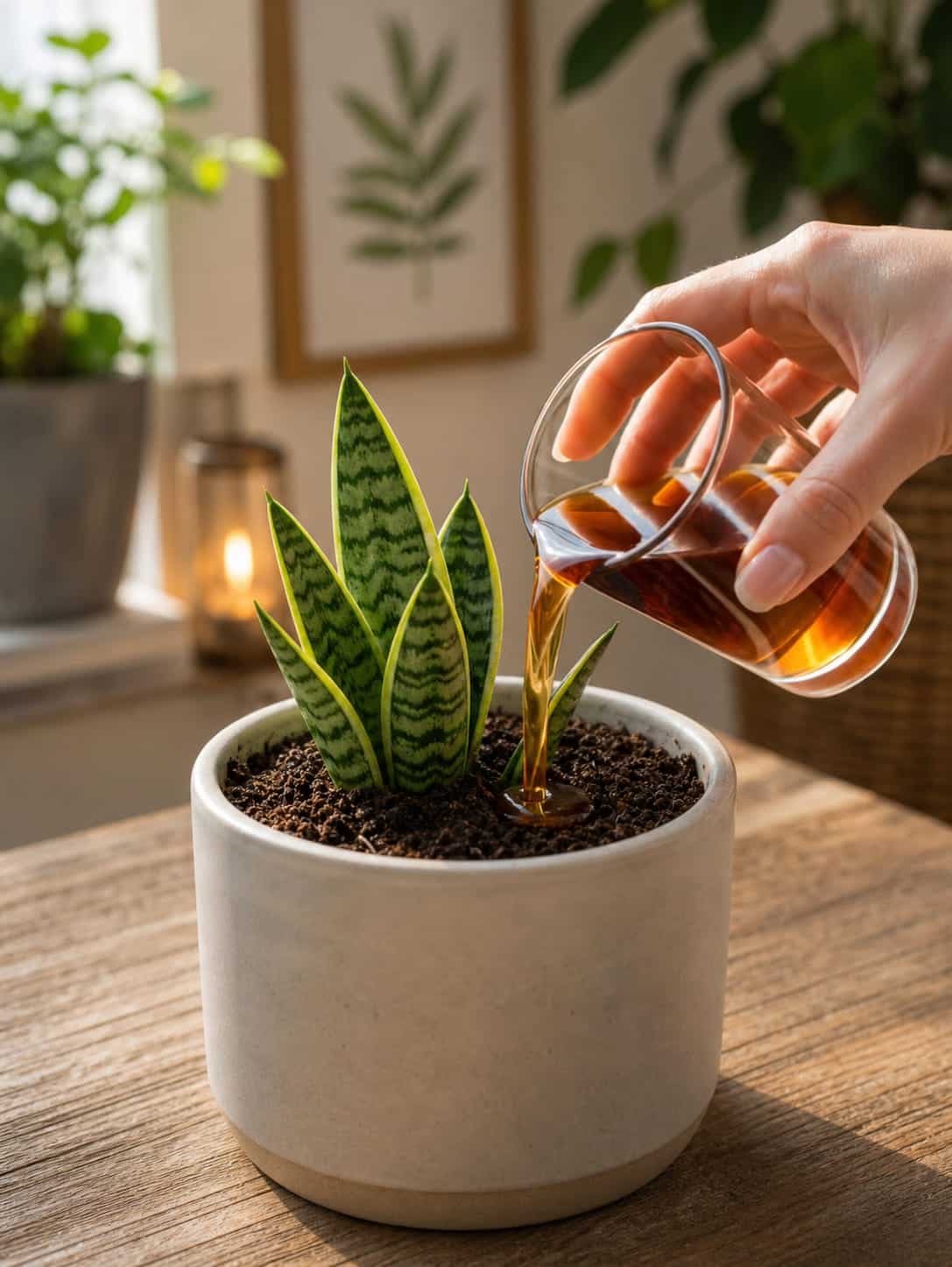
The image shows a beautiful snake plant in a white ceramic pot, sitting on a wooden table in warm indoor light. A hand is pouring an amber-colored liquid into the soil near the edge of the pot. The plant looks healthy, upright, and compact, which makes this the perfect moment for a simple houseplant care trick: a mild amber root tonic made from diluted worm casting tea.
This natural plant fertilizer is gentle enough for snake plants when used correctly. It can help refresh tired potting soil, support beneficial soil life, and encourage steady root activity. But the secret is to keep it weak and use it only when the soil is dry. Snake plants are drought-tolerant indoor plants, and too much liquid can cause root rot faster than it can create new growth.
What Plant Is in the Image?
The plant in the image is a snake plant, also known as mother-in-law’s tongue or Dracaena trifasciata. It has upright, sword-like leaves with dark green patterning and bright yellow edges. This is one of the most popular low-maintenance houseplants because it tolerates dry indoor air, missed watering, and lower light better than many other houseplants.
Snake plants are also loved as air-purifying indoor plants and modern home decor plants. Their vertical shape makes them perfect for bedrooms, offices, living rooms, apartments, and small spaces. But while they are easy to care for, they still need the right growing conditions to produce strong leaves and new pups.
The plant in the image looks healthy, so this is not an emergency rescue treatment. It is a gentle growth-support trick for a snake plant that is stable but could use a little natural boost.
What Is the Amber Liquid?
The amber liquid in this trick is best explained as diluted worm casting tea. Worm castings are a mild organic soil amendment made by earthworms. When a small amount is soaked in water and strained, it creates a light brown liquid that can be used as a gentle houseplant fertilizer.
Worm casting tea is not harsh like strong synthetic fertilizer. It is mild, earthy, and useful for indoor plant care because it supports the root zone without burning the plant when diluted properly.
The liquid should look like weak tea. It should not be thick, sticky, black, sour-smelling, or muddy. If it smells rotten, do not use it. A good tonic should smell clean and earthy.
Why Snake Plants Like a Gentle Root Tonic
Snake plants are slow-growing, especially indoors. They do not need constant feeding, but they can benefit from a light organic fertilizer during the growing season. Over time, potting soil loses structure and nutrients. A weak worm casting tea can refresh the soil without making it too rich.
This trick can support:
- Healthy snake plant roots
- Stronger upright leaves
- New snake plant pups
- Slow-growing indoor plants
- Tired potting soil
- Better soil biology
- Natural houseplant feeding
The goal is not instant growth overnight. The goal is steady improvement over weeks and months.
The Safe Amber Root Tonic Recipe
Use a very weak mixture. Snake plants prefer light feeding, not heavy feeding.
Ingredients
- 1 teaspoon worm castings
- 1 cup room-temperature water
- 1 clean jar or cup
- 1 spoon
- 1 fine strainer or coffee filter
Instructions
- Add one teaspoon of worm castings to one cup of water.
- Stir for 30 seconds.
- Let it sit for 20 to 30 minutes.
- Stir again.
- Strain the liquid well.
- Use only the clear amber liquid.
If the liquid looks too dark, add more water. For snake plant care, a weak tonic is always safer than a strong one.
How to Apply It
Check the soil first. The top two inches should be dry before using this tonic. If the soil feels damp, wait. Snake plants do not like wet soil, and adding more liquid to damp soil can increase the risk of root rot.
Pour two to four tablespoons of the amber tonic around the outer edge of the pot. Do not pour it directly into the center where the leaves meet the soil. That center area, also called the crown, should stay dry.
After applying the tonic, allow the pot to drain completely. If the pot sits in a saucer, empty any extra liquid.
How Often to Use It
Use this tonic once every six to eight weeks during spring and summer. That is the active growing season for most indoor snake plants.
In fall and winter, use it rarely or skip it completely. Snake plants grow more slowly when light is lower and temperatures are cooler. Feeding too much during slow growth can leave excess moisture and nutrients in the soil.
This is an occasional plant growth booster, not a weekly watering routine.
Do Not Use This Trick on Wet Soil
This is the most important rule. Snake plants are far more likely to die from overwatering than underwatering. If the soil is wet, do not add worm casting tea, compost tea, fertilizer, rice water, banana peel water, or any other homemade plant tonic.
Wet soil blocks oxygen from reaching the roots. Once roots sit too long in soggy soil, they can rot. Rotten roots cannot absorb water, so the plant may turn yellow, soft, or mushy.
Always let the soil dry first.
Best Soil for Snake Plant
The amber tonic only works well if the snake plant is growing in fast-draining soil. If the potting mix is dense and heavy, any extra liquid can make the problem worse.
A good snake plant soil mix can include:
- 2 parts cactus or succulent soil
- 1 part perlite
- 1 part pumice or coarse sand
- A small handful of orchid bark
This creates an airy root zone that dries faster and helps prevent root rot. Good soil is more important than any fertilizer trick.
Best Pot for Snake Plant
Use a pot with drainage holes. A ceramic pot looks beautiful, but it must allow extra water to escape. If the decorative pot has no drainage, keep the snake plant in a plastic nursery pot inside the decorative container.
When watering, remove the nursery pot, water it, let it drain, and then place it back. This protects the roots from sitting in trapped water.
A slightly snug pot is also helpful. Snake plants often produce pups better when they are not swimming in a pot that is too large.
Can This Help Snake Plant Grow Faster?
It can support healthier growth, but snake plants are naturally slow-growing indoors. The biggest factors for faster snake plant growth are bright indirect light, warm temperatures, healthy roots, and correct watering.
If your snake plant is in a dark corner, fertilizer will not solve the problem. Move it closer to bright filtered light first. A tonic helps only when the plant has enough light to use the nutrients.
For the best results, combine this trick with better light and fast-draining soil.
Can This Help Snake Plant Produce Pups?
Snake plant pups grow from underground rhizomes. A healthy root system is more likely to produce new shoots. Mild feeding with worm casting tea can support the root zone, but it does not guarantee pups by itself.
To encourage snake plant pups, give the plant:
- Bright indirect light
- A snug pot
- Fast-draining soil
- Careful watering
- Light feeding in spring and summer
Be patient. Pups can take time, but once a snake plant is happy, new shoots often appear near the base.
What Not to Use as the Amber Liquid
The amber color may look like tea, coffee, honey water, or sugar water, but those are not the safest choices for snake plants.
Do not use:
- Coffee
- Sweet tea
- Honey water
- Molasses water
- Soda
- Alcohol
- Cooking oil
- Strong compost tea
- Fermented fruit water
Sweet and sticky liquids can attract ants, fungus gnats, mold, and bacteria. Snake plants need clean, airy soil, not sugary residue around their roots.
Can You Use Regular Tea?
Plain weak tea is sometimes used by plant owners, but it is not ideal as a regular snake plant fertilizer. Tea can affect the soil over time, and flavored or sweetened tea should never be used.
Worm casting tea is a better option because it is made for soil health. It is also easier to control when diluted.
Keep the routine simple and clean.
Continue to Page 2
Continue to page 2 for more details about this article and the key points many readers miss on the first page.