Can You Add Sugar to the Tea?
No. Sugar does not help geraniums. It can attract ants, fungus gnats, and other pests. It may also encourage unwanted microbial growth in the soil.
Plant roots do not need sweet drinks. Keep the tea plain.
If the tea was prepared for people with sugar added, do not use it on plants.
Can You Add Milk?
No. Milk can sour, smell bad, and attract pests in indoor soil. It can also leave residue around the pot.
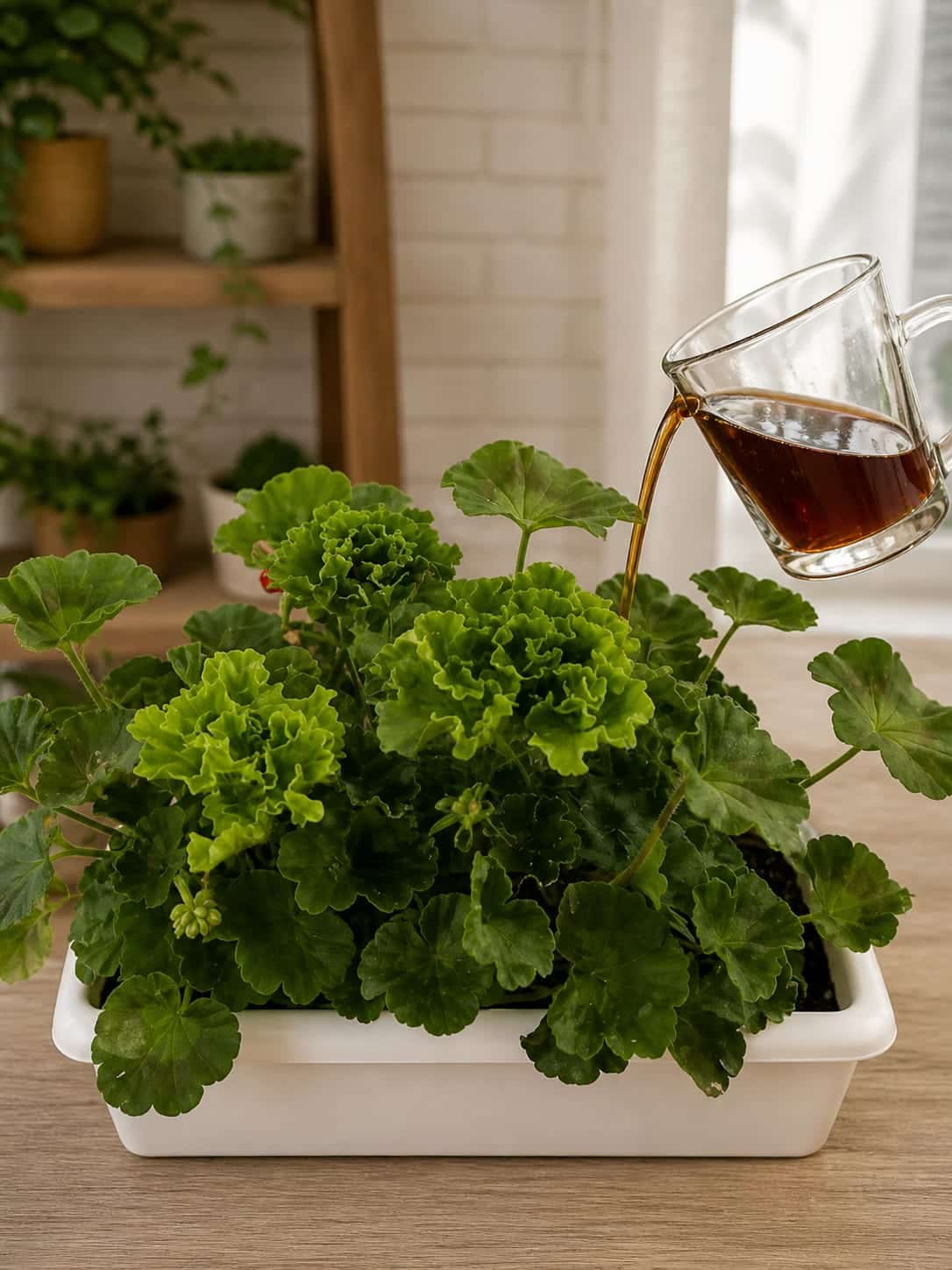
The liquid in the image is brown and clear, which is more like tea than milk. Keep it that way.
Plain tea water is cleaner and safer than dairy-based mixtures.
Can You Use Herbal Tea?
Use caution with herbal teas. Some contain oils, spices, fruit pieces, flavorings, or ingredients that may not be ideal for soil. Chamomile tea is sometimes used in gentle plant routines, but for this trick, plain black tea is more straightforward.
If you are unsure what is in a tea blend, do not use it. Indoor plant soil should not become a testing ground for flavored drinks.
Simple ingredients are best.
What If Your Geranium Leaves Turn Yellow?
Yellow geranium leaves can happen for many reasons. Overwatering is one of the most common. Low light, old leaves, nutrient issues, and cold stress can also cause yellowing.
If yellow leaves appear after using tea water, stop using it and check whether the soil is staying too wet. Let the pot dry slightly and improve light and airflow.
Do not keep adding more tea to a yellowing plant. More liquid may make the problem worse.
What If the Geranium Leaves Curl?
Curling leaves can be caused by underwatering, heat stress, pests, or inconsistent moisture. Check the underside of leaves for pests and feel the soil.
If the soil is bone dry, water properly. If the soil is wet and leaves are curling, inspect the roots and improve drainage.
Tea tonic is not a cure for every symptom. Use it only after the basic needs are correct.
What If the Plant Has No Buds?
If your geranium is leafy but not blooming, it probably needs more light. Indoors, geraniums often struggle to bloom if they are too far from a window.
Move the plant to brighter light and prune leggy stems to encourage fuller growth. Feed lightly during the growing season.
A tea tonic may support general care, but it will not replace sunlight.
How to Deadhead Geraniums for More Flowers
Deadheading means removing faded flower clusters. Once a bloom head starts to dry or lose color, pinch or cut the flower stem back near its base.
This helps the plant redirect energy into new buds instead of seed production. It also keeps the plant looking neat.
Deadheading is more important for repeat blooming than most homemade tricks.
How to Prune Geraniums for Full Growth
Geraniums can become leggy if they are not pruned. Pinch back long stems just above a leaf node to encourage branching. This creates a fuller, bushier plant.
Use clean scissors or your fingers for soft growth. Do not remove too much at once if the plant is already stressed.
After pruning, give the plant bright light so new growth comes in strong.
Best Soil for Geraniums
Geraniums need a potting mix that holds some moisture but drains well. Heavy, compacted soil can cause root problems. A good mix should feel light and airy.
A simple geranium mix can include:
- Two parts high-quality potting mix
- One part perlite
- A small amount of compost or worm castings
If the plant is indoors, avoid overly rich, soggy soil. Good drainage keeps roots healthy and helps prevent yellow leaves.
Best Pot for Geraniums
The white rectangular planter in the image looks clean and modern. For real care, the most important detail is drainage holes. Geranium roots need oxygen, and water must be able to leave the pot.
If your planter has no holes, use it as a decorative cover pot and keep the geranium in a nursery pot inside it. Remove the inner pot when watering and let it drain before placing it back.
This simple habit can prevent many geranium problems.
How Much Water Do Geraniums Need?
Geraniums prefer moderate watering. Let the top inch of soil dry before watering again. When you water, water thoroughly and let excess drain away.
Do not keep the soil constantly wet. Do not let the plant completely collapse from dryness every time either. A steady rhythm works best.
Tea tonic should follow the same rule: use it only when the plant is ready to be watered.
Can You Use This Tea Trick on Outdoor Geraniums?
Yes, you can use weak diluted black tea on outdoor container geraniums occasionally. Outdoor plants usually have more airflow and stronger light, so they may dry faster than indoor plants.
Still, avoid overusing tea. Outdoor geraniums benefit more from proper sunlight, regular watering, and balanced fertilizer.
Use the tea tonic as a small extra, not the main care method.
Can You Use This Trick on Seedlings?
Be careful with young seedlings. Their roots are delicate, and they do not need homemade tonics right away. Use plain water until they are established.
Once the plant is larger and growing well, you can try a very diluted tea watering occasionally.
For seedlings, less is always better.
Can You Use This Trick on Cuttings?
Geranium cuttings should be rooted in light soil with careful moisture. Avoid using tea water on fresh cuttings because it may keep the soil too damp or introduce extra organic matter.
Wait until the cutting has rooted and started producing new growth. Then, if desired, use a very weak tea tonic as part of normal watering.
Fresh cuttings need clean, simple conditions first.
Can Black Tea Attract Pests?
Plain diluted tea is less likely to attract pests than sugary or milky drinks. However, if you use it too often or let soil stay wet, fungus gnats can become a problem.
To avoid pests, use the tea fresh, dilute it well, and let the soil dry slightly between waterings. Do not leave tea leaves or organic scraps on the soil surface.
Good airflow and drainage also help prevent pests.
Signs You Used Too Much Tea
If you overuse tea water, the plant may show stress. Watch for:
- Soil staying wet too long
- Sour smell from the pot
- Fungus gnats
- Yellowing leaves
- Soft stems
- Mold on the soil surface
- Brown leaf edges
- Slow or weak growth
If these signs appear, stop using tea. Flush the soil with plain water if the pot drains well, or repot if the soil smells bad or remains soggy.
Signs the Geranium Likes the Routine
A happy geranium will show firm leaves, fresh green growth, and new buds. The plant may become fuller over time if it has enough light and is pruned properly.
After using a tea tonic, do not expect instant flowers the next day. Watch the plant over several weeks. If it stays green and continues budding, the routine is gentle enough.
The best plant tricks are subtle. They support the plant without shocking it.
How to Use This Trick for Plant Content
The image works beautifully because the action is clear. A glass cup pours brown tea into a lush green geranium planter. The background is soft, bright, and natural. It looks like something anyone could try at home.
To recreate this type of plant-care content, use:
- A healthy geranium plant
- A white or terracotta planter
- A clear glass cup
- Weak black tea
- A bright indoor window
- Soft natural light
- Plants or shelves in the background
- A slow pour close to the soil
Keep the tea light brown and the plant fresh. The trick should look gentle, not messy.
Quick Black Tea Geranium Tonic Recipe
- Brew one used black tea bag in two cups of hot water for two to three minutes.
- Remove the tea bag.
- Let the tea cool completely.
- Dilute with two cups of plain water.
- Check that the geranium soil is slightly dry on top.
- Pour slowly around the soil, not over the leaves.
- Let the planter drain fully.
- Repeat only once every four to six weeks during active growth.
Common Mistakes to Avoid
- Using hot tea
- Using sweet tea
- Using milk tea
- Using lemon tea
- Using strong undiluted tea
- Pouring tea when the soil is already wet
- Leaving tea leaves on the soil
- Using the trick every week
- Ignoring poor light
- Expecting tea to replace fertilizer
Short Caption for This Trick
“Give geraniums a gentle old-fashioned refresh with weak black tea water. Brew it plain, cool it fully, dilute it, and pour lightly into the soil only when the plant is ready for watering. Bright light and drainage do the real bloom work.”
Frequently Asked Questions
Is black tea good for geraniums?
Weak diluted black tea can be used occasionally as a gentle soil tonic for geraniums. It should be plain, unsweetened, cooled, and diluted.
Can tea make geraniums bloom?
Tea alone will not force blooms. Geraniums need bright light, correct watering, pruning, and balanced feeding for strong flowering.
How often should I use tea water?
Use it once every four to six weeks during active growth. Do not use it every watering.
Can I use leftover tea?
Only if it is plain, unsweetened, and has no milk, lemon, spices, or flavorings. It must be cooled and diluted before use.
Can I put tea bags in the soil?
It is better not to put tea bags or wet tea leaves in indoor soil because they can mold or attract gnats. Use strained tea water instead.
Should I pour tea on the leaves?
No. Pour it onto the soil. Wet geranium leaves can develop spots if they stay damp too often.
Can I use green tea instead?
Weak plain green tea can be used occasionally, but black tea gives the classic brown tonic shown in the image.
Can I use sweet tea?
No. Sugar can attract pests and create problems in the soil.
Why are my geranium leaves yellow?
Yellow leaves are often caused by overwatering, poor drainage, low light, old growth, or nutrient issues. Check soil and light before adding any tonic.
What is the best way to get more geranium flowers?
Give the plant bright light, let the soil dry slightly between waterings, deadhead old blooms, prune for fullness, and feed lightly during active growth.
Final Thoughts
The brown pour in the image is a beautiful and simple geranium trick, and the safest version is weak black tea water. It gives the plant-care moment a warm, natural feeling while offering a gentle soil refresh when used correctly.
The rules are simple. Use plain black tea only. Cool it completely. Dilute it well. Pour it around the soil, not over the leaves. Use it only when the plant actually needs watering. Repeat rarely, not weekly.
Geraniums reward good basics more than dramatic tricks. They want bright light, well-draining soil, moderate watering, and regular deadheading. A mild tea tonic can be a lovely extra, but it should never replace proper care.
So the next time your geranium looks green, full, and ready to bloom, try this gentle tea refresh. Pour lightly, let the planter drain, keep the plant in bright light, and watch for fresh leaves, new buds, and a fuller, happier plant.