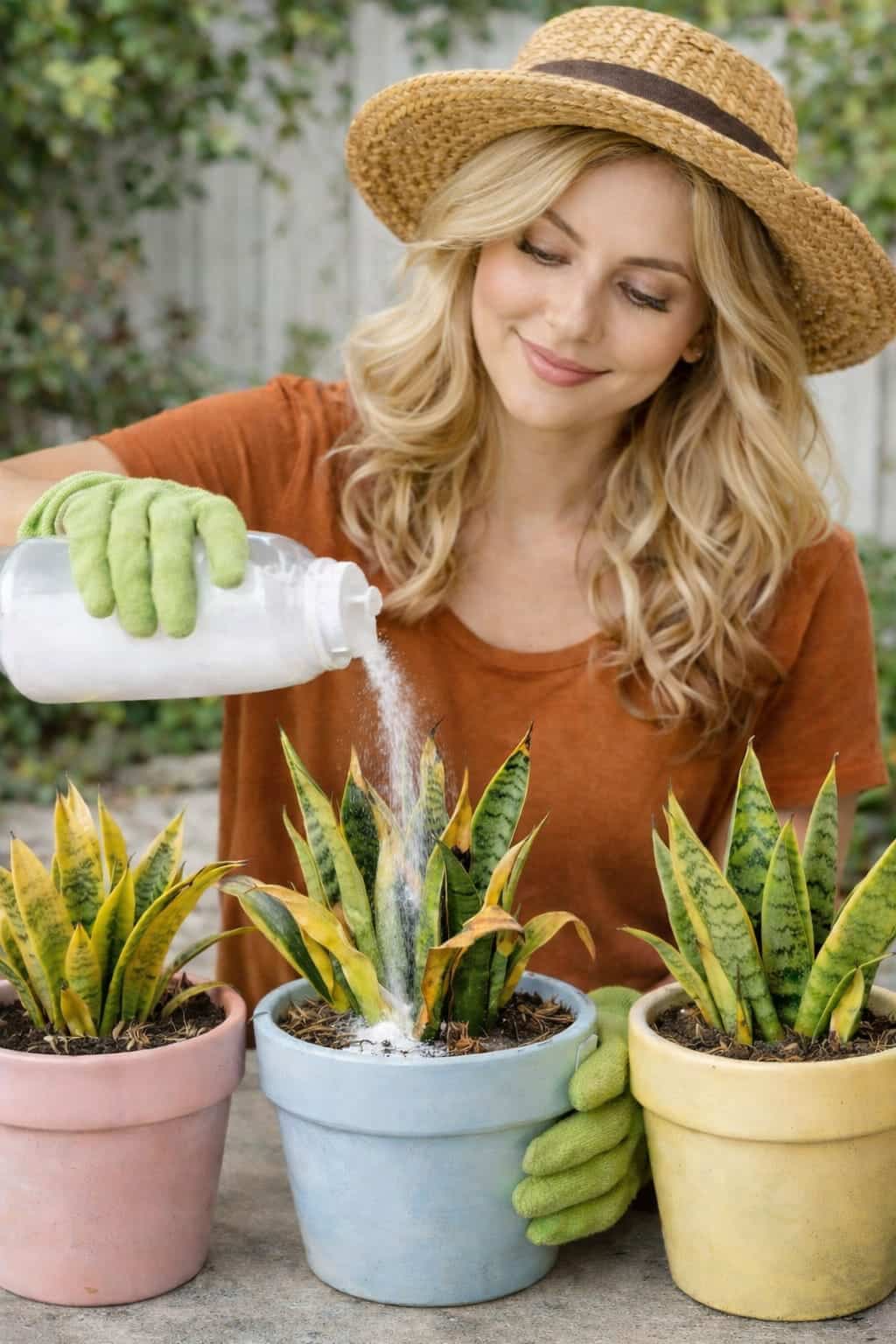
A Better Way to Help a Struggling Snake Plant
Before adding any powder, check these first.
- Look at the Soil
Is it dense, compacted, or waterlogged? Does it smell sour? If yes, repot. Snake plants need fast‑draining cactus or succulent mix. If the soil is heavy, add perlite or sand.
- Check the Roots
Gently remove the plant from its pot. Healthy roots are firm and white or tan. Unhealthy roots are brown, mushy, or hollow. If you see rot, trim away the bad roots with clean scissors. Dust cut ends with a tiny bit of cinnamon (this is one of the few times powder is genuinely helpful). Repot in fresh, dry mix.
- Improve Light
Snake plants tolerate low light, but they grow much better in bright indirect light. An east window or a south/west window with a sheer curtain is ideal. If your plant has been in a dark corner for months, move it closer to light. You will see a difference within weeks.
- Water Less Often
Let the soil dry completely between waterings. Stick your finger in — if it feels dry at least 2 inches down, water. In most homes, that means watering every 2–4 weeks in spring/summer and once a month or less in winter. Overwatering is the #1 killer.
- Feed Lightly Only When Needed
A mild houseplant or succulent fertilizer (diluted to half strength) once every 6–8 weeks during spring and summer is much safer than random experiments. If you want to use a powdered fertilizer, dissolve it in water first and apply to moist soil.
When a White Powder Can Actually Make Sense (Specific Situations)
There are a few real situations where a white powder may be useful for a snake plant.
A Mild Fertilizer for Depleted Soil
If your snake plant has been in the same pot for over a year, has not been fed, and looks pale, a light application of a balanced fertilizer (like 10‑10‑10) can help. Use it sparingly and only during active growth.
Diatomaceous Earth for Pests
If you see fungus gnats flying around the soil or tiny white insects, a light dusting of food‑grade diatomaceous earth on the soil surface can help control them. It is not a fertilizer, but it solves a pest problem.
A Targeted Mineral Supplement When Deficiency Is Known
If a soil test or clear symptoms (yellowing between leaf veins) indicate a magnesium deficiency, a very diluted Epsom salt solution (1 teaspoon per gallon) once a month for 2–3 months may help. Otherwise, skip it.
Cinnamon After Pruning Damaged Tissue
After you cut away rotten roots or damaged leaves, dust the cut ends with a tiny amount of cinnamon. This is an antifungal measure, not a growth stimulant.
These are specific uses. That is very different from dumping powder into every pot and waiting for magic.
Signs Your Snake Plant Is Truly Recovering (Not Just Reacting to Powder)
If your plant is actually improving, you will notice:
· Stronger new leaves – Fresh growth is firm and upright.
· Less yellowing – Older leaves maintain green color.
· Better firmness – Leaves feel solid, not soft or wrinkled.
· Healthier color – Rich green, not pale or yellowish.
· New pups emerging from the base – Baby shoots appear around the mother plant.
These are the signs worth paying attention to. Not the powder itself.
Common Mistakes That Keep Snake Plants Weak
Avoid these errors if you want a healthy, thriving snake plant.
Overwatering
The #1 mistake. Snake plants are drought‑tolerant. When in doubt, wait another week.
Using Regular Potting Soil Alone
Too dense. Always add perlite or use cactus mix.
Keeping the Plant in a Dark Corner
Surviving is not thriving. Move it closer to a window.
Ignoring Drainage
A pot without holes will eventually cause root rot.
Fertilizing a Sick Plant
Damaged roots cannot use fertilizer. Wait for recovery signs.
Using Random Powders Without Research
Baking soda, Epsom salt, and cinnamon are not interchangeable. Know what you are using.
Expecting Overnight Results
Snake plants are slow growers. Recovery takes weeks to months.
A Simple Snake Plant Care Routine (No Powder Required)
Here is a proven routine that works better than any hack.
Weekly
· Check soil moisture. Water only if completely dry.
· Wipe leaves with a damp cloth to remove dust.
· Rotate the pot slightly for even light.
Monthly
· Inspect for pests (mealybugs, spider mites).
· Remove any dead or yellow leaves.
· Flush the soil with plain water to prevent salt buildup.
Spring & Summer (Active Growth)
· Bright indirect light (10–12 hours).
· Water every 2–4 weeks (when dry).
· If desired, feed with half‑strength balanced fertilizer once every 6–8 weeks.
· Watch for new pups.
Fall & Winter (Resting Period)
· Still bright light, but days are shorter — consider a grow light.
· Water once a month or less.
· No fertilizer.
· Keep away from cold drafts (below 50°F).
Annually
· Refresh the top inch of soil with fresh cactus mix.
· Repot every 2–3 years if roots are crowded or soil is compacted.
· When repotting, check rhizomes for rot. Trim any soft, dark areas.
Frequently Asked Questions (White Powder on Snake Plants)
Can I use baking soda on my snake plant?
No. Baking soda is not a general plant treatment. It raises soil pH and can harm roots. There are safer ways to address any issues.
Is Epsom salt good for snake plants?
Only if the plant has a magnesium deficiency (yellowing between leaf veins). Use 1 teaspoon per gallon of water once a month for 2–3 months. Otherwise, it adds unnecessary salt.
Will cinnamon help my snake plant grow?
No. Cinnamon is antifungal, not a fertilizer. Use it on cut wounds after trimming rot. Do not sprinkle it on healthy soil or roots.
How do I know if my snake plant needs fertilizer?
Signs of nutrient need: pale leaves, very slow growth (no new leaves in over a year), no pups despite good light and watering. If the plant has been in the same soil for 2+ years without repotting, a light fertilizer may help.
What is the best white powder for snake plants?
There is no single “best.” For pest control, diatomaceous earth. For cut wounds, cinnamon. For nutrient boost, a balanced fertilizer (dissolved in water). Each has a specific purpose.
Why is my snake plant turning yellow after I added powder?
You may have overwatered, used the wrong powder, or added too much. Stop all treatments. Flush the soil with plain water. Check roots for rot. Return to basic care.
Can I use diatomaceous earth on snake plants?
Yes, for pest control. Dust lightly on dry soil to kill fungus gnats and other soil pests. It will not feed the plant.
How often should I add anything to my snake plant soil?
Rarely. Most snake plants need only fresh soil every 2–3 years and occasional light feeding in spring/summer. Powders and amendments are not routine needs.
Final Thoughts
Putting white powder on snake plants can sometimes help — but only when the powder is appropriate and the plant’s real problem is also being addressed.
The truth behind the viral trick is simple: snake plants do not thrive because of one mysterious ingredient. They thrive because they finally get healthier roots, better drainage, brighter light, careful watering, and light support when needed. That is what people should really be watching for.
Because the most impressive snake plant transformations rarely come from the powder. They come from fixing what was happening underneath it — the soil, the roots, the water, and the light.
So before you reach for that white powder, check your plant’s soil. Inspect the roots. Move it closer to a window. Water less often. Then, if you still want to use a specific powder for a specific purpose, do so sparingly and knowledgeably.
Your snake plant will reward you with firm, upright leaves, rich green color, and — with patience — those wonderful new pups that make the whole pot feel alive.
No magic required. Just good care.
Have you tried a white powder on your snake plant? Share your experience in the comments below. And if you found this guide helpful, save it for later or send it to a friend who needs a real snake plant rescue plan.