How to Check Peace Lily Roots
If your peace lily is drooping, yellowing, or browning badly, inspect the roots before feeding. This peace lily root health check is essential for diagnosis.
Healthy Roots
- Firm
- White, cream, or tan
- No bad smell
- Not mushy
Rotten Roots
- Brown or black
- Mushy
- Slimy
- Bad-smelling
- Fall apart easily
If roots are rotten, repotting is more important than rice water.
How to Rescue a Peace Lily With Root Rot
If the plant has root rot, do not apply rice water yet. Follow this emergency peace lily root rot treatment first.
Rescue Steps
- Remove the plant from the pot.
- Shake away wet old soil.
- Cut off mushy black roots.
- Keep firm healthy roots.
- Repot in fresh well-draining soil.
- Use a pot with drainage holes.
- Water lightly with plain water.
- Place in bright indirect light.
- Wait for recovery before feeding.
Rice water should only be used once the plant is stable and actively growing again.
Best Soil Mix for Peace Lilies
Peace lilies need soil that holds moisture but still drains well. Dense soil can suffocate the roots. Choosing the best potting mix for peace lilies is half the battle.
Good Peace Lily Soil Mix
- 2 parts indoor potting mix
- 1 part perlite or pumice
- 1 part coco coir or peat moss
- A small amount of orchid bark for airflow
This type of mix keeps the roots moist but not waterlogged.
Can You Use Cooked Rice Water?
It is safer to use fresh rice rinse water, not cooked rice water. Cooked rice water can be too starchy and may spoil faster in soil. For safe rice water for houseplants, always use fresh rinse water.
Avoid rice water that contains:
- Salt
- Oil
- Butter
- Spices
- Sugar
- Sauce
- Fermented smell
Only plain fresh rice rinse water should be used for houseplants.
Can Fermented Rice Water Be Used?
Fermented rice water is popular in some gardening routines, but it is riskier for indoor peace lilies. It can smell, attract pests, and become too strong if not diluted correctly. For indoor peace lilies, fresh diluted rice water is safer than fermented rice water.
Can Rice Water Attract Fungus Gnats?
Yes, if used too often or too strong. Fungus gnats love moist organic soil. Starchy water can make the pot more attractive to them if the soil stays wet. Follow these pest prevention tips for peace lilies to avoid problems.
To prevent fungus gnats:
- Use rice water only occasionally
- Dilute it well
- Let the top inch of soil dry
- Do not leave water in the saucer
- Improve airflow
- Remove dead leaves from the soil
If gnats appear, stop using rice water immediately.
Rice Water vs. Regular Fertilizer
Rice water is a mild homemade tonic, not a complete fertilizer. It may support the soil, but it does not provide the precise nutrition found in balanced houseplant fertilizer. This natural vs synthetic fertilizer comparison helps you choose.
| Option | Best Use | Main Risk |
|---|---|---|
| Fresh diluted rice water | Gentle soil refresh | Mold or gnats if overused |
| Balanced liquid fertilizer | Reliable plant feeding | Burn if too strong |
| Compost tea | Soil microbe support | Odor if too concentrated |
| Plain water | Regular hydration | No added nutrients |
For peace lilies, a good routine may include mostly plain water, occasional weak fertilizer, and rare rice water as a gentle supplement.
How to Combine Rice Water With Fertilizer
Do not use rice water and fertilizer at the same time. Alternate them to avoid overfeeding. This balanced peace lily feeding plan prevents nutrient overload.
Simple Monthly Routine During Active Growth
- Week 1: plain water
- Week 2: plain water if needed
- Week 3: weak balanced fertilizer
- Week 4: plain water or diluted rice water
If your peace lily grows slowly or sits in lower light, use less fertilizer and less rice water.
How to Make Peace Lily Leaves Glossy
Rice water may support future leaf health, but glossy leaves also need cleaning. Dust blocks light and makes leaves look dull. This peace lily leaf cleaning method restores natural shine.
Leaf Cleaning Method
- Use a soft damp cloth.
- Support each leaf with one hand.
- Wipe the top surface gently.
- Use plain water only.
- Dry with a clean cloth if needed.
- Avoid oily leaf shine products.
Clean leaves instantly look brighter and help the plant absorb light better.
Should You Pour Rice Water on Leaves?
No. Apply rice water to the soil only. Pouring it over leaves can leave residue, attract dust, or encourage fungal spots. Peace lily leaves should be cleaned with plain water, not starchy liquid.
Should You Remove Damaged Leaves?
Yes, remove leaves that are fully yellow, brown, or crispy. This improves the plant’s appearance and helps airflow. Proper peace lily pruning for damaged leaves keeps the plant tidy.
How to Prune Peace Lily Leaves
- Use clean scissors.
- Cut the damaged stem near the base.
- Do not tear leaves by hand.
- Remove dead leaves from the soil surface.
- Clean scissors after pruning.
Do not remove every slightly damaged leaf if the plant still needs energy. Keep leaves that are mostly green.
Can Rice Water Help a Drooping Peace Lily?
Only if the plant is drooping from mild dehydration or nutrient weakness. If the peace lily is drooping because of root rot, rice water will not help. This peace lily drooping cause checklist will guide you.
Check the soil:
- Dry soil + drooping leaves: water with plain water first
- Wet soil + drooping leaves: inspect roots
- Slightly dry soil + stable plant: diluted rice water may be used
Do not treat every droop as a feeding problem.
Can Rice Water Help Brown Leaf Tips?
Rice water cannot repair brown tips. Brown tissue is already damaged. However, better care may prevent new tips from browning. For preventing peace lily brown tips naturally, focus on humidity and water quality.
To reduce brown tips:
- Use filtered or rested water if tap water is harsh
- Avoid overfertilizing
- Keep humidity moderate
- Water consistently
- Keep away from hot direct sun
- Flush the soil occasionally with plain water
Peace Lily Care Table
| Care Factor | Best Method | Why It Matters |
|---|---|---|
| Rice water | Diluted 1:1 with clean water | Gentle soil support |
| Frequency | Every 4 weeks max | Prevents starch buildup |
| Light | Bright indirect light | Supports blooms |
| Watering | When top inch dries | Prevents root rot |
| Soil | Moist but well-draining | Protects roots |
| Pot | Drainage holes | Prevents standing water |
| Leaves | Wipe with plain water | Restores shine |
Simple Rice Water Peace Lily Recipe
Ingredients
- ½ cup fresh rice rinse water
- ½ cup clean water
Instructions
- Rinse plain uncooked rice in clean water.
- Collect the cloudy rinse water.
- Dilute it with equal parts clean water.
- Check that the peace lily soil is slightly dry on top.
- Pour a small amount around the outer soil edge.
- Avoid leaves, flowers, and crown.
- Let excess water drain fully.
- Repeat only after 4 weeks if the plant responds well.
Common Mistakes to Avoid
- Using thick cooked rice water
- Using salty rice water
- Applying rice water every day
- Pouring rice water on leaves
- Using it on wet soil
- Ignoring root rot
- Leaving water in the saucer
- Combining it with strong fertilizer
- Using fermented rice water indoors without dilution
- Expecting brown tips to turn green
Signs the Rice Water Trick Is Helping
Watch the plant over 7 to 14 days. The best signs are subtle but visible. These are positive indicators of peace lily recovery.
- Leaves stand more upright
- New growth looks greener
- Plant droops less often
- Soil smells fresh
- No mold appears
- No fungus gnats appear
- Blooms remain stable
- Leaves look slightly glossier after cleaning and better care
Signs You Should Stop Using Rice Water
Stop immediately if you notice:
- White mold on soil
- Fungus gnats
- Sour smell
- Sticky soil surface
- More yellow leaves
- Soil staying wet too long
- Drooping after application
- Root rot symptoms
Return to plain water and check the roots if the plant declines.
Short Caption for This Trick
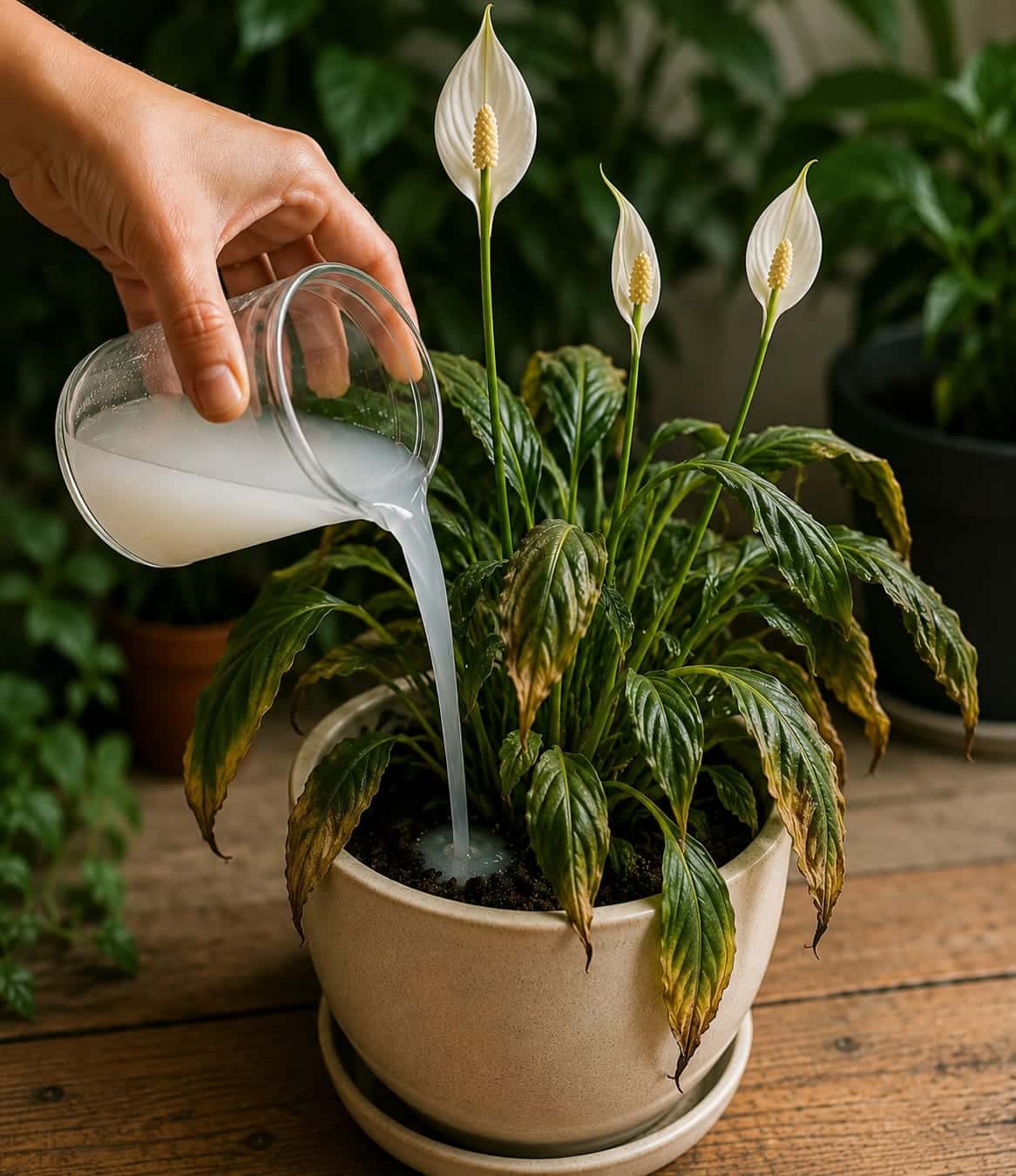
“For peace lilies, use rice water only as a diluted soil tonic: mix ½ cup fresh rice rinse water with ½ cup clean water, then apply a small amount around the outer soil edge when the top inch is slightly dry. Avoid leaves, flowers, and crown. Use no more than once every 4 weeks.”
Frequently Asked Questions
Is rice water good for peace lilies?
Fresh diluted rice water can be used occasionally as a mild soil tonic for peace lilies. It should be diluted and applied only to the soil.
How often should I use rice water on a peace lily?
Use it no more than once every 4 weeks during active growth. Do not use it daily or weekly.
Can rice water make peace lily leaves greener?
It may support healthier future growth, but it will not repair badly damaged yellow or brown leaves.
Can rice water make peace lilies bloom?
Rice water may support plant health, but bright indirect light and healthy roots are more important for blooming.
Can I use cooked rice water?
Fresh rice rinse water is safer. Cooked rice water is often too starchy and can spoil in the soil.
Can fermented rice water be used?
It can be used by some gardeners, but it is riskier indoors. Fresh diluted rice water is safer for peace lilies.
Should I spray rice water on peace lily leaves?
No. Rice water can leave residue on leaves. Use plain water and a soft cloth for cleaning.
Why is my peace lily drooping after rice water?
The soil may be too wet, the mixture may be too strong, or the roots may be stressed. Stop using rice water and check the soil.
Can rice water attract bugs?
Yes, if used too often or too thick. Dilute it well and let the soil dry slightly between waterings.
What is the best homemade fertilizer for peace lilies?
The safest homemade options are mild diluted rice water, weak compost tea, or eggshell tea used occasionally. A balanced houseplant fertilizer at low strength is more reliable for regular feeding.
Final Thoughts
The rice water trick can be a simple way to support a peace lily when it is used correctly. The cloudy white liquid in the image represents a gentle homemade tonic that may help refresh the soil and support healthier future growth. But the plant must not be overwatered, and the mixture must never be thick or salty. This natural peace lily care method has helped many indoor gardeners.
The safe method is to rinse plain uncooked rice, collect the cloudy water, dilute it with clean water, and apply a small amount to the soil edge. Keep it away from the leaves, blooms, and crown. Use it only occasionally, and always let the pot drain well. Following this complete peace lily care guide will keep your plant thriving.
After 7 days, a peace lily may look firmer, fresher, and less tired if the rice water is combined with proper care. But the real transformation comes from the full routine: bright indirect light, consistent watering, good drainage, clean leaves, healthy roots, and gentle feeding. These professional indoor plant care secrets will help you succeed.
Used wisely, rice water can become a helpful part of peace lily care. Used too often, it can cause mold, pests, sour soil, and root stress. With peace lilies, the secret is not heavy feeding — it is steady moisture, clean soil, and gentle support. Enjoy your beautiful, healthy peace lily for years to come.