Pests to Watch For
Snake plants are usually pest resistant, but they can still attract mealybugs, scale, spider mites, and fungus gnats. Mealybugs may hide near the base of leaves. Scale can look like small brown bumps. Spider mites may create fine webbing and speckled damage. Fungus gnats usually appear when soil stays wet or contains too much decaying organic matter.
Check your plant regularly, especially after bringing home new plants or repotting. Early pest problems are easier to manage. Keep the soil on the dry side and avoid overusing organic materials. Healthy dry conditions make fungus gnats less likely.
Should You Mist Snake Plants?
Snake plants do not need misting. Their leaves are not designed to stay wet. Misting can leave water sitting between leaves, which may increase the risk of rot or fungal spots. If the leaves are dusty, wipe them instead. If the air is dry, the plant will usually tolerate it well because snake plants are adapted to dry conditions.
Many tropical plants enjoy humidity, but snake plants are different. They prefer simple dry care. This is one reason they are so easy indoors. Do not treat them like ferns or peace lilies. They need less moisture and more drying time.
Seasonal Snake Plant Care
During spring and summer, snake plants may grow more actively. This is the best time to repot, divide, or feed lightly. Water may be needed more often because light and warmth help the soil dry faster. Even then, always check the soil first.
During fall and winter, growth slows. The plant needs less water and usually no fertilizer. Many snake plants are overwatered in winter because owners keep using a summer watering habit. In cooler darker months, wait longer between waterings. Keep the plant away from cold drafts and windows that become very cold at night.
If you want blooms, steady seasonal care is important. Strong growth during bright months helps the plant store energy. Dry, stable care during slower months protects the roots.
Why the Yellow Pot Works Well
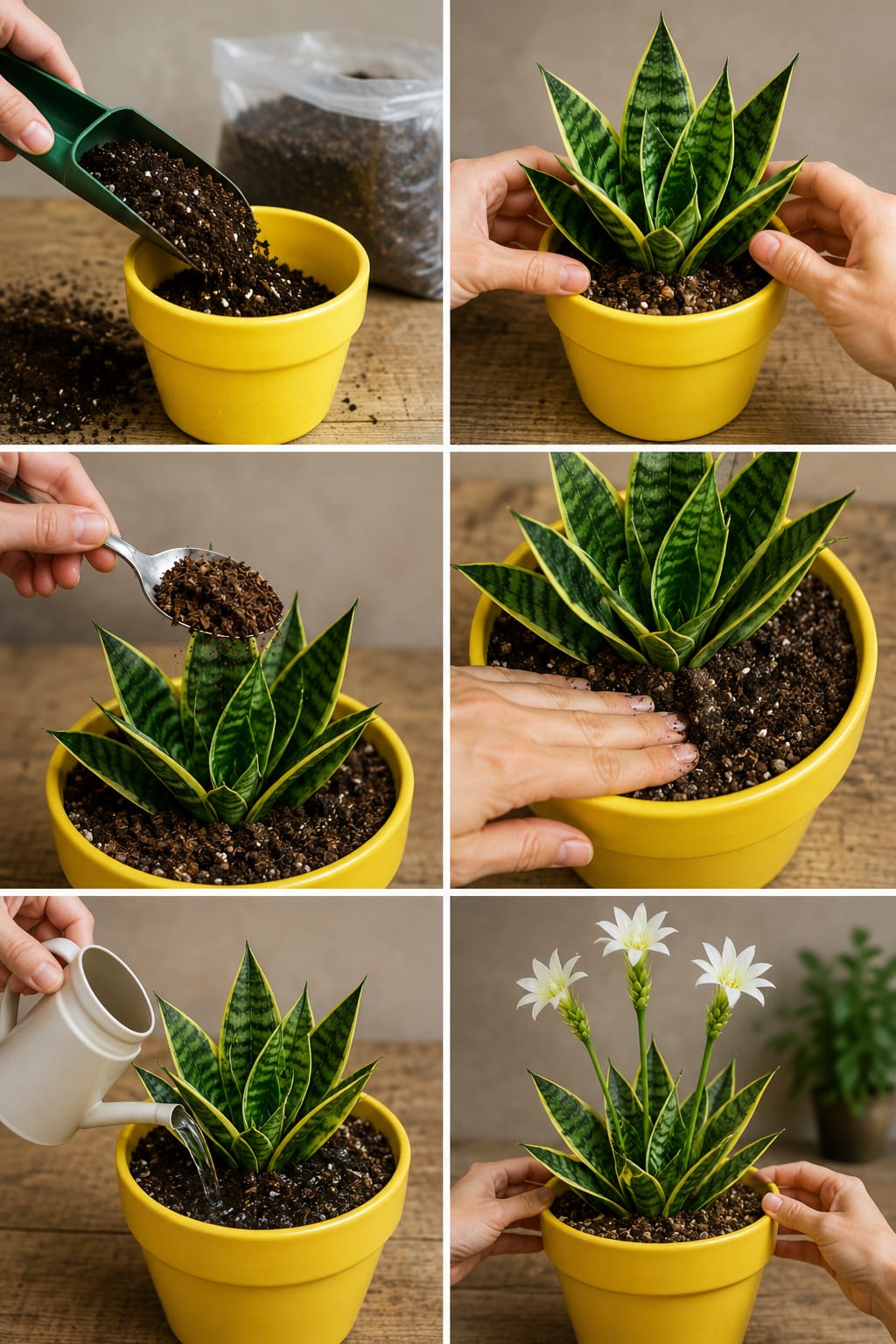
The yellow pot in the image makes the snake plant look bright and cheerful. It highlights the yellow leaf margins and gives the plant a bold decorative style. A colorful pot can make a simple houseplant feel more modern and intentional. Snake plants look especially good in yellow, white, black, terracotta, gray, and natural woven containers.
When styling a snake plant indoors, choose a pot that matches both the plant and the room. A yellow pot works well in warm spaces, kitchens, plant shelves, and rooms with neutral walls. A white pot gives a clean minimalist look. A terracotta pot gives a natural rustic look. A black pot creates strong contrast with the green leaves.
Style matters, but plant health comes first. The most beautiful pot is still a problem if it has no drainage or holds too much water. Choose beauty and function together.
Final Thoughts
A snake plant is one of the easiest houseplants to grow, but it still responds beautifully to proper care. The step-by-step image shows the foundation of success: good soil, careful planting, gentle top dressing, light watering, and patience. These simple actions help create healthy roots and strong leaves, which are the real secret behind a beautiful plant.
Rare blooms can happen when a snake plant is mature, healthy, bright, slightly snug, and watered correctly. They cannot be forced by one spoonful of organic material or one watering trick. Feeding can support growth, but it should always be light. Too much fertilizer or too much organic matter can damage the roots and prevent the plant from thriving.
For the best results, give your snake plant a draining pot, gritty soil, bright indirect light, and deep but infrequent watering. Let the soil dry completely before watering again. Keep the crown above the soil line. Avoid soggy conditions, strong homemade liquids, and heavy feeding. Clean the leaves when dusty and watch for signs of root stress.
With steady care, your snake plant can become full, upright, and striking. It may produce new pups, stronger leaves, and, if conditions are right, rare flower stalks that make the plant feel truly special. Even without blooms, a healthy snake plant is a beautiful long-lasting indoor companion. Treat it simply, keep the roots dry and airy, and let it grow at its own calm pace.