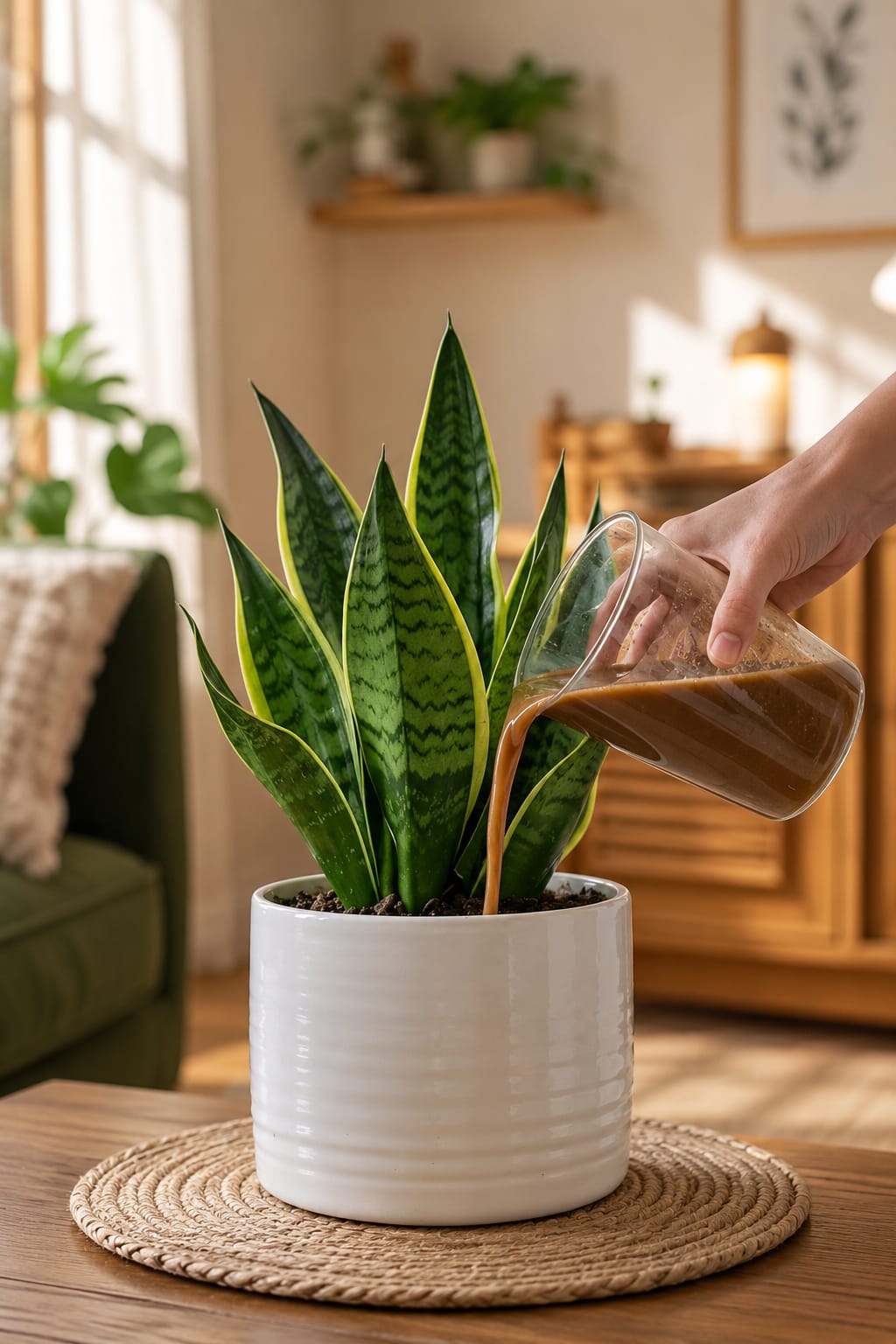
Snake plants are some of the most reliable indoor plants you can grow. They have upright sword-shaped leaves, bold green patterns, and clean architectural lines that fit beautifully in modern homes, cozy apartments, offices, bedrooms, entryways, and bright living rooms. A healthy snake plant looks strong, sculptural, and almost effortless. Because it is so tough, many plant lovers enjoy trying simple home tricks to make it look even greener and healthier.
One popular idea is the coffee water trick. This method uses diluted leftover coffee or coffee-based water as an occasional soil tonic for snake plants. The idea sounds simple: coffee is dark, natural, and rich-looking, so many people believe it can wake up tired plants, deepen leaf color, and support growth. But snake plants are not heavy feeders, and coffee must be used with care. Too much coffee can harm the roots, sour the soil, attract pests, and create moisture problems.
This guide explains the safe way to understand the coffee water trick for snake plants. It covers what coffee can and cannot do, how to dilute it, how often to use it, what mistakes to avoid, how to protect the roots, how to water snake plants correctly, and how to style them beautifully indoors. The goal is not to pour coffee into the pot every week. The goal is to use plant care with balance, patience, and safety.
Why Snake Plants Are So Popular Indoors
Snake plants are loved because they are strong, stylish, and low-maintenance. Their leaves grow upright instead of spreading wide, so they fit well in small rooms and narrow corners. They can tolerate low to medium light, although they grow best in bright indirect light. They also do not need frequent watering, which makes them perfect for busy plant owners.
Their thick leaves store moisture, and their roots prefer to dry between watering. This is the most important thing to remember when using any liquid trick. A snake plant does not want constantly wet soil. It wants a dry, airy, well-draining root zone. Any homemade tonic should respect that natural need.
Because snake plants are slow-growing, people sometimes try to force growth with extra liquids or fertilizer. This is where problems begin. Snake plants respond best to gentle, occasional feeding, not constant boosting.
What the Coffee Water Trick Means
The coffee water trick usually means using plain cooled coffee diluted with water and pouring a small amount into the soil. Some people also use water that has passed through used coffee grounds. The goal is to give the plant a tiny nutrient boost and add organic matter to the soil.
Coffee contains small amounts of nutrients, but it is not a complete fertilizer. It can also be acidic depending on the coffee and how it is prepared. Indoor potted plants have limited soil volume, so anything added to the pot can build up over time. That is why coffee water must be weak and rare.
For snake plants, coffee water should never replace normal watering. It should never be used on wet soil. It should never be poured in large amounts. Think of it as an occasional experiment, not a routine requirement.
Important Safety Warning Before Using Coffee Water
Snake plants are drought-tolerant plants with roots that can rot if the soil stays wet. Coffee water is still water. If you pour it into soil that is already damp, you increase the risk of root rot. If the coffee is strong, sweetened, flavored, creamy, or hot, it can cause even more damage.
Only use plain black coffee that has cooled completely. Never use coffee with sugar, milk, cream, syrup, artificial sweetener, spices, or flavorings. These ingredients can attract insects, feed mold, and make soil smell bad.
The safest rule is simple: use clean water most of the time. Use coffee water only rarely, heavily diluted, and only when the plant actually needs watering.
Safe Coffee Water Ratio for Snake Plants
A safe coffee water mix should be very weak. Snake plants do not need strong feeding.
- 1 part plain cooled black coffee
- 4 to 6 parts clean water
- Mix well before using
- Apply only to dry soil
- Use once every 6 to 8 weeks at most during active growth
For a small snake plant, use only a small amount of the mixture. For a medium pot, use enough to lightly moisten the soil, not flood it. Always let excess liquid drain away.
If you are unsure, dilute more. Weak is safer than strong.
Best Type of Coffee to Use
Only use plain black coffee. It should be cooled to room temperature before touching the plant. Hot coffee can damage roots. Sweet coffee can attract pests. Creamy coffee can sour in the soil.
Do not use instant coffee with additives. Do not use flavored coffee. Do not use coffee drinks from cafes that may contain sugar or milk. Do not use leftover coffee that has been sitting for days and smells stale or fermented.
Fresh, plain, diluted coffee is the only version that should be considered.
Can Coffee Grounds Be Added Directly to Snake Plant Soil?
It is better not to add wet coffee grounds directly to snake plant soil. Coffee grounds can compact, hold moisture, grow mold, and attract fungus gnats. Snake plants need airy soil, and wet coffee grounds can make the top layer heavy and damp.
If you want to use coffee grounds, compost them first. Finished compost is safer than raw grounds. Even then, use only a small amount in a well-draining mix.
For indoor snake plants, diluted coffee water is less risky than sprinkling wet grounds directly into the pot.
What Coffee Water Can Do
Used carefully, diluted coffee water may offer a small nutrient boost. It may support microbial activity in the soil and add tiny amounts of nitrogen and other compounds. But the effect is mild. It will not instantly create new leaves, repair damaged leaves, or cure root problems.
Coffee water can be part of plant care only if the rest of the routine is already correct. A snake plant with poor light, soggy soil, no drainage, or rotting roots will not be saved by coffee water.
The plant’s main needs always come first: light, drainage, dry periods, and a suitable soil mix.
What Coffee Water Cannot Do
- It cannot fix root rot.
- It cannot repair broken leaves.
- It cannot save a plant in a pot with no drainage.
- It cannot replace proper fertilizer completely.
- It cannot make a snake plant grow fast overnight.
- It cannot solve overwatering damage.
- It cannot correct very poor lighting.
- It cannot remove pests.
Snake plants grow slowly by nature. A healthy snake plant may produce new leaves gradually during warm, bright seasons. Slow growth is normal.
How to Apply Coffee Water Safely
First, check the soil. Push your finger into the top 2 inches of soil. If it feels damp, wait. If the soil is dry and the pot feels light, the plant may be ready for watering.
Pour the diluted coffee water slowly around the soil, not directly into the center of the plant. Avoid letting liquid sit inside the leaf rosette. Water trapped between leaves can encourage rot.
Let excess liquid drain from the bottom. Empty the saucer after watering. A snake plant should never sit in liquid.
How Often to Use Coffee Water
Use coffee water rarely. Once every 6 to 8 weeks during spring and summer is enough. During fall and winter, avoid coffee water unless the plant is actively growing in bright warm conditions.
Most watering should be done with plain water. The plant does not need constant homemade tonics.
If your snake plant is already healthy, you may not need coffee water at all.
Signs Coffee Water Is Helping
If the plant responds well, the changes will be slow and subtle. You may notice steady leaf firmness, healthy color, and gradual new growth during the growing season.
- Leaves stay upright and firm
- No sour smell comes from soil
- No mold appears on the surface
- New leaves appear slowly
- Soil dries at a normal pace
- No fungus gnats appear
These signs mean the plant is tolerating the routine. It does not mean coffee water is necessary every week.
Signs You Should Stop Using Coffee Water
- Soil smells sour or fermented
- White mold appears on top of soil
- Fungus gnats appear
- Leaves become soft or mushy
- Leaf bases turn yellow
- The pot stays wet too long
- Brown wet spots appear near the base
- The plant begins leaning or collapsing
If any of these signs appear, stop using coffee water immediately. Let the soil dry. Check drainage. Inspect the roots if the plant continues to decline.
What to Do if You Used Too Much Coffee
If you accidentally poured strong coffee into the pot, flush the soil with clean room-temperature water, but only if the pot has drainage holes. Let plenty of water run through the soil and drain away. Then allow the pot to dry well before watering again.
If the soil smells bad or remains wet for too long, repot the plant into fresh dry, well-draining mix. Remove as much old sour soil as possible without damaging healthy roots.
Do not fertilize right after this. Give the plant time to recover.
Best Soil Mix for Snake Plants
Snake plants need a fast-draining mix. Heavy potting soil holds too much water and can cause root rot. A good mix should feel airy, gritty, and quick to dry.
A simple snake plant mix:
- 2 parts cactus or succulent mix
- 1 part perlite
- 1 part pumice or coarse sand
- Small amount of orchid bark, optional
This type of mix allows water to pass through quickly and gives roots oxygen. It is much better than dense garden soil.
Why Drainage Is Essential
Snake plants should always grow in pots with drainage holes. A decorative pot without drainage can trap water at the bottom and rot the roots. Even if the top soil looks dry, the bottom may stay wet.
Use a nursery pot inside a decorative cover pot if you want a clean look. After watering, remove the inner pot and let it drain before placing it back.
No coffee trick or fertilizer can replace proper drainage.
Best Watering Routine for Snake Plants
The best watering routine is simple: water deeply, then let the soil dry completely or almost completely before watering again. Snake plants prefer dry periods. Their thick leaves store moisture, so they do not need constant watering.
In bright warm conditions, watering may be needed every 2 to 4 weeks. In low light or winter, it may be much less often. Always check the soil instead of following a strict schedule.
Overwatering is the most common snake plant mistake.
How to Tell if a Snake Plant Needs Water
A thirsty snake plant may have slightly wrinkled leaves, a dry pot, and soil that feels dry several inches down. The leaves may lose a little firmness, but they should not be mushy.
If the soil is dry and the pot feels light, water thoroughly. If the soil is still damp, wait.
It is safer to underwater a snake plant slightly than to overwater it.
How to Tell if a Snake Plant Is Overwatered
An overwatered snake plant may show yellowing leaves, soft leaf bases, mushy roots, bad smell, or leaves that fall over. The soil may feel wet for many days.
If this happens, remove the plant from the pot and inspect the roots. Healthy roots are firm. Rotten roots are mushy, dark, and smelly. Trim damaged roots and repot into dry, fresh mix.
Do not add coffee water to an overwatered snake plant.
Best Light for Snake Plants
Snake plants can tolerate low light, but they grow better in bright indirect light. A bright room helps the plant use water more efficiently and produce stronger leaves.
Place the plant near a window with filtered light. A few hours of gentle morning sun can be fine. Harsh direct afternoon sun may burn leaves, especially if the plant was previously in low light.
If the plant becomes weak, stretched, or very slow, it may need brighter light.
Can Coffee Water Make Snake Plant Leaves Greener?
Coffee water alone will not magically darken leaves. Greener leaves usually come from good light, healthy roots, balanced nutrients, and proper watering. If the plant is pale from low light, coffee water will not solve the problem.
If the plant is healthy but growing slowly, a weak feeding routine may support new growth. But for most snake plants, a balanced houseplant fertilizer diluted to half strength is more predictable than coffee water.
Use coffee water only as an occasional mild tonic, not a main fertilizer.
Best Fertilizer for Snake Plants
Snake plants do not need much fertilizer. Feed lightly during spring and summer. Use a balanced houseplant fertilizer or cactus fertilizer diluted to half strength. Feed once every 6 to 8 weeks during active growth.
Do not fertilize in winter if the plant is not actively growing. Do not combine fertilizer and coffee water at the same time. Too many nutrients can stress roots.
Light feeding is enough.
How to Clean Snake Plant Leaves
Snake plant leaves collect dust over time. Dust blocks light and makes the plant look dull. Wipe leaves with a soft damp cloth. Support each leaf gently as you clean.
Do not use oily leaf shine products. They can leave residue and attract dust. Plain water is enough for a clean, natural look.
Clean leaves help the plant absorb light better and look more polished indoors.
Common Snake Plant Problems
Yellow Leaves
Yellow leaves often mean overwatering, poor drainage, cold stress, or root damage. Check the soil and roots before adding any tonic.
Brown Tips
Brown tips can come from underwatering, inconsistent watering, dry air, damage, or fertilizer buildup. Trim dry tips if needed.
Mushy Leaves
Mushy leaves usually mean rot. Remove damaged leaves and check roots immediately.
Leaning Leaves
Leaves may lean from low light, weak roots, or overcrowding. Move the plant to brighter light and check the root system.
Wrinkled Leaves
Wrinkled leaves often mean the plant is thirsty, especially if the soil is very dry. Water thoroughly and let drain.
How to Repot a Snake Plant
Repot when the plant is root-bound, the soil is compacted, or the pot has drainage problems. Choose a pot only slightly larger than the current one. A pot that is too large holds too much soil and moisture.
Remove the plant gently. Shake away old soil. Trim rotten roots if needed. Place the plant in fresh well-draining mix. Do not water heavily right away if roots were damaged. Let the plant settle in bright indirect light.
Repotting is often better than adding more liquids when a plant is struggling.
Continue to Page 2
Continue to page 2 for more details about this article and the key points many readers miss on the first page.