How Often Should You Water?
There is no perfect schedule because every home is different.
Watering depends on:
Room temperature
Light level
Humidity
Jar size
Amount of medium
Root health
Season
In a warm, bright room, the orchid may dry faster. In a cooler room, it may stay moist longer. The clear jar helps because you can see what is happening.
Instead of watering every certain number of days, watch the roots and medium.
If it still looks wet, wait.
If it looks dry, water carefully.
This observation-based approach is one of the best parts of the method.
Light Is the Secret to Orchid Blooms
Many people focus on watering but forget that orchids need enough light to bloom.
A healthy orchid may grow leaves in lower light, but it often needs brighter indirect light to produce flower spikes.
Good orchid locations include:
Near an east-facing window
Near a bright window with a sheer curtain
On a counter with filtered daylight
Near a balcony door with soft light
In a bright bathroom with natural light
Avoid harsh direct midday sun. Glass can magnify heat, and orchid leaves can burn.
If your orchid looks healthy but never blooms, light may be the missing factor.
Why Orchids Stop Blooming After You Buy Them
Many people think their orchid is dead when the flowers fall off. But flower drop is normal. Orchids do not bloom forever. After blooming, they enter a rest and growth phase.
During this time, the plant may focus on:
Growing roots
Producing new leaves
Building energy
Preparing for the next bloom cycle
The problem is that many people throw orchids away after the flowers fade because they think the plant is finished.
It is not finished.
With the right care, many orchids can bloom again.
The jar method can help homeowners stay interested in the plant even when it is not blooming because the root system remains visible and decorative.
Signs Your Orchid Likes the Jar Method
If your orchid is adjusting well, you may notice:
Firm leaves
Healthy root color
New root tips
Stable moisture levels
No bad smell
No mushy roots
New leaf growth
Eventually, a flower spike
New root tips are especially exciting. They often appear as bright green points at the end of roots. This means the orchid is actively growing.
A strong root system is a good sign that the plant may bloom again later.
Warning Signs to Watch For
The jar method can look beautiful, but you should watch for warning signs.
Be careful if you notice:
Water sitting at the bottom too long
Roots turning brown and mushy
A sour or rotten smell
Leaves becoming limp
Yellowing from the base
Moldy buildup
The crown staying wet
Condensation that never clears
These signs may mean there is too much moisture or not enough airflow.
If this happens, reduce watering, improve air movement, or reset the plant in a better medium.
Why Airflow Matters So Much
Orchid roots need air. Even when they are inside a jar, they should not be sealed into wet conditions.
A wide-mouth jar is better than a narrow container because it allows more air exchange. Loose grains are better than tightly packed material because they create spaces.
You can also help airflow by not filling the jar too high.
The roots should be supported, but the setup should not feel airtight.
Airflow helps prevent rot and keeps roots healthier.
Can Orchids Really Grow Without Soil?
Yes. Many common orchids do not need regular soil. In fact, regular soil can be harmful because it holds too much moisture and blocks airflow.
Orchids are usually grown in materials like bark, moss, clay pellets, stones, or other loose media because these materials create space around the roots.
The jar method follows this same idea: support the plant without burying the roots in dense soil.
This is why the method makes sense visually and practically.
Why This Method Is Popular With Homeowners
The jar method is not only about plant health. It is also about style.
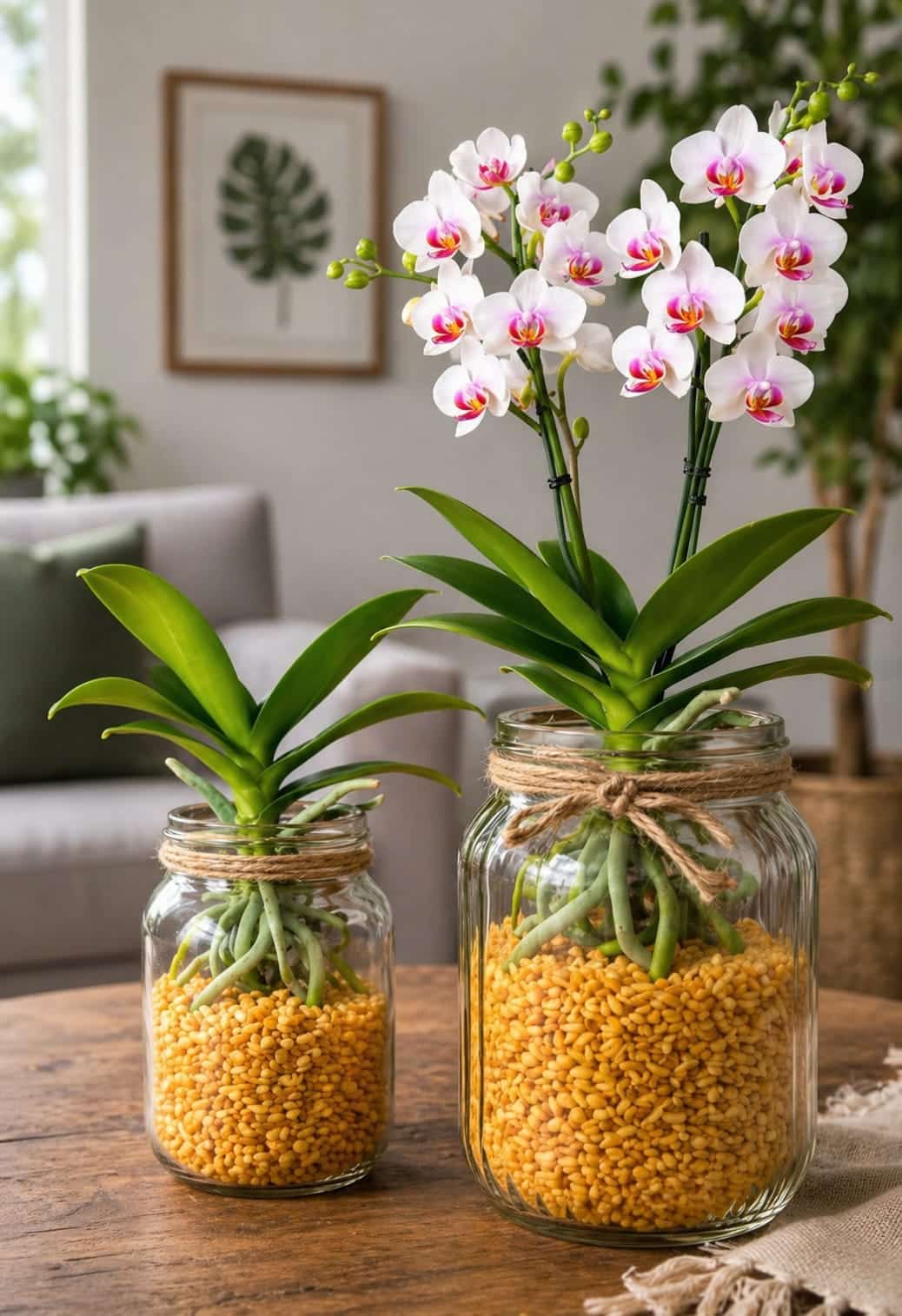
A clear glass jar with golden grains looks clean, warm, and decorative. It fits beautifully into modern interiors. It can match rustic decor, minimalist spaces, farmhouse kitchens, spa bathrooms, and natural wood furniture.
Homeowners love it because it turns orchid care into display decor.
Instead of hiding the plant in a plastic nursery pot, the entire root system becomes part of the arrangement.
The plant looks intentional.
This is especially appealing for people who want their indoor plants to improve the look of their home, not just fill space.
The Decorative Power of Visible Roots
Orchid roots are unique. They are thick, pale, twisting, and sculptural. In a clear jar, they add texture and interest.
Many people are used to hiding roots, but with orchids, visible roots can look beautiful. They make the plant feel natural and alive. They also remind you that orchids are different from regular houseplants.
The visible roots are part of the charm.
When combined with golden grains and soft flowers, the effect is elegant and eye-catching.
Why the Jar Method Looks Expensive
A blooming orchid already looks expensive. But placing it in a glass jar with a warm-toned base makes it look even more curated.
The method creates a boutique-style appearance without needing a costly planter.
It looks like something you might see in:
A luxury spa
A hotel lobby
A modern kitchen
A designer bathroom
A plant boutique
A styled interior photo
This is why the method appeals to people who love both plants and home decor.
Best Places to Display Jar Orchids
Because jar orchids are decorative, placement matters.
Beautiful locations include:
Kitchen counters with indirect light
Bathroom shelves with windows
Bedroom dressers near soft light
Coffee tables near bright rooms
Entryway consoles
Office desks
Floating shelves near windows
Dining tables with filtered brightness
Avoid places that are too dark, too hot, or too cold.
Do not place the jar in strong direct sun for long periods because glass can heat up.
How to Make the Jar Setup Look Even Better
To create a beautiful display, keep the setup clean and simple.
Use a clear jar with no heavy labels.
Tie natural twine around the rim for a rustic look.
Choose warm golden grains for contrast.
Keep the leaves clean and dust-free.
Remove old flower spikes when necessary.
Use a simple background so the flowers stand out.
The best orchid displays are not cluttered. Let the flowers, roots, and jar be the focus.
Can You Use This Method for Orchids Without Flowers?
Yes. In fact, the jar method can make a non-blooming orchid look more attractive while you wait for the next bloom cycle.
When orchids are not flowering, they can look plain in regular pots. But in a clear jar, the roots and base become part of the visual interest.
This helps homeowners keep enjoying the plant even between blooming periods.
It also encourages better root monitoring, which supports future flowers.
How to Encourage Reblooming With the Jar Method
The jar method can help you care for the roots, but blooming also depends on other conditions.
To encourage reblooming:
Give bright indirect light.
Avoid overwatering.
Keep roots healthy.
Allow gentle temperature changes.
Feed lightly during active growth.
Be patient after flowers fade.
Some orchids need a slight nighttime temperature drop to trigger blooming. Others simply need enough light and time.
Do not expect flowers immediately. Orchids work in cycles.
Feeding Orchids in a Jar
Orchids can benefit from light feeding, but too much fertilizer can damage roots.
Use a diluted orchid fertilizer during active growth. Apply lightly and avoid buildup. Because jars can hold residue, it is important to flush or refresh the setup occasionally.
A gentle approach is best.
Orchids do not need heavy feeding. They need consistent, balanced care.
Should You Keep Water at the Bottom of the Jar?
This is one of the most important questions.
In most cases, you should not keep orchid roots sitting in standing water for long periods. Constant water at the bottom can lead to root rot, especially if the jar has poor airflow.
Some methods use a tiny water reservoir below the roots, but the roots themselves should not stay submerged unless the setup is specifically designed and monitored.
For beginners, it is safer to avoid standing water.
Moisture should be controlled, not constant.
How to Refresh the Jar Setup
Over time, the jar may collect mineral residue, algae, or old organic material. Refreshing the setup helps keep it clean.
To refresh:
Remove the orchid carefully.
Rinse the jar.
Check the roots.
Remove dead root pieces.
Rinse or replace the grains if needed.
Place the orchid back gently.
Do not refresh too often if the plant is stable. Orchids do not like constant disturbance. But occasional cleaning keeps the display attractive and healthy.
Common Mistakes With the Orchid Jar Method
Using Too Much Water
This is the biggest mistake. Orchids in glass jars can rot if water stays trapped too long.
Burying the Crown
The crown must stay above the medium and dry. Burying it can cause serious damage.
Packing the Grains Too Tightly
Roots need air. Loose support is better than tight packing.
Using a Jar That Is Too Narrow
A narrow jar limits airflow and makes root placement difficult.
Placing It in Harsh Sun
Glass can heat up quickly and burn roots or leaves.
Ignoring Root Color
The roots are visible for a reason. Watch them.
Expecting Instant Blooms
Healthy roots come first. Blooms follow later.
Treating It Like a Normal Soil Plant
Orchids need a different care style.
Orchid Jar Method Care Table
| Care Factor | Best Condition | Why It Matters |
|---|---|---|
| Jar | Clear and wide-mouth | Allows visibility and airflow |
| Medium | Loose golden grains or airy base | Supports roots without suffocating them |
| Roots | Visible and firm | Helps monitor plant health |
| Water | Light and controlled | Prevents rot |
| Crown | Above the medium | Avoids crown rot |
| Light | Bright indirect light | Supports blooming |
| Airflow | Gentle circulation | Keeps roots healthy |
| Feeding | Light orchid fertilizer | Supports growth |
| Cleaning | Occasional refresh | Keeps setup attractive |
| Patience | Long-term care | Orchids bloom in cycles |
Frequently Asked Questions
What is the orchid jar method?
The orchid jar method is a decorative growing technique where an orchid is placed inside a clear glass jar with a loose, airy medium around the roots. It helps display the roots while supporting the plant.
Why do people put orchids in glass jars?
People use glass jars because they look beautiful and allow the roots to remain visible. This makes it easier to monitor root health and moisture levels.
What are the golden grains used with orchids?
The golden grains are usually presented as a loose support medium that helps hold the orchid steady while allowing space around the roots. They also create a clean, decorative look.
Can orchids grow without soil?
Yes. Many popular orchids do not need regular soil. They prefer airy materials that allow their roots to breathe.
Is the jar method good for beginners?
It can be beginner-friendly because the roots are visible, but beginners must be careful with watering. Too much moisture in a jar can damage orchid roots.
How often should I water an orchid in a jar?
Water when the roots and medium look dry. Do not follow a strict schedule. Watch the plant and avoid keeping the roots constantly wet.
Should water stay at the bottom of the jar?
It is usually safer not to leave water sitting at the bottom for long periods. Constant standing water can cause root rot.
Can this method make orchids bloom again?
It can support healthier roots, which helps the orchid become strong enough to bloom again. However, reblooming also requires bright indirect light and patience.
Where should I place a jar orchid?
Place it in bright indirect light, such as near a window with filtered sunlight. Avoid harsh direct sun and dark corners.
Can I use any glass jar?
Use a clean, clear jar that is wide enough for the roots and stable enough to hold the plant. A wide opening is better for airflow.
Why are orchid roots important?
Orchid roots absorb moisture and nutrients, but they also need air. Healthy roots are essential for strong leaves and future blooms.
What do healthy orchid roots look like?
Healthy roots are usually firm and plump. They may look green when moist and silvery or pale when dry.
What are signs of root problems?
Mushy, brown, hollow, or bad-smelling roots may indicate problems. Too much moisture is often the cause.
Should I remove old orchid roots before using this method?
Remove roots that are clearly dead, mushy, or hollow using clean scissors. Keep firm healthy roots.
Can I put a blooming orchid in a jar?
Yes, but handle it carefully. Blooming orchids can be placed in a jar if the roots are protected and the crown stays above the medium.
What happens after the flowers fall off?
The orchid enters a rest or growth phase. Keep caring for the roots and leaves. With proper care, it may bloom again.
Does the jar need drainage holes?
Most jars do not have drainage holes, so watering must be very controlled. Avoid excess water and monitor the roots carefully.
Can I decorate the jar?
Yes. Twine, simple glass, and clean natural materials can make the display look beautiful. Avoid decorations that trap moisture around the crown.
Why does this method look so good in home decor?
The clear glass, visible roots, golden grains, and elegant flowers create a clean, natural, high-end look that fits modern interiors.
Final Thoughts
The orchid jar method has become popular because it combines two things homeowners love: beautiful plant decor and simple plant care. Orchids already look elegant, but when they are placed in clear glass jars with golden grains around their roots, they become even more eye-catching.
This method turns the orchid into more than a plant. It becomes a living display.
The real appeal is the visibility. Instead of guessing what is happening inside a hidden pot, you can see the roots. You can watch their color, notice moisture, and understand the plant better. For many beginners, this makes orchid care feel less mysterious.
The jar method also highlights one of the most important truths about orchids: they are not ordinary soil plants. Their roots need air, light, and careful moisture. When roots are healthy, the whole plant has a better chance of growing stronger leaves and blooming again.
But the method must be done carefully. Too much water can cause rot. The crown must stay dry. The medium should stay loose. The jar should allow airflow. The plant should receive bright indirect light.
When these conditions come together, the result can be beautiful.
A healthy orchid in a glass jar can brighten a kitchen, soften a bedroom, decorate a bathroom, or become the centerpiece of a coffee table. It looks modern, natural, and elegant. It also encourages better care because the roots are always visible.
If your orchid has stopped blooming or looks stuck, this method may help you reconnect with how the plant grows. Instead of focusing only on flowers, you begin to focus on roots. And with orchids, strong roots are the beginning of everything.
Give the plant the right light. Keep the roots airy. Water gently. Watch carefully. Be patient.
Over time, your orchid may reward you with stronger roots, healthier leaves, and eventually, a new wave of beautiful blooms.
That is why so many smart homeowners are trying this simple jar method. It looks beautiful, feels easy, and helps make orchid care more visual, more stylish, and more enjoyable.