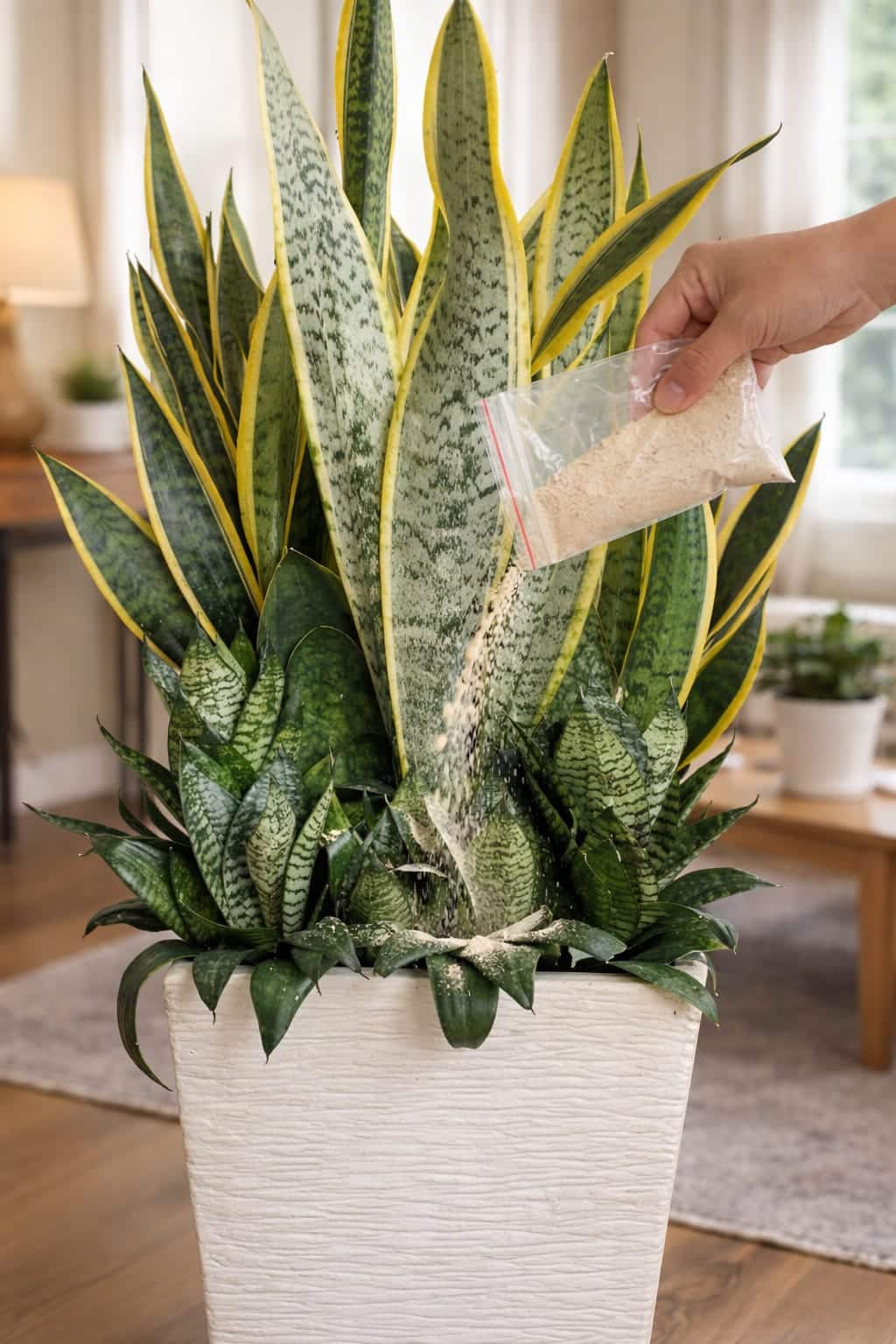
Snake plants are already one of the easiest houseplants to grow, but many people want more than just a few upright leaves. They want that full, thick, bushy look — the kind of snake plant that fills the pot with strong leaves and lots of baby pups around the base.
That is why “sprinkle this on your snake plant” tricks get so much attention.
You have probably seen videos showing a powder being sprinkled over the soil with claims that it makes the plant fuller, greener, and more crowded. It sounds simple, but the truth is a little more realistic.
A powder or light soil amendment can sometimes help support growth, but the real secret to a bushier snake plant is not the powder alone. It is giving the plant the kind of conditions that encourage healthy roots and more pups.
In this guide, you will learn exactly what makes a snake plant bushy, which powders or amendments might actually help, and — most importantly — the proven care habits that turn a sparse snake plant into a lush, thriving centerpiece.
Why Bushiness in Snake Plants Comes from Pups
Snake plants do not become bushy the same way leafy houseplants do. They grow fuller by producing pups, which are baby shoots that emerge from underground rhizomes. Each pup grows into a new set of leaves, and over time, multiple pups fill the pot.
That means if you want a bushier plant, the goal is not just greener leaves or taller growth.
The Real Goal Is:
· Healthy roots – Strong, white, firm roots that absorb water and nutrients.
· Strong rhizomes – The underground stems that store energy and produce pups.
· Stable growing conditions – Consistent light, temperature, and watering.
· Enough energy for new pups – The plant needs surplus energy to reproduce.
Once the plant starts sending up more pups, the pot begins to look full and dense. Without pups, even a healthy snake plant will look sparse.
What the Sprinkled Powder Might Be
In viral posts, the powder shown being sprinkled on snake plant soil is often one of these:
· A mild fertilizer powder (like slow‑release granules)
· Epsom salt (magnesium sulfate)
· Cinnamon powder (antifungal, not a fertilizer)
· Rice flour or another homemade kitchen powder
· Crushed organic amendment (like bone meal or eggshell powder)
Sometimes these ingredients may help a little, depending on what they are and how they are used. But none of them will make a weak snake plant suddenly turn bushy overnight.
If the roots are stressed, the light is poor, or the soil stays soggy, no powder will fix the real issue.
Let us look at each potential powder.
Epsom Salt for Snake Plants
Epsom salt provides magnesium and sulfur. Magnesium is essential for chlorophyll production. If your snake plant has yellowing leaves with green veins, it might be magnesium deficient. A very light sprinkle (1 teaspoon per gallon of soil) once a month during spring can help. But Epsom salt does not directly trigger pup production. Overusing it can cause salt buildup and root burn.
Fertilizer Powder
A balanced, slow‑release fertilizer (like 10‑10‑10) sprinkled on the soil surface can provide nutrients over time. This supports overall health, which may lead to more pups. However, too much fertilizer (especially high nitrogen) encourages leaf growth at the expense of roots and pups.
Cinnamon Powder
Cinnamon is antifungal and can help prevent mold on the soil surface. It does not feed the plant or stimulate pup growth. Sprinkling cinnamon is useful if you have fungus issues, but it will not make your snake plant bushy.
Rice Flour or Kitchen Powders
These are not recommended. They can attract pests, mold, and bacteria. They offer no meaningful nutrition to a snake plant.
The bottom line: a powder alone is not the secret. The healthy root system is.
What Actually Makes a Snake Plant Grow Bushier
If you want a thick, pup‑filled snake plant, focus on these five proven factors.
- Bright, Indirect Light
Snake plants survive in low light, but they multiply better in brighter conditions. If you want more pups and a fuller look, put the plant where it gets strong filtered light.
· Ideal spot: Within 3–5 feet of a south or west window, with a sheer curtain.
· How much: 10–12 hours of bright indirect light daily.
· Signs of too little light: Leggy growth, dark green leaves, no pups for years.
· Signs of too much direct sun: Scorched, pale, or curling leaves.
If your snake plant has never produced a pup, moving it to a brighter location is the single most effective change you can make.
- Let the Soil Dry Between Waterings
This is one of the biggest secrets. Snake plants hate constantly wet soil. Healthy dry cycles help the roots and rhizomes stay strong enough to produce new growth.
· Water only when the soil is completely dry (stick your finger in — if it feels damp, wait).
· In most homes, that means watering every 2–4 weeks in spring/summer and once a month or less in fall/winter.
· Always use a pot with drainage holes and empty the saucer after watering.
Overwatering leads to root rot. Rotting roots cannot produce pups. Underwatering (within reason) is much less harmful than overwatering.
- Use Fast‑Draining Soil
Heavy, compact soil keeps the roots too wet and slows pup production. Snake plants need air around their roots.
· Best soil: Cactus or succulent potting mix.
· DIY mix: 2 parts all‑purpose potting soil + 1 part perlite + 1 part coarse sand.
· Avoid: Regular potting soil alone (holds too much moisture), garden soil (too dense).
Repot every 2–3 years or when the soil becomes compacted. Fresh soil also provides trace nutrients that support pup growth.
- Keep the Pot Slightly Snug
Snake plants often produce more pups when they are a little root‑bound. A huge pot can slow things down because the plant spends more time filling empty soil space with roots instead of sending up pups.
· Choose a pot that is only 1–2 inches wider than the root ball.
· Do not repot too often – every 2–3 years is plenty.
· If roots are cracking the pot or circling densely, it is time to repot — but go up only one size.
A snug pot signals to the plant that it is running out of space, which can trigger reproduction (pups) as a survival strategy.
- Feed Lightly During Active Growth
A mild fertilizer in spring and summer can help support stronger growth. That is where a safe soil amendment or light feeding routine may help — but only in moderation.
· Use a balanced liquid fertilizer (like 10‑10‑10 or 20‑20‑20) diluted to half strength.
· Feed once every 6–8 weeks during spring and summer.
· Do not fertilize in fall and winter.
· If using a slow‑release powder, follow label directions and use sparingly.
Overfeeding (especially with high‑nitrogen fertilizer) can cause weak, floppy leaves and actually reduce pup production. Gentle support works best.
Continue to Page 2
Continue to page 2 for more details about this article and the key points many readers miss on the first page.