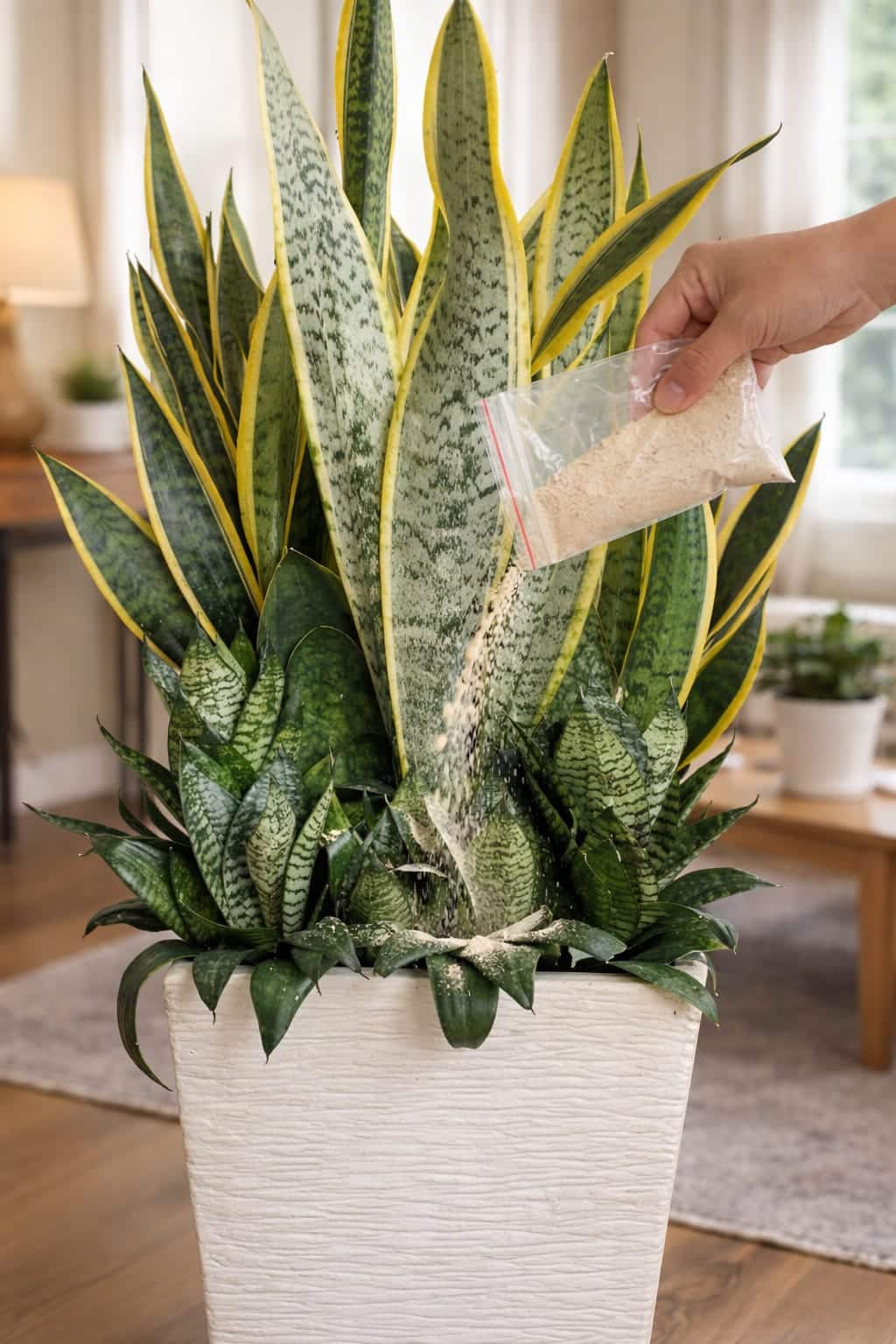
Can Sprinkling Something on the Soil Help?
Yes, sometimes — but only as a support step, not a miracle cure.
A light, appropriate amendment may help if:
· the soil is a little depleted (no repotting in over 2 years)
· the plant is in active growth (spring/summer)
· the roots are healthy (white or tan, firm)
· the pot drains well
· you use the amendment correctly and sparingly
What You Can Sprinkle (Safely)
· A pinch of slow‑release balanced fertilizer (like Osmocote) on the soil surface, watered in.
· A light dusting of worm castings – gentle, organic, adds trace nutrients.
· A very small amount of Epsom salt (1 teaspoon per gallon of soil) once a month for 2–3 months if you suspect magnesium deficiency.
What to Avoid Sprinkling
· Cinnamon (does not feed, only antifungal)
· Coffee grounds (too acidic, can compact)
· Rice or flour (attracts pests, molds)
· Baking soda (alters soil pH, can harm roots)
· Ash (too alkaline, burns roots)
The biggest mistake people make is assuming the powder is the secret. The powder is not the secret. The healthy root system is.
Signs Your Snake Plant Is Getting Bushier
If your plant is responding well to improved care (with or without a sprinkle), you may notice:
· firmer, more upright leaves (no flopping)
· richer green color (not pale or yellow)
· stronger new growth emerging from the center
· tiny pointed shoots appearing near the base — these are pups!
· more baby plants filling the pot over time
That is when the plant begins to take on that full, bushy look everyone wants.
Pups usually start as small, light green cones pushing up through the soil. They grow slowly but steadily. Once they reach 4–6 inches tall, they will begin to look like miniature snake plants.
Common Mistakes That Keep Your Snake Plant Sparse
If you want a thicker snake plant, avoid these common errors.
Overwatering
The #1 killer. Soggy soil = root rot = no pups.
Very Low Light
The plant may live, but it will not have enough energy to multiply.
Heavy, Compact Soil
Suffocates roots. Repot with cactus mix.
Overfeeding
Too much fertilizer (especially nitrogen) pushes leaf growth at the expense of roots and pups.
Using Random Powders Too Often
Many powders do nothing beneficial; some harm the soil biology.
Repotting into an Oversized Container
A huge pot encourages root sprawl instead of pup production.
Ignoring Pests
Mealybugs and spider mites weaken the plant. Check regularly.
A Simple Routine for a Bushier Snake Plant
Here is a weekly and seasonal plan to maximize pups and fullness.
Weekly (Quick Check)
· Feel the soil. Water only if completely dry.
· Wipe leaves with a damp cloth to remove dust.
· Rotate the pot slightly for even light.
Monthly
· Inspect for pests (under leaves, at the base).
· Remove any dead or yellowing leaves.
· Check for new pups emerging.
Spring and Summer (Active Growth)
· Provide bright indirect light (10–12 hours).
· Water every 2–4 weeks (when dry).
· Fertilize lightly every 6–8 weeks.
· Consider a safe sprinkle (worm castings or slow‑release fertilizer) once.
Fall and Winter (Resting Period)
· Reduce watering to once a month or less.
· No fertilizer.
· Lower light is okay, but brighter light still helps.
· Do not repot.
Annually
· Refresh the top inch of soil with fresh cactus mix.
· Repot only if roots are densely circling or cracking the pot.
How to Separate and Repot Pups (For Even More Bushiness)
Once your snake plant produces pups, you have two choices: leave them to fill the pot, or separate them to create new plants. Both approaches can lead to a bushier overall display.
To Leave Pups (For a Fuller Pot)
Simply let them grow. Over time, they will fill the space and create that dense, bushy look. Water and care for the mother plant as usual.
To Separate and Repot Pups
- Wait until the pup is at least 4–6 inches tall.
- Unpot the mother plant and gently tease apart the roots.
- Use a clean, sharp knife to cut the pup away from the main rhizome.
- Let the cut end dry for a day (callus over).
- Plant the pup in a small pot (4–5 inches) with fresh cactus soil.
- Water lightly once, then wait for the soil to dry before watering again.
Separating pups does not make the original plant bushier (you are removing growth), but it allows you to propagate new plants. If you want a single pot to look full, leave the pups attached.
Frequently Asked Questions (Snake Plant Bushiness)
How long does it take for a snake plant to produce pups?
It can take anywhere from a few months to over a year, depending on light, watering, and the plant’s maturity. Young plants (under 2 years old) rarely pup.
Why does my snake plant have no pups even though it looks healthy?
Most likely not enough light. Move it to a brighter spot. Also check that the pot is not too large and that you are not overwatering.
Can I use Epsom salt to encourage pups?
Epsom salt provides magnesium. If your plant shows signs of magnesium deficiency (yellowing between leaf veins), a light application may help overall health, which could indirectly support pup production. It is not a direct pup trigger.
Is cinnamon good for snake plants?
Cinnamon is antifungal. It can be sprinkled on cut wounds to prevent rot, but it does not stimulate growth or pups.
How do I know if my snake plant is root‑bound enough to pup?
Look for roots circling the inside of the pot or growing out of drainage holes. The plant may also be top‑heavy. A slightly snug pot is good; a severely cramped pot (cracking) needs repotting.
Can I make my snake plant bushier by cutting the leaves?
No. Cutting leaves does not encourage pups. It only removes foliage. Focus on root and rhizome health instead.
What is the best natural fertilizer for snake plants?
Worm castings (sprinkled on the soil) or diluted compost tea are gentle, organic options. Use them sparingly during spring and summer.
Will my snake plant ever stop producing pups?
Mature plants can produce pups for many years. Over time, if the pot becomes extremely crowded, pup production may slow. Repotting into fresh soil can rejuvenate the plant.
The Bottom Line: No Magic Powder, Just Good Care
Sprinkling the right soil amendment can support a healthy snake plant, but it is not a magic shortcut. No powder will turn a weak, overwatered, underlit plant into a bushy masterpiece.
If you want your snake plant to grow bushy, focus on what really works:
· bright indirect light
· dry‑down time between watering
· fast‑draining soil (cactus mix)
· a slightly snug pot
· light feeding during active growth
That is what encourages stronger roots, healthier rhizomes, and more pups.
And once the pups start coming in, that is when your snake plant transforms from simple to stunning — a full, lush, thriving centerpiece that looks like it belongs in a magazine.
So put down the random kitchen powders. Move your snake plant closer to the window. Let the soil dry out completely. And watch as those little green shoots begin to appear.
That is the real secret. And it works every time.
Have you successfully grown snake plant pups? Share your experience in the comments below. And if you found this guide helpful, save it for later or send it to a friend who wants a fuller, bushier snake plant.