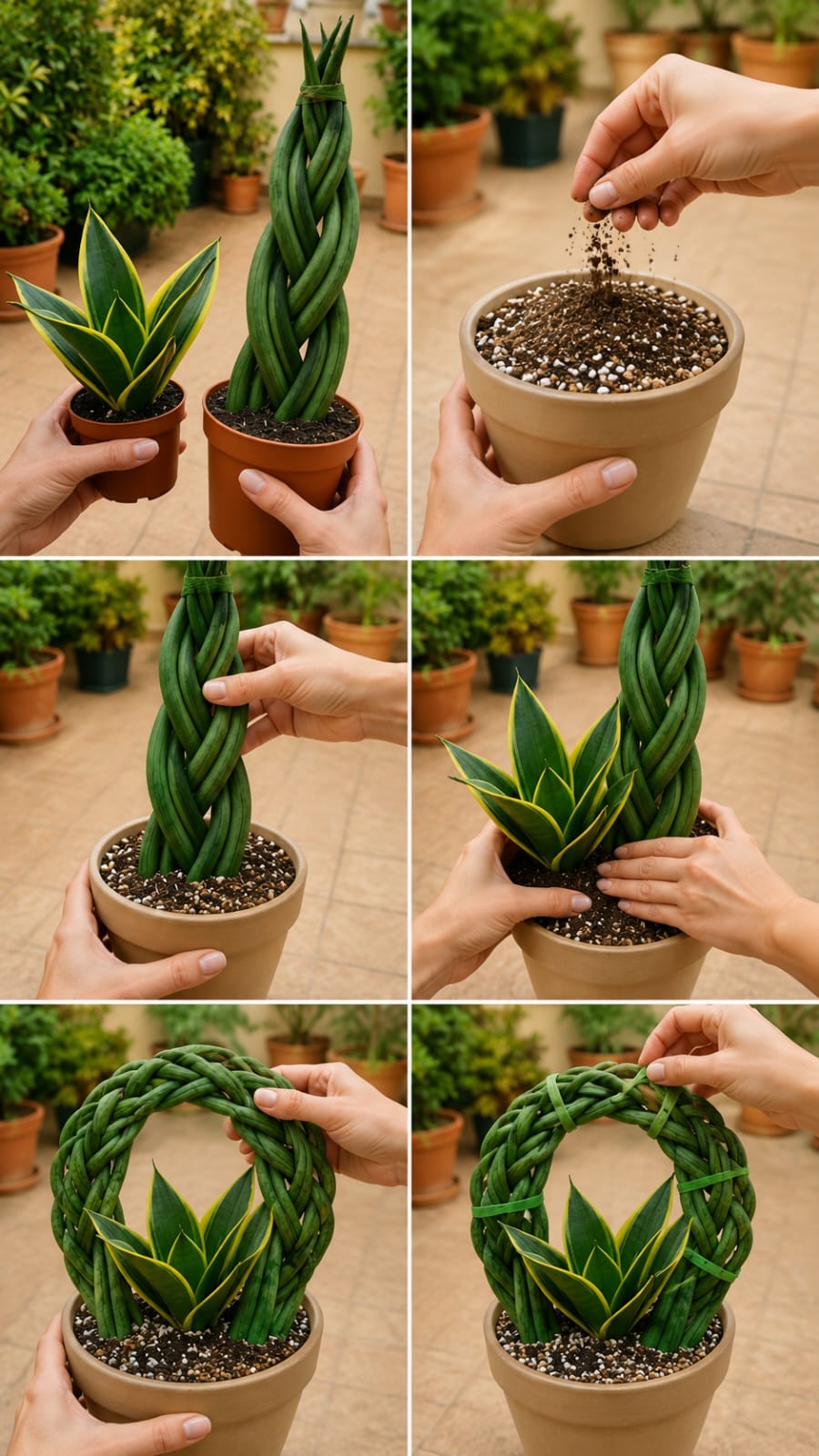
Snake plants are already known for their bold upright leaves, strong shape, and easy-care nature. They look clean, modern, and elegant in almost any home. But there is another creative way to style them that turns a simple plant into a living sculpture: the braided snake plant arch trick.
This idea uses long, flexible snake plant leaves or similar upright succulent leaves and gently trains them into a braided arch shape. The result looks like a natural green handle rising above the pot, with a compact snake plant growing below it. It creates a dramatic design that feels handmade, artistic, and completely different from a normal potted houseplant.
The braided snake plant arch trick is not a fast plant hack. It is a gentle styling method. The plant must stay healthy first. The leaves should never be forced, cracked, tied too tightly, or bent suddenly. When done with patience, soft support, and proper care, this method can create a beautiful decorative display for plant shelves, patios, bright windows, balconies, and indoor garden corners.
What Is the Braided Snake Plant Arch Trick?
The braided snake plant arch trick is a decorative plant-training method where long snake plant leaves are gently woven together and shaped into an arch. A smaller snake plant or young rosette can be planted in the same pot below the arch to create a layered design.
The arch gives height and drama. The lower plant gives fullness and balance. Together, they create a living arrangement that looks like a botanical sculpture.
This style works best with snake plant leaves that are long, strong, and slightly flexible. Very stiff leaves can split if forced, so the key is to work slowly and gently.
Why This Trick Looks So Beautiful
Snake plants naturally have a strong architectural look. Their leaves are upright, firm, patterned, and bold. When those leaves are braided into an arch, the plant becomes even more eye-catching.
The design works because it combines three shapes:
- The vertical height of the braided leaves
- The curved softness of the arch
- The pointed rosette shape of the smaller snake plant below
This mix creates contrast. The braid looks structured, while the lower plant looks fresh and natural. The result feels both modern and organic.
Is It Safe to Braid Snake Plant Leaves?
It can be safe only when done carefully. Snake plant leaves are thick and succulent. They store water inside, which makes them firm but also easy to crack if bent too sharply. The leaves do not heal like soft vines. If a leaf splits, creases, or breaks, the damage will remain visible.
That means this trick should be done only with leaves that are naturally long enough and flexible enough. Never force a leaf into a shape it does not want to take.
The safest approach is gradual shaping. First, guide the leaves upright. Then braid loosely. Then curve the braid slowly into an arch over time. Soft plant ties can hold the shape without cutting into the leaves.
Best Snake Plant Types for Braiding
Not every snake plant is ideal for this trick. Some varieties have short, stiff leaves that are better for compact displays. Others have long leaves that can be guided more easily.
The best choices are:
- Long upright snake plant varieties
- Young flexible leaves from mature plants
- Tall green snake plants without very brittle edges
- Healthy leaves with no cracks or soft spots
- Leaves that already lean slightly and can bend gently
Short bird’s nest snake plants are better for the lower center of the arrangement. They create a beautiful base under the braided arch.
When to Try This Method
The best time to shape snake plant leaves is during warm active growth, usually spring or summer. During this season, the plant is stronger and more able to handle gentle training.
Avoid major shaping during winter, when snake plants grow slowly and may be more brittle. Cold rooms, low light, and dry indoor air can make the plant less flexible.
Choose a day when the plant is healthy, the soil is not soaking wet, and the leaves feel firm but not dehydrated.
Tools You Need
This project uses simple tools. The most important thing is that every support should be gentle.
- A healthy snake plant with long leaves
- A wide pot with drainage holes
- Fast-draining succulent soil
- Soft plant ties
- Soft green garden tape
- Small bamboo stakes, optional
- A smaller snake plant pup or compact rosette
- Clean hands
- A small trowel
- Decorative pebbles, optional
Avoid thin wire directly on leaves. Avoid tight rubber bands. Avoid rough string that can cut into the leaf surface.
Start With a Healthy Plant
Before creating a braided arch, check the plant’s health. The leaves should be firm, upright, and free from mushy areas. The soil should not smell sour. The pot should have drainage holes. The roots should be healthy and not rotting.
Do not braid a plant that is already stressed. If the leaves are wrinkled, soft, yellowing, or falling over because of root rot, focus on recovery first.
A healthy snake plant will handle gentle styling much better.
Step 1: Prepare the Pot
Use a pot that is wide enough to support the arch. A narrow pot can tip over once the braided leaves are curved. A wider pot gives better balance and creates room for the smaller center plant.
The pot must have drainage holes. Snake plants do not like sitting in wet soil. Use a fast-draining soil mix made for cactus and succulents, or create your own mix with potting soil, perlite, pumice, coarse sand, and small bark chips.
Fill the pot with soil and gently firm it without packing it too tightly.
Step 2: Choose the Leaves for Braiding
Select three or more long leaves for the braid. They should be healthy and flexible enough to move gently. Leaves that are too short will not form a strong arch. Leaves that are too stiff may crack.
Try to choose leaves growing close together so the braid starts naturally from the base. This keeps the design cleaner and reduces strain on the plant.
If the leaves resist strongly, do not force them. Choose different leaves or wait until new growth appears.
Step 3: Begin a Loose Braid
Start braiding the leaves loosely. Do not pull them tight. A snake plant braid should not be firm like a hair braid. It should have space and softness so the leaves are not crushed.
Move slowly. Cross one leaf over another, then repeat gently. Support the leaves with your hands as you work. If you hear cracking or feel resistance, stop immediately.
The braid should look natural and relaxed.
Step 4: Secure the Top Softly
Once the braid reaches the desired height, secure the top with soft plant tape or a gentle tie. The tie should hold the leaves together without squeezing them.
Check that the tie is not cutting into the leaf edges. Snake plant leaves can be damaged by pressure. A loose tie is safer than a tight one.
You may need to adjust the tie later as the leaves settle.
Step 5: Shape the Braid Into an Arch
After the braid is formed, begin guiding it into an arch. This step should be slow. Do not bend the braid sharply in one movement.
Hold the braided leaves gently and curve them downward toward the opposite side of the pot. If the leaves are flexible enough, secure the lower end into the soil or support it with a stake.
If the braid resists, keep it upright for a few days, then try bending slightly again. Gradual shaping is safer.
Step 6: Add the Center Plant
A small compact snake plant can be planted at the base of the arch. This creates a beautiful layered arrangement. The lower plant fills the center and makes the pot look complete.
Choose a healthy pup or compact rosette with roots attached. Plant it in the soil below the arch, keeping the crown above the soil line. Do not bury it too deeply.
Firm the soil gently around the roots.
Step 7: Stabilize the Arrangement
Once the arch and center plant are in place, check the balance. The pot should not tip. The arch should not pull the plant out of the soil.
You can use small bamboo stakes hidden behind the leaves for support. Soft ties can hold the braid in place while it settles.
Do not rely on tight ties alone. The structure should feel stable without pressure damage.
Step 8: Water Carefully
After arranging the plant, water lightly if the soil is dry. If the soil is already moist, wait.
Snake plants prefer dry conditions between waterings. After styling or repotting, avoid soaking the soil heavily. Overwatering can cause root rot, especially if roots were disturbed.
Water only when the soil has dried well. Always let extra water drain away.
How Long Does the Shape Last?
The braided arch may hold its shape for a long time if the leaves accept the curve and the support remains stable. However, snake plant leaves are living tissue. They may shift, relax, grow, or change angle over time.
This is normal. The design may need small adjustments. Loosen or move ties if they start pressing into the leaves.
Think of the arch as a living design that evolves with the plant.
How to Avoid Leaf Damage
Leaf damage is the biggest risk with this trick. To avoid it, follow these rules:
- Braid loosely
- Use only flexible leaves
- Avoid sharp bends
- Use soft ties
- Check ties regularly
- Do not shape dehydrated leaves
- Do not work in cold conditions
- Stop if leaves crack or crease
Patience protects the plant.
What If a Leaf Cracks?
If a leaf cracks, stop shaping that leaf. The damage will not fully disappear. If the crack is small, you can leave the leaf and monitor it. If the leaf becomes soft or unattractive, remove it with clean scissors near the base.
Do not keep forcing damaged leaves into the braid. They may rot or break further.
Next time, shape more slowly and choose younger leaves.
Best Light for a Braided Snake Plant
A braided snake plant needs bright indirect light. Good light keeps the leaves strong and helps the plant maintain healthy growth.
Snake plants can tolerate lower light, but low light may cause weak growth and slower recovery after styling. Bright filtered light is better for maintaining the decorative shape.
A bright room, sunny windowsill with indirect light, covered patio, or balcony with filtered sun can work well.
Can It Take Direct Sun?
Snake plants can handle some direct sun if introduced gradually, but sudden harsh sun can scorch leaves. Styled leaves may be more vulnerable because they are curved and may receive light unevenly.
Morning sun is usually safer than hot afternoon sun. If the leaves look bleached, dry, or burned, move the plant to softer light.
Bright indirect light is the safest choice.
Watering Routine
Water only when the soil is dry. Snake plants store water in their leaves and roots, so they do not need frequent watering.
When watering, soak the soil until water drains from the bottom. Then empty the saucer. Do not water again until the soil has dried.
In winter or low light, water even less often. Overwatering is more dangerous than underwatering.
Soil Mix for Strong Roots
The braided snake plant arch needs strong roots to stay stable. Use a gritty, fast-draining mix.
A good mix can include:
- Cactus or succulent soil
- Perlite
- Pumice
- Coarse sand
- Small bark chips
- A small amount of regular potting mix
The mix should drain quickly and not stay wet for days.
Why a Wide Pot Works Best
A wide pot helps balance the arch. Since the braided shape adds height and curve, a narrow pot may become unstable. A wider pot also gives space for the center plant and helps the display look intentional.
Choose a pot that is heavy enough to support the arrangement. Terracotta and ceramic pots are good choices because they add weight and stability.
Make sure the pot still has drainage holes.
Decor Styling Ideas
A braided snake plant arch can become a bold decor feature. It looks beautiful in natural, modern, rustic, and patio-style spaces.
Try these styling ideas:
- Use a matte terracotta pot for a warm natural look
- Choose a stone-colored pot for a sculptural style
- Use a black pot for modern contrast
- Add a thin pebble top dressing for a finished look
- Place it on a wooden plant stand
- Display it on a bright patio table
- Use it as a statement piece near a window
The arch shape naturally draws attention, so simple styling works best.
Indoor Placement Ideas
Place the plant where the arch can be seen clearly. Good locations include:
- Living room side tables
- Bright windowsills
- Entryway consoles
- Home office shelves
- Plant stands near windows
- Sunrooms
- Covered balcony corners
Avoid narrow spots where people may bump the arch. The leaves can crack if knocked often.
Continue to Page 2
Continue to page 2 for more details about this article and the key points many readers miss on the first page.