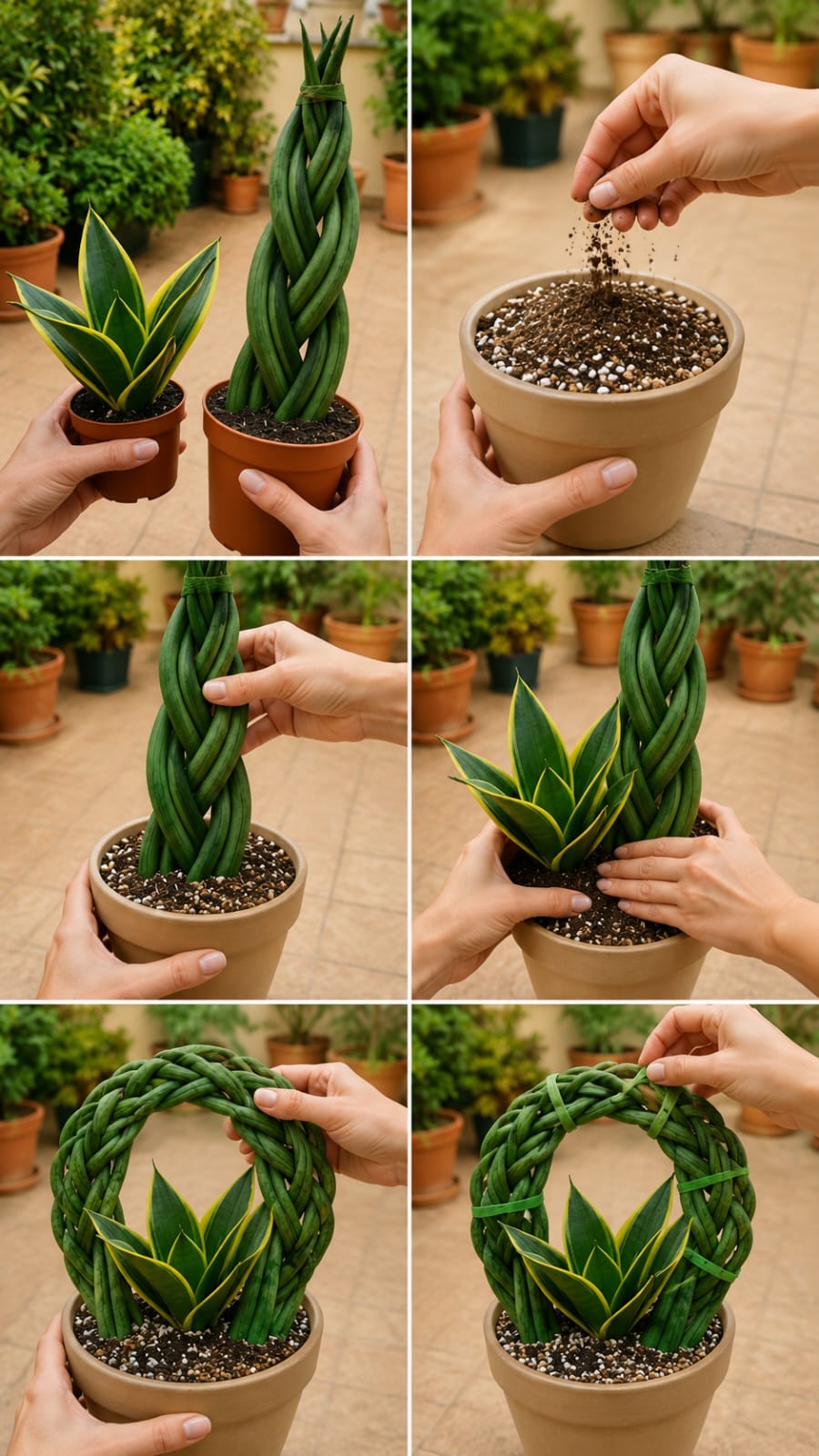
Outdoor Patio Display
This design can look beautiful on a patio or balcony during warm weather. The braided shape pairs well with terracotta pots, herbs, succulents, and small flowering plants.
Keep it protected from heavy rain, strong wind, and harsh midday sun. Wind can pull on the arch and loosen the plant. Rain can oversaturate the soil.
A covered patio with bright filtered light is ideal.
How to Keep the Arch Neat
Check the braid every week. Look for loose leaves, tight ties, dust, or pressure marks. Adjust gently as needed.
If a tie becomes too tight, replace it. If the arch leans, add a hidden support. If a leaf begins to crack, release pressure immediately.
A living sculpture needs small maintenance to stay beautiful.
Cleaning the Leaves
Dust can collect on snake plant leaves and dull their pattern. Wipe the leaves with a soft damp cloth every few weeks.
Be careful around the braided section. Support the leaves with one hand while wiping with the other. Do not pull the braid apart or push too hard.
Clean leaves look brighter and healthier.
Should You Fertilize?
Snake plants are light feeders. During spring and summer, use a diluted cactus or succulent fertilizer once every 6 to 8 weeks.
Do not fertilize immediately after heavy styling or repotting. Wait until the plant looks stable.
Too much fertilizer can cause weak growth, and weak growth is not ideal for sculptural styling.
How to Encourage More Pups
A fuller pot makes the arch design look even better. To encourage pups, give the plant bright indirect light, a snug pot, fast-draining soil, and careful watering.
Snake plants often produce pups when they are healthy and slightly root-bound. Do not move them into a much larger pot too soon.
New pups can later be added to the base of the display for a fuller arrangement.
Common Problems
Common issues include:
- Leaves cracking from tight bending
- Soft leaves from overwatering
- Wrinkled leaves from underwatering
- Leaning arch from poor support
- Yellow leaves from root stress
- Mushy base from wet soil
- Brown marks from tight ties
Most problems can be avoided by working gently and keeping the soil dry between waterings.
Common Mistakes to Avoid
Avoid these mistakes:
- Braiding leaves too tightly
- Bending mature stiff leaves sharply
- Using wire directly on leaves
- Leaving ties on without checking them
- Using a pot without drainage
- Watering too often after styling
- Placing the plant in harsh sun suddenly
- Using a pot that is too narrow and unstable
The goal is a graceful living shape, not a forced design.
A Simple Care Routine
Use this routine to keep the braided snake plant arch healthy:
- Place it in bright indirect light
- Water only when soil is dry
- Use fast-draining succulent soil
- Check ties weekly
- Loosen anything tight
- Wipe leaves gently
- Protect from strong wind
- Feed lightly during active growth
- Remove damaged leaves cleanly
This routine keeps both the design and the plant in good condition.
Final Thoughts
The braided snake plant arch trick is a creative way to turn a simple snake plant into a living decorative sculpture. With long healthy leaves, soft ties, a stable pot, and careful shaping, you can create a beautiful arch that adds height, movement, and personality to your plant display.
The most important rule is to keep the plant healthy. Do not force stiff leaves, do not tie too tightly, and do not overwater after styling. Use bright indirect light, fast-draining soil, and gentle maintenance.
With patience, this plant styling idea can become a stunning indoor or patio feature. It combines the strength of snake plant leaves with the softness of a curved design, creating a piece of living decor that feels natural, modern, and unique.