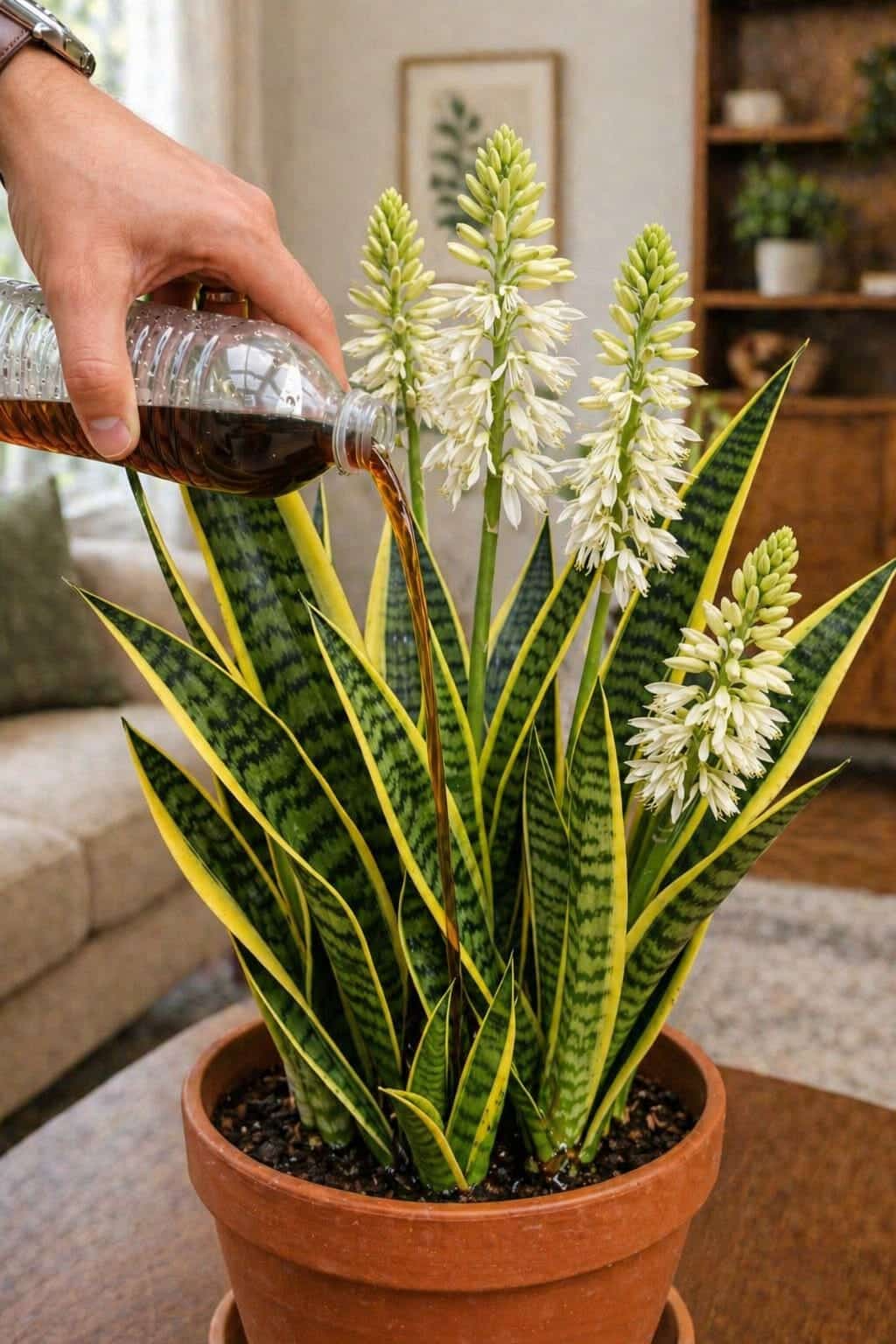
Can You Use Molasses?
Molasses is not recommended for indoor snake plants. It is sticky, sugar-rich, and can attract pests. It may be used in some outdoor soil practices, but a potted indoor snake plant is a very different environment.
Do not pour syrup, molasses, sweet drinks, or sugary liquids into snake plant soil.
Can You Use Compost Tea Indoors?
You can use very weak, clean compost tea indoors, but it must be made from finished compost or worm castings and used immediately. It should not smell rotten. It should not be thick. It should be strained well.
Indoor pots are small, and problems develop quickly if organic liquids go sour. If you are unsure, use a diluted commercial houseplant fertilizer instead. It is cleaner and easier to control.
A Better Fertilizer Option
If your goal is reliable growth, a balanced cactus or houseplant fertilizer is better than homemade brown liquid. Use it at half strength during spring and summer. Feed lightly, perhaps once every six to eight weeks.
Do not fertilize in winter if the plant is not actively growing. Do not fertilize a stressed or overwatered plant.
Snake plants are light feeders. Too much fertilizer can burn roots or create salt buildup.
How to Flush the Soil After Homemade Tonics
If you use homemade tonics occasionally, it is wise to flush the soil with plain water from time to time. This helps remove residue and prevents buildup.
To flush safely, wait until the soil is dry and the plant needs watering. Then run plain room-temperature water through the pot until it drains freely. Let it drain completely and empty the saucer.
Do not flush if the soil is already wet. That can cause overwatering.
Signs the Brown Pour Is Being Used Safely
The trick is being used safely if the plant remains firm, the soil drains quickly, and there is no sour smell. The leaves should stay upright and strong. No fungus gnats, mold, or sticky residue should appear.
If the plant is flowering, the flower stalks should remain firm and continue opening normally. The soil should not stay wet for many days after watering.
A safe tonic disappears into the soil like water and leaves the pot fresh.
Signs You Should Stop Immediately
Stop using the brown pour if you notice any of the following:
- Sour or fermented smell
- Fungus gnats
- Mold on soil
- Soft yellow leaf bases
- Mushy leaves
- Wet soil that does not dry
- Sticky residue
- Rotten roots
These are warning signs that the pot is too wet or contaminated. Return to plain water and allow the soil to dry. If rot is present, repot immediately into fresh dry mix.
How to Rescue a Snake Plant After Too Much Tonic
If you used too much brown liquid and the plant begins to decline, act quickly.
- Stop watering.
- Remove the plant from the pot if the soil smells sour or stays wet.
- Shake away the old soil.
- Inspect the roots and rhizomes.
- Cut away mushy or black areas with clean tools.
- Let healthy parts dry for several hours.
- Repot into fresh gritty mix.
- Use a pot with drainage.
- Wait before watering again.
Snake plants can often recover if healthy rhizomes remain. The key is to remove wet, sour conditions quickly.
How to Keep the Leaves Shiny and Strong
The leaves in the image look glossy and firm. This comes from good care, not from pouring liquid over the leaves. Snake plant leaves should be kept clean and dry.
Wipe dusty leaves with a soft damp cloth. Do not use oils, milk, syrup, or leaf shine products. These can clog the leaf surface or attract dust.
Clean leaves absorb light better and show their natural patterns more clearly.
Should You Mist Snake Plants?
Snake plants do not need misting. They tolerate dry indoor air well. Misting can leave water sitting between leaves, which may increase the risk of rot in tight crowns.
If your home is very dry, the snake plant will usually still be fine. Focus on correct watering at the soil level instead.
How to Encourage a Snake Plant to Bloom Naturally
If you want your snake plant to bloom, create the right conditions over time.
- Place it in bright indirect light.
- Use a pot with drainage.
- Keep it slightly snug in the pot.
- Use gritty soil.
- Water only when dry.
- Feed lightly during active growth.
- Avoid constant repotting.
- Give stable care for months or years.
Flowering is a reward for maturity and balance. It cannot be rushed with one bottle of liquid.
Common Mistakes With the Brown Pour Snake Plant Trick
Using a Strong Liquid
The tonic should be weak. Strong organic liquids can sour and attract pests.
Using It Too Often
Once every six to eight weeks during active growth is enough.
Watering Wet Soil
Never add tonic if the soil is already damp. Snake plants need dry-down time.
Using a Pot Without Drainage
Drainage holes are essential. A trapped brown liquid can rot roots quickly.
Expecting Instant Flowers
Snake plant blooming is rare and depends on maturity, light, and root health.
Pouring Into the Leaf Crown
Aim for the soil, not the center of the leaves.
Using Coffee Grounds
Coffee grounds can compact and hold moisture. They are not ideal for snake plants.
A Safe Brown Pour Routine
Here is the safest way to use this trick:
- Use only on a healthy snake plant.
- Wait until the soil is dry.
- Prepare weak banana peel tea or worm casting tea.
- Dilute it until it looks like weak tea.
- Pour slowly into the soil around the plant.
- Let the pot drain completely.
- Empty the saucer.
- Use plain water for normal watering.
- Repeat only after six to eight weeks if needed.
- Stop at the first sign of pests, mold, odor, or rot.
This keeps the trick gentle enough for indoor use.
Frequently Asked Questions
What is the brown liquid being poured on the snake plant?
It looks like a homemade plant tonic, such as diluted banana peel water, compost tea, or worm casting tea. The safest version is very weak and freshly made.
Can this make a snake plant bloom?
Not directly. Snake plant flowers depend on maturity, bright indirect light, root health, and stable care. A mild tonic may support growth but cannot force flowers overnight.
How often should I use the brown pour?
Once every six to eight weeks during active growth is enough. Do not use it weekly.
Can I use coffee?
Coffee is not recommended for snake plants. It can leave residue, affect soil conditions, and encourage pests if used incorrectly.
Can I use banana peel water?
Yes, but only weak, fresh, diluted banana peel water. Do not use fermented or smelly banana water.
Can I use compost tea?
Very weak worm casting tea or clean compost tea can be used occasionally, but it must be diluted and strained well.
Should I pour it on the leaves?
No. Pour only into the soil. Keep the leaves and crown dry.
What if my snake plant has yellow leaves?
Check for overwatering, poor drainage, cold damage, or root rot first. Do not add tonic until you know the cause.
Do snake plants need fertilizer?
They need only light feeding during active growth. Too much fertilizer can harm them.
Why did my snake plant bloom?
It may be mature, slightly root-bound, receiving good light, and experiencing stable care. Blooming is a sign that the plant is established.
Final Thoughts
The brown pour snake plant trick looks dramatic and promising. A dark natural liquid flowing into the pot beneath tall leaves and white flower spikes makes the plant look like it has received a secret bloom treatment. It is easy to see why this image attracts attention.
But snake plants are simple plants at heart. They do not need heavy tonics or constant feeding. They grow best with bright indirect light, a draining pot, gritty soil, and careful watering. Their roots need air, and their soil must dry between waterings.
The safe version of the brown pour uses a very weak homemade tonic, such as diluted banana peel tea or worm casting tea, only once in a while during active growth. It should be fresh, mild, and poured only into dry soil. The pot must drain completely afterward.
The brown pour will not force flowers by itself. Snake plant blooming is rare indoors and usually happens when the plant is mature, slightly root-bound, healthy, and receiving enough light. If your plant blooms, enjoy it as a special reward for steady care.
Use the trick gently if you like the ritual, but do not overdo it. Skip strong liquids, sour mixtures, coffee grounds, sugar, syrup, and anything that smells fermented. If the plant shows signs of rot, stop all tonics and check the roots.
The real secret to a blooming snake plant is not one bottle of brown liquid. It is patience, restraint, and the right growing conditions. Give your snake plant light, drainage, dry-down time, and a peaceful place to grow. With time, it may surprise you with strong leaves, fresh pups, and perhaps even those rare fragrant white flower spikes.