Can Cinnamon Help With Fungus Gnats?
Cinnamon may help make the soil surface less appealing when used lightly, but it is not a complete fungus gnat solution. Fungus gnats usually appear because the soil stays too damp and contains organic material where larvae can live.
To reduce gnats, let the top layer of soil dry between waterings, remove dead leaves, use yellow sticky traps, and avoid overwatering. If the infestation is severe, you may need a targeted treatment such as beneficial nematodes or mosquito-bit style biological control.
A light cinnamon dusting can be part of a prevention routine, but it will not fix a serious gnat problem alone.
Can Cinnamon Help With Mold on Soil?
If you see a little white mold on the soil surface, first remove the moldy top layer and improve airflow. Mold usually means the soil is staying too damp or there is too much organic debris on top.
After cleaning and drying the surface, a very light cinnamon dusting may help freshen the area. But if mold keeps returning, the real problem is watering, drainage, or airflow.
Do not simply cover mold with cinnamon. Remove the mold first. Covering a problem does not solve it.
Can Cinnamon Burn Geranium Leaves?
Cinnamon is not usually thought of as a leaf-burning product, but powder sitting on leaves can irritate or dry the surface, especially if the leaves get wet afterward. It can also make leaves look dirty.
Geranium leaves have fine texture and can hold powder easily. If cinnamon lands on the leaves, gently shake it off or wipe the leaves with a soft dry brush or cloth.
Do not spray water over cinnamon-covered leaves. That can make the powder stick and stain.
Keep the powder low and light.
Can You Mix Cinnamon With Water and Spray It?
For geraniums, a dry dusting is better than a cinnamon water spray. Cinnamon does not dissolve well in water, and sprays can leave residue on leaves. Wet leaves indoors can also increase mildew risk.
If you want to use cinnamon, keep it dry and apply it to the soil surface or small cut areas only.
Geranium foliage should stay clean and dry whenever possible. Water at the soil level instead.
Can You Use Cinnamon After Pruning Geraniums?
Yes, this is one of the better uses. After pruning a geranium, you can apply a tiny amount of cinnamon near cut areas if the stems are thick or if the plant is being kept indoors where airflow is limited.
However, geraniums usually heal well on their own if pruned with clean tools and kept in good conditions. Cinnamon is optional.
After pruning, give the plant bright light and avoid overwatering. New growth usually appears from nodes below the cut.
The best pruning results come from clean cuts, good light, and patience.
How to Prune Geraniums for Fuller Growth
Pruning helps geraniums stay bushy. Without pruning, stems can become long and leggy. A fuller plant has more growing tips, and more growing tips can lead to more flowers.
- Use clean scissors or pruners.
- Remove dead or weak stems first.
- Cut leggy stems just above a leaf node.
- Do not remove more than one-third of the plant at once unless it is very overgrown.
- Let cut areas dry naturally.
- Give bright light after pruning.
If desired, lightly dust the soil surface with cinnamon after cleaning up the plant. But do not smother the fresh cuts with powder.
How to Feed Geraniums for More Blooms
Geraniums bloom best when they receive regular but not excessive feeding during active growth. Use a balanced flowering plant fertilizer or a fertilizer made for geraniums and blooming container plants.
Follow the label instructions. If the plant is indoors, a half-strength feeding every few weeks during spring and summer may be enough. Too much fertilizer can cause lots of leaves but fewer blooms, or it can create salt buildup in the soil.
Flush the pot occasionally with plain water to reduce buildup, especially if you use liquid fertilizer regularly.
Cinnamon does not replace feeding. It is only a surface-care trick.
How to Keep Geraniums Blooming Indoors
To keep geraniums blooming indoors, give them as much bright light as possible. Place them near a sunny window or under a grow light. Deadhead faded flowers. Pinch or prune leggy stems. Water when the top inch of soil dries. Feed lightly during active growth.
Also keep the plant clean. Remove fallen petals and yellow leaves from the soil surface. This reduces damp debris and improves airflow.
A tiny cinnamon sprinkle can be used after cleaning, but the main bloom routine is light, pruning, and feeding.
If your geranium has healthy leaves but no flowers, it almost always needs more light.
Why Geranium Leaves Turn Yellow
Yellow leaves on geraniums can happen for many reasons. Older lower leaves may naturally yellow and drop. Overwatering can cause yellowing, especially if the soil stays wet. Underwatering can also cause crispy yellow leaves. Low light may cause pale, weak growth. Nutrient deficiency can make leaves look tired.
Before using cinnamon, check the care conditions. Is the soil wet? Is the plant getting enough sun? Is the pot draining? Has the plant been fertilized during the growing season? Is it too cold near a window?
Cinnamon will not turn yellow leaves green again. Remove yellow leaves and fix the cause.
What to Do With Old Leaves at the Base
Old leaves at the base of a geranium can trap moisture and encourage mold. Remove them regularly. This is one of the easiest ways to keep a geranium healthy indoors.
Use your fingers or clean scissors to remove yellow, brown, or dead leaves. Also remove fallen petals from the soil surface.
After cleaning, if the soil surface looks damp or stale, let it dry. Then apply a tiny cinnamon dusting if desired.
A clean base is much healthier than a crowded damp base.
Can Cinnamon Help Cuttings Root?
Cinnamon is often used around cuttings as a dry dusting, but it is not a true rooting hormone. Geranium cuttings root because the plant naturally forms roots from stem nodes under the right conditions.
If you take geranium cuttings, let the cut end dry slightly, remove lower leaves, and place the cutting in a light potting mix. Keep it bright but not in harsh sun. Water lightly so the mix stays barely moist, not wet.
You may dip the cut end lightly in cinnamon if you like, but do not overdo it. Too much powder can block contact with the rooting medium.
For faster rooting, a proper rooting hormone is more reliable than cinnamon.
Can You Use Cinnamon Outside on Garden Geraniums?
Yes, but outdoor use is less controlled. Rain and watering can wash the powder away quickly. Outdoors, good spacing, sunlight, and airflow matter much more.
If you use cinnamon outdoors, apply it after pruning on a dry day. Use only a small amount. Do not expect it to last long after rain.
For outdoor geraniums, the best care is full sun or bright light, well-draining soil, regular deadheading, and proper watering.
Can Cinnamon Attract Pets or Children?
Cinnamon has a strong scent and may attract curiosity. Keep the bowl or container of powder away from pets and children. Do not leave loose piles of spice around the plant.
Use only a tiny amount and store the rest safely. Also remember that many ornamental plants, including geraniums, can be irritating if eaten by pets. Keep plants out of reach if your pets chew leaves.
A safe plant trick should also be safe for the home around it.
Can Cinnamon Stain the Floor or Pot?
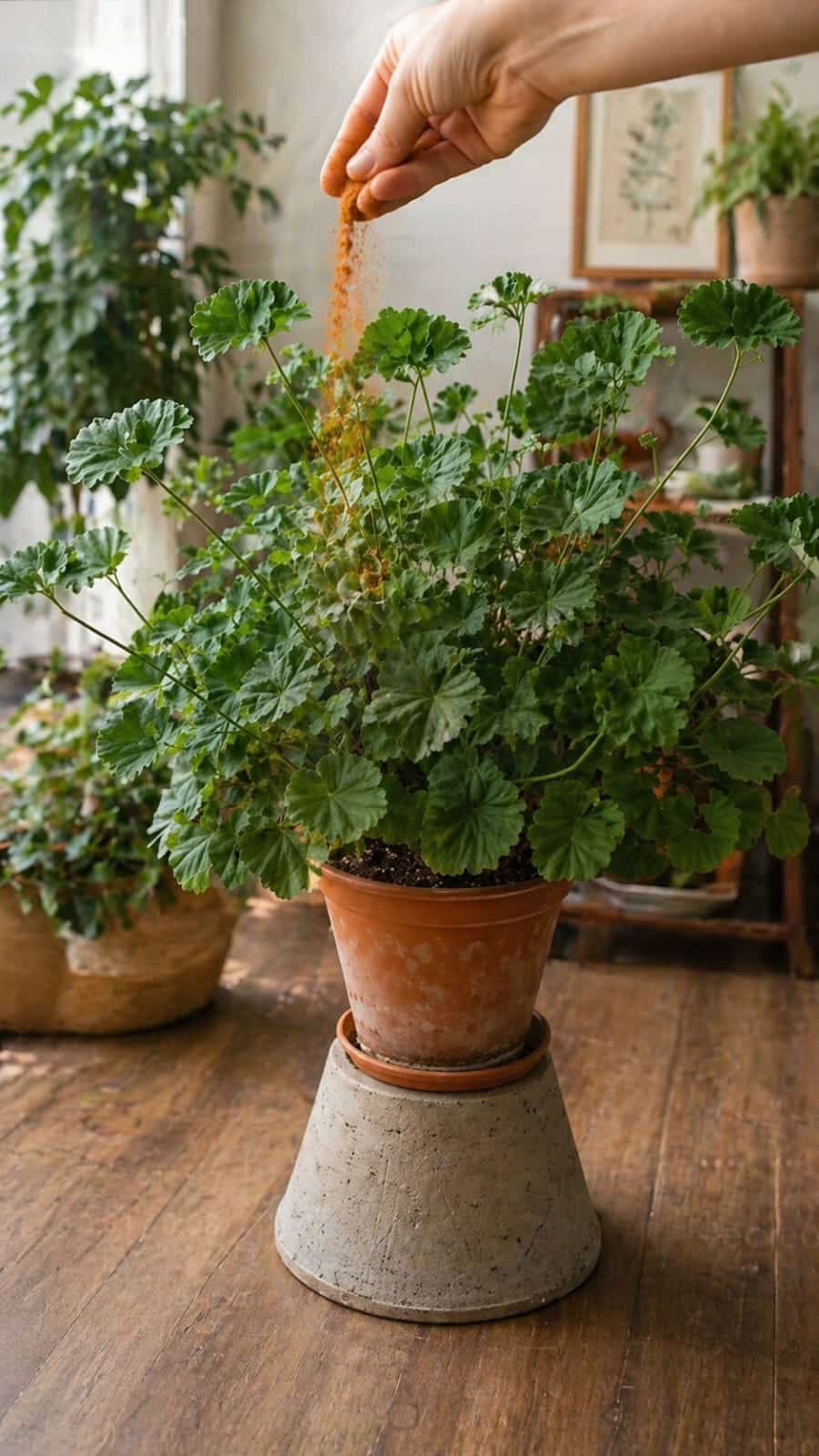
Cinnamon can stain light fabric, rugs, and porous surfaces if it gets wet. The image shows powder being sprinkled over a plant standing on a floor. In real life, place a tray or newspaper under the pot before applying powder.
If cinnamon spills, clean it while it is dry. Once it gets wet, it can smear and stain.
Terracotta can also hold color in its pores. Apply carefully and wipe the pot if powder lands on the outside.
What If You Used Too Much Cinnamon?
If you accidentally used too much cinnamon, remove the excess. Use a spoon to gently scrape off the top layer of powder from the soil surface. If powder is stuck to the leaves, brush it off with a soft dry brush.
Do not flush the pot heavily just to wash cinnamon away unless the plant also needs watering. Too much water can create a bigger problem.
If the soil surface becomes clumpy or messy, replace the top half inch of soil with fresh mix.
Next time, use only a pinch.
A Safe Cinnamon Geranium Routine
Here is a simple way to use the trick safely:
- Place the geranium in bright light.
- Check that the pot has drainage.
- Remove dead leaves and faded flowers.
- Let the soil surface dry slightly.
- Sprinkle only a tiny pinch of cinnamon on the soil.
- Keep cinnamon off the leaves and blooms.
- Do not water immediately unless needed.
- Repeat only after pruning or once every four to six weeks if necessary.
- Use fertilizer separately during active growth.
- Stop if powder builds up, stains, or clumps.
This routine keeps cinnamon as a helpful finishing touch instead of a messy over-treatment.
Common Mistakes With the Cinnamon Geranium Trick
Using Too Much Powder
The most common mistake is applying a heavy layer. Geraniums need a pinch, not a pile.
Sprinkling Over Wet Leaves
Powder sticks to wet leaves and can look messy. Apply only when foliage is dry.
Using It Instead of Fertilizer
Cinnamon does not feed blooms. Use proper fertilizer if nutrients are needed.
Ignoring Low Light
A geranium without enough light will not bloom well, no matter how much cinnamon is used.
Covering Mold Instead of Removing It
Always remove moldy soil first. Do not hide it under spice.
Applying It Too Often
Too much cinnamon can build up. Use rarely.
Pouring Water Over It Immediately
Wet cinnamon can clump. Apply as a dry surface dusting.
Signs the Trick Is Being Used Correctly
The trick is being used correctly if the plant remains clean, the soil surface looks fresh, and no heavy powder layer is visible. The leaves should stay green and dry. There should be no sour smell, no sticky residue, and no clumping.
Over time, the geranium should continue growing normally. If it receives enough light and proper feeding, it may produce more flowers. Cinnamon is only a small part of the routine.
Success looks like a tidy plant, fresh soil surface, and steady growth.
Signs You Should Stop Using Cinnamon
Stop using cinnamon if the soil surface becomes crusty, orange, clumpy, moldy, or stained. Stop if leaves are coated with powder. Stop if you notice pests or if the pot smells unpleasant.
Also stop if the plant is declining and you are using cinnamon as a way to avoid checking the roots. A struggling geranium needs diagnosis, not repeated dusting.
When in doubt, return to the basics: light, water, soil, airflow, pruning, and feeding.
Frequently Asked Questions
What is the orange powder being sprinkled on the geranium?
The orange-brown powder is most likely cinnamon. It is often used as a light soil-surface dusting or after pruning.
Is cinnamon good for geraniums?
Cinnamon can be useful in tiny amounts as a dry surface freshener, but it is not required and should not be overused.
Can cinnamon make geraniums bloom?
Not directly. Geranium blooms depend mostly on bright light, deadheading, pruning, and proper feeding.
How much cinnamon should I use?
Use only a tiny pinch for a small or medium pot. Avoid heavy layers.
Can I sprinkle cinnamon on the leaves?
No. Keep it mostly on the soil surface. Brush it off if it lands on leaves.
Can cinnamon replace fertilizer?
No. Cinnamon is not a complete plant food. Use proper fertilizer during active growth if needed.
Can cinnamon stop fungus gnats?
It may help as part of a dry surface routine, but fungus gnats require better watering habits and sometimes targeted treatment.
Can I use turmeric instead?
Cinnamon is usually cleaner for geraniums. Turmeric stains more strongly and should be used with caution.
How often can I use this trick?
Use it after pruning or cleaning, or no more than once every four to six weeks if needed.
What matters more than cinnamon?
Bright light, good airflow, proper watering, drainage, deadheading, pruning, and balanced feeding matter much more.
Final Thoughts
The cinnamon dusting geranium trick is simple, cozy, and visually satisfying. A warm orange sprinkle over a lush potted geranium makes the plant-care routine feel natural and old-fashioned, almost like a secret passed down from a careful gardener. It is easy to understand why this trick attracts attention.
But the safe version is light and practical. Cinnamon should be used as a tiny dry dusting on the soil surface or near small cut areas after pruning. It should not be dumped over the plant by the spoonful. It should not coat the leaves. It should not be mixed into wet soil. It should not be used as fertilizer.
If your geranium is healthy, cinnamon can be a small finishing touch after cleaning the plant. Remove dead leaves, deadhead old flowers, improve airflow, let the soil surface dry slightly, and then use a pinch of cinnamon if desired. That is enough.
If your geranium is weak, yellowing, drooping, or not blooming, look deeper. Check the light, watering, drainage, soil, and feeding routine. Most geranium problems come from low light, wet soil, old debris, poor airflow, or lack of regular deadheading.
The real secret to a beautiful geranium is not one sprinkle of orange powder. It is steady care. Give the plant bright light, a breathable pot, well-draining soil, careful watering, regular pruning, and light feeding during active growth. Keep the base clean and remove old leaves before they create dampness.
Used wisely, the cinnamon trick can help your geranium look and feel freshly cared for. Used heavily, it becomes just another mess on the soil. Keep it gentle, keep it dry, and let the plant’s natural strength do the rest.
With the right routine, your geranium can stay full, green, and ready to bloom again and again, bringing that classic cottage-garden charm into your indoor space.