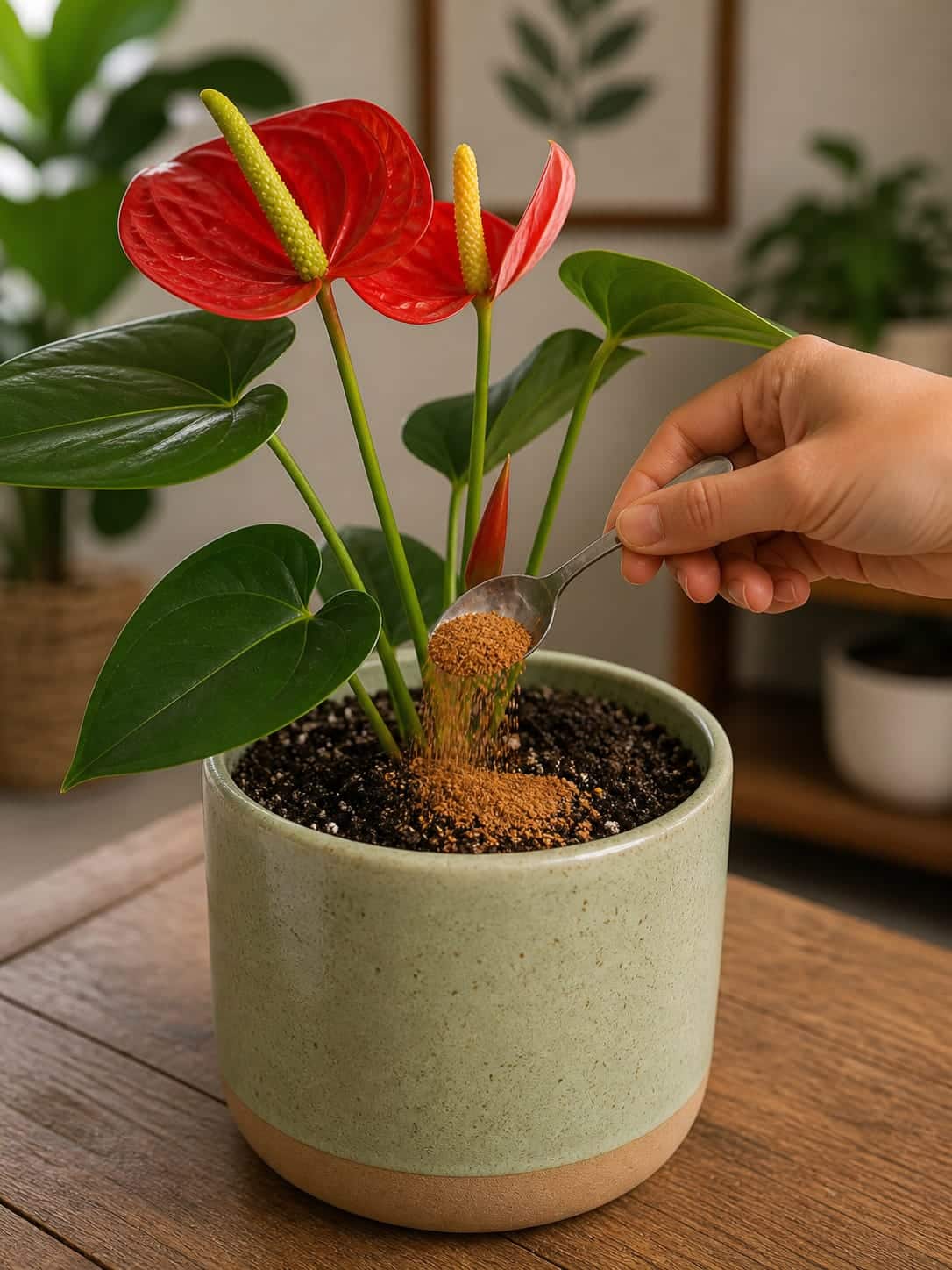
How to Encourage More Anthurium Blooms
To encourage repeat flowering, focus on the full care routine:
- Bright indirect light
- Chunky well-draining soil
- Consistent light moisture
- Moderate humidity
- Warm indoor temperatures
- Light feeding during active growth
- Pruning old flowers
- Clean leaves
- A pot with drainage holes
Cinnamon powder supports cleanliness around the soil surface, but flowers come from overall plant health.
Should You Fertilize Anthuriums Too?
Yes, but lightly. Anthuriums benefit from gentle feeding during spring and summer. Use a diluted liquid houseplant fertilizer, orchid fertilizer, or mild organic plant food once every four to six weeks during active growth.
Do not fertilize a stressed plant with wet soil or root rot. Do not apply strong fertilizer immediately after repotting damaged roots.
Cinnamon and fertilizer do different jobs. Cinnamon is a surface care trick. Fertilizer provides nutrients.
Natural Fertilizer Options for Anthuriums
If you prefer natural indoor plant care, gentle options include:
- Diluted worm casting tea
- Very weak compost tea
- Small amounts of worm castings in the potting mix
- Diluted banana peel water used occasionally
- Mild organic liquid fertilizer
Use natural fertilizers carefully. Organic does not mean unlimited. Too much homemade fertilizer can attract pests, sour the soil, or burn roots.
How to Keep Anthurium Leaves Glossy
Anthurium leaves naturally shine when they are clean and healthy. Dust can make them look dull, so wipe them gently with a damp cloth every couple of weeks.
Do not use cooking oil, milk, mayonnaise, or leaf shine sprays. These can clog leaf pores and attract dust.
The best glossy leaf routine is simple: clean water, soft cloth, good humidity, bright indirect light, and healthy roots.
Humidity for Anthuriums
Anthuriums appreciate moderate to high humidity. Dry indoor air can cause brown leaf tips, curling leaves, and slower growth. If your home is dry, humidity support can make a big difference.
Try:
- Grouping plants together
- Using a small humidifier
- Keeping the plant away from heaters
- Using a pebble tray under the pot
- Avoiding cold drafts
Do not keep the leaves constantly wet in a room with poor airflow. Moisture sitting on leaves can create spotting.
Common Anthurium Problems
| Problem | Likely Cause | Best Solution |
|---|---|---|
| No blooms | Low light or weak nutrition | Move to bright indirect light and feed lightly |
| Yellow leaves | Overwatering, poor drainage, or aging leaves | Check roots and adjust watering |
| Brown tips | Dry air, salt buildup, or inconsistent watering | Improve humidity and flush soil |
| Mold on soil | Too much moisture and poor airflow | Remove mold, dry topsoil, use light cinnamon dusting |
| Fungus gnats | Damp soil and decaying matter | Reduce watering and use sticky traps |
| Soft stems | Root rot or crown rot | Inspect roots and repot immediately |
How to Fix Surface Mold on Anthurium Soil
If you see a small amount of white surface mold, do not panic. It often appears when soil stays damp and airflow is low.
- Remove the moldy top layer with a spoon.
- Throw away dead leaves and debris.
- Let the topsoil dry slightly.
- Improve airflow around the plant.
- Sprinkle a very light dusting of cinnamon powder.
- Water less often going forward.
If mold keeps returning, the potting mix may be too dense and should be replaced.
How to Repot an Anthurium With Root Stress
If your anthurium has yellow leaves, sour-smelling soil, or soft stems, repotting may be necessary.
- Remove the plant from the pot.
- Shake away old wet soil.
- Inspect the roots.
- Trim black or mushy roots with clean scissors.
- Let cut areas dry briefly.
- Apply a tiny amount of cinnamon only to cut areas if desired.
- Repot into chunky anthurium soil.
- Use a pot with drainage holes.
- Wait a few days before watering if many roots were removed.
After repotting, give bright indirect light and avoid fertilizer until the plant stabilizes.
Can Cinnamon Burn Anthurium Roots?
Too much cinnamon can irritate roots or create a dry crusty layer in the soil. This is why it should not be mixed deeply into the pot in large amounts. Use it lightly on the surface or on small cut areas only.
A pinch is enough. A spoonful is usually too much for a small pot.
With anthuriums, gentle care always wins.
Can You Mix Cinnamon With Water?
For this trick, dry cinnamon powder is better than cinnamon water. Cinnamon does not dissolve well in water, and pouring cinnamon water into soil can distribute particles unevenly. It may also create residue in the pot.
Use cinnamon as a dry dusting on slightly dry soil or cut areas. Keep watering separate.
Can You Mix Cinnamon With Honey?
No. Honey may sound natural, but it can attract ants, mold, and fungus gnats in indoor plant soil. It can also become sticky and unpleasant around the base of the plant.
Use plain cinnamon powder only. Do not mix it with sweeteners.
Can You Use Cinnamon Every Week?
No. Cinnamon should be used occasionally. Weekly use can build up on the soil surface and may interfere with airflow. If you need cinnamon every week because mold keeps returning, the real problem is overwatering, poor drainage, or weak airflow.
Fix the cause instead of repeatedly covering the symptom.
Simple Cinnamon Powder Routine for Anthuriums
- Make or buy plain cinnamon powder.
- Make sure the soil surface is slightly dry.
- Remove dead leaves and old flower stems.
- Take a small pinch of cinnamon.
- Dust lightly around the soil surface.
- Do not pile it against the stems.
- Do not mix large amounts into the roots.
- Improve airflow around the plant.
- Water only when the top inch begins to dry.
- Use only when needed, not weekly.
Common Mistakes to Avoid
- Using cinnamon sugar instead of plain cinnamon
- Applying too much powder
- Covering the crown with cinnamon
- Mixing large amounts deep into the soil
- Using cinnamon instead of fixing soggy soil
- Applying it every week
- Using it on severe root rot without repotting
- Forgetting drainage holes
- Keeping the anthurium in low light
- Expecting cinnamon to act like fertilizer
Short Caption for This Trick
“Sprinkle a tiny pinch of plain cinnamon powder on the surface of anthurium soil after pruning, repotting, or removing mild surface mold. Cinnamon helps keep the crown area clean and dry, but it is not fertilizer. Use only a light dusting, keep the plant in bright indirect light, and grow it in chunky well-draining soil.”
Frequently Asked Questions
What is the brown powder on anthurium soil?
The brown powder is plain cinnamon powder. It is used as a light surface dusting around the soil, especially after pruning or when mild surface mold appears.
How do you make cinnamon powder at home?
Break plain cinnamon sticks into small pieces, grind them in a clean dry spice grinder, sift the powder, and store it in a dry glass jar.
Can cinnamon help anthuriums bloom?
Cinnamon does not directly make anthuriums bloom. It supports a cleaner soil surface. Blooms depend on bright indirect light, healthy roots, proper watering, and light feeding.
Is cinnamon a fertilizer?
No. Cinnamon is not a complete fertilizer. Anthuriums still need balanced nutrients during active growth.
How much cinnamon should I use?
Use only a pinch for a small pot or about ¼ teaspoon or less for a medium pot. A light dusting is enough.
Can cinnamon stop root rot?
No. Serious root rot requires removing the plant, trimming rotten roots, and repotting into fresh well-draining soil.
Can I use cinnamon sugar?
No. Cinnamon sugar can attract ants, mold, and fungus gnats. Use plain cinnamon only.
Can I mix cinnamon into the soil?
Do not mix large amounts into the soil. Use it lightly on the surface or on small cut areas.
How often can I use cinnamon on anthuriums?
Use it only when needed, such as after pruning, repotting, or removing mild surface mold. Do not apply it weekly.
What is the best soil for anthuriums?
A chunky mix with orchid bark, perlite, coco chips, and a little potting soil is best. Anthurium roots need moisture and airflow.
Final Thoughts
The cinnamon powder trick is a simple and useful anthurium care method when used correctly. It can help keep the soil surface cleaner, support dry cut areas after pruning, and discourage mild surface mold around the pot. It is easy, affordable, and natural.
But cinnamon is not magic. It will not replace good light, proper watering, chunky soil, drainage holes, humidity, or balanced fertilizer. If your anthurium is not blooming, start by improving light and root health. If the plant has root rot, repot it instead of covering the soil with powder.
Use cinnamon lightly. Make sure it is plain and dry. Sprinkle only a tiny amount on the soil surface when needed. Keep it away from heavy buildup around the crown. Combined with bright indirect light, airy soil, and careful watering, this small trick can help your anthurium stay clean, glossy, and ready for its next beautiful bloom cycle.