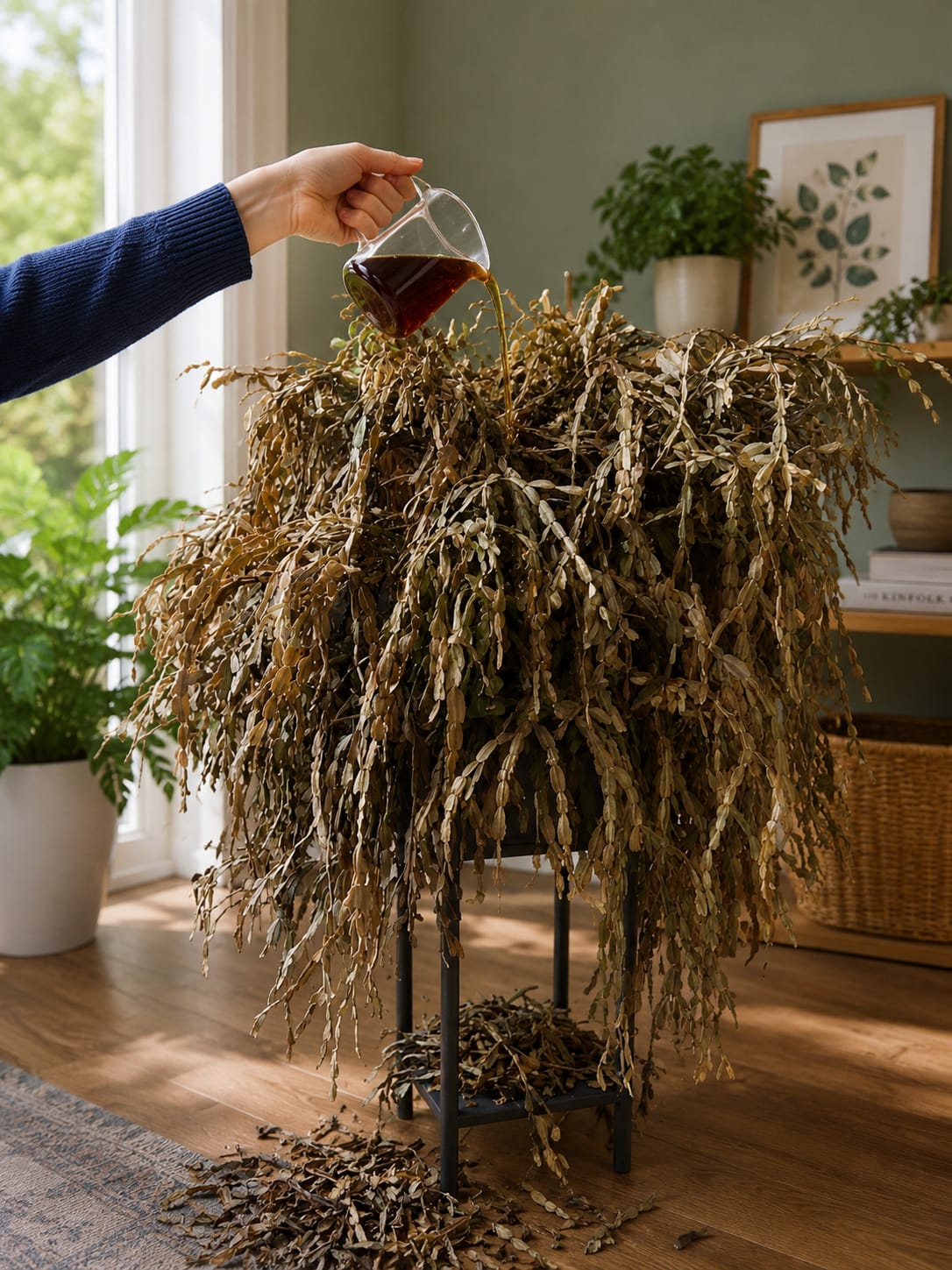
Why Hanging Plants Dry Out So Quickly
Hanging baskets dry faster than regular pots because they are exposed to more airflow. They also often contain smaller root spaces and lighter soil mixes. Understanding common reasons hanging baskets dry out helps with prevention.
Common reasons hanging plants dry out include:
- Small basket size
- High airflow
- Warm window exposure
- Root-bound plant
- Thin potting mix
- Missed watering
- Direct afternoon sun
- Heating or cooling vents
A hanging plant can dry out dramatically in just a few hot days.
How to Prevent a Hanging Plant From Drying Again
Once the plant recovers, adjust the care routine to prevent another collapse. These best practices for hanging plant care will keep your basket lush.
Prevention Tips
- Check soil moisture twice weekly
- Use a moisture meter if needed
- Move away from harsh direct sun
- Use a slightly larger basket if root-bound
- Add coco coir to improve moisture retention
- Water deeply until excess drains
- Trim dead growth regularly
- Rotate the plant for even light
- Keep away from heat vents
The best rescue method is prevention. A plant that never reaches crispy stress will stay fuller and healthier.
Best Light for a Recovering Hanging Plant
A recovering plant needs bright light but not harsh sun. Too much direct sun can dry the remaining stems even more. Providing optimal light for stressed hanging plants accelerates recovery.
Best recovery light:
- Bright indirect light
- Filtered window light
- Morning sun only
- No hot afternoon sun
- No dark corner
If the plant is indoors, place it near a bright window but away from direct heat. If outdoors, move it to protected shade with good brightness.
Best Soil for Hanging Plant Recovery
Old soil may become compacted, dry, and hard to rewet. If the plant survives, repotting may help. Using the best potting mix for hanging baskets makes a huge difference.
Good Hanging Plant Soil Mix
- 2 parts quality potting mix
- 1 part coco coir
- 1 part perlite
- A small amount of compost or worm castings
This mix holds moisture better than plain barky soil while still draining well.
Should You Repot Immediately?
Do not repot a severely dry plant immediately unless the soil is terrible or the roots are trapped in a hard dry mass. Repotting is stressful. Rehydrate first, prune dead growth, then decide. This when to repot a dying plant guide will help you time it right.
Repot if:
- The soil will not absorb water
- The plant is root-bound
- The pot has no drainage
- The soil smells bad
- Roots are circling tightly
- The potting mix has collapsed
If repotting, remove dead roots and use fresh airy soil. Water lightly afterward.
Compost Tea vs. Regular Fertilizer
Compost tea is gentler than many synthetic fertilizers, but it is less predictable. Regular fertilizer gives measured nutrients. Compost tea supports soil life and mild nutrition. This organic vs synthetic fertilizer comparison helps you choose.
| Option | Best Use | Main Risk |
|---|---|---|
| Compost tea | Gentle soil support | Smell or gnats if too strong |
| Worm casting tea | Mild root recovery | Overuse in wet soil |
| Liquid fertilizer | Measured feeding | Root burn if too strong |
| Plain water | First drought recovery | Not enough if soil is exhausted |
For a nearly dead plant, plain water comes first. Compost tea comes later.
Can Coffee Be Used as the Dark Liquid?
Some people use diluted coffee on plants, but it is not the best rescue liquid for a dying hanging plant. Coffee can affect soil acidity, attract pests, and cause buildup if used too often. For safe organic plant tonics, stick with compost or worm tea.
If the dark liquid is coffee, it should be extremely diluted and used only on plants that prefer slightly acidic conditions. For a weak unknown plant, compost tea or worm casting tea is safer.
Can Black Tea Be Used?
Plain unsweetened black tea is sometimes used as a mild acidic watering trick, but it is not a complete fertilizer. It should not be used heavily on a dried plant. If used, it must be weak and unsweetened. Never use tea with sugar, milk, honey, lemon, or flavorings in plant pots.
Can Molasses Water Be Used?
Molasses water is sometimes used to feed soil microbes, but it can attract pests if used too strongly. For indoor plants, it is risky. If used at all, it should be extremely diluted. For stressed indoor hanging plants, worm casting tea is cleaner and safer than sweet liquids.
Common Mistakes to Avoid
- Pouring strong fertilizer onto a dry root ball
- Using compost tea before rehydrating the plant
- Leaving dead leaves in the pot
- Using unfinished compost
- Applying dark liquid every day
- Feeding a plant with rotten roots
- Keeping the plant in direct hot sun
- Letting the pot sit in runoff water
- Repotting and fertilizing at the same time
- Expecting brown leaves to turn green
Avoid these common plant rescue mistakes for a better chance at recovery.
Signs the Rescue Is Working
A dried hanging plant recovers slowly. Watch for new life, not old leaves. These are positive signs of plant recovery after drought.
Good signs include:
- Small green shoots near the base
- New leaves after pruning
- Flexible stems staying alive
- Soil absorbing water again
- No sour smell
- No mold
- Roots firming up
- Less leaf drop
Signs the Plant Is Not Recovering
The plant may be too far gone if:
- All stems snap dry
- No green tissue remains
- Roots are hollow and dead
- The crown is dry and brittle
- No new growth appears after several weeks
- The plant smells rotten after watering
- The potting mix stays wet with no recovery
In that case, take any possible cuttings or replace the plant.
Simple Dark Liquid Rescue Recipe
Ingredients
- 1 tablespoon worm castings or finished compost
- 1 liter clean water
Instructions
- Mix worm castings or compost into water.
- Steep for 4 to 12 hours.
- Strain well.
- Dilute with equal parts clean water.
- Use only after the plant has been rehydrated first.
- Apply a small amount to the soil.
- Repeat only after 4 to 6 weeks if recovery appears.
Emergency Rescue Plan for a Dried Hanging Plant
- Remove crispy dead leaves.
- Test stems for green living tissue.
- Bottom-soak the pot in plain water for 20 to 30 minutes.
- Let it drain completely.
- Move to bright indirect light.
- Wait several days.
- Prune dead stems again.
- Use diluted compost tea only if living growth remains.
- Keep soil evenly moist but not soggy.
- Watch for new shoots.
Short Caption for This Trick
“For a dried hanging plant, do not pour strong fertilizer right away. First prune dead leaves, rehydrate the root ball with plain water, and check for living stems. If new growth appears, apply a weak compost tea made from 1 tablespoon worm castings in 1 liter water, strained and diluted again. Use only a small amount.”
Frequently Asked Questions
Can compost tea revive a dried plant?
Compost tea may support recovery if the plant still has living roots and stems. It cannot revive a completely dead plant.
Should I fertilize a dried-out plant?
Not immediately. Rehydrate with plain water first. Fertilize only after signs of recovery appear.
Can brown leaves turn green again?
No. Brown crispy leaves are dead. Remove them and watch for new green growth.
What is the best dark liquid fertilizer for houseplants?
A weak worm casting tea or diluted compost tea is usually safer than coffee, molasses, or strong fertilizer.
How do I make compost tea for indoor plants?
Soak 1 tablespoon finished compost or worm castings in 1 liter water, steep for several hours, strain, and dilute before use.
How often should I use compost tea?
Use once every 4 to 6 weeks during active growth. Do not use it daily or weekly on weak plants.
Why did my hanging plant dry out so fast?
Hanging plants dry quickly because of airflow, small pots, warm windows, root-bound soil, and missed watering.
Can I save a completely brown hanging plant?
Only if the roots or stems are still alive. If everything is brittle and hollow, the plant is likely dead.
Should I repot a dried hanging plant?
Repot only after rehydrating and checking the roots, unless the soil is hydrophobic, compacted, or has no drainage.
Can compost tea attract fungus gnats?
Yes, if it is too strong, used too often, or applied to wet soil. Use a weak strained mixture and let the pot dry properly.
Final Thoughts
The dark liquid trick can help a weak hanging plant, but only when used at the right time. The plant in the image is severely dried, so the first rescue step is not fertilizer. The first step is pruning dead growth and rehydrating the root ball slowly with plain water. This complete hanging plant revival guide will help you save even the most distressed basket.
Once the plant shows signs of life, a weak compost tea or worm casting tea can support the soil and encourage new growth. The mixture should be light, strained, diluted, and applied in small amounts. Strong dark liquid poured onto dry roots can shock the plant instead of saving it. This best organic plant rescue method works when you follow the correct order.
For long-term success, keep the plant in bright indirect light, water before the basket becomes bone dry, use a well-draining but moisture-retentive soil mix, and prune regularly. Hanging plants are beautiful, but they dry faster than standard pots and need consistent attention. These professional indoor plant care secrets will keep your hanging baskets thriving.
Used wisely, diluted compost tea can become a gentle recovery tool for stressed plants. Used too heavily, it can cause odor, pests, mold, and root stress. With a nearly dried plant, patience and gentle care are always more powerful than a strong fertilizer shock.