Why Peace Lily Leaves Turn Yellow
Yellow leaves are not always a sign of hunger. In many cases, yellow leaves come from watering problems. This peace lily yellow leaf diagnosis guide will help you identify the real cause.
Common causes include:
- Overwatering
- Underwatering
- Old leaf aging
- Low light
- Root rot
- Too much fertilizer
- Cold stress
- Poor drainage
If several leaves turn yellow quickly, inspect the soil and roots before using any homemade tonic.
Why Peace Lily Leaf Tips Turn Brown
Brown tips are very common. They can happen even on otherwise healthy plants. For preventing peace lily brown tips naturally, focus on humidity and water quality.
Possible causes include:
- Dry air
- Inconsistent watering
- Tap water minerals
- Overfertilizing
- Direct sun
- Low humidity
- Root stress
Garlic rice water will not reverse brown tips. Brown tissue is already damaged. Trim it if needed and improve the care routine.
Best Soil Mix for Peace Lilies
Peace lilies need soil that stays lightly moist but drains well. Dense soil can suffocate roots and cause rot. Choosing the best potting mix for peace lilies is half the battle.
Good Peace Lily Soil Mix
- 2 parts indoor potting mix
- 1 part perlite or pumice
- 1 part coco coir or peat moss
- A small amount of orchid bark
This mix keeps enough moisture while allowing oxygen around the roots.
Why Drainage Matters
Garlic rice water should only be used in pots with drainage holes. Without drainage, the mixture can sit in the bottom of the pot and become sour. Using a pot with drainage for peace lilies is non-negotiable.
A good peace lily pot should:
- Have drainage holes
- Use a removable saucer
- Allow excess water to escape
- Not be too large for the root ball
- Contain airy potting mix
If your decorative pot has no drainage, use a nursery pot inside it.
When Not to Use Garlic Rice Water
This trick is not safe for every plant situation. Knowing when to avoid homemade plant tonics is as important as knowing how to use them.
Avoid garlic rice water if:
- The soil is wet
- The pot has no drainage
- The plant has root rot
- The soil smells sour
- Fungus gnats are already severe
- Mold is growing on the soil
- The plant was recently repotted
- The room is cold and dark
- You recently fertilized
- The plant is heavily stressed
In these cases, plain water and root care are safer.
Can You Spray Garlic Rice Water on Peace Lily Leaves?
It is better not to spray this mixture on peace lily leaves. Garlic can leave a smell, and rice water can leave a cloudy residue. Peace lily leaves are best cleaned with plain water. For natural pest control for peace lily leaves, use safer methods.
If pests are on the leaves, use a safer leaf treatment such as:
- Plain water rinse
- Soft cloth cleaning
- Mild insecticidal soap used correctly
- Neem oil diluted according to label directions
Do not use strong garlic spray indoors unless you are prepared for the smell.
Can You Use Garlic Powder Instead of Fresh Garlic?
Fresh garlic is better for this trick because it can be infused briefly and strained. Garlic powder may contain additives, clump in soil, and create residue. For pure natural garlic infusion for plants, always use fresh cloves.
Avoid using:
- Garlic salt
- Seasoned garlic powder
- Garlic paste with oil
- Cooked garlic
- Garlic sauces
Use only plain fresh garlic, and use a very small amount.
Can You Use Cooked Rice Water?
Fresh rice rinse water is safer than cooked rice water. Cooked rice water can be too starchy and may spoil faster in indoor soil. For safe rice water for houseplants, always use fresh rinse water.
Avoid rice water that contains:
- Salt
- Oil
- Butter
- Spices
- Sauce
- Sugar
- Fermented smell
Use only plain fresh rice rinse water.
Can You Store Garlic Rice Water?
No. Use it fresh. Garlic rice water can change smell quickly and may become unpleasant if stored.
Best rule:
Make only what you need and use it the same day.
Discard leftovers instead of storing them.
What If the Soil Smells Like Garlic After Use?
A light garlic smell may fade. A strong smell means the mixture was too concentrated or too much was applied. This quick fix for over‑treated peace lily soil will help.
Fix Steps
- Stop using the mixture.
- Remove any residue from the soil surface.
- Let the top layer dry slightly.
- Improve airflow.
- Water with plain water next time.
- If smell becomes sour, inspect the roots.
Peace lily soil should smell earthy, not sour or rotten.
How to Check Peace Lily Roots
If your peace lily reacts badly after any homemade tonic, inspect the roots. This peace lily root health check is essential for diagnosis.
Healthy Roots
- Firm
- White, cream, or tan
- No bad smell
- Not slimy
Unhealthy Roots
- Black
- Mushy
- Slimy
- Bad-smelling
- Falling apart
If roots are rotten, repot into fresh airy soil and stop all feeding until the plant recovers.
Peace Lily Care Table
| Care Factor | Best Method | Why It Matters |
|---|---|---|
| Garlic rice water | Very diluted and occasional | Prevents root stress |
| Application | Soil edge only | Protects crown and leaves |
| Frequency | Every 4 to 6 weeks max | Avoids buildup and odor |
| Light | Bright indirect light | Supports growth and blooms |
| Watering | When top inch dries | Prevents root rot |
| Soil | Moist but airy | Keeps roots healthy |
| Drainage | Required | Prevents sour soil |
Simple Garlic Rice Water Recipe
Ingredients
- ½ cup fresh rice rinse water
- ½ cup clean water
- 1 small garlic clove
Instructions
- Crush the garlic clove lightly.
- Soak it in ½ cup clean water for 10 to 15 minutes.
- Strain very well.
- Mix 2 tablespoons of garlic water with ½ cup rice rinse water.
- Add ½ cup clean water.
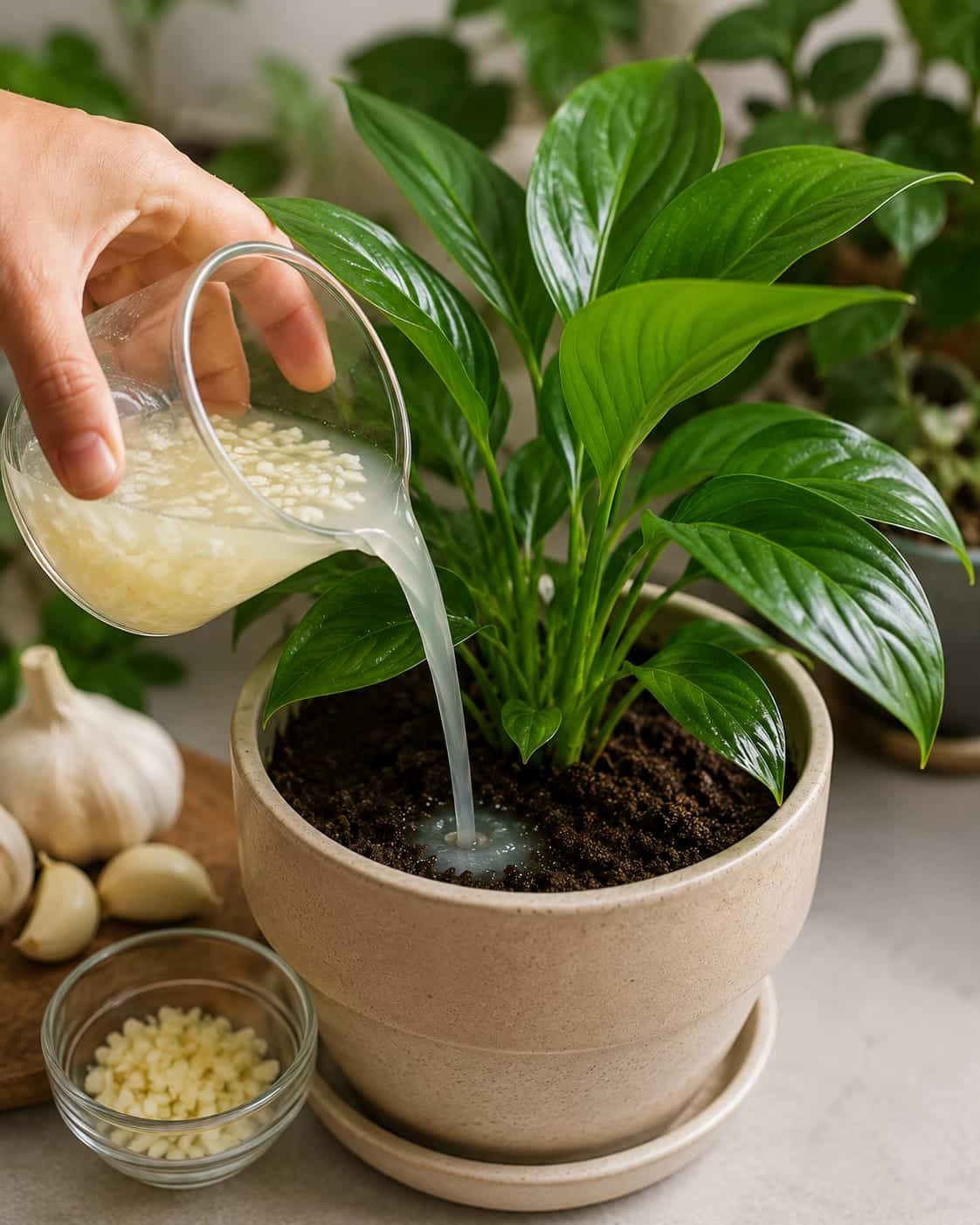
- Apply ¼ cup of the final mixture around the outer soil edge.
- Avoid leaves, crown, and blooms.
- Use only once every 4 to 6 weeks during active growth.
Common Mistakes to Avoid
- Using strong garlic water
- Pouring chopped garlic into the soil
- Using garlic salt or garlic powder
- Using thick cooked rice water
- Applying the mixture every week
- Pouring it on leaves
- Using it on wet soil
- Using it in a pot without drainage
- Combining it with strong fertilizer
- Ignoring root rot symptoms
Avoid these common DIY plant tonic mistakes for success.
Signs the Trick Is Helping
Watch the plant over 7 to 14 days. The improvement may be subtle. These are positive indicators of peace lily recovery.
- Leaves stay firm
- New growth appears healthy
- Soil smells fresh
- No mold appears
- No fungus gnats increase
- Leaves look glossy after cleaning
- The plant droops less often
- White blooms remain stable
Signs You Should Stop Immediately
Stop using garlic rice water if you notice:
- Garlic smell lingering strongly
- Sour soil odor
- White mold on soil
- More fungus gnats
- Yellow leaves after application
- Drooping after use
- Soil staying wet too long
- Root rot symptoms
Return to plain water and let the soil recover.
Short Caption for This Trick
“For peace lilies, use garlic rice water only as a very diluted soil tonic. Mix fresh rice rinse water with a weak strained garlic infusion, apply a small amount around the outer soil edge, and avoid the leaves, blooms, and crown. Use no more than once every 4 to 6 weeks.”
Frequently Asked Questions
Is garlic water good for peace lilies?
Very weak garlic water may be used occasionally as part of a diluted soil tonic, but strong garlic water can stress peace lily roots.
Is rice water good for peace lilies?
Fresh diluted rice water can support soil activity gently when used occasionally. It should not be thick, salty, or fermented indoors.
Can I mix garlic and rice water for plants?
Yes, but the garlic must be very weak and strained. Use only a small amount on the soil edge.
How often should I use garlic rice water?
Use it once every 4 to 6 weeks during active growth at most. Do not use it weekly.
Can garlic rice water kill fungus gnats?
It may help discourage them slightly, but moisture control is the real solution. Let the top inch of soil dry and use sticky traps if needed.
Can I pour chopped garlic into plant soil?
No. Chopped garlic can rot, smell, attract pests, and irritate roots. Use only a strained weak infusion.
Can I spray garlic rice water on leaves?
No. It can leave residue and odor. Apply to soil only.
Can this mixture make peace lilies bloom?
It may support general plant health, but blooms depend mostly on bright indirect light, healthy roots, and balanced care.
Why is my peace lily drooping after using it?
The soil may be too wet, the mixture may be too strong, or the roots may be stressed. Stop using it and check soil moisture.
Can I store garlic rice water?
No. Use it fresh the same day and discard leftovers.
Final Thoughts
The garlic rice water trick can be a helpful natural support method for peace lilies, but only when it is diluted and used carefully. The image shows a cloudy homemade liquid being poured into a healthy peace lily pot, with garlic nearby. The safest version is a fresh rice water tonic mixed with a very weak strained garlic infusion. This natural peace lily care method has helped many indoor gardeners maintain stunning plants.
This mixture should never be strong, thick, salty, or poured directly onto the crown. Apply only a small amount around the outer soil edge when the top inch of soil is slightly dry. Always use a pot with drainage holes and empty the saucer afterward. Following this complete peace lily care guide will keep your plant thriving.
For the best results, combine this trick with proper peace lily care: bright indirect light, consistent watering, airy soil, clean leaves, moderate humidity, and careful pruning. Garlic rice water can support the soil, but it cannot replace healthy roots and good growing conditions. These professional indoor plant care secrets will help you succeed.
Used wisely, this simple homemade tonic may help your peace lily maintain glossy leaves, fresh growth, and stronger root-zone health. Used too often or too strong, it can cause odor, pests, mold, and root stress. With peace lilies, gentle care always wins. Enjoy your beautiful, healthy peace lily for years to come.