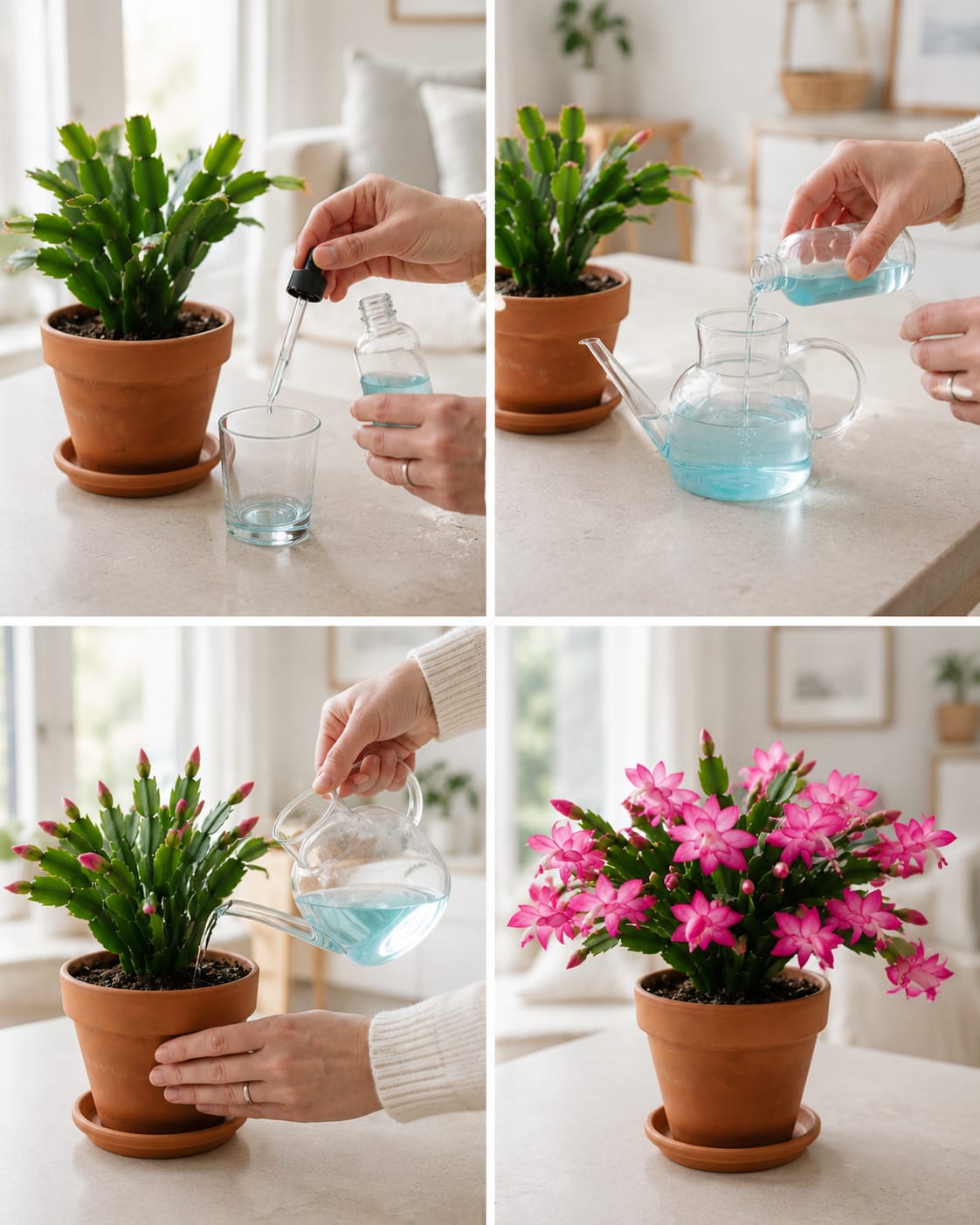
Christmas cactus is one of the most beautiful holiday houseplants you can grow indoors. Its arching green stems, soft segmented leaves, and colorful blooms make it a favorite for windowsills, shelves, coffee tables, kitchen corners, and cozy winter displays. When it is healthy, a Christmas cactus can produce dozens of bright pink, red, white, orange, or purple flowers, often blooming right when the home needs color the most.
Many plant lovers use gentle liquid feeding routines to help Christmas cactus stay strong and prepare for blooming. One popular idea is using a diluted blue liquid plant food, sometimes called a blue water tonic, because many water-soluble houseplant fertilizers have a light blue color when mixed with water. Used correctly, this kind of diluted fertilizer can support root strength, fresh growth, and flower production. Used too strongly or too often, it can burn roots, cause salt buildup, and lead to weak growth.
The key is moderation. Christmas cactus does not need constant feeding. It needs the right soil, the right watering rhythm, bright indirect light, and a seasonal routine that encourages buds. A weak blue fertilizer solution can be helpful during active growth, but it should never replace proper care. This guide explains how to use it safely, when to avoid it, and how to create the best conditions for a fuller, healthier Christmas cactus.
What Is the Blue Water Trick?
The blue water trick usually refers to mixing a small amount of water-soluble plant fertilizer into clean water and applying it to the soil as a gentle feed. Many common plant foods dissolve into a pale blue solution because of added color in the product. The color itself is not what helps the plant. The nutrients in the fertilizer are what matter.
For Christmas cactus, the solution should be weak. Strong fertilizer is not better. A concentrated mix can damage the roots and leave salts in the soil. A diluted mix used at the right time is safer and more useful.
Think of blue water as a light seasonal support, not a miracle bloom shortcut.
Why Christmas Cactus Needs Careful Feeding
Christmas cactus is not a desert cactus. It is a tropical forest cactus. In nature, it grows in loose organic material where moisture and air move around the roots. It enjoys more moisture than desert cactus, but it still dislikes soggy soil.
Because the roots are sensitive, feeding must be gentle. Too much fertilizer can stress the plant, especially if the potting mix is dry, compacted, or already full of mineral buildup.
A Christmas cactus grows and blooms best when nutrition is balanced with light, water, and rest. Feeding alone cannot fix poor light, bad soil, or overwatering.
When to Use Blue Fertilizer Water
The best time to use diluted blue fertilizer water is during active growth, usually spring through early summer. This is when the plant is producing new green segments and building strength for the next bloom cycle.
You can also feed lightly after flowering has finished and the plant begins growing again. Do not feed heavily while the plant is resting or while buds are forming.
A good schedule is once every 4 to 6 weeks during active growth. Use plain water between feeding days.
When Not to Use It
Do not use blue fertilizer water if the plant is stressed, overwatered, newly repotted, or showing signs of root rot. Fertilizer cannot repair damaged roots. In fact, it can make root stress worse.
Avoid feeding if you notice:
- Limp stems with wet soil
- Yellowing segments
- Soft or mushy base growth
- Sour smell from the pot
- Fungus gnats
- Soil that stays wet for many days
- Recent heavy repotting
- Freshly rooted cuttings
In these cases, fix the soil and watering routine first. Once the plant is stable, feeding can resume lightly.
How to Mix Blue Fertilizer Water Safely
Always follow the fertilizer label, then dilute it more for Christmas cactus. A half-strength or quarter-strength solution is usually safer than a full-strength mix.
A simple method:
- Fill a watering can with room-temperature water.
- Add only a small amount of water-soluble houseplant fertilizer.
- Mix until fully dissolved.
- The solution should look pale, not dark blue.
- Apply only to soil that is already ready for watering.
Never pour concentrated fertilizer directly onto the plant. Always dilute it first.
Water the Soil, Not the Leaves
When using fertilizer water, apply it to the soil around the plant. Avoid pouring it over the stems or flower buds. Wet foliage can attract spots if airflow is poor.
Pour slowly until a little water drains from the bottom of the pot. This helps distribute nutrients through the root zone. After watering, empty the saucer so the plant does not sit in liquid.
Good drainage is essential when using any fertilizer.
Why Drainage Matters
Christmas cactus roots need oxygen. If the pot has no drainage holes, water and fertilizer can collect at the bottom. This creates a salty, stagnant layer that damages roots.
Always use a pot with drainage holes. If your plant sits in a decorative pot, keep it inside a nursery pot with holes and remove extra water after watering.
Drainage protects roots from rot and fertilizer buildup.
The Best Soil for Christmas Cactus
Christmas cactus needs a soil mix that holds gentle moisture but drains well. Heavy soil can stay wet too long, while very gritty cactus soil may dry too fast.
A good mix can include:
- Indoor potting mix
- Perlite
- Fine orchid bark
- Coco coir
- A small amount of compost or worm castings
This creates a loose, airy texture. The roots get moisture without being trapped in soggy soil.
How Soil Affects Feeding
Fertilizer works best when the soil is healthy. If the soil is old, compacted, or sour-smelling, nutrients will not solve the problem. The roots may not absorb them properly.
If the potting mix has become hard or drains slowly, refresh it before continuing any feeding routine. A light soil mix makes fertilizer safer and more effective.
Healthy roots are the foundation of good blooming.
Watering Christmas Cactus Correctly
Christmas cactus likes more moisture than desert cactus, but it should not stay wet all the time. Water when the top inch of soil feels dry.
During active growth, the plant may need water more often. During cooler months, it may need less. During bud formation, try to keep watering consistent because sudden dryness can cause buds to drop.
Always check the soil before watering. Do not rely only on a calendar.
How to Use Plain Water Between Feeding
Between fertilizer applications, use plain clean water. This prevents nutrient buildup and keeps the root zone balanced.
Every few months, you can water thoroughly with plain water and let extra drain out. This helps flush excess salts from the soil. Make sure the pot drains completely afterward.
This simple habit protects the plant from fertilizer stress.
Signs the Fertilizer Routine Is Working
A Christmas cactus that responds well to light feeding may show fresh green segments, firmer growth, better branching, and stronger overall shape. Later in the season, it may have more energy for buds if light and temperature conditions are right.
Positive signs include:
- Firm green segments
- New segment growth
- No sour smell from soil
- Stable moisture balance
- Healthy branching
- Stronger bud formation in season
Growth should look natural, not forced or weak.
Signs You Are Using Too Much Fertilizer
Too much fertilizer can harm Christmas cactus. Watch for brown edges, shriveled tips, white crust on soil, sudden limpness, or yellowing after feeding.
If this happens, stop fertilizing. Flush the soil with plain water if the pot drains well, or repot into fresh soil if buildup is severe.
Use weaker fertilizer next time or feed less often.
How to Encourage More Blooms
Fertilizer helps the plant build strength, but blooms depend on seasonal signals. Christmas cactus needs shorter days, longer nights, and slightly cooler conditions to set buds.
In fall, give the plant bright daytime light and long uninterrupted darkness at night. Avoid placing it near lamps that stay on late.
Cooler nights can also help. The plant should be cool, not cold. Avoid frost and cold drafts.
Light for Healthy Growth
Christmas cactus grows best in bright indirect light. Direct harsh afternoon sun can burn the segments, but low light can reduce growth and blooming.
A bright window with filtered light works well. Morning sun is often gentle enough. If the plant receives too much sun, the segments may turn reddish or develop dry patches.
Good light during the growing season helps the plant store energy for flowers.
Why Buds Drop
Bud drop is common with Christmas cactus. It can happen when the plant experiences sudden changes in light, temperature, watering, or location.
Common causes include:
- Moving the plant after buds form
- Letting soil dry too much
- Overwatering
- Cold drafts
- Hot dry air
- Too much fertilizer near bloom time
- Low humidity
Once buds appear, keep the plant’s environment stable.
Should You Feed During Blooming?
It is usually better not to fertilize heavily while the plant is blooming. During bloom time, focus on steady moisture, bright indirect light, and stable temperature.
After flowering ends, allow the plant to rest for a short period. Then resume light feeding when new growth begins.
This rhythm follows the plant’s natural cycle.
Continue to Page 2
Continue to page 2 for more details about this article and the key points many readers miss on the first page.