Pruning for Fuller Growth
Pruning helps Christmas cactus become fuller and more balanced. The best time to prune is after blooming has finished.
Remove one to three segments from long stems by gently twisting at the joint. This encourages branching and helps the plant grow a fuller shape.
The removed segments can be used for propagation.
Propagating Christmas Cactus
Christmas cactus is easy to propagate from stem segments. Take a cutting with two to four segments and let it dry for a day or two. Then place it in a light potting mix.
Keep the soil lightly moist, not wet. Place the cutting in bright indirect light. New roots will form with time.
Do not fertilize fresh cuttings until they are rooted and growing.
Humidity and Airflow
Christmas cactus appreciates moderate humidity. Dry air can make segments wrinkle and can cause buds to drop.
You can increase humidity by grouping plants together, using a pebble tray, or running a small humidifier nearby. Good airflow is also important. Humidity without airflow can encourage fungal problems.
A bright kitchen or bathroom with natural light can be a good location.
Cleaning the Plant
Dust can settle on the flat green segments. Clean stems help the plant absorb light and look healthier.
Wipe gently with a damp cloth or rinse lightly with lukewarm water. Let the plant drain well afterward.
A clean Christmas cactus looks brighter and fresher in decor displays.
Repotting Christmas Cactus
Christmas cactus does not need frequent repotting. It often blooms better when slightly root-bound. Repot only when the soil is old, roots fill the pot, or drainage becomes poor.
Use a pot only one size larger. A huge pot holds too much wet soil and can cause root issues.
Spring is a good time to repot, after the bloom season has ended.
Best Decor Ideas
Christmas cactus is a wonderful decor plant because its stems naturally arch and cascade. It looks beautiful in hanging baskets, ceramic pots, terracotta planters, and decorative cover pots.
Try these ideas:
- Place it on a bright windowsill in a terracotta pot.
- Use a white ceramic pot for a clean holiday look.
- Hang it near a window where stems can trail.
- Group it with poinsettias and peace lilies for seasonal color.
- Place it on a wooden plant stand for height.
When in bloom, it can become a natural centerpiece.
Common Mistakes to Avoid
Avoid these mistakes with blue fertilizer water:
- Mixing fertilizer too strong
- Feeding every week
- Pouring fertilizer onto dry roots
- Using fertilizer on a sick plant
- Letting the pot sit in fertilizer water
- Using a pot without drainage
- Feeding heavily during bud formation
- Ignoring light and temperature needs
A weak solution used occasionally is much safer than a strong solution used often.
A Simple Christmas Cactus Blue Water Routine
Follow this balanced routine:
- Keep the plant in bright indirect light.
- Water when the top inch of soil dries.
- Use airy soil with perlite and bark.
- Feed with quarter-strength blue water-soluble fertilizer once every 4 to 6 weeks during active growth.
- Use plain water between feedings.
- Stop feeding when buds begin forming.
- Give longer dark nights in fall to encourage blooms.
- Keep conditions stable once buds appear.
This routine supports healthy growth without overwhelming the plant.
Final Thoughts
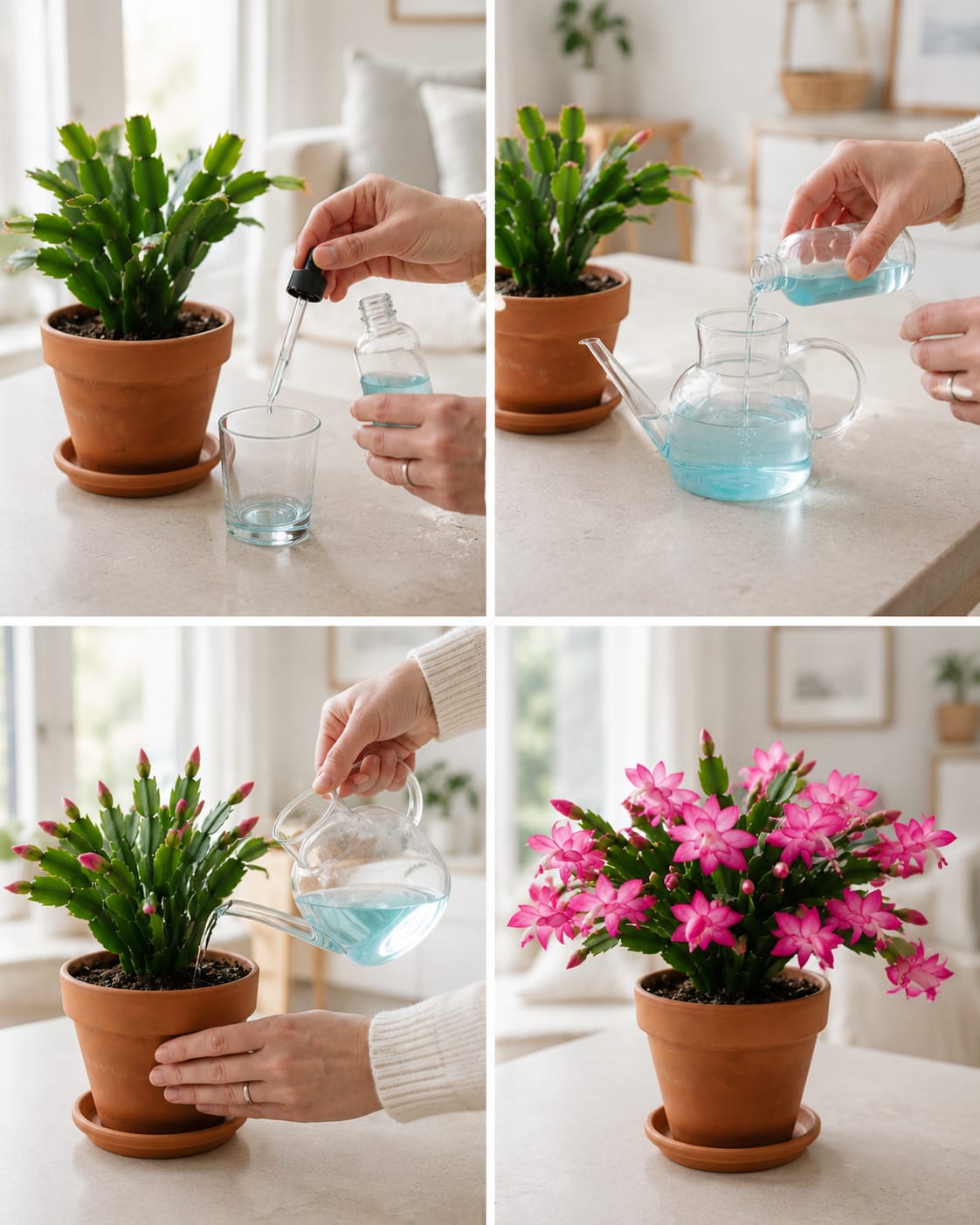
The gentle blue water trick can help Christmas cactus when it is used correctly. The blue color usually comes from a water-soluble fertilizer, but the color is not the important part. What matters is using a weak, balanced solution at the right time.
Christmas cactus needs bright indirect light, airy soil, careful watering, drainage, moderate humidity, and a seasonal bloom routine. Fertilizer is only one part of the full picture.
Use blue fertilizer water lightly during active growth, stop before bud formation, and keep the plant stable during bloom season. With patience and balanced care, your Christmas cactus can grow fuller, stay healthier, and produce beautiful holiday flowers year after year.