Why Jade Plants Drop Leaves
Leaf drop can happen from overwatering, underwatering, sudden temperature changes, low light, or root stress.
If leaves are yellow and mushy, overwatering is likely. If they are dry and wrinkled, underwatering may be the issue. If the plant is stretching, it needs more light.
Correct the cause before adding any natural routine.
Best Temperature for Jade Plants
Jade plants prefer warm indoor temperatures and should be protected from frost. They dislike cold drafts and sudden temperature drops.
Keep them away from open winter windows, cold glass, and air-conditioning vents.
Stable warmth supports steady growth.
Humidity and Airflow
Jade plants do not need high humidity. Average indoor humidity is usually fine. In fact, very humid and stagnant conditions can increase the risk of fungal problems if the soil stays wet.
Good airflow helps the soil dry properly and keeps the plant healthier.
Styling Jade Plants Indoors
Jade plants are excellent decor plants because they have a sculptural form. Their thick stems and rounded leaves look beautiful in simple pots.
Use terracotta for a warm natural style, white ceramic for a clean modern look, matte black for contrast, or stone-textured pots for a minimalist display.
A mature jade plant looks beautiful on a wooden table, sunny windowsill, office desk, entry shelf, or plant stand.
Best Places to Display Jade Plants
Good locations include:
- Sunny windowsills
- Bright living rooms
- Home offices
- Kitchen window corners
- Bedroom shelves with bright light
- Covered balconies in mild weather
Avoid dark corners if you want compact, healthy growth.
A Simple Jade Plant Care Routine
For a healthy jade plant, follow this routine:
- Place in bright light
- Use fast-draining succulent soil
- Water only when soil is dry
- Use a pot with drainage holes
- Clean leaves with a damp cloth
- Feed lightly during active growth
- Prune for shape when needed
- Use coffee or eggshell powder only rarely
This routine is simple, safe, and effective.
Common Mistakes to Avoid
Avoid these mistakes:
- Adding sugar directly to the soil
- Pouring milk into the pot often
- Using wet coffee grounds
- Piling powder near the stem
- Watering too frequently
- Keeping the plant in low light
- Using a pot without drainage
- Feeding during winter
Jade plants prefer clean, dry, bright conditions.
Final Thoughts
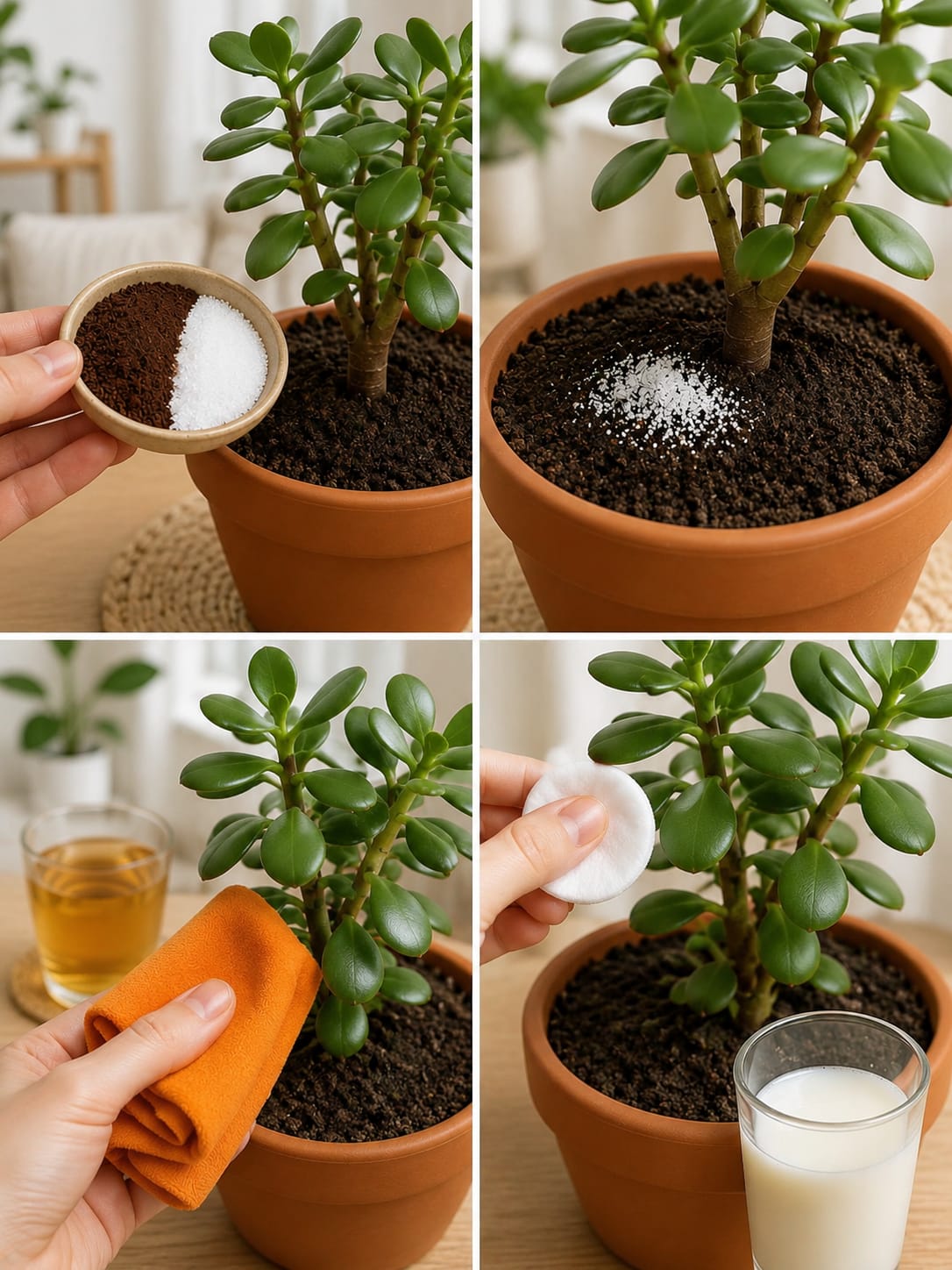
The coffee, white powder, and milk-style jade plant routine should be used with caution. Jade plants are succulents, and they do not need heavy homemade mixtures. A tiny amount of dried coffee grounds or finely crushed eggshell powder can be used occasionally, but sugar and milk should be avoided or used only in very diluted, careful ways.
The real secret to a beautiful jade plant is bright light, fast-draining soil, correct watering, drainage, gentle feeding, and clean leaves. When these basics are correct, the plant can grow thick stems, glossy leaves, and a strong tree-like shape over time.
With patience and a light touch, your jade plant can become a long-lasting, elegant indoor feature that brings calm greenery and natural beauty into your home.