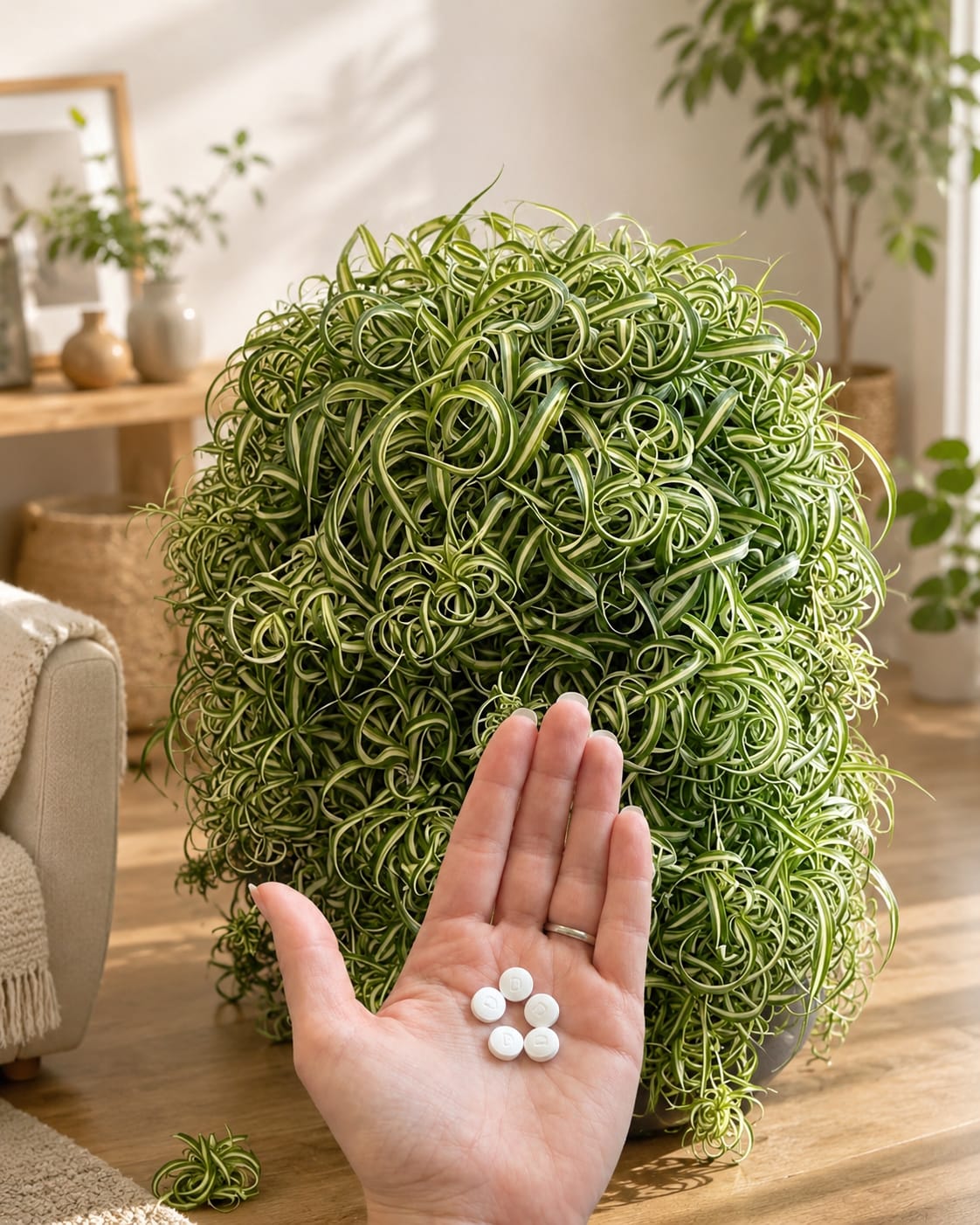
Spider plants are already famous for being easy, forgiving, and beautiful, but when they are grown well, they can become truly spectacular. A mature spider plant can turn into a huge fountain of green-and-white leaves, sending out baby plantlets in every direction and creating a soft, curly, overflowing shape that looks almost like living decor. Few houseplants can fill a corner, brighten a window, or soften a room as naturally as a healthy spider plant.
One unusual plant-care idea that often gets attention is the “tablet trick.” In many plant-care routines, small white tablets are used as a simple homemade tonic, usually inspired by aspirin-water gardening methods. Some gardeners believe a very diluted aspirin solution may help stressed plants respond better after pruning, repotting, or environmental changes. However, this trick must be used carefully. Spider plants do not need strong chemicals, constant tablets, or heavy treatments to grow. They need bright indirect light, proper watering, good drainage, light feeding, and space to produce babies.
This guide explains how to approach the tablet routine safely, what it can and cannot do, and how to grow a fuller, healthier spider plant indoors. The goal is not to rely on one quick trick. The goal is to build a complete care routine that helps your spider plant become lush, balanced, and decorative over time.
Why Spider Plants Become So Full
Spider plants grow in a rosette-like form, producing long, narrow leaves that arch outward from the center. Mature plants also produce long runners with small baby plants at the ends. These baby plants create the famous cascading look that makes spider plants perfect for hanging baskets and high shelves.
When the plant receives enough light, water, and mild nutrition, it can produce many new leaves and spiderettes. Over time, these overlapping leaves and babies create a full, rounded, almost curly appearance. This is what makes a mature spider plant look dramatic and abundant.
The fullness comes from steady care, not from one treatment. A tablet tonic may be used occasionally, but the plant’s daily environment is what really determines its shape and health.
What Is the Tablet Trick?
The tablet trick usually refers to dissolving a small amount of plain aspirin in water and using that solution as an occasional plant tonic. Aspirin contains acetylsalicylic acid, which is related to salicylic acid, a compound involved in plant stress responses. Some gardeners use very weak aspirin water for plants after stress, pruning, or transplanting.
However, aspirin water is not fertilizer. It does not replace nitrogen, phosphorus, potassium, magnesium, calcium, or trace minerals. It also does not magically create baby plants overnight.
If used, it should be very diluted and rare. Too much can stress the plant, disturb soil balance, or cause leaf damage.
A Safer Tablet Water Recipe
For spider plants, use an extremely mild mixture:
- 1 plain uncoated aspirin tablet
- 2 to 4 liters of clean water
- Dissolve completely
- Use only a small amount on moist soil
- Apply rarely, not weekly
Do not use flavored tablets, pain relievers mixed with caffeine, cold medicine, vitamins, or coated pills with extra ingredients. Only plain aspirin is usually discussed in plant-care routines, and even then, it should be used with caution.
If you are unsure what the tablet contains, do not use it on plants.
How Often to Use Tablet Water
Use tablet water no more than once every 2 to 3 months, and only on a healthy plant. It should not be part of every watering.
Spider plants grow well without it. The routine is optional. If your plant is already full, green, and producing babies, there is no need to keep adding special treatments.
Overuse is one of the biggest mistakes. Indoor pots are small environments, and repeated homemade solutions can build up in the soil.
When Not to Use the Tablet Trick
Do not use tablet water if the spider plant has soggy soil, root rot, fungus gnats, mold, a soft crown, yellow leaves from overwatering, or a bad smell from the pot.
Also avoid using it right after adding fertilizer. Do not combine many treatments at once. If the plant reacts badly, you will not know which ingredient caused the problem.
A stressed plant needs diagnosis first. If the roots are damaged, the soil is too wet, or the light is too low, tablet water will not solve the issue.
The Real Secret: Bright Indirect Light
Spider plants tolerate lower light, but they grow much better in bright indirect light. If you want a large, full, curly plant with many babies, light is one of the most important factors.
Place the plant near a bright window where it receives filtered sunlight. Morning sun is usually gentle and helpful. Strong afternoon sun can scorch the leaves, especially variegated types with white stripes.
If the plant looks pale, stretched, or thin, it likely needs more light. Move it gradually to a brighter location.
Watering Spider Plants Correctly
Spider plants prefer evenly moist soil, but they do not like sitting in water. Water when the top inch of soil feels dry. Water thoroughly until excess drains out, then empty the saucer.
Avoid small daily splashes. They keep the surface damp and may encourage fungus gnats while the deeper roots receive uneven moisture.
Deep watering followed by a short drying period is much healthier.
Best Soil for Spider Plants
Spider plants grow best in light, airy soil. Heavy compact soil can hold too much water and reduce oxygen around the roots.
A good mix may include:
- Indoor potting soil
- Perlite
- Coco coir
- Fine bark chips
- A small amount of compost
The soil should hold moisture without becoming muddy. If it stays wet for many days, add more perlite or bark to improve drainage.
Drainage Is Essential
Every spider plant pot should have drainage holes. Without drainage, water collects at the bottom and can cause root rot.
If you use a decorative pot without holes, keep the spider plant in a nursery pot with drainage and place it inside the decorative container. After watering, remove extra water.
Good drainage is more powerful than any plant trick.
How to Encourage More Baby Plants
Spider plants produce babies when they are mature, healthy, and slightly root-bound. Bright indirect light and light feeding during active growth can encourage runners.
If the pot is too large, the plant may focus on filling the soil with roots instead of producing babies. A slightly snug pot often works better.
Do not overfeed. Too much fertilizer can create lots of soft leaves but fewer strong plantlets.
Feeding Spider Plants
Use a balanced houseplant fertilizer at half strength once a month during spring and summer. This gives the plant steady nutrition without overwhelming it.
During winter or low-light months, reduce feeding or stop completely. The plant grows more slowly and does not need as much nutrition.
Tablet water is not fertilizer, so do not use it as a replacement for balanced feeding.
Why Spider Plants Get Brown Tips
Brown tips are very common on spider plants. They may happen because of dry air, inconsistent watering, too much fertilizer, mineral-heavy tap water, or direct sun stress.
You can trim brown tips with clean scissors. Cut at an angle to match the natural shape of the leaf.
To reduce future brown tips, use filtered water if possible, avoid overfertilizing, keep watering consistent, and protect the plant from harsh sun.
Cleaning the Leaves
A large spider plant can collect dust between its many leaves. Dust makes the plant look dull and reduces light absorption.
Gently rinse the plant in the shower or sink, or wipe leaves with a damp cloth. Let the plant dry in a bright airy spot.
Clean leaves make the plant look fresher, greener, and more decorative.
Pruning for Shape
Remove dry, yellow, or damaged leaves from the base. This keeps the plant tidy and improves airflow around the crown.
If some runners become too long or messy, trim them back. You can root the baby plants separately or leave them attached for a dramatic cascading effect.
Regular light pruning helps a large spider plant keep a rounded, attractive shape.
Propagating Spider Plant Babies
Spider plant babies are easy to propagate. Choose a baby plant with small root bumps at the base. Place it in water or plant it directly into moist potting mix.
If rooting in water, change the water every few days. Once roots grow, plant the baby in soil.
If rooting in soil, keep it lightly moist until the baby becomes established.
Repotting a Large Spider Plant
A mature spider plant may eventually become root-bound. Thick roots can fill the pot and make watering difficult.
Signs it may need repotting include soil drying extremely fast, roots pushing out of drainage holes, slow growth, or the plant lifting itself upward.
Repot into a container only one size larger. A pot that is too big can hold too much moisture.
Humidity and Airflow
Spider plants adapt well to normal indoor humidity, but dry air can contribute to crispy tips. Grouping plants together can help create a slightly more humid microclimate.
Good airflow is also important, especially for very large plants with dense foliage. Avoid keeping the plant pressed tightly against a wall where leaves stay damp and crowded.
Air movement keeps the crown healthier.
Continue to Page 2
Continue to page 2 for more details about this article and the key points many readers miss on the first page.